Help Falling Asleep: How to Stop the Mind-Spinning

The Most Important Points at a Glance
- The Mind-Spinning Carousel: Recurring thoughts when trying to fall asleep are usually a sign of an overactive nervous system—not a lack of discipline or willpower.
- The Hormone Cycle: Cortisol blocks the release of melatonin. Trying to force yourself to fall asleep often creates additional stress and thus even more cortisol. The solution may seem counterintuitive: acceptance instead of struggle.
- What can help right away: the countdown method, stopping your thoughts, a soothing image, a warm shower, indirect lighting, or a short breathing exercise.
- World Cup fans: After 90 or 120 intense minutes in front of the TV, the body produces stress and arousal hormones similar to those of a professional athlete after the final whistle. That’s why the same recovery techniques often help.
- When to see a doctor: If the racing thoughts persist for more than four weeks and interfere with daily life or performance, you should seek medical advice. Cognitive behavioral therapy for insomnia (CBT-I) is often helpful.
Your mind keeps racing because your brain is still active—not because you can’t fall asleep. Your body produces cortisol and adrenaline, which block melatonin. Fighting against this only makes the problem worse. The most effective way to fall asleep, therefore, doesn’t start with a technique, but with an attitude: acceptance.
Circling thoughts can make it difficult to fall asleep. Methods such as the countdown method or the thought-stopping technique help break negative thought loops. In addition, techniques like visualization and sleep restriction can help improve sleep quality in the long term. Be sure to consult a doctor before trying these methods.
Sleep Aid: What Helps You Fall Asleep and What You Can Do If You Have Trouble Falling Asleep
No sooner have you closed your eyes than it starts spinning—the merry-go-round of thoughts. Over and over again, old memories of days long past flash before your mind’s eye. Sometimes it’s worries or fears about the future that keep you from sleeping. You keep asking yourself the same questions over and over without reaching a conclusion or finding closure. This state of mind can make going to bed a real ordeal. You can’t find peace, and your sleep suffers as well, because the racing thoughts keep you awake and prolong the time it takes to fall asleep. Instead of drifting off, you lie awake in bed—and the night feels short. What you need in moments like these is an effective sleep aid.
Racing thoughts are a common problem when trying to fall asleep. And many people wonder what they can do to stop the nightly whirlwind of thoughts. So: What helps you fall asleep? And what can you do if you have trouble falling asleep? You’ll find out in this article. Gentle sleep aids that bring peace of mind without any side effects are particularly in demand. That’s because many people would rather avoid taking sleeping pills and medications to help them fall asleep. The risk of dependency is simply too high. If you feel the same way and are looking for effective tips to help you fall asleep, this article is just right for you. Learn how you can stop your mind from racing at night and finally find peace more easily. Here are the best sleep aids and exercises.
"To sleep well at night, it’s important to wind down in the evening. However, constant worrying and racing thoughts often keep us from sleeping. With simple sleep aids, you can calm your mind and put a stop to the mental whirlwind."
Dr. Fabian Krapf, sleep expert
When you toss and turn in bed, you produce cortisol—which in turn blocks melatonin. Anna West, Sleep Performance Coach, calls it the hormonal spiral: The harder you try, the harder it becomes to fall asleep. The only solution that works goes against all intuition: acceptance.
You’re lying awake. Your thoughts are racing. You try to stop them. You get frustrated that it’s not working. You look at the clock. You calculate how many hours of sleep you have left. You get even more frustrated.
What’s happening in your body at this moment: The frustration of not being able to fall asleep triggers a stress response. Your brain interprets “I have to sleep now!” as an emergency. The sympathetic nervous system kicks in—the same system that protects you from danger. Cortisol levels rise. And cortisol directly blocks the production of melatonin, your sleep hormone.
Source: Hormonal mechanism according to Saper et al. (2005); cortisol-melatonin axis.
Intense evening (sports / World Cup game / stress) | Adrenaline rises | Trying to fall asleep → Frustration | Cortisol levels rise | Melatonin is blocked | ↺ The spiral continues |
“There are many sleep challenges that stem from unrealistic expectations. When we believe we have to fall asleep quickly, it leads to frustration, anger, and stress—and thus to higher levels of cortisol and adrenaline. These hormones block melatonin production. We try harder and, in doing so, make it even harder.”
Anna West, Sleep Performance Coach

How to Break the Cycle
The only way out isn’t a struggle, but a conscious step back. Accepting that it will take longer to fall asleep tonight reduces your body’s stress response and, with it, the rise in cortisol. This allows melatonin levels to rebuild.
Acceptance here isn’t just a cliché—it’s a physiological lever.
Many helpful tools work precisely because they don’t force anything:
- Warm shower: After showering, your core body temperature drops slightly. It is precisely this drop in temperature that serves as a natural signal to fall asleep.
- Indirect light: Dim or warm light reduces the inhibition of melatonin release.
- Breathing exercises to help you fall asleep: Slow breathing activates the parasympathetic nervous system. A simple variation: inhale for four seconds, exhale for six seconds.
- Body scan: Consciously focusing on individual parts of the body shifts your attention away from racing thoughts and back to your body.
Learn more about the mechanism behind lowering cortisol: The Cortisol Hub explains tips and exercises for reducing stress in the body and the bigger picture.
After World Cup Night: When the Adrenaline Won’t Subside
⚽ 2026 World Cup
Millions of fans know exactly what professional players go through after a game—just like they do after intense World Cup nights. The biology is the same.
90 or 120 intense minutes in front of the TV. Suspense, cheering, disappointment, excitement. Then it’s bedtime—and your brain keeps racing. Game highlights, missed passes, the decisive goal. No sleep despite feeling tired.
This is no coincidence. After an intense emotional experience, your body produces the same hormones as a player does after the final whistle: adrenaline, cortisol, and an elevated heart rate. It doesn’t matter whether you were on the field yourself or on the couch. Your nervous system reacts to intensity—not to activity.
The tools are the same ones Anna West uses in professional sports. Check out the story: How Pros Wind Down After the Final Whistle and the World Cup Travel Hub. And above all: Accept that the first half-hour after an intense World Cup evening isn’t sleep time—it’s a transition. That’s normal. That’s physiology.
For more on the scientific background, check out the article “Sleep as a Performance Enhancer in Professional Sports.”


Tip for falling asleep: The Countdown Method
Spend5 minutes intentionally ruminating —with an alarm set. Then ask yourself three questions. This forces you to take a step back. The whirlwind of thoughts loses its pull when it’s limited in time.
At first glance, the countdown method may seem a bit counterintuitive, but this exercise can help you fall asleep faster and more soundly. Here’s how this sleep aid works: When you go to bed, set an alarm or use the timer function on your smartphone for exactly five minutes. During this time, consciously focus on the thoughts that won’t let you go: What topic is on your mind? What worries are causing you distress? What situation from your daily life are you replaying over and over in your head? Take the time until the alarm goes off to get to the root of what’s driving your racing thoughts. Once the five minutes are up, ask yourself the following questions:
1 Have I gained any new insights?
2 Do I feel better?
3 Has the situation become clearer to me?
This way, you can determine whether you’re having positive thoughts as you fall asleep or just ruminating aimlessly. And even if that’s the case and you answer “no” to all three questions, that’s okay. Simply engaging in this conscious, time-limited, intensive thinking—followed by reflection—can help you gain some distance. You’ll gain some distance from your own thoughts, making it easier to break the endless loop in your head. In this way, this tip for falling asleep—the countdown method—can help you find peace and fall asleep more quickly.


Tip for Falling Asleep: The Thought Stop
🛑 Say “Stop!” loudly in your head—combined with the image of a red stop sign. The brain responds to clear commands. Then move directly to the calming image (Section 03).
Ideally, we shouldn’t dwell on things in the bedroom at all. The bed is only for sleep and intimacy, not for thinking. But sometimes it’s not so easy to shut off your thoughts in the evening. And in these cases, the so-called “thought-stop” technique can help you. This is a method that makes it easier to interrupt the “mental movie” before bedtime and thus fall asleep faster. Here’s how this simple but effective sleep aid works:
If your thoughts just won’t stop flowing and you find yourself ruminating aimlessly,then tell yourself—in your mind—out loud: “Stop!”This is an unambiguous command to yourself. As you speak to yourself, also picture a red stop sign in your mind’s eye.
Picture the sign in your mind:
- What do the letters look like?
- How big is the sign?
- What shade of red do you see?
The stop sign is meant to reinforce your inner command and make it clear to you that the ruminating is now over, which helps you fall asleep immediately. To reinforce the “stop thinking” method, you can combine it with a tactile physical cue. This can be a particularly helpful tool for children. The signal could be , for example, a “finger snap” against your wrist . This also helps pull you out of your mental loop. This way, you can redirect your thoughts to something else—such asthe calming image ( see next paragraph).


Tip for falling asleep: The “calming image”—beautiful and positive thoughts to help you fall asleep
The “Stop Thinking” method can help you pause the endless loop in your head. But this sleep aid isn’t a long-term solution to the question:
What helps you fall asleep? You need a complementary technique to keep the merry-go-round of thoughts from spinning again, and that can be the calming image.
With this method, you consciously think of something beautiful or soothing. Your personal “calming image” is your mental refuge when you need a distraction and positive thoughts to help you fall asleep.
Here’s how it works:
Imagine a beautiful scene—for example, a landscape or a situation that brings back pleasant memories.
Perhaps a beautiful sunset on the beach or the breathtaking view from the top of a mountain.
Your mental image should radiate calm. It shouldn’t include any hectic or fast-paced activities, and—apart from you—no other people—just a pleasant thought to help you fall asleep.
Now, mentally immerse yourself in this situation as best you can and try to visualize it with all your senses.
- What does it smell like there?
- What do I hear?
- What does it taste like?
- How does the ground feel?
Focus on every little detail, no matter how small, and try to gather as many sensory impressions as possible.
You’ll usually fall asleep quickly this way. This “calming visualization” has already helped many people with trouble falling asleep.
If it doesn’t work for you right away, stay patient. If you manage to really immerse yourself in it, this method for falling asleep will have a very calming effect on you, and you’ll fall asleep more easily.


Tip for falling asleep: The Sleep Expert
Actively try to stay awake as long as possible. The paradoxical effect: The fear of not falling asleep dissipates. No fear—no cortisol. No cortisol—more melatonin.
In response to the question “Trouble falling asleep—what to do?”, “The Wake Expert” admittedly sounds a bit strange.
After all, this method is based on the opposite of what you’re trying to achieve: falling asleep quickly. But be sure to give “The Sleep Expert” a chance, because this technique works wonders.
Especially if you’re struggling with sleep disorders but want to avoid artificial sleep aids like medication and oral melatonin, you should try this exercise.
It’s also incredibly simple: Get into bed in the evening and try, no matter what, to stay awake for as long as you possibly can. Nothing makes you—the “Sleep Expert”—tired, and you try with all your might to stay alert.
Try this technique on the weekend first, because the next day you’ll likely feel incredibly tired—and that’s exactly the point! Now you might be wondering what the point of this sleep aid is.
In short, the “Sleep Expert” is based on a psychological phenomenon: By intentionally staying awake, you reduce the worry—or even fear—of not being able to fall asleep. And without that fear, you’re significantly more relaxed. Among other things, this makes it easier to fall asleep.
A second effect of the exercise: The lack of sleep increases what’s known as “sleep pressure” the next day. The longer you stay awake, the more tired you become. This is another reason why the “Stay-Awake Expert” makes it easier for you to fall asleep the following night.

Tip for falling asleep: Sleep restriction
Get more sleep by temporarily reducing your time in bed. A medically recognized method for treating difficulty falling asleep and staying asleep. Perform only under medical supervision.
Sleep restriction is one of the most effective—but also one of the most challenging—methods for treating chronic difficulty falling asleep. The basic idea: temporarily reduce bedtime to the actual duration of sleep in order to increase sleep pressure and improve sleep efficiency.
“Many people are able to stop their racing thoughts using these techniques. However, those seeking lasting change will benefit from professional support—such as CBT-I (Cognitive Behavioral Therapy for Insomnia).”
Leona Rudolph, health psychologist and sleep health expert

How Sleep Restriction Works (Only Under a Doctor’s Supervision)
- Prerequisite: You should keep a sleep diary for at least two weeks before starting.
- Calculate bedtime: What matters is the average actual sleep duration, not the total time spent in bed. The recommended minimum bedtime is 4.5 hours.
- Measuring sleep efficiency: Sleep efficiency describes the ratio of sleep duration to time in bed. The goal is an efficiency of at least 85%. Once this value is reached, the time in bed can be gradually extended by about 30 minutes.
- Important: Sleep restriction should only be carried out under medical supervision or as part of professional sleep therapy.
If you’d like to not only try out these cognitive techniques but also learn them for the long term, our sleep psychologist is here to support you.

Sleep better, live healthier—with our sleep course. Up to 100% reimbursement.
Discover the online sleep course now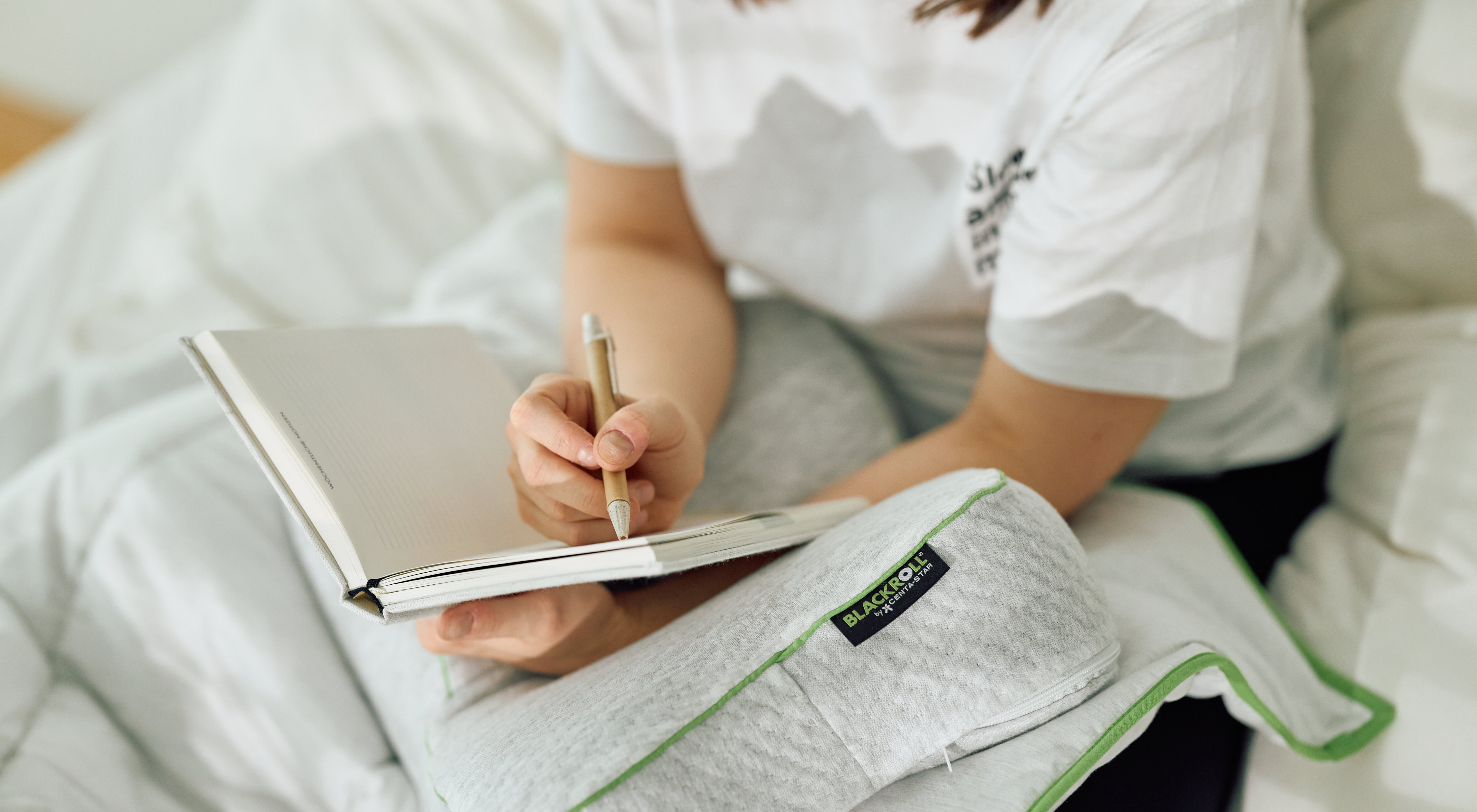
Prevent trouble falling asleep
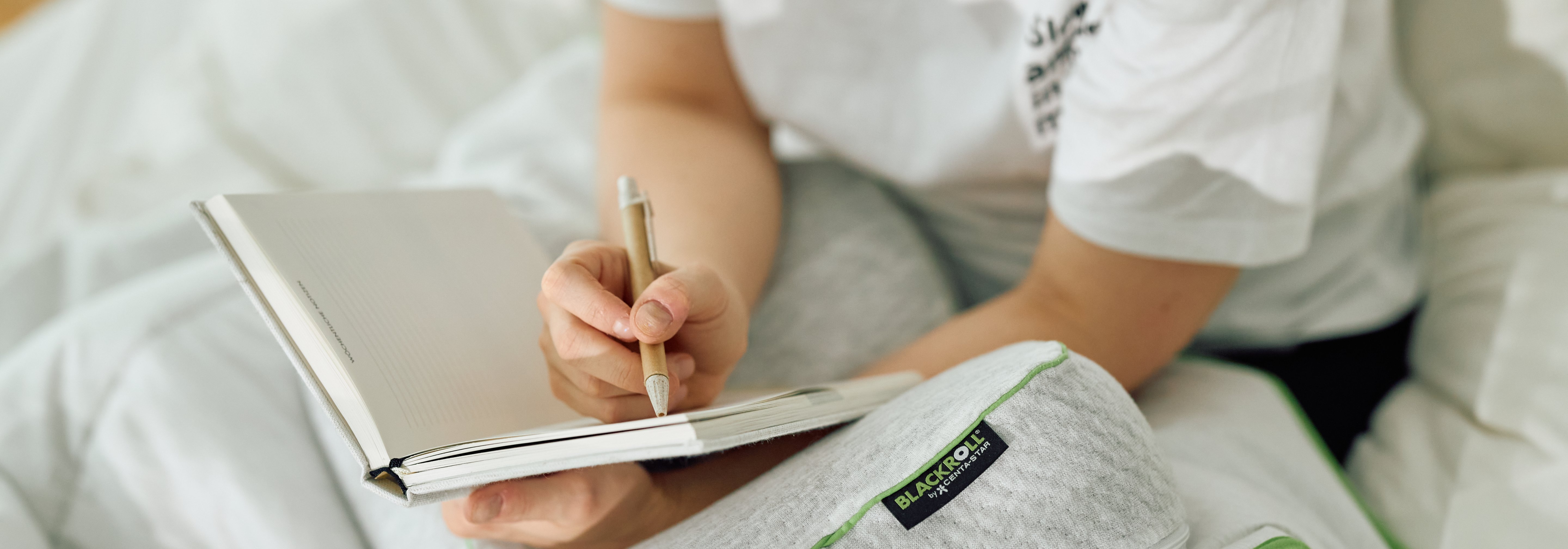
You can also stop the whirlwind of thoughts during the day: use a “brooding chair,” stick to a consistent schedule, and resolve unpleasant situations early on. When you clear up the day, you’ll sleep with less baggage.
With preventive techniques, you can ensure as early as during the day that your thoughts weigh less heavily on you in the evening.
- The “Brooding Chair”: Choose a specific chair or spot where you consciously and actively engage with your thoughts. There, you can analyze, plan, and take notes. When you get up, your thoughts and notes symbolically stay behind.
- Keep a calendar and to-do list: If you reliably record tasks and appointments, you’ll have to keep fewer of them in your head at night. This reduces the feeling that you might forget something.
- Don’t put off conflicts: Resolve unpleasant situations as soon as possible. Otherwise, unresolved conflicts often become fuel for nighttime rumination.
Recommended Exercises to Help You Fall Asleep




Instead of medication and melatonin: Home remedies to help you fall asleep
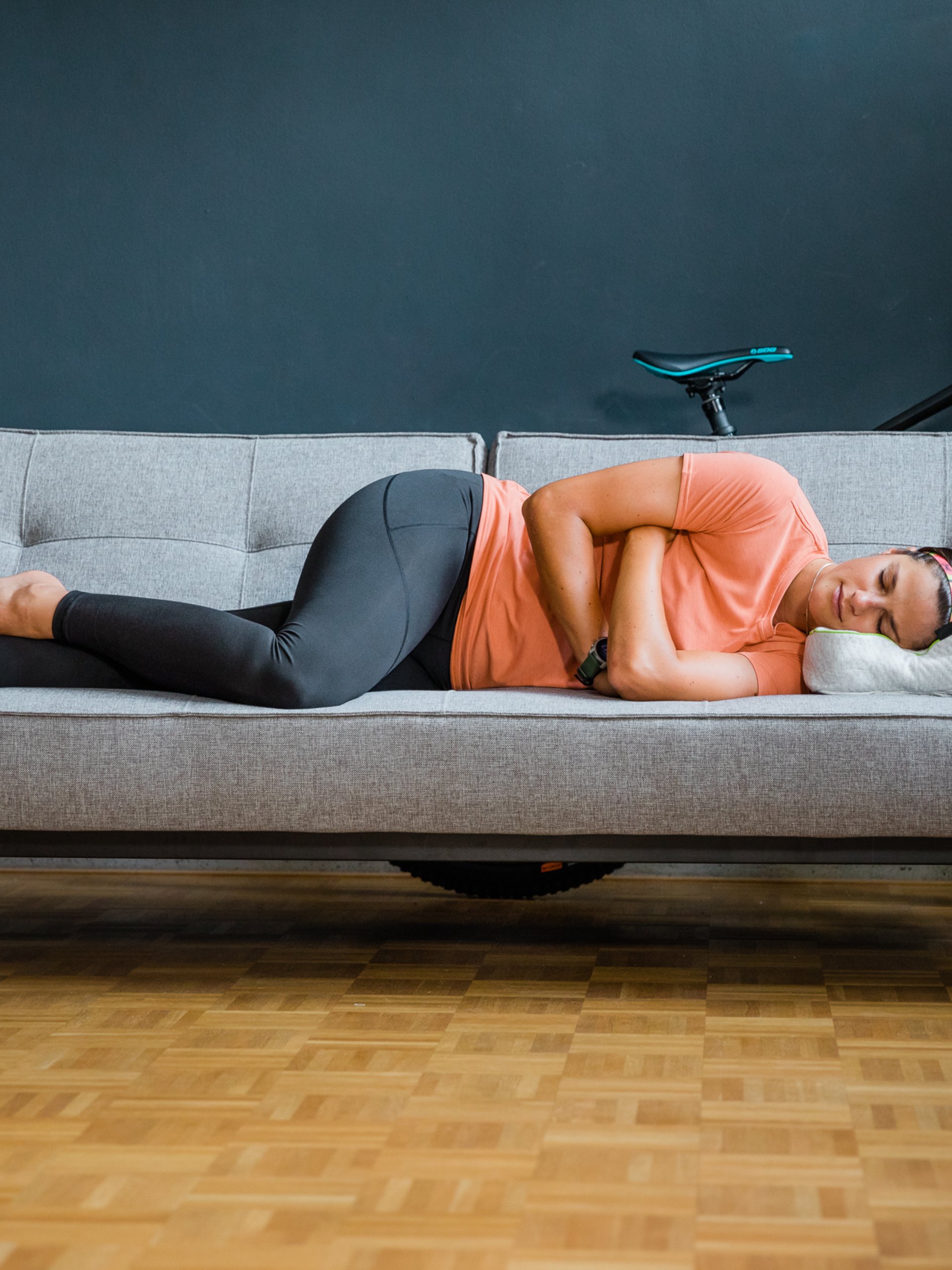
Sleep tea (valerian, lavender), a warm shower, and exercise 3 hours before bedtime. Simple, no side effects, and well-documented.
In addition to mental techniques, there are also proven physical home remedies. They’re a useful supplement and often the easier way to get started for many people.
- Sleep tea: Valerian, lavender, or chamomile are classic ingredients for soothing tea blends. Many blends are already available ready-made. The ritual of drinking tea itself can also signal to the body that it’s time to wind down.
- Warm shower or bath: Ideal about 60–90 minutes before bedtime. The body’s core temperature rises slightly at first and then drops again. It is precisely this drop in temperature that serves as a physiological signal for sleep.
- Exercise: Regular physical activity during the day often improves sleep quality. However, there should be at least three hours between your workout and bedtime. Exercising too late can increase adrenaline release and delay falling asleep.

Conclusion: Help for falling asleep when your mind is racing at night
The most effective ways to fall asleep have one thing in common: They don’t fight against being awake—they work with it. The countdown method, thought stopping, visualizing calm, and acceptance gently interrupt the hormonal spiral instead of intensifying it.
Try out what works for you. Not every method suits everyone. If your racing thoughts persist regularly for more than 4 weeks and interfere with your daily life, talking to a doctor is the right next step.

Book a free initial consultation with our sleep psychologist.
Discover the online sleep course nowFrequently Asked Questions About Sleep Aids (FAQ)
Melatonin supports the sleep-wake cycle but does not solve the underlying problem of an overactive nervous system. It can be useful as a short-term aid but is not a long-term solution. Read more in the article on melatonin.
A medically recognized method: temporarily reducing bedtime to match your actual sleep duration in order to increase sleep pressure. This should only be done under medical supervision and after keeping a 2-week sleep diary as preparation.
Cognitive Behavioral Therapy for Insomnia —the most effective non-pharmacological treatment for chronic sleep problems. It combines sleep restriction, stimulus control, and cognitive techniques. Recommended when home remedies and other methods are insufficient.
Use the same tools as professional athletes after a game: dim lighting, a warm shower, and calm breathing exercises. And above all: don’t expect to fall asleep right away. Accept the first half-hour as a transition period. Your nervous system needs a deceleration zone—not the emergency brake.
Sources & Studies
- Saper, C. B., Scammell, T. E., & Lu, J. (2005). Hypothalamic regulation of sleep and circadian rhythms. Nature, 437(7063), 1257–1263. https://doi.org/10.1038/nature04284
- Roehrs, T., & Roth, T. (2008). Caffeine: Sleep and daytime sleepiness. Sleep Medicine Reviews, 12(2), 153–162. https://doi.org/10.1016/j.smrv.2007.07.004
- Buman, M. P., & King, A. C. (2010). Exercise as a treatment to enhance sleep. American Journal of Lifestyle Medicine, 4(6), 500–514. https://doi.org/10.1177/1559827610376547
- University of Fribourg. (June 10, 2021). Sleep Better with the Right Words. Unifr News. https://www.unifr.ch/news/de/25732/besser-schlafen-mit-den-richtigen-wortern
- ETH Zurich. (November 24, 2024). “We should take a more relaxed approach to sleep.” ETH Zurich News. https://ethz.ch/de/news-und-veranstaltungen/eth-news/news/2024/11/wir-sollten-das-thema-schlaf-gelassener-angehen.html
- Deutsche Handwerks Zeitung. (January 29, 2025). This simple technique helps you fall asleep. DHZ. https://www.deutsche-handwerks-zeitung.de/gedankenmischen-statt-gruebeln-methode-fuer-schnelleres-einschlafen-357945/