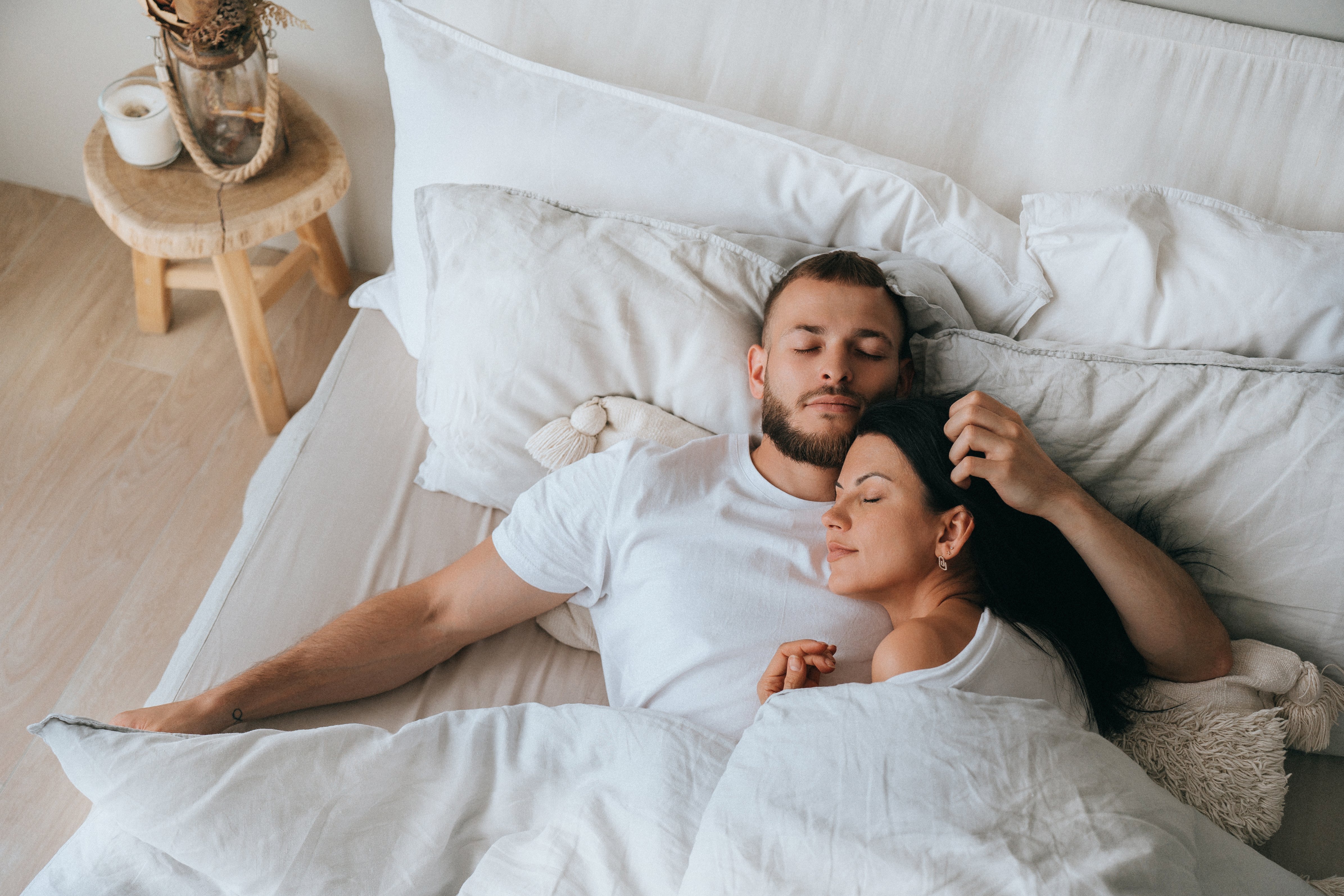
Sleeping In

Finally getting a good night’s sleep—for many, that sounds like the epitome of relaxation. No alarm clock, no time pressure, just sleeping until your body naturally says “enough.” But what’s really behind the need for a long night’s sleep? Is sleeping in actually healthy—or just a supposed solution to chronic sleep deprivation?
In this article, you’ll learn what sleeping in actually means, whether you can “catch up” on sleep, what health effects are possible—and where potential risks lie. We’ll also give you practical tips on how to wake up feeling truly refreshed.
Sleeping in can be good for you—if you know how to do it right. Not every long sleep automatically leads to true rest. After all, if you sleep too long, you run the risk of losing your rhythm instead of your tiredness.
The Meaning of Sleeping In
Sleeping in means sleeping without external pressure or an alarm clock until your body signals on its own: “I’m rested.” It’s the conscious letting go of a fixed wake-up time—no battle with the snooze button, but sleeping until your natural wake-up response kicks in. When you’ve had a good night’s sleep, you usually feel awake, refreshed, focused, and physically balanced.
This need often arises after periods of sleep deprivation or stress, when the body requires additional sleep to make up for a sleep deficit. Many people therefore choose to sleep in on weekends or during vacations to recharge. But how long should you actually sleep in?
Sleep needs vary from person to person. While some people feel fully rested after 6.5 hours, others need 9 hours or more to feel well-rested. Age, physical activity, mental stress, hormonal factors, and the circadian rhythm all influence how much sleep we actually need.Adolescents and young adults often have a greater need for sleep, while older adults may require less sleep—though their need for rest is not always reduced. If you suddenly start sleeping an unusually long time (≥ 9–10 hours) over an extended period without waking up feeling refreshed, this could indicate health problems such as sleep apnea, thyroid disorders, or depression. In such cases, you should definitely seek medical advice.
Important to know: Sleeping in is not a “weakness” or merely a matter of convenience; rather, when done correctly, it can be a valuable contribution to recovery and sleep health. The key is not to view it as a permanent solution for poor sleep during the week, but as a sensible supplement for temporary sleep deficits.

Sleep better, live healthier—with our sleep course. Up to 100% reimbursement.
Discover the online sleep course now
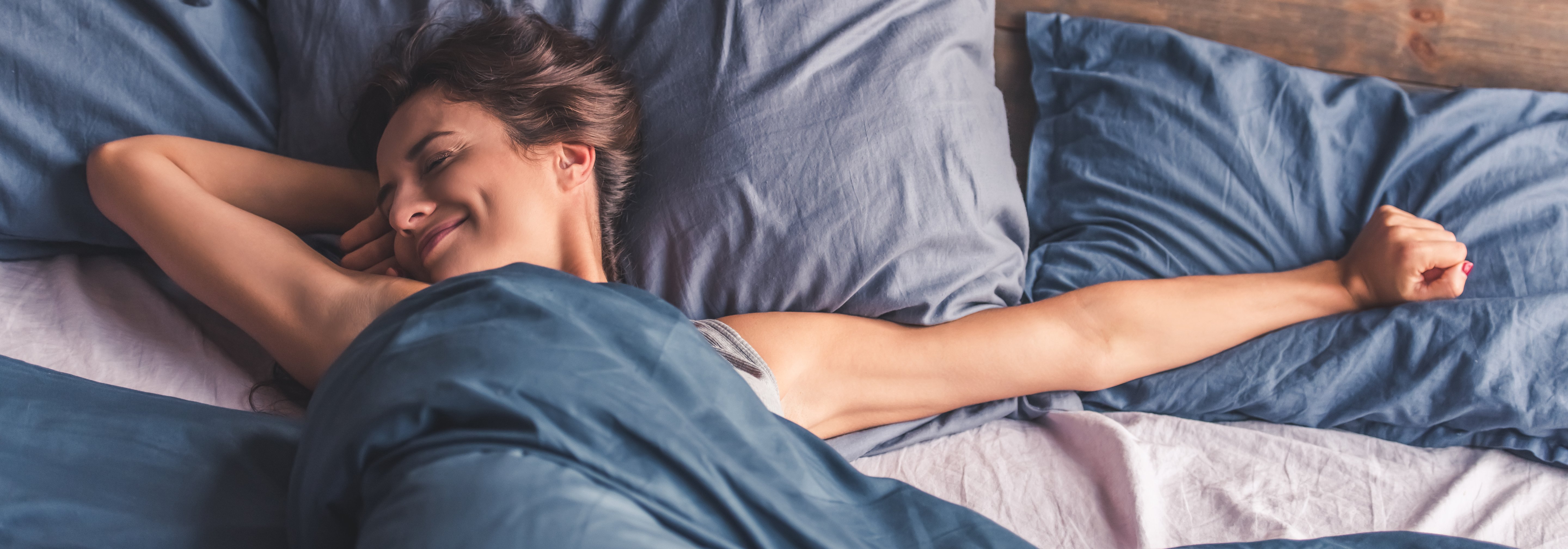
Feeling well-rested: What’s behind that feeling of refreshment?
Sleeping in and feeling well-rested aren’t the same thing. Many people sleep longer on the weekend than during the week—and yet still wonder why they still feel tired, sluggish, or groggy after nine hours of sleep.
Sleeping in simply means waking up without an alarm clock or pressure—in other words, giving your body the chance to sleep as long as it deems necessary. But that doesn’t automatically mean the sleep was actually restorative.
Feeling well-rested, on the other hand, describes the state of being clear-headed, refreshed, alert, and productive upon waking.
This feeling only arises when several factors come together: sufficient sleep duration, good sleep quality, and a favorable wake-up time in harmony with the circadian rhythm.
If, for example, you’re jolted awake in the middle of a deep sleep phase or sleep far past your usual wake-up time, you may experience what’s known as “sleep drunkenness”—you may even feel less refreshed than after a shorter night’s sleep that aligns with your natural rhythm.
Conclusion: Just because you sleep in doesn’t mean you’ll feel well-rested. What matters is how and when you sleep—not just how long.


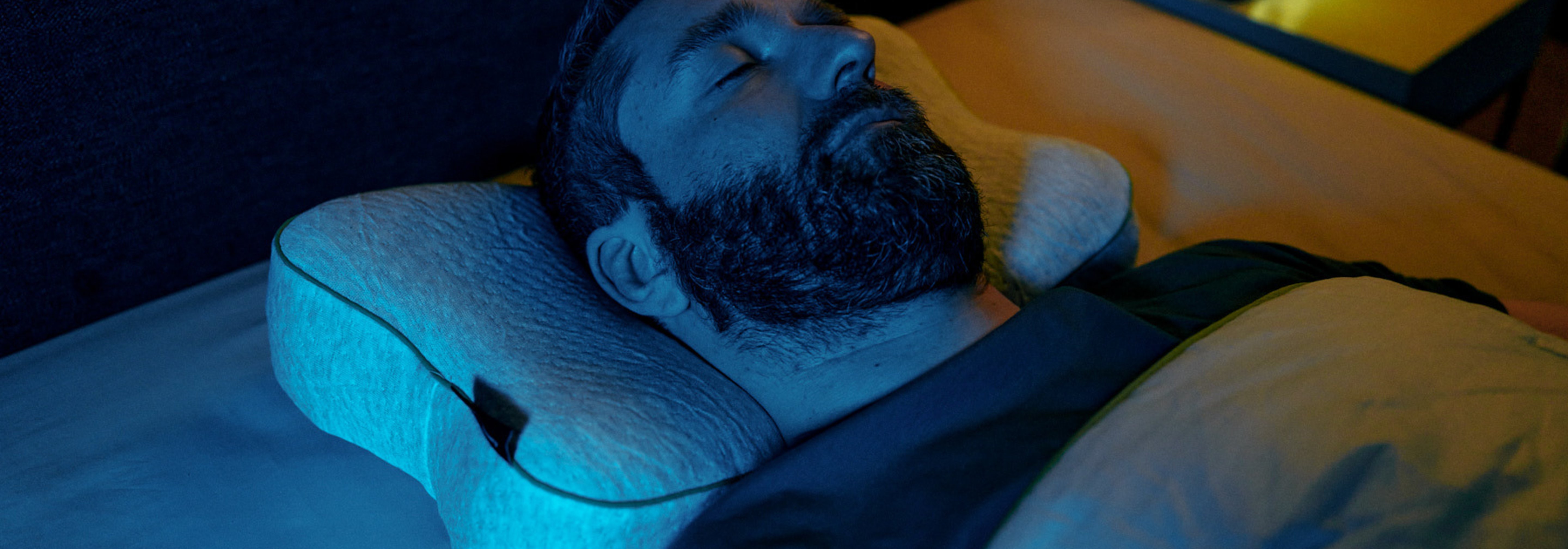
Can You Catch Up on Sleep? Science & Myths
- Short-term sleep deficit: If you don’t get enough sleep for one or two nights, you can “catch up on sleep” by staying in bed 1–2 hours longer the next day. Your body quickly relieves the acute need for sleep—concentration and mood usually return to normal after just one restful night.
- Chronic sleep deprivation: On the other hand, if you get only 5–6 hours of sleep for weeks on end, you’ll accumulate a permanent sleep deficit. Studies show that just 14 days of getting only 6 hours of sleep per night lead to cognitive impairments that are almost as severe as two nights of complete insomnia—and that it takes several consecutive restful nights to recover even partially. In short: A single “marathon night” isn’t enough to fully recharge your batteries. One or two longer nights on the weekend can help compensate for short-term sleep deprivation. With a chronic sleep deficit, however, occasionally sleeping in isn’t enough to completely reverse the cognitive and physical effects.
Circadian Rhythm & Weekend Sleep
Many people believe they can simply make up for their weekly sleep deficit by sleeping in on Saturday. The research is divided:
- Positive effect: A large U.S. study found that sleeping 1–2 hours longer on weekends reduced the risk of obesity in people who typically sleep little.
- However: More recent analyses show that sleeping in too late shifts the circadian rhythm (“social jet lag”)—as a result, some people feel even more tired on Monday, and in the long term, the risk of metabolic disorders actually increases
Conclusion:
- Yes, you can catch up on sleep if the deficit is short-term.
- No, you can’t sleep off chronic sleep deprivation. That requires consistently regular sleep patterns over several days to weeks—plus a consistently sufficient amount of sleep.
Catching Up on Sleep vs. a Regular Sleep Schedule
First, let’s look at the effects of irregular sleep schedules. This is also known as “social jet lag.”
“Social jet lag” describes the gap between your internal clock and the rhythm of your daily routine: During the week, you get up early; on the weekend, you treat yourself to one or two (or more) extra hours of sleep. It sounds harmless and often even feels good—but for your body, this constant shifting of times is stressful.
Short-Term Benefits / Long-Term Drawbacks
+ Relieve acute fatigue after hard days at work
– Disruption of the circadian rhythm (internal clock)
+ Improved mood & concentration on a restful morning
– Increased risk of insulin resistance and metabolic syndrome
+ Fewer cravings immediately after the “catch-up night”
– According to a study, more belly fat and markers of atherosclerosis with chronic weekend jet lag.
– Higher likelihood of sleep disorders, depressive moods, and cardiovascular diseases.
Why is that?
- Your hormones (melatonin, cortisol, insulin) operate on a 24-hour cycle. If you constantly switch between being an early riser (Mon–Fri) and a late sleeper (Sat/Sun), they get thrown off balance.
- According to a 2025 review, even a difference of more than 60 minutes between your work and leisure sleep times increases the risk of blood sugar spikes and weight gain.
- With every “shifted” Monday, your body needs 1–2 days to “reset” its internal clock—similar to what happens after a flight eastward.
What does this mean for you?
- Consistency beats marathon sleep: A consistent bedtime and wake-up window (± 30 min.) is more effective for recovery and health than sleeping in until noon just once.
- Catch up systematically: If you did end up going to bed late, extend your sleep moderately the next day (max. 1–2 hours) or take a 20-minute power nap. This way, you can make up for lost sleep without disrupting your rhythm.
- Soak up light in the morning: Bright daylight after waking up stabilizes your internal clock and reduces the jet lag effect.
- Stay consistent: Two weeks of a regular sleep schedule do more to restore balance than a weekend of nonstop relaxation—as shown by studies in which regular bedtimes alone measurably improved insulin sensitivity.
Takeaway: Sleeping in can be a tool to overcome a short-term sleep deficit. But in the long run, a consistent rhythm wins out: It keeps your hormones in sync, protects your metabolism and heart, and ensures that you don’t just “sleep in,” but actually feel well-rested.


Sleep Deprivation: Risks to Health & Performance
A sleep deficit occurs when you sleep less than your body actually needs for days or weeks on end. The consequences go far beyond “mere fatigue”—they have a measurable impact on your immune system, concentration, and mood.
1. Immune System – More Susceptible to Infections
- Even just a few nights of insufficient sleep reduce the production of protective immune cells and cause levels of inflammatory messengers to spike. A recent review shows that chronic sleep deprivation puts the immune system into a permanent state of alert, thereby increasing the risk of infections and inflammatory diseases.
- Classic human studies confirm this effect: People who slept less than 7 hours per night were almost twice as likely to catch a cold after deliberate exposure to the cold virus compared to well-rested control groups.
2. Concentration & Cognitive Performance
- A large meta-review involving more than 1,000 participants found clear impairments in reaction time and working memory after just one night of 4–6 hours of sleep.
- If sleep deprivation persists, the deficits accumulate: After two weeks of only 6 hours of sleep per night, participants showed performance declines similar to those seen after two sleepless nights—and needed several nights to recover. (see Van Dongen et al., 2003)
3. Mood – Mood swings, irritability, depression
- Short or highly fluctuating sleep duration correlates with irritability and a higher susceptibility to errors; even 1–2 hours of sleep deprivation increases levels of the stress hormone cortisol.
- A recent analysis shows that people who don’t get enough sleep during the week and don’t make up for it on the weekend have a ~25% higher risk of depression. Moderate “weekend catch-up sleep” of 1–2 hours significantly reduced the likelihood of depression.
In short: A chronic sleep deficit weakens your immune system, impairs your mental performance, and dampens your mood. The best “medicine” is a consistently regulated sleep schedule with regular sleep duration—instead of sporadically sleeping in for long periods, you should aim to get 7–9 hours of sleep every night.
Routines for Restful Sleep
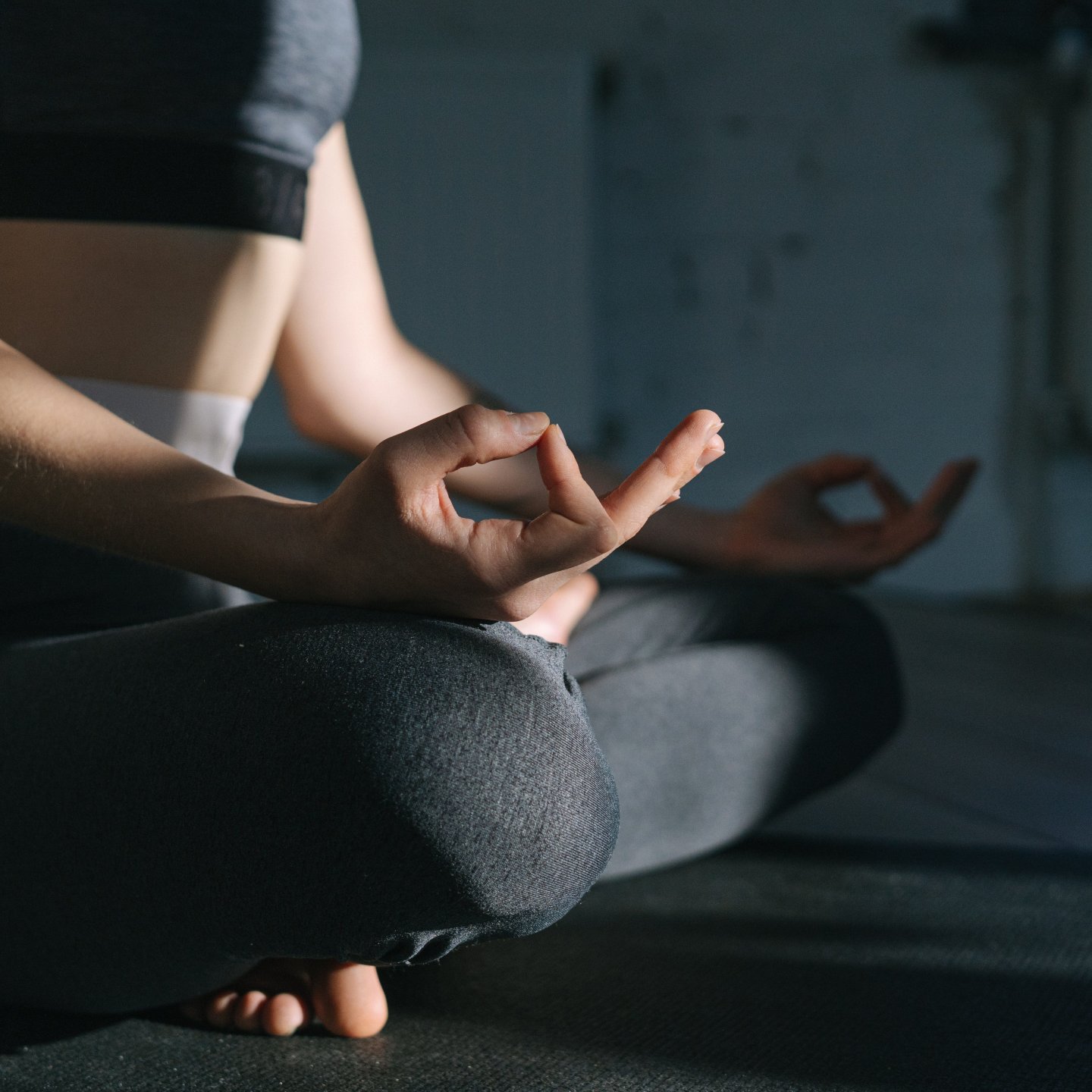
Why Do I Sleep So Much? Possible Causes & Solutions
Needing more than 9–10 hours of sleep on a regular basis may seem like a luxury at first glance—but it can also be a warning sign. Getting more than nine hours of sleep per night on a regular basis has even been linked to an increased risk of diabetes, obesity, depression, and even cardiovascular disease.
There are usually three main factors behind this:
Increased need for rest
Intense periods of exercise, study marathons, infections, or emotionally stressful situations temporarily increase the proportion of deep sleep—your body is specifically seeking more recovery.
Sleep Disorders
Conditions such as obstructive sleep apnea, restless legs syndrome, or depression impair sleep quality. Those affected “sleep through” the day because they are constantly disturbed at night without realizing it.
Lifestyle Factors
A lack of exposure to daylight, lack of exercise, a late, heavy dinner, alcohol, or excessive screen time can disrupt your circadian rhythm and prolong your subjective sleep duration.
If you consistently need more than nine hours of sleep, it’s worth taking a closer look at your lifestyle, your need for rest, and possible sleep disorders—because better sleep often starts with small but targeted changes.
Tips for Sleeping In Properly
Here we’ve summarized 5 simple practical tips for you—try them out and “learn how to sleep in properly”:
- Optimize Your Sleep Environment
Make sure your bedroom is cool (≈ 18 °C), dark, and quiet. Blackout curtains, a good mattress, and—if necessary—earplugs reduce disturbances and make every extra hour of sleep truly restful. - Sleep Hygiene: Timing & Rituals
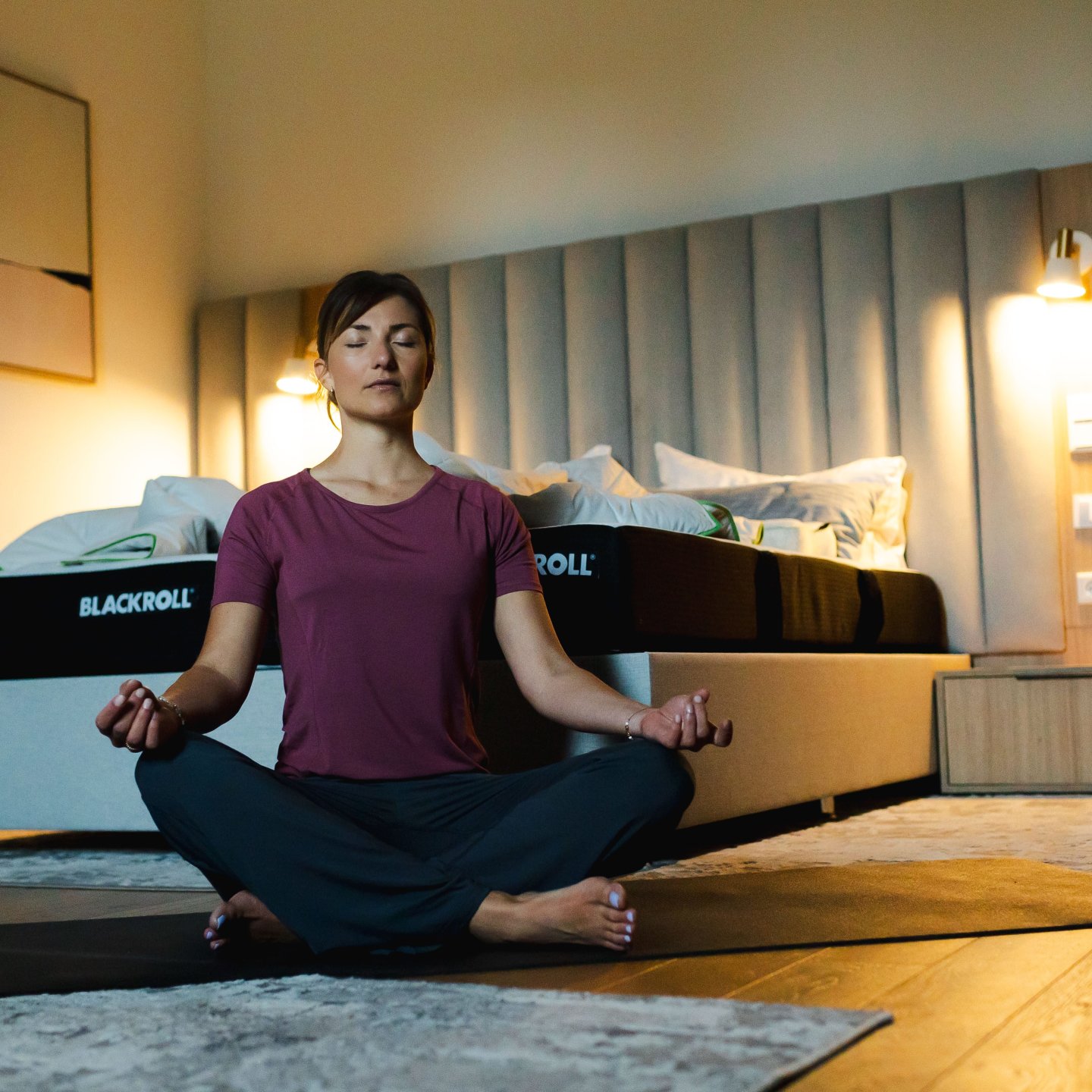
On days off, go to bed just 30–60 minutes later than usual—and get up no more than 1–2 hours later. A short evening routine combining reading, stretching, or breathing exercises signals to your body that “sleep mode is active” and prevents endless scrolling. - Avoid Caffeine & Alcohol Starting in the Afternoon
Caffeine blocks adenosine’s fatigue signals for up to 6 hours, while alcohol disrupts deep sleep phases. Both sabotage the quality of your sleep: You may stay in bed longer, but you’ll wake up feeling less refreshed. - Power nap instead of marathon sleep
If you’re accumulating a sleep deficit during the week, a 20-minute nap between 1:00 and 3:00 p.m. will give you a boost without disrupting your circadian rhythm. Sleeping for long periods (> 9 hours) only makes sense if you’re acutely ill or exhausted after an intense workout. - Alternatives to Sleeping In: Consistency Wins
Set fixed bedtime routines (± 30 min.), limit blue light exposure in the evening, and dim the lights in your rooms starting at 9 p.m. This way, you’ll gradually reduce fatigue, need “sleep-in rescue missions” less often—and start each day feeling noticeably more refreshed.
Treating Sleep Disorders




Conclusion – Is Sleeping In Healthy?
Sleeping in isn’t inherently good or bad—it depends on “why, how long, and how often .” A short sleep-in of one to two hours can make up for acute sleep deficits, strengthen the immune system, and lift your mood. However, if you regularly sleep in for more than nine hours or let it disrupt your rhythm every weekend, the benefits turn into drawbacks: your metabolism, cardiovascular health, and performance suffer.
Keep in mind:
- Symptom, not solution —Chronic oversleeping can indicate underlying issues (sleep disorders, depression, poor sleep hygiene).
- Quality beats quantity— a regular sleep schedule with 7–9 solid hours per night is more effective than sporadic “sleep marathons.”
- Use it strategically— consciously allow yourself to sleep in after stressful periods or illness, but keep the deviation from your normal schedule minimal (max. 1–2 hours).
- Maintain your rhythm – Morning light, exercise, and a caffeine-free “cool-down” in the evening help ensure you wake up feeling well-rested rather than just “having slept in.”
This way, sleeping in goes from being a last resort to a valuable recovery strategy—and doesn’t become a hindrance to your health and performance.
Note: Ifyou experience persistent fatigue despite getting enough sleep, you should seek medical advice.


FAQ—Quick Answers
Sleeping in means sleeping as long as you want—without an alarm clock or obligations—until you feel refreshed on your own.
In the short term, yes—one or two longer nights of sleep can make up for an acute sleep deficit, but they are no substitute for a consistently regular sleep schedule.
Occasionally, it’s not a problem; however, a highly fluctuating sleep-wake cycle can stress the body and make it harder to start the week.
Chronic sleep deprivation causes fatigue, reduces performance, and weakens the immune system.
Keep your bedroom dark and quiet, go to bed at a regular time whenever possible, and make sure to relax before falling asleep—that way, you’ll wake up feeling refreshed.
More articles on sleep







Sources / Studies
Van Dongen et al. (2003): “The cumulative cost of additional wakefulness” – PDF: https://www.med.upenn.edu/uep/assets/user-content/documents/VanDongen2003CumulativeCost.pdf
Kim et al. (2017): “Weekend catch-up sleep and BMI” – https://academic.oup.com/sleep/article-abstract/40/7/zsx089/3836093
Mendes et al. (2025): “The sleep paradox: weekend catch-up sleep” – https://www.sciencedirect.com/science/article/pii/S0149763425002313
Umbrella Review “Sleep Duration/Quality & Health Outcomes” (2021) – https://www.frontiersin.org/articles/10.3389/fmed.2021.813943/full
Bouman E J et al (Trials 2024) - https://trialsjournal.biomedcentral.com/articles/10.1186/s13063-024-08329-w
Sondrup N et al. (Sleep Medicine Reviews 2022) - https://www.sciencedirect.com/science/article/pii/S1087079222000077
(IJERPH 2024) - https://www.mdpi.com/1660-4601/21/6/668
Zhang Y. et al. “Potential Role of Sleep Deficiency in Inducing Immune Dysfunction” (2022) - https://www.mdpi.com/2227-9059/10/9/2159
Cohen S. et al. “Sleep Habits and Susceptibility to the Common Cold” (2009) - https://jamanetwork.com/journals/jamainternalmedicine/fullarticle/414701