Sleep Coaching – How to Achieve Lasting, Healthy Sleep

Do you know that feeling: You’re tired, you get into bed, and yet you still toss and turn for hours? Sleep should be the most natural thing in the world, and yet for many people it has become a daily challenge. Maybe you’ve already tried all kinds of tips, sleep hygiene practices, and sleep techniques—only to end up feeling even more frustrated and helpless?
But poor sleep isn’t a fate you simply have to accept. That’s exactly where sleep coaching comes in. Unlike general recommendations or rigid programs, it offers personalized support from experts who address your specific sleep habits, stressors, and underlying causes. You—as a person—are viewed holistically, with all your individual needs taken into account.
The result: Through tailored strategies that truly fit your life, you’ll learn to regain confidence in your sleep. This way, your sleep will once again give you the energy and rest you need for everyday life. In this article, you’ll learn everything about the process, methods, and benefits of sleep coaching—as a sustainable solution to sleep problems.


What Is Sleep Coaching – Definition & Goals
Sleep coaching is personalized support provided by sleep experts. It involves analyzing your behavioral and thought patterns, stressors, and life situation. The goal is to develop practical strategies and rebuild your trust in sleep, helping you sleep better in the long term.
Everyone knows that a personal trainer at the gym helps you get fit in the long run. So why not apply the same approach to sleep? Just as a trainer analyzes your physical fitness, tailors the program to your goals, and creates a personalized workout plan, you’ll work with your sleep expert to examine your sleep habits, daily routine, and environment to develop strategies tailored specifically to you. In particular, psychological factors such as stress, ruminative thoughts, inner tension, or anxiety about not being able to sleep well are taken into account.
The goal is not merely to alleviate symptoms in the short term, but to achieve lasting change. That’s why sleep coaching is based on the cognitive behavioral therapy for insomnia (CBT-I) approach, the first-line treatment for chronic sleep disorders. The German Society for Sleep Research and Sleep Medicine (DGSM) emphasizes in its guidelines that behavior and sleep hygiene are central to improving sleep quality. This is exactly where a qualified expert can support you: you can make practical changes to your daily routine, and you no longer have to do it alone.

Sleep better, live healthier—with our sleep course. Up to 100% reimbursement.
Discover the online sleep course now

Process & Methods in Sleep Coaching
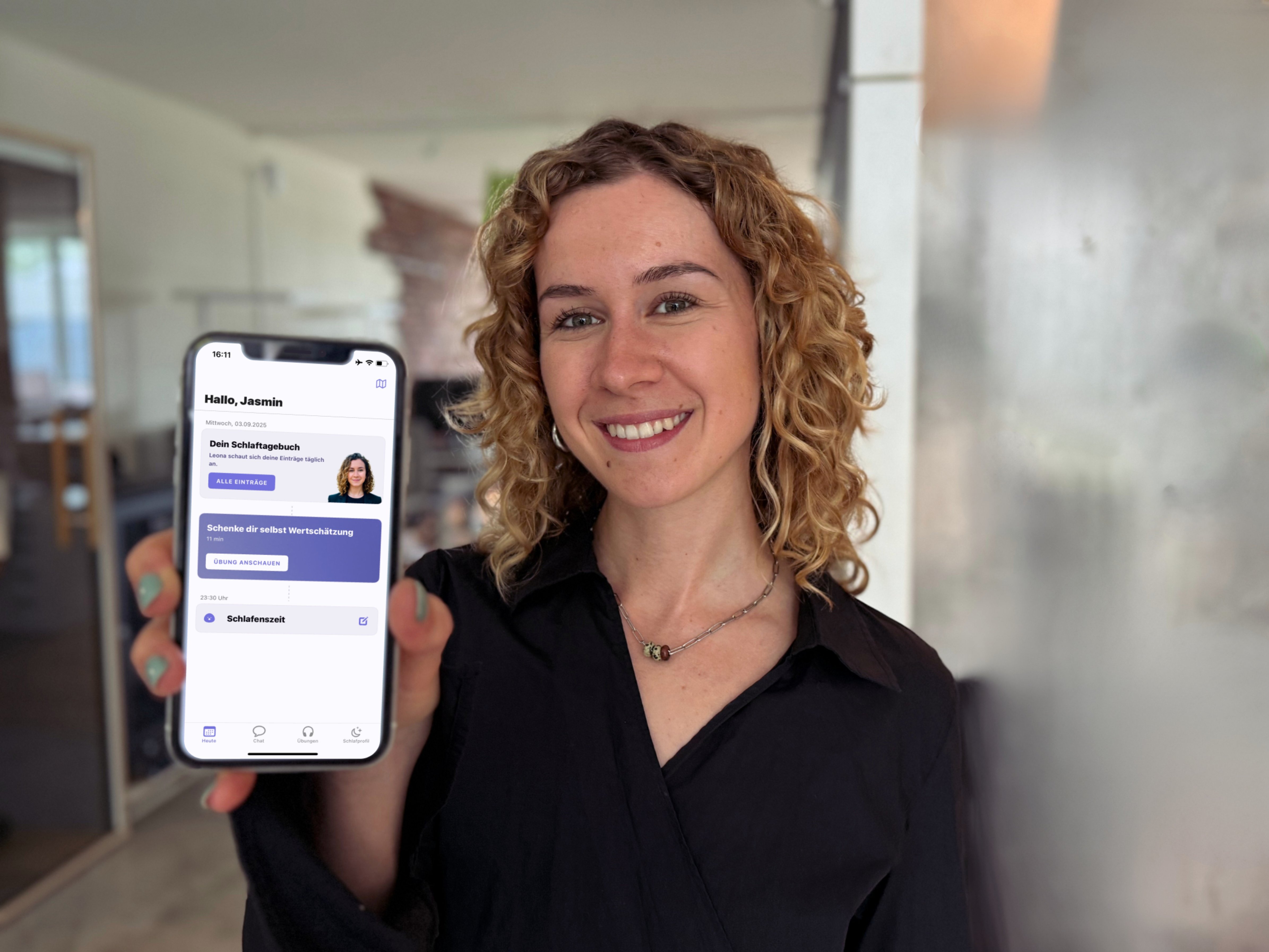
Sleep coaching typically follows a clear process, though it is tailored to each individual. It can take place both in person and digitally, for example, via an app.
Here is a typical structure:
1. Analysis Phase
- Assessment of sleep habits (e.g., bedtimes, waking patterns, rituals)
- Examination of sleep environment factors (e.g., light, noise, sleep temperature)
- Discussion of thought patterns and stressors that affect sleep
- Assessment of physical factors (e.g., sleep apnea, snoring, medical conditions)
- Defining goals and motivation
2. Individual coaching plan
- Tailored to the individual’s level of understanding, underlying causes, and life situation
- Development of specific sleep routines
- Tips for healthy sleep hygiene (e.g., managing screen time, evening activities)
- Introduction to relaxation and cognitive techniques (e.g., breathing exercises, visualizations)
- Development of self-reflection techniques (e.g., core beliefs, stress patterns)
3. Support Phase
- Usually about 1–3 sessions, as needed
- Additional support through homework, practice materials, or an app
- Regular reflection and adjustment of the plan
- Motivation and guidance
- Managing expectations to relieve pressure
Overview of methods (based on KVT-I):
- Techniques for calming the nervous system
- Developing stress management skills
- Promoting healthy routines (day & night)
- Optimizing sleep hygiene
- Recognizing personal patterns through self-reflection
- Boosting self-esteem and confidence in sleep



Recovery Blanket All Year
Available in multiple variants


Advantages & Benefits of Sleep Coaching
Do you feel like getting a good night’s sleep often falls short in practice? With sleep coaching, you no longer have to struggle through it alone. Even better: Support from qualified experts has been proven to promote long-term success (Blom et al., 2015).
Here’s why sleep coaching is worth it:
- Personalized Solutions: Everyone sleeps differently. Instead of generic tips, you’ll receive strategies tailored specifically to you.
- Holistic approach: Sleep coaching considers not only sleep itself but also daily structure, stress management, nutrition, and exercise. This addresses the root causes, not just the symptoms.
- Long-term effects: Unlike short-term measures or medication, sleep coaching aims to build stable and healthy sleep habits. Once you’ve learned the principles, you can apply them on your own.
- Motivation & Support: The guidance takes the pressure off, provides ongoing feedback, and helps you stay motivated. After all, setbacks are part of the process. This makes it easier to take the next step and not give up out of frustration.
- Evidence-Based Results: Sleep coaching is based on cognitive behavioral therapy for insomnia (CBT-I), the scientifically recognized treatment of choice for chronic or acute insomnia (van Straten et al., 2018).
I’m tired but can’t sleep: What’s behind it?


Who benefits from sleep coaching?
Are you asking yourself, “Is sleep coaching right for me?” The good news: Support from sleep experts is suitable for many people.
Take the quiz—do you belong to one of these groups?
- People who have trouble falling asleep or staying asleep
- People with non-restorative sleep or daytime sleepiness
- People with (occasional) sleep problems due to a fear of insomnia
- Parents who develop unhealthy sleep habits themselves due to their children’s irregular sleep patterns
- Athletes who are under pressure to perform and want to use sleep as a source of energy
- Working professionals with high stress levels
- People working shifts who want to stabilize their sleep rhythm


Sleep coaching vs. traditional methods
So what’s the difference between this and other methods? Traditional approaches, such as sleep training or general advice from self-help guides, often follow set rules or provide standard recommendations. They can help, but they lack flexibility and rarely take your personal circumstances into account.
Sleep coaching takes a different approach: Instead of a “one-size-fits-all” approach, the focus here is on your individuality. Together with your sleep expert, you’ll analyze your sleep habits, daily routine, and stressors. You’ll develop strategies that truly suit you. This creates a flexible, sustainable approach that supports you without pressure and provides long-term benefits.
Evening Routines for Relaxation



Costs, Certifications & Availability
The cost of sleep coaching varies depending on the provider and the scope of the program. It’s important to consider exactly what you need.
Unfortunately, there is currently no standardized certification. That’s why you should pay attention to the qualifications and experience of the sleep experts. We recommend professionals with a background in (health) psychology who have completed in-depth training in sleep health or health coaching. It’s also best to look for a connection to the cognitive behavioral therapy approach.
So, what’s the best way to get started?
Access to qualified sleep coaching is often limited locally. However, there are now hybrid options available: this means you’ll be in direct contact with your sleep expert—for example, by phone—and also engage digitally, such as via an app. This gives you flexibility, allows you to participate from anywhere, and lets you get started more quickly.


FAQ – Sleep Coaching at a Glance
Useful information
Sleep coaching is personalized support provided by sleep experts. It involves analyzing your behavioral and thought patterns, stressors, and life situation. The goal is to develop practical strategies and build confidence in your ability to sleep, helping you achieve better sleep in the long term.
To start, you’ll work with your sleep expert to analyze your overall situation. Based on this, you’ll develop a personalized plan with routines, exercises, self-reflection, and adjustments that are implemented step by step and reviewed together as you go. This helps prevent setbacks from turning into frustration.
When choosing a professional, look for experience, qualifications, and methods—ideally those related to cognitive behavioral therapy for insomnia (CBT-I). A background in psychology, such as in the field of health psychology, is ideal. This ensures that the support you receive is professional and effective.
Sleep coaching not only improves your ability to fall asleep and stay asleep, as well as your sleep quality, but also strengthens your confidence in your ability to sleep. This gives you the confidence to handle new stressors effectively and prevents you from falling back into old patterns. In the long term, you’ll feel more rested, more productive, and more confident in dealing with everyday stressors or thoughts.


Conclusion
You don’t have to wait for your sleep to improve on its own. With a professional sleep expert by your side, you’ll receive support tailored specifically to you and your needs. This empowers you to take action.
Sleep coaching is an effective and sustainable approach for anyone who wants to improve their sleep. Instead of addressing symptoms in the short term, it focuses on analyzing the root causes, practical strategies, and personalized guidance. This provides motivation, reassurance, and helps prevent frustration and relapses.
By committing to this process, you’ll not only improve your sleep but also strengthen your health, performance, and well-being—for the long term. Start with an initial consultation.
More interesting articles





Sources & Studies
Blom, K., Jernelöv, S., Kraepelien, M., Bergdahl, M. O., Jungmarker, K., Ankartjärn, L., Lindefors, N., & Kaldo, V. (2015). Guided Internet Cognitive Behavioral Therapy for Insomnia Compared to an Active Control Condition: A Randomized Controlled Trial. Behavior Research and Therapy, 70, 47–55. https://doi.org/10.1016/j.brat.2015.05.002
German Society for Sleep Research and Sleep Medicine. (2017). S3 Guideline on Non-Restorative Sleep/Sleep Disorders—Insomnia in Adults (AWMF Registry Number 063/003). https://www.awmf.org/leitlinien/detail/ll/063-003.html
van Straten, A., van der Zweerde, T., Kleiboer, A., Cuijpers, P., Morin, C. M., & Lancee, J. (2018). Cognitive and behavioral therapies in the treatment of insomnia: A meta-analysis. Sleep Medicine Reviews, 38, 3–16. https://doi.org/10.1016/j.smrv.2017.02.001