Sleep Stages in Children: What You Should Know About Your Child’s Sleep

Does your child toss and turn at night, wake up frequently, or seem exhausted in the morning? As a parent, you want the best for your child—and good sleep is the foundation for healthy development, concentration, and well-being. But what actually happens in your child’s body at night? And why do children sleep differently than adults?
The answer lies in the sleep stages, which change significantly throughout childhood. Here, you’ll learn everything you need to know about the different sleep stages in children, how they develop, and what you can do to best support your child’s sleep.

Your health insurance covers the cost so you can enjoy restful nights. Up to 100% reimbursement.
Start the children’s sleep course now

An overview of the different sleep stages in children
Whether we’re adults or children, our sleep isn’t a uniform state—it goes through different phases that repeat in a cycle. These sleep phases differ in terms of how deeply we sleep; more specifically, how easily we can be woken up and how active our bodies are during that time.
Fall-asleep phase (N1)
The falling-asleep phase is the transition from wakefulness to sleep. It lasts only a few minutes. The muscles relax, and breathing becomes calmer. During this phase, your child can still be easily woken up. Even a small noise or a touch can wake them up again.
Light Sleep Phase (N2)
Light sleep makes up the majority of the night. This is when the body begins to truly relax. The heart rate slows down, and body temperature drops slightly. In addition, the light sleep phase serves to consolidate memories. Your child is harder to wake up from this sleep phase than from the falling-asleep phase.
Deep sleep phase (N3)
Deep sleep is the most restorative phase of the night. This is when your child is hardest to wake up. The body regenerates, cells are repaired, the immune system is active, and growth hormone (somatropin) is released.
Memory consolidation also takes place during deep sleep. A distinction is made between declarative memory, which relates to facts and experienced events, and procedural memory. Here, motor skills and abilities in particular are processed and consolidated. However, individual sleep stages cannot be clearly assigned to the different types of memory. The transitions between the individual sleep phases are also relevant for memory consolidation.
Deep sleep is particularly pronounced during the first half of the night. That’s why it’s so important for your child to be able to sleep through the first half of the night as undisturbed as possible.
By the way: Sleep stages N1 through N3 are also referred to as non-REM sleep.
REM Sleep (Dream Phase)
REM stands for “Rapid Eye Movement.” The term comes from the fact that the eyes move rapidly back and forth during this phase, even though the eyelids are closed. At the same time, your child’s muscles are inactive.
REM sleep is also called dream sleep because particularly vivid, imagery-rich dreams occur during this phase. While dreams also occur during non-REM sleep, they are much more abstract than those experienced during REM sleep. During REM sleep, the brain is very active—almost as active as when awake. It is believed that REM sleep plays a role in creative problem-solving by fostering new associations.
Did you know? In early infancy, non-REM sleep (N1 to N3) and REM sleep occur in equal proportions (50 percent each). As we age, REM sleep steadily decreases—until it accounts for about 20 percent of total sleep time.
Dr. Alfred Wiater, MD, expert in pediatric sleep medicine, pediatrician, and sleep researcher

How the Sleep Cycle Differs in Children
In both children and adults, a sleep cycle consists of the various sleep stages that we go through one after another: falling asleep → light sleep → deep sleep → REM sleep. After that, the cycle starts over. Adults “sleep through” about four to six such cycles per night, each lasting 90 to 110 minutes.
In children, the sleep cycle is different:
- Newborns (0–3 months): Sleep cycles last about 50 to 60 minutes. The proportion of REM sleep—at around 50 percent—is significantly higher than in older children or adults. Sleep is distributed at regular intervals throughout the 24-hour day. The individual phases alternate in a consistent pattern.
- Infants (3–12 months): Sleep cycles gradually lengthen to over 60 minutes. The proportion of REM sleep decreases steadily. Starting at around 6 months of age, children often begin to develop a longer nighttime sleep phase and take even shorter daytime naps.
- Toddlers (1–3 years): Sleep cycles last about 60 to 90 minutes. Sleep architecture becomes increasingly mature and slowly begins to resemble that of adults, with deep sleep phases in the first half of the sleep period and more light sleep and REM sleep in the second half.
- Children aged 4 and older: The cycles, lasting 90 to 110 minutes, increasingly resemble those of adults.
Why Should You Know About Sleep Cycles?
Between individual sleep cycles, there are brief periods of wakefulness or phases during which your child may wake up more easily. This is completely normal. Many parents feel uneasy when their child wakes up briefly at night, but this is a natural part of the sleep architecture. It’s important that your child learns to fall back asleep on their own so they can sleep without sleep disturbances.
Sleep Phases by Age: How Your Child’s Sleep Develops
Sleep stages and sleep structure change significantly throughout childhood. Here you’ll find detailed information for each age group:
Sleep Stages by Age
Newborns sleep a lot (14 to 17 hours a day), but their sleep is not yet structured around day and night. They sleep in short periods of two to four hours, interrupted by periods of wakefulness and feeding.
Special characteristics of newborn sleep:
- very high proportion of REM sleep (about 50 percent)
- short sleep cycles (50 to 60 minutes)
- frequent waking between cycles
- Sleep is distributed evenly throughout the day and night.
Starting around six months, a day-night rhythm gradually develops. Nighttime sleep periods become longer, while daytime naps are reduced to two to three shorter naps.
Sleep problems in infancy are more likely to occur if a child’s sleep-wake cycle is irregular. That’s why you should try to establish regular sleep times right from the start.
Between the ages of one and three, children typically sleep 12 to 13.5 hours per day—most of that (about 10 to 12 hours) at night. In addition, there is often an afternoon nap lasting one to two hours, though many toddlers gradually stop taking this nap toward the end of this phase.
Characteristics of sleep phases and cycles in toddlers aged 1, 2, and 3:
- Deep sleep phases become more pronounced.
- Sleep cycles lengthen to 60 to 90 minutes.
- The proportion of REM sleep continues to decrease.
- Two daytime naps are reduced to one or are eliminated entirely.
Reasons for sleep problems at this age: Your child is developing imagination and fears (such as of the dark or monsters), testing boundaries, and wanting to explore their autonomy—including at bedtime. Bedtime rituals can help here. Nightmares or so-called night terrors (pavor nocturnus) may also occur for the first time during this phase. Take time for your child and establish fixed routines to create a relaxed bedtime environment.
Preschoolers need about 11.5 to 12.5 hours of sleep per night. Most children in this phase no longer take an afternoon nap.
Characteristics of sleep phases in children aged 3, 4, 5, and 6:
- Sleep cycles now closely resemble those of adults (90 to 110 minutes).
- REM sleep accounts for about 20 to 25 percent of total sleep time.
- Deep sleep phases are well-defined.
- Most children sleep through the night.
- Dreams become more intense and vivid.
Your child’s imagination develops tremendously during this phase—and so do their dreams. Some children experience vivid nightmares or are afraid of the dark. A sense of security in the bedroom is especially important now.
Elementary school children need about nine to eleven hours of sleep per night. Their sleep architecture is now fully developed and corresponds to that of adults.
Special considerations for school-age children:
- Sleep cycles last 90 to 120 minutes.
- REM sleep accounts for about 20 to 25 percent.
- Very pronounced deep sleep phases occur, especially during the first half of the night.
- Children are able to sleep through the night without waking.
The challenge at this age: School, extracurricular activities, homework, and increasing screen time can lead to your child going to bed too late and suffering from sleep deprivation. Make sure to stick to a consistent bedtime—even when the temptation and protests are strong. A soothing evening routine can help with this.
How to Optimally Support Your Child’s Sleep Cycles
Now you know how your child’s sleep cycles work. But as a parent, how can you actively help your child sleep better?
Here are the most important tips
Children need consistent routines. A regular sleep-wake cycle helps the body prepare for the night. Try to put your child to bed at the same time every night—even on weekends.
Rituals provide a sense of security and signal to the body: “It’s time for bed.” This could be reading together, a soothing bath, or soft music. Important: The last 30 to 60 minutes before bedtime should be calm and relaxed.
The blue light from tablets, smartphones, and TVs suppresses the production of the sleep hormone melatonin. You can avoid this by ensuring screen-free time at least one hour before bedtime.
- Room temperature: 18 °C is ideal.
- Darkness: Blackout curtains or blinds help darken the room.
- Quiet: Avoid loud noises. If necessary, soft background noise (white noise) can help during the transition phase into sleep.
- Fresh air: Air out the room thoroughly before going to bed.
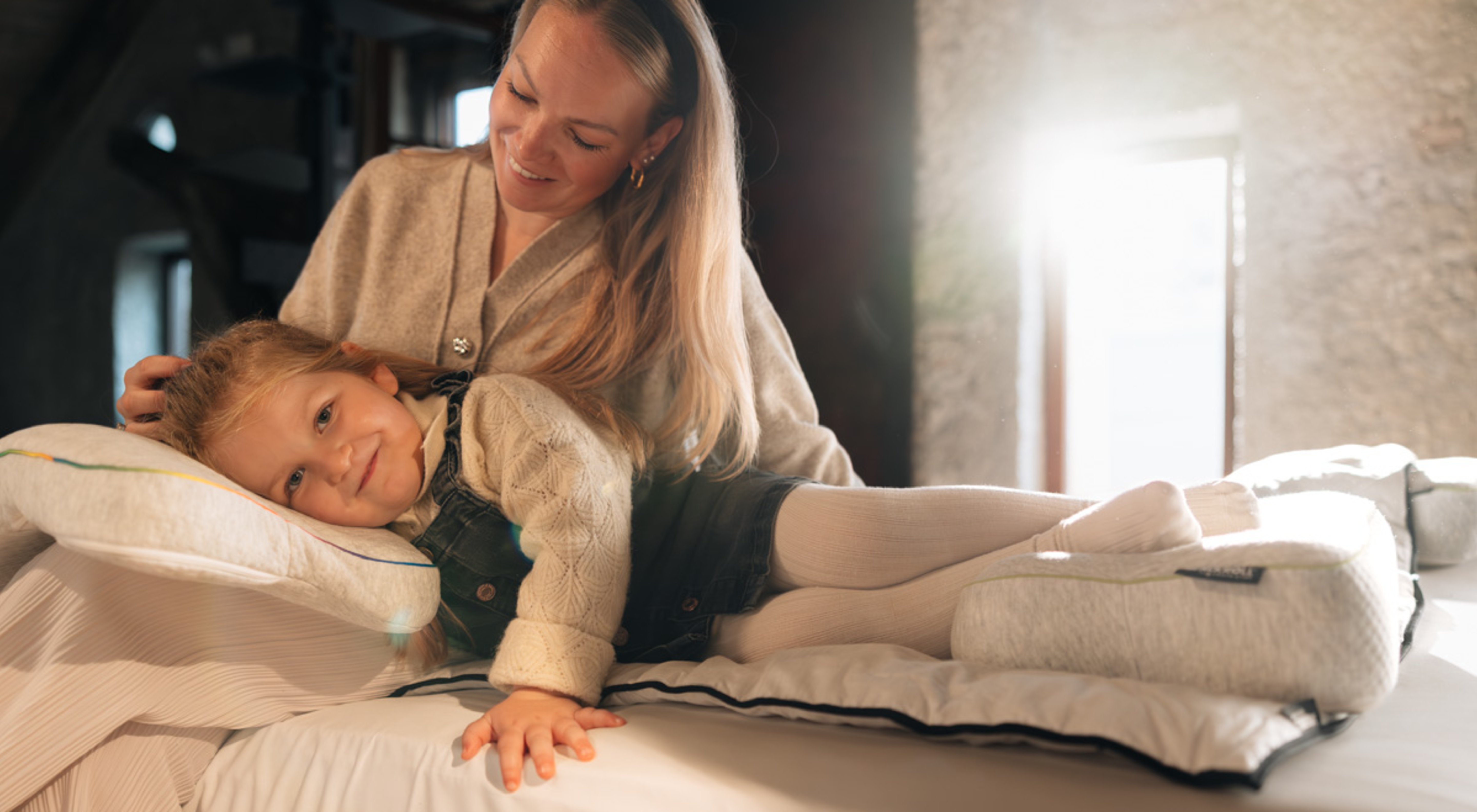
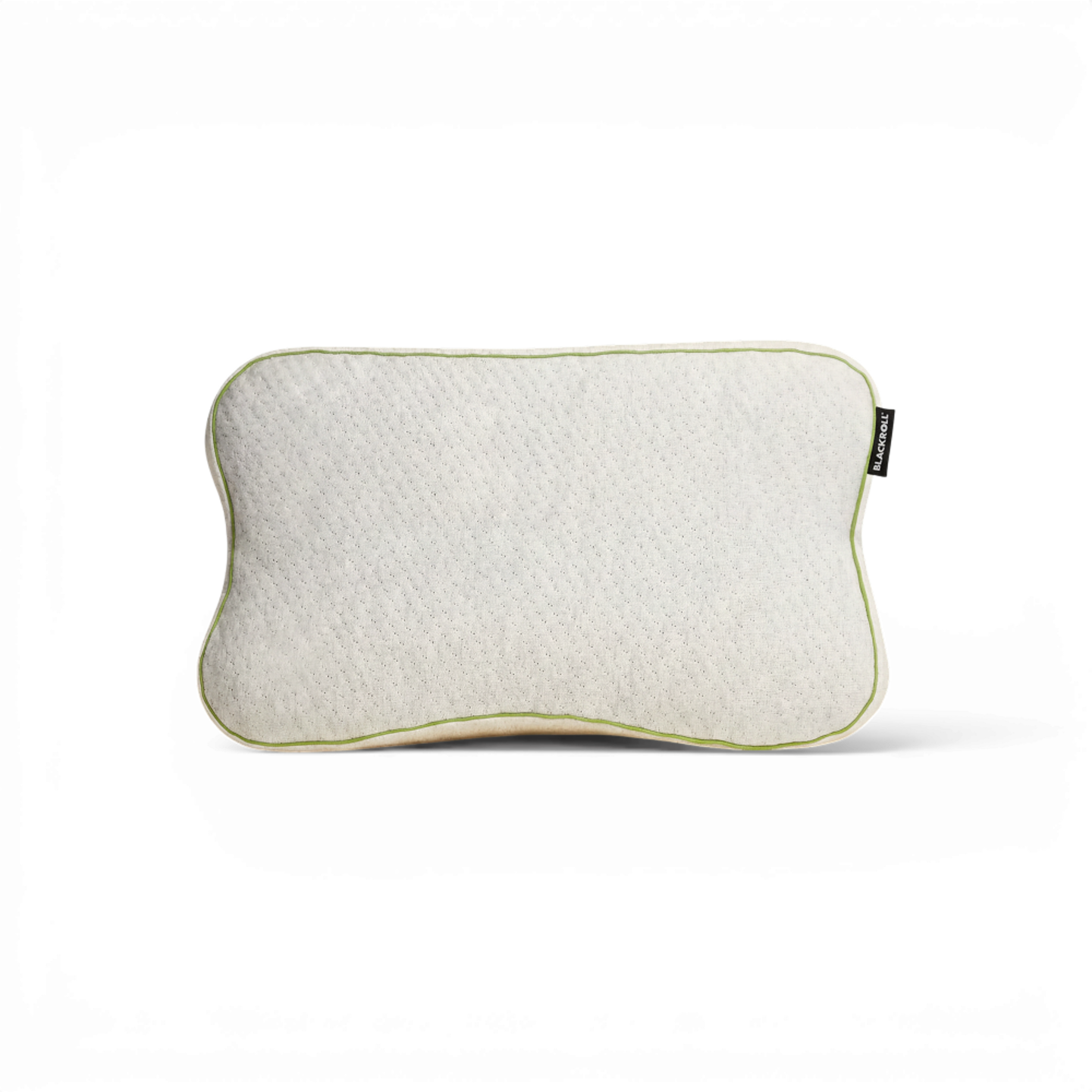
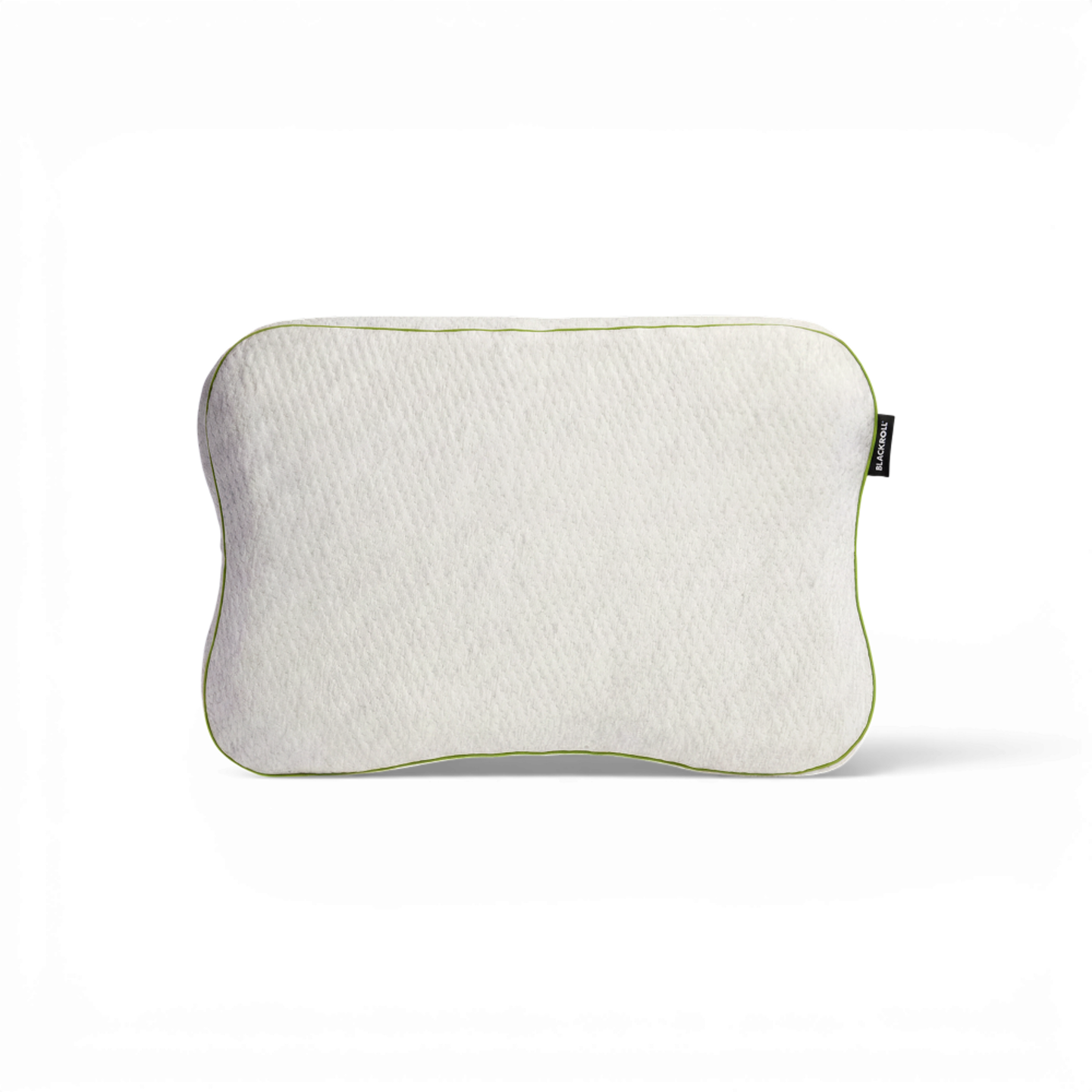
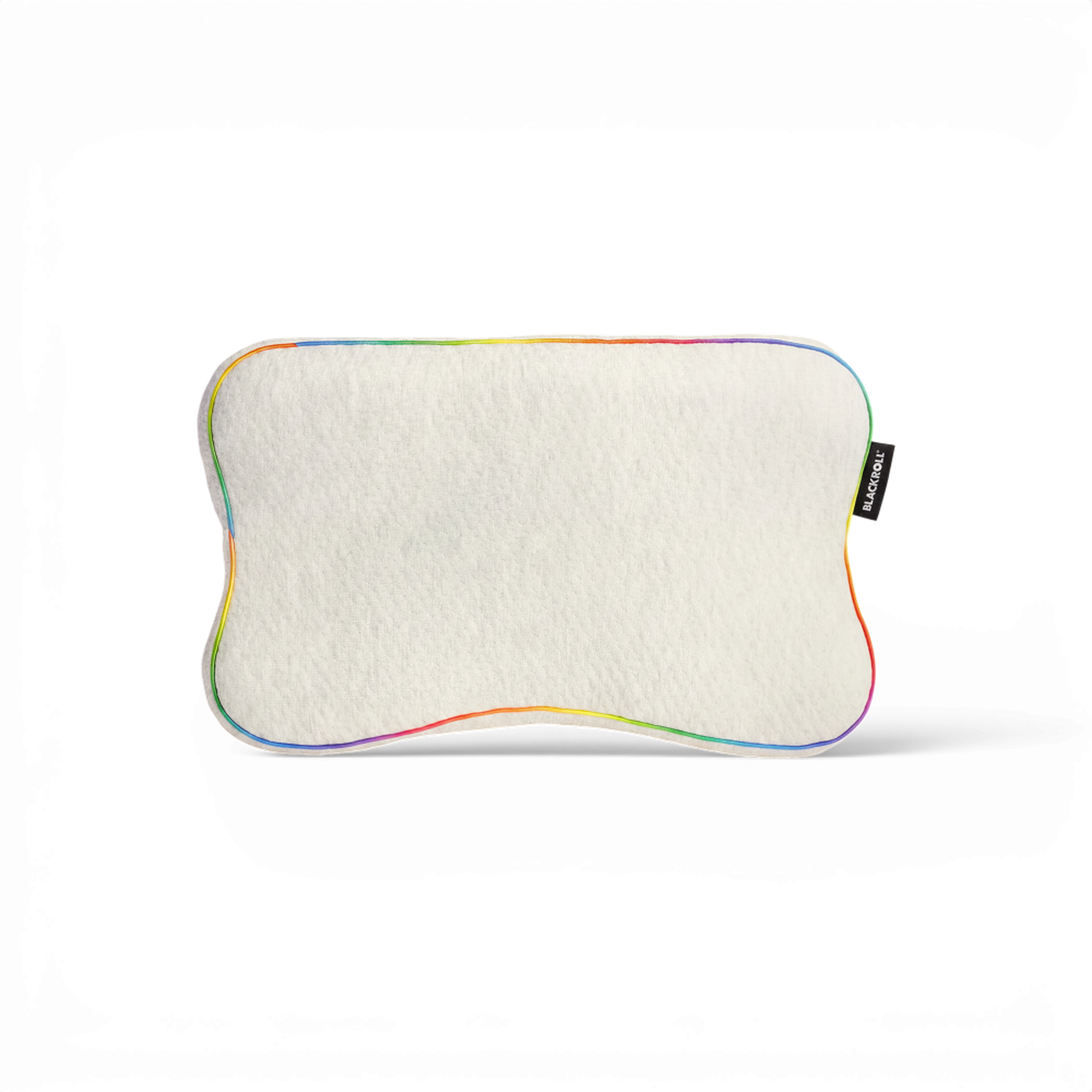
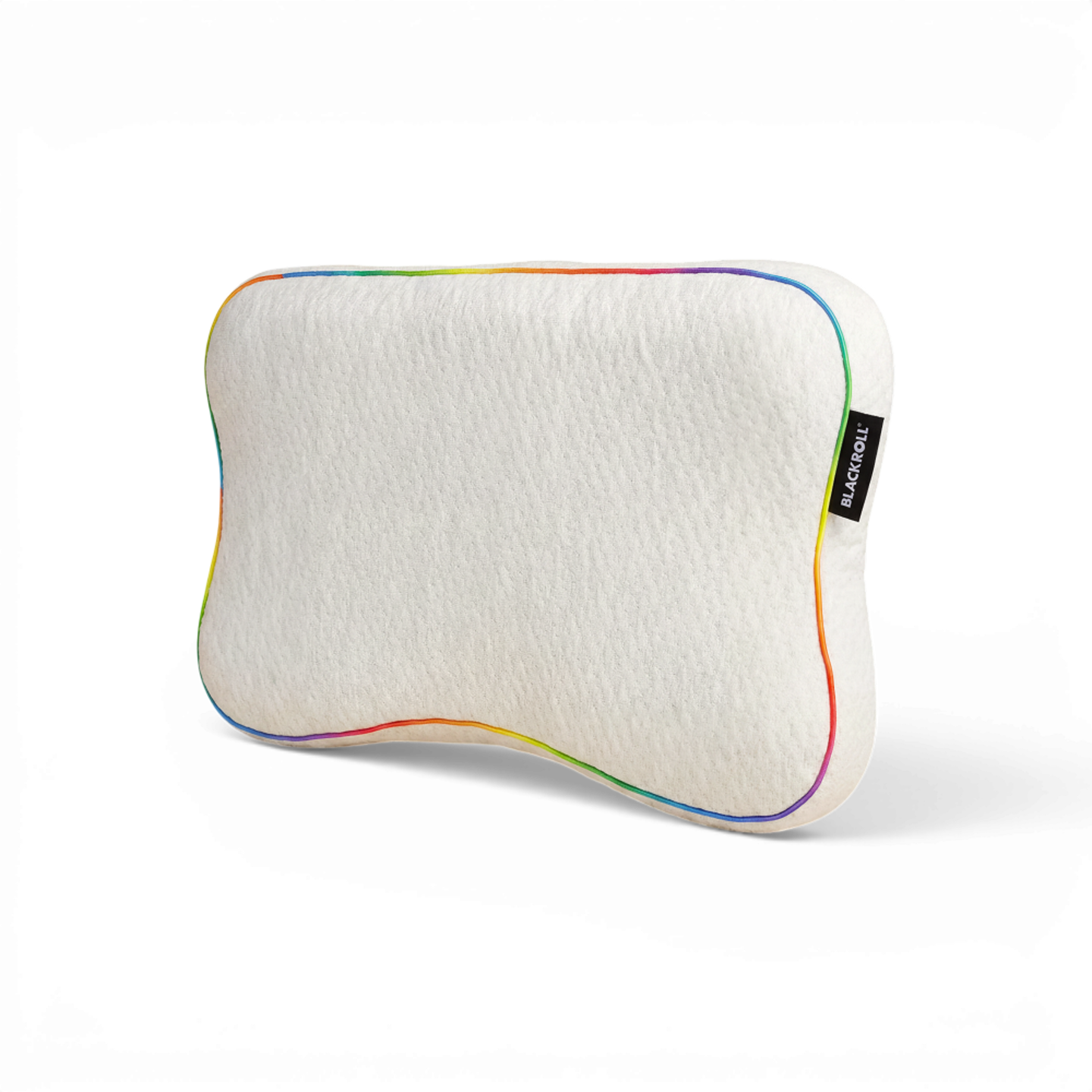
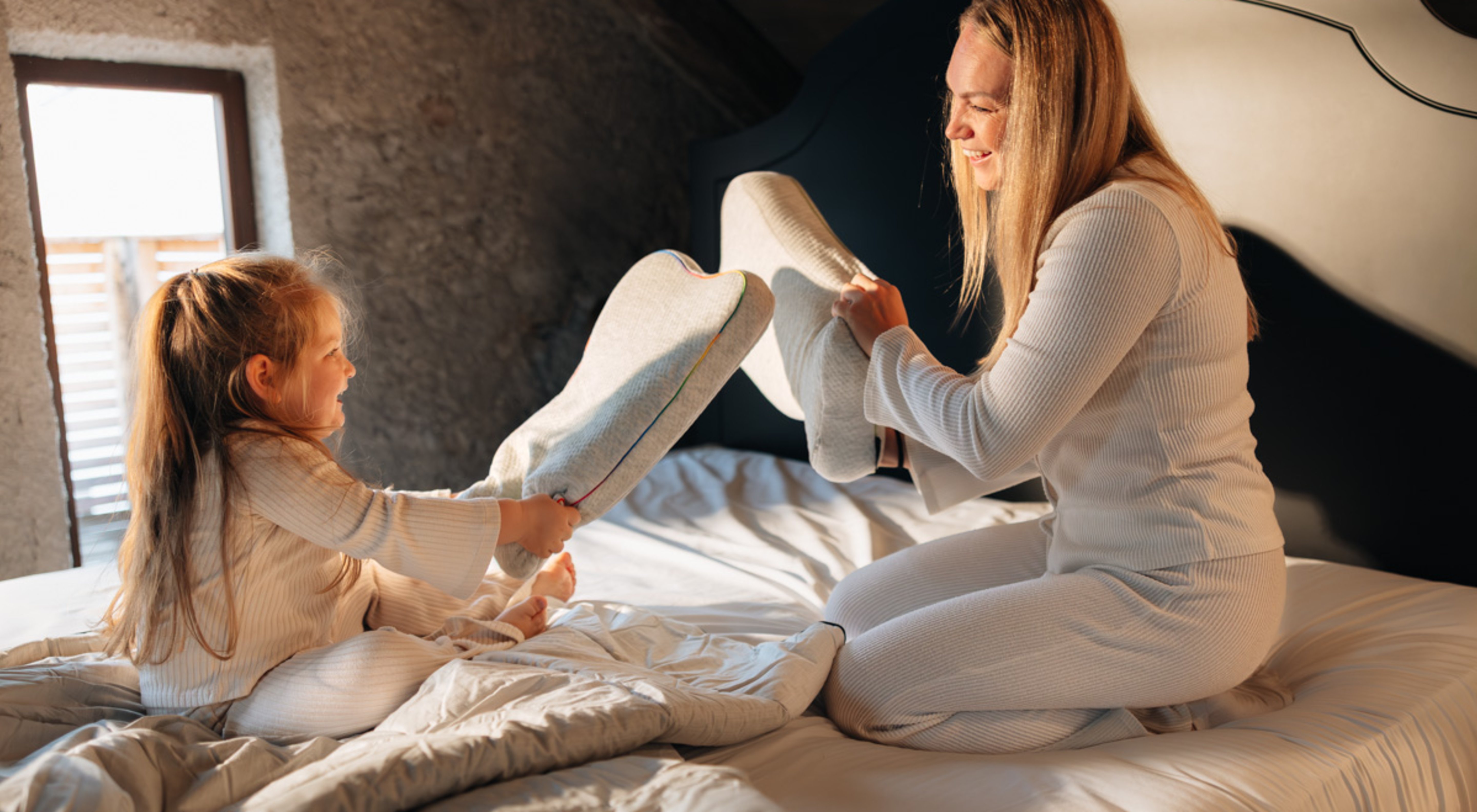
Children have a different anatomy than adults—their cervical spine is shorter, and their head is larger in proportion to their body. An adult pillow is therefore not suitable. A pillow designed specifically for children, such as the RECOVERY PILLOW KIDS, ensures that the cervical spine is optimally supported—whether your child sleeps on their back, side, or stomach.
Learn to recognize your child’s signs of tiredness: yawning, rubbing their eyes, fussiness. If you put your child to bed as soon as they’re tired (but not yet overtired), they’ll fall asleep more easily.
Children who get enough exercise during the day—especially outdoors in daylight—sleep better at night. However, make sure that intense physical activity doesn’t take place right before bedtime.

Why is sleep so important for your child’s development?
Sleep is much more than just a rest period. Especially during childhood, it fulfills essential functions that go beyond mere rest. According to the German Society for Sleep Research and Sleep Medicine (DGSM), sleep is of fundamental importance for the development of neural structures in the brain. This means that while your child is sleeping, their brain is working at full speed.
The most important functions of sleep in children:
- Growth and physical development: Growth hormone is released during deep sleep. Without enough deep sleep, your child’s growth can be impaired.
- Memory formation and learning: Information and impressions absorbed during the day are processed by the brain at night and transferred to long-term memory. This means your child learns while sleeping.
- Emotional regulation: Children who get enough sleep are better able to regulate their emotions. Lack of sleep, on the other hand, often leads to irritability, concentration problems, and mood swings.
- Immune system: The immune system regenerates during sleep. Children who sleep well are less susceptible to infections.
When looking at sleep development over the course of a person’s life, one thing stands out: the younger a person is, the more they sleep. This is no coincidence—children need more sleep because their bodies and brains are still developing.
Frequently Asked Questions About Sleep Stages in Children
That depends on their age. Newborns have sleep cycles lasting about 50 to 60 minutes and go through eight to ten cycles per night. For older children (ages four and up), the cycles last 90 to 110 minutes—similar to those of adults. Each night, a child goes through about four to six complete cycles, each consisting of light sleep, deep sleep, and REM sleep.
Brief periods of wakefulness between sleep cycles are completely normal and are part of the natural sleep architecture. It only becomes a problem if your child cannot fall back asleep on their own. Consistent bedtime routines and a soothing sleep environment help your child better navigate these transitional phases.
Children dream primarily during REM sleep. This phase is characterized by rapid eye movements and vivid, visual dreams. However, they also dream during non-REM sleep—though these dreams are more abstract and less vivid. In toddlers, the proportion of REM sleep is still significantly higher than in older children or adults.