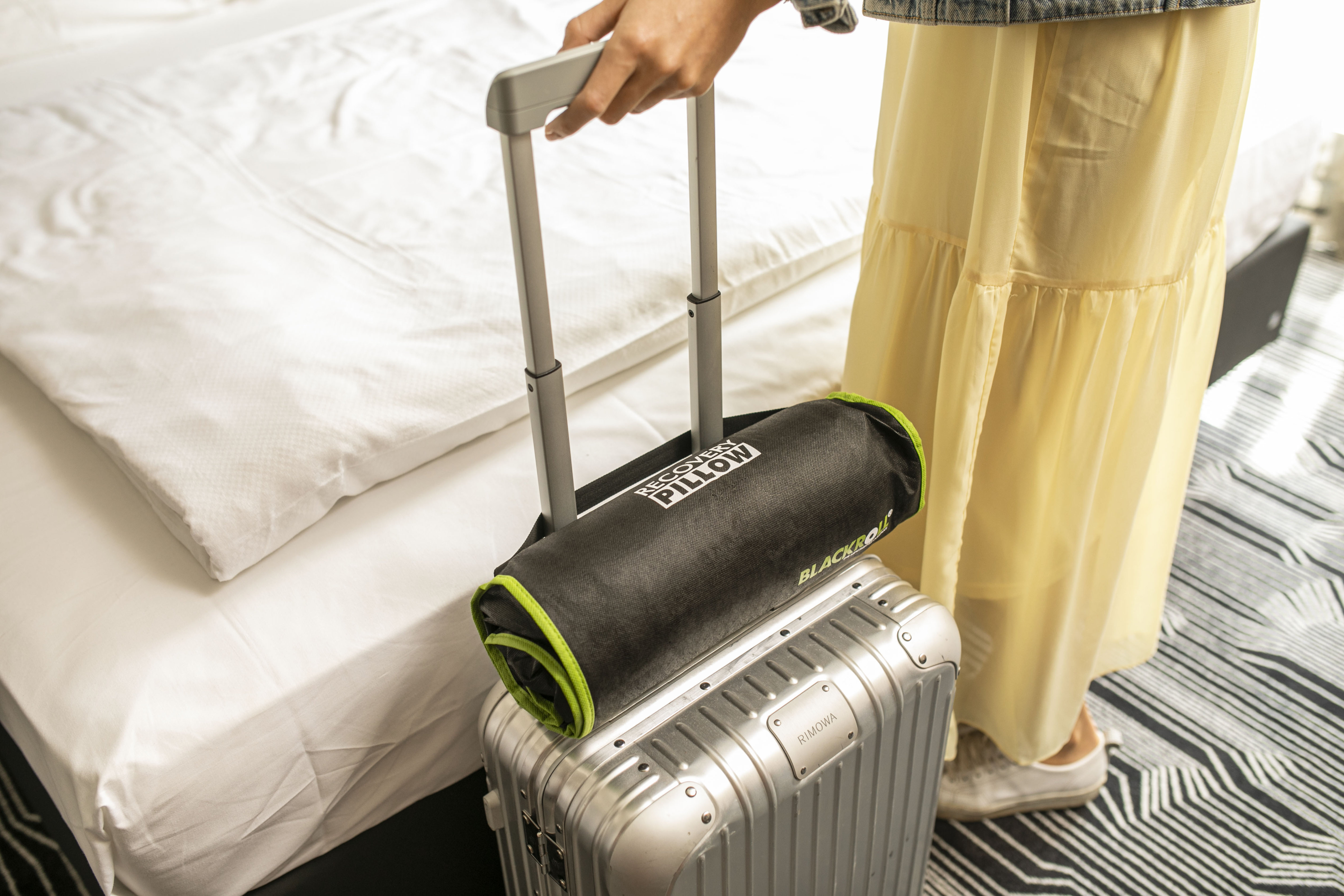
First-Night Effect: Why We Sleep Worse on Vacation

On the first night of your vacation, your brain is often more alert than it is at home. This is normal—and usually not a sign of a sleep disorder. The key now is to quickly manage light, noise, temperature, and routine.
The First Night Effect is a scientifically proven phenomenon: In unfamiliar sleeping environments, one hemisphere of the brain remains more alert than usual. The result: You sleep more lightly, wake up more often, and feel unrested the next morning. With targeted routines, this effect can be significantly mitigated.
The most important points at a glance
- The First-Night Effect describes how people often sleep worse in unfamiliar surroundings, especially on the first night.
- Typical symptoms include taking longer to fall asleep, waking up more often during the night, and having less restful sleep overall.
- One possible explanation is that the brain remains more cautious in a new environment and reacts more easily to noises.
- This phenomenon is well documented and occurs not only in sleep labs but also while traveling and on vacation.
- In most cases, sleep improves significantly starting on the second night, as the surroundings become more familiar.
01. Why You Sleep Worse on the First Night of Your Vacation
The “First Night Effect” describes how your brain remains more alert in unfamiliar surroundings. As a result, you fall asleep more easily, wake up more frequently, and feel less rested the next morning.
The phenomenon of sleeping worse while on vacation—whether at a hotel, camping, or on a business trip—or being unable to sleep in unfamiliar beds has now been scientifically studied.
Symptoms of this phenomenon include, for example, taking longer to fall asleep, as well as sleep that is more prone to disturbances and fragmented—that is, interrupted. A change in temperature is one of the possible causes of night sweats and can contribute to sweating at night. All of these factors cause us to start the new day feeling less rested in the morning.
In 2016, researchers at Brown University demonstrated that, in what is known as the “first-night effect,” the left hemisphere of the brain remains more alert than usual in unfamiliar sleeping environments. As a result, sleep becomes more sensitive to noises and stimuli—a possible evolutionary protective mechanism in unfamiliar surroundings.
But why is that the case?
In humans, this phenomenon did not simply develop by chance over the course of evolution; rather, it serves—or rather, served in the past—a purpose: If our ancestors slept in an unfamiliar cave while hunting, for example, they could never be sure that the cave’s actual inhabitant might not unexpectedly return and attack them.
Although we no longer spend the night in caves today, the effect remains the same: when sleeping in unfamiliar surroundings, our brain often doesn’t fully shut down so that it can react quickly in the event of a nasty surprise.

Sleep better, live healthier—with our sleep course. Up to 100% refund.
Discover the online sleep course nowTonight’s Plan: 10 Minutes for Better Sleep at the Hotel
- Turn off or cover light sources
- Close the curtains twice
- Cool down the room
- Reduce or mask noise
- Briefly go through your evening routine
- Put your cell phone away and start your wind-down routine
"The 'first-night effect' explains why we often sleep worse in new places: our brain stays alert. However, sticking to bedtime rituals, doing relaxation exercises, or bringing comfort items—such as your own pillow—can help you sleep well even when you’re away from home."
Dr. Fabian Krapf, sleep expert

Mini Self-Test: First-Night Effect, Jet Lag, or Stress?
Answer these questions to identify the most likely cause:
- Have you traveled across multiple time zones?
- Is this just your first night in a new place?
- Are you bothered by light, noise, temperature, or the bed?
- Are your thoughts racing, or do you feel tense inside?
- Did you have caffeine, alcohol, nicotine, or a nap late in the day?
02. When the environment is the problem
If light, noise, temperature, or an unfamiliar bed are bothering you, a quick hotel room reset can help: block out the light, reduce noise, use familiar bedtime routines, and make the bed as similar as possible to your usual setup.
Rituals can provide structure:
Try to stick to all your bedtime rituals even in unfamiliar surroundings—for example, solving a Sudoku puzzle, drinking warm milk with honey, or relaxing with a BLACKROLL®. These familiar rituals help reduce the feeling of being in a completely foreign place.
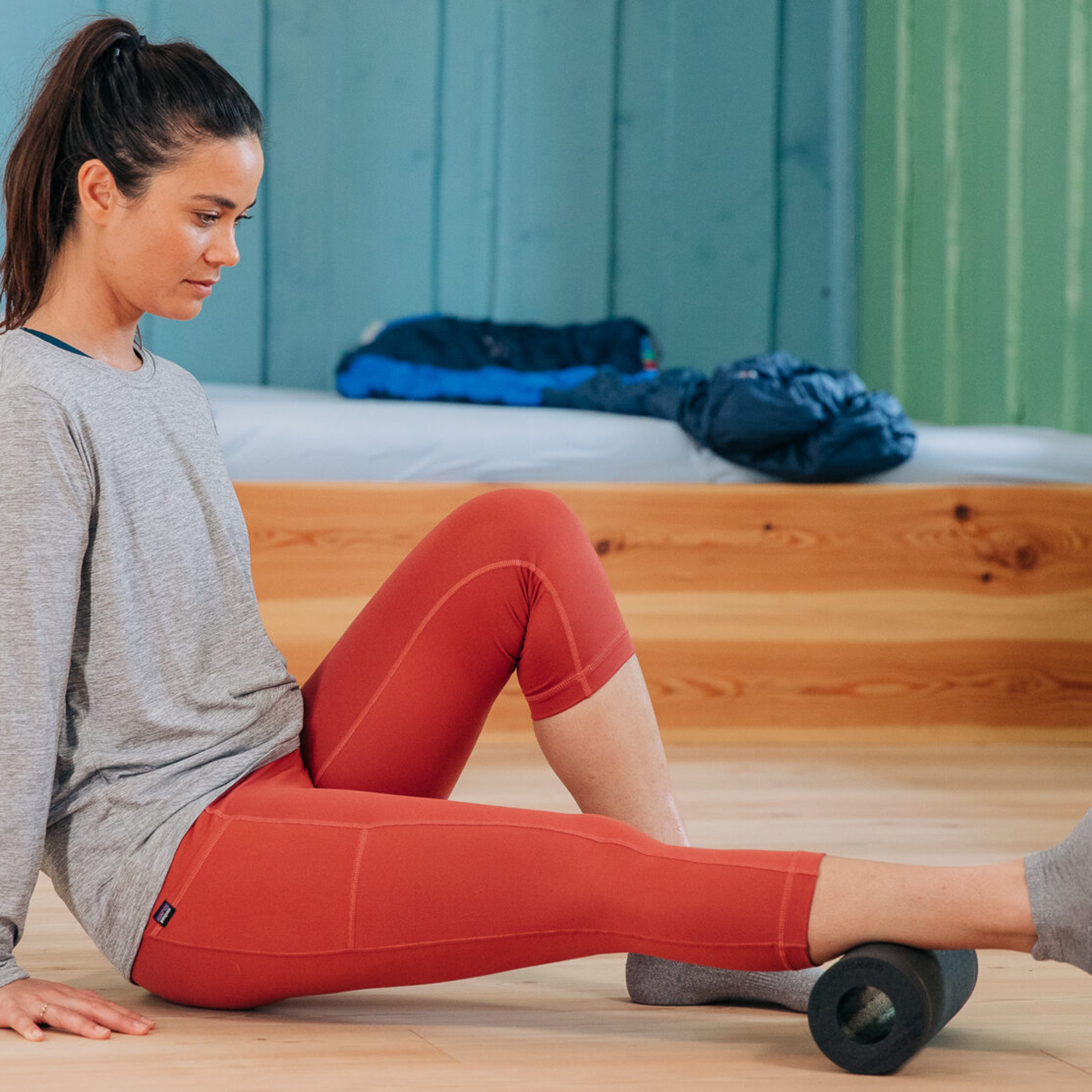
They also help you relax:
Relaxation is the soil in which restful sleep can grow. To cultivate this soil, there are various relaxation exercises you can try—from breathing exercises to autogenic training to progressive muscle relaxation.
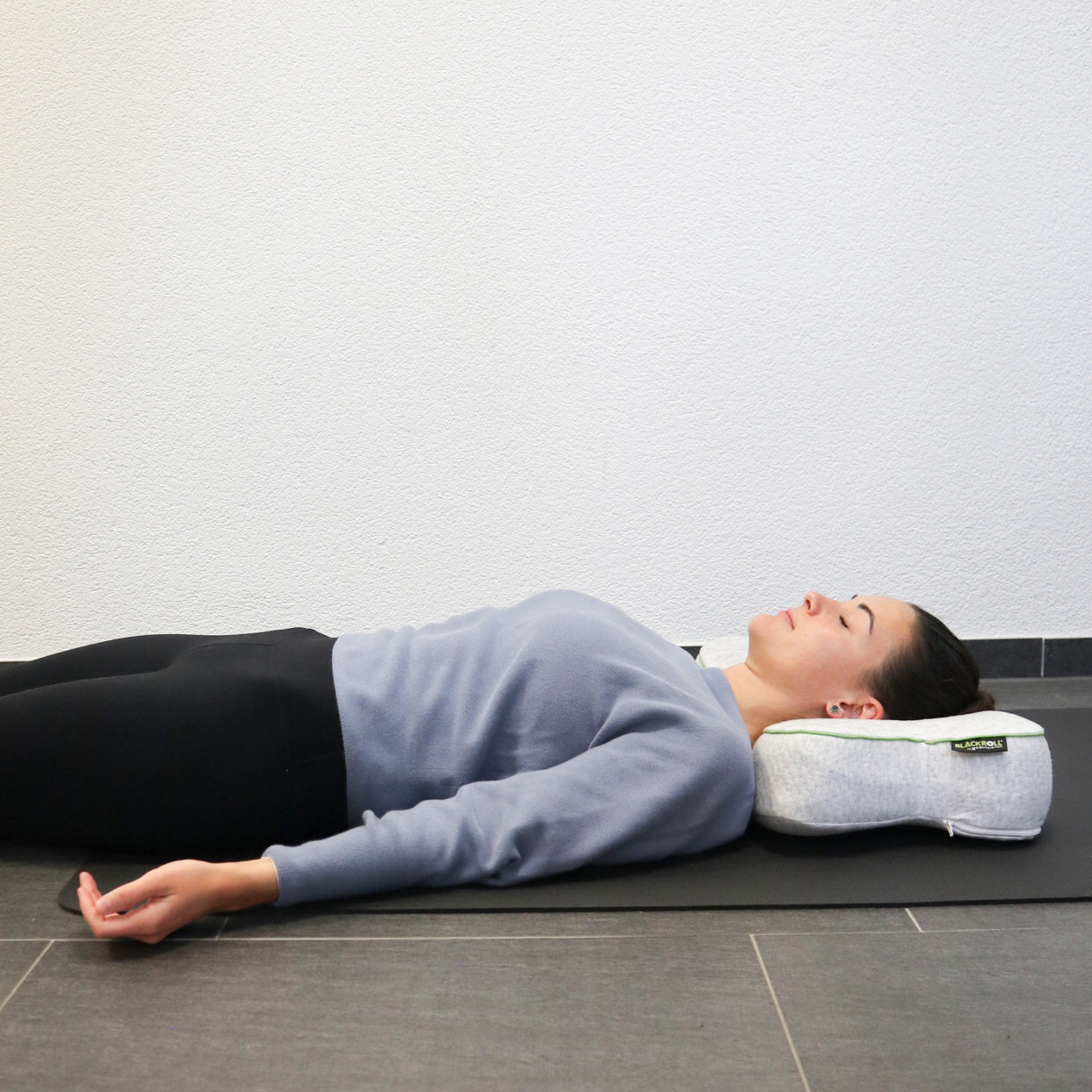
Practice makes perfect
The more we travel, the less the brain reacts to changes in the environment, which weakens the effect. So stay calm. If you travel frequently, you’ll soon hardly notice this effect at all.
Create a familiar atmosphere:
For example, place a small bag of lavender or fragrant Swiss stone pine shavings on your nightstand at home. When you travel, it’s often enough to take this bag with you to create a familiar scent while you’re away.

When you travel, bring your own travel pillowcase!
Why? The familiar feel of your pillowcase against your skin or the pleasant scent of your own fabric softener evokes a sense of home while you’re away and helps you sleep better. A travel pillow that you use frequently at home is particularly well-suited for this.
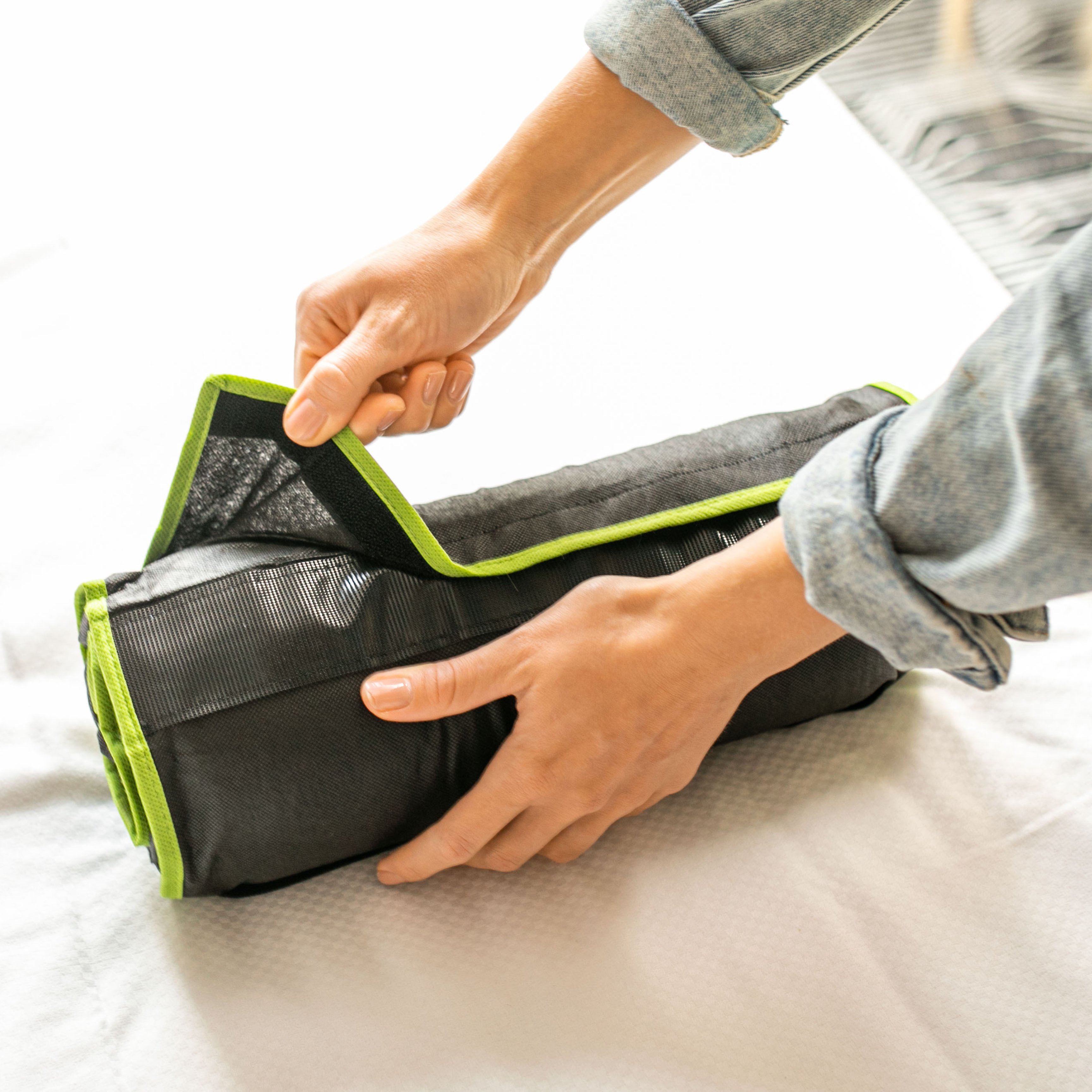
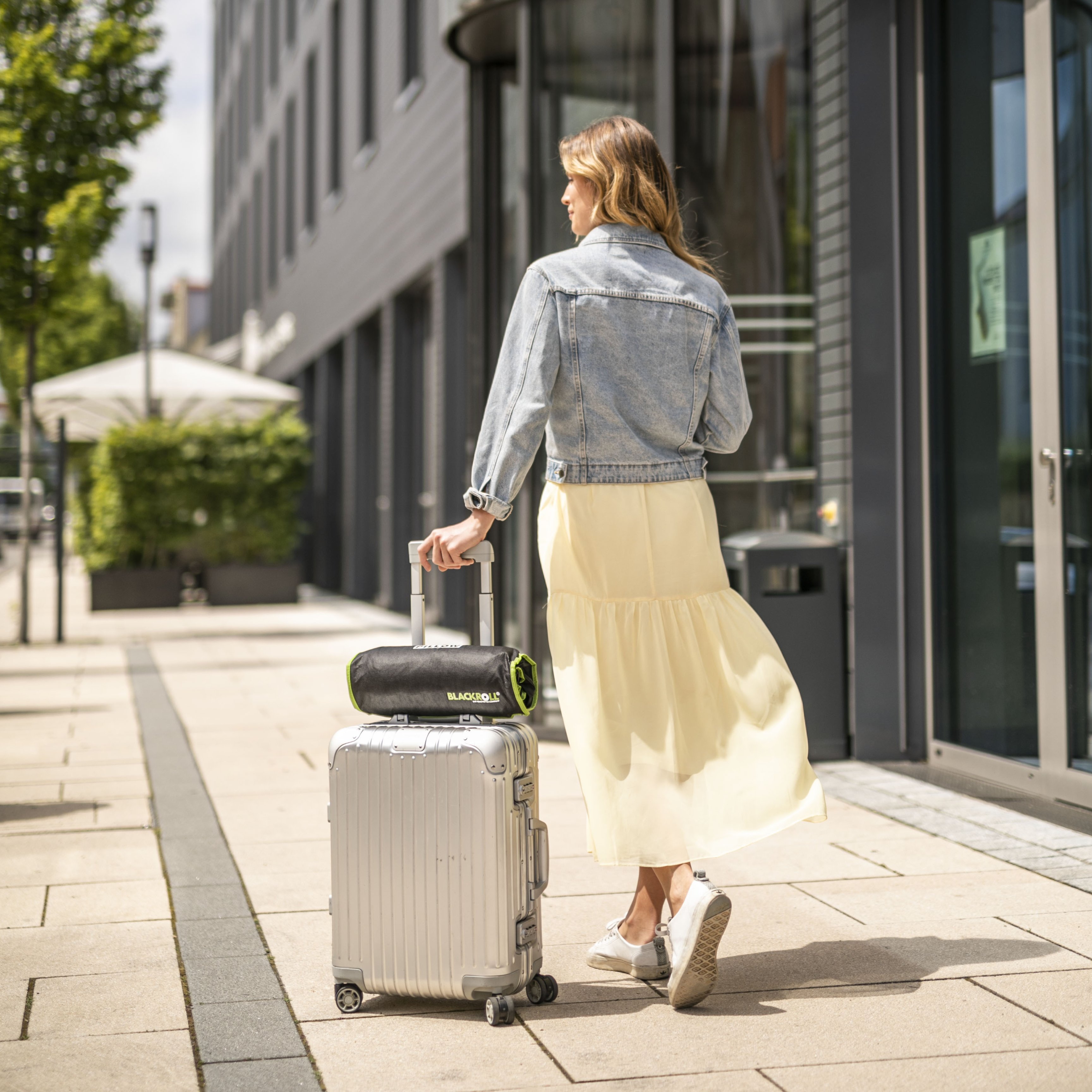
P.S. Our ergonomic neck pillow isn’t just small—it also rolls up easily in just a few simple steps. This makes it especially space-saving and ensures it fits in any luggage.
03. Hotel Night Setup — How the Pros Do It
Professional athletes sometimes spend up to 200 nights a year in hotels. To ensure that the so-called “First Night Effect”—the unconscious state of alertness in unfamiliar sleeping environments—doesn’t become a burden every night, teams rely on clear routines and familiar setup elements: their own pillow, sleep mask, controlled lighting, and sleeping conditions that remain as consistent as possible.
“When you book a night at a hotel, you’re booking a night’s sleep. You can stay at the most luxurious hotel—but if you’ve had three bad nights, your perception of the stay will drop dramatically.”
— Anna West, Sleep Performance Coach
What role does light play on the first night?
Light, in particular, is an underestimated factor here. Anna West explains that many hotels turn on all the lights the moment you insert your key card—precisely when your body and brain should actually be winding down.
Her practical recommendation: When you enter the room, briefly wear sunglasses or pull your hoodie over your head, immediately turn off all direct light sources, and use only indirect lighting.
That’s why professional teams often inspect hotels before arrival. Delegations test lighting systems, air conditioning, blackout curtains, and air quality in advance.
West is particularly critical of strong spotlights directly above the bed—a typical design element in many hotels that, while it looks high-end, can significantly impair sleep quality.
For fans and frequent travelers, the same principle applies as in professional sports: familiarity reduces stress on the nervous system.
That’s why simple measures often help surprisingly well—such as bringing your own pillow, a sleep mask, or a familiar scent from your usual sleeping environment. In addition, West recommends closing curtains twice, consistently covering light sources, and ensuring adequate hydration before falling asleep.
04. When Your Mind Won’t Shut Off
Brooding increases alertness. Instead of forcing yourself to sleep, try a short routine: dim the lights, take a warm shower, breathe more slowly, jot down your thoughts, and accept that falling asleep sometimes takes time. Click here for help falling asleep when your mind is racing
When jet lag is to blame
When dealing with time zone changes and jet lag, your internal clock is out of sync. Light, bedtime, caffeine, and naps are key. In the morning, daylight helps; in the evening, you should avoid bright light and caffeine late in the day.
What You Should Avoid Doing Today
- Using alcohol as a sleep aid
- Drinking coffee or energy drinks late in the day
- Sleeping for long periods during the day
- Keep working or scroll endlessly in bed
- Forcing yourself to sleep
When You Should Seek Medical Advice for Sleep Problems
If you have trouble falling asleep or staying asleep for several weeks, regularly notice pauses in your breathing, snore heavily, feel extremely tired during the day, or develop a fear of sleep, you should seek medical advice.
Also interesting






Sleep Products to Go
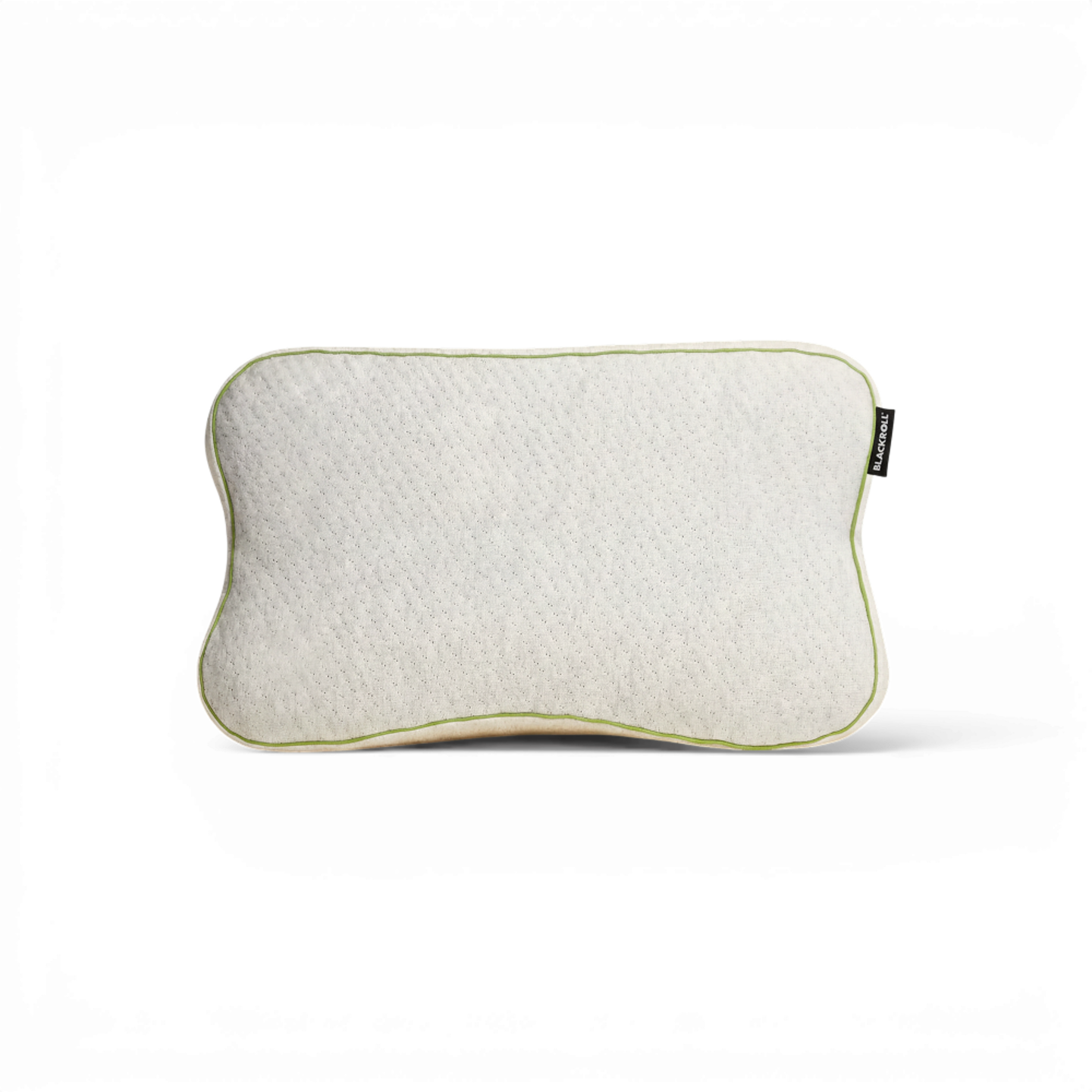
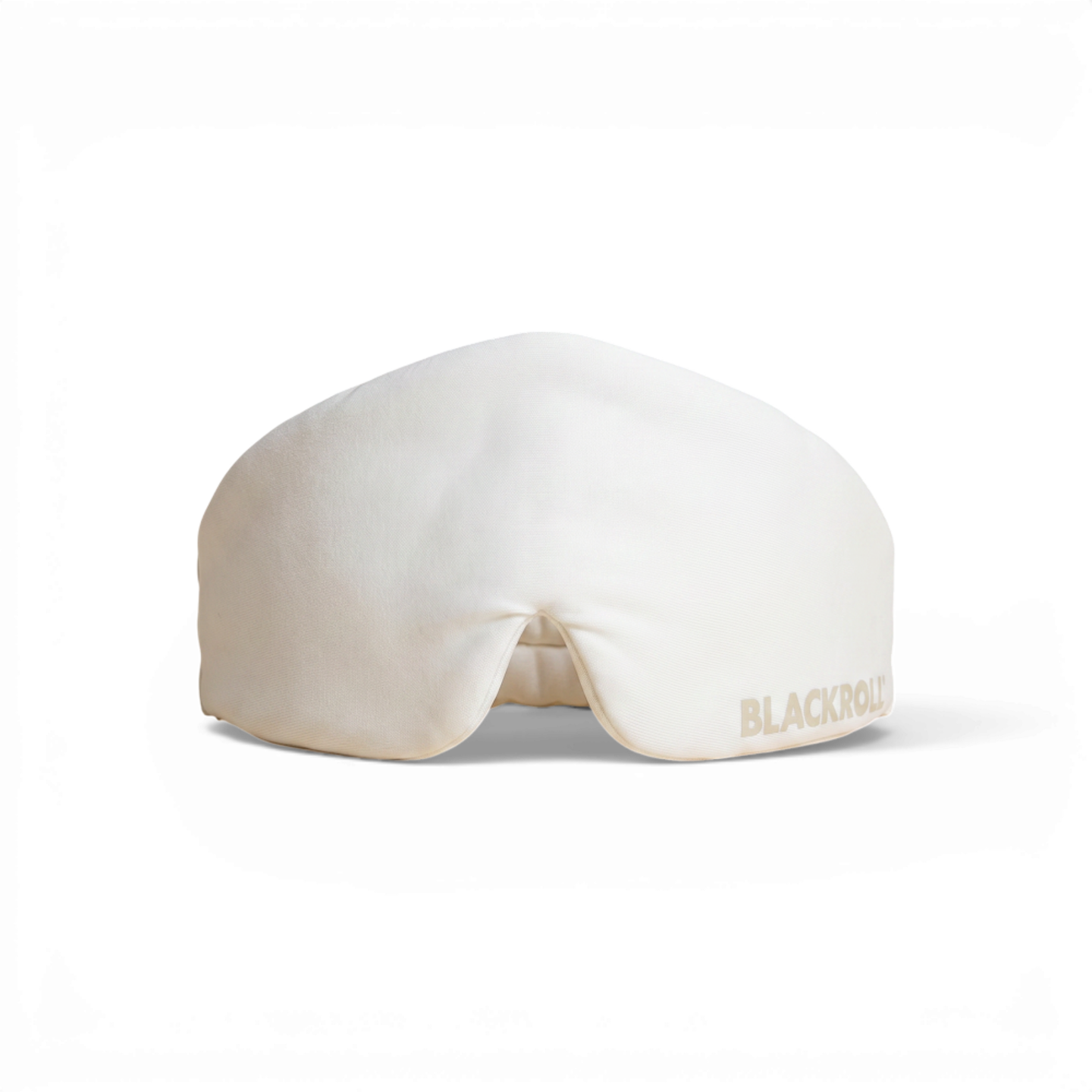
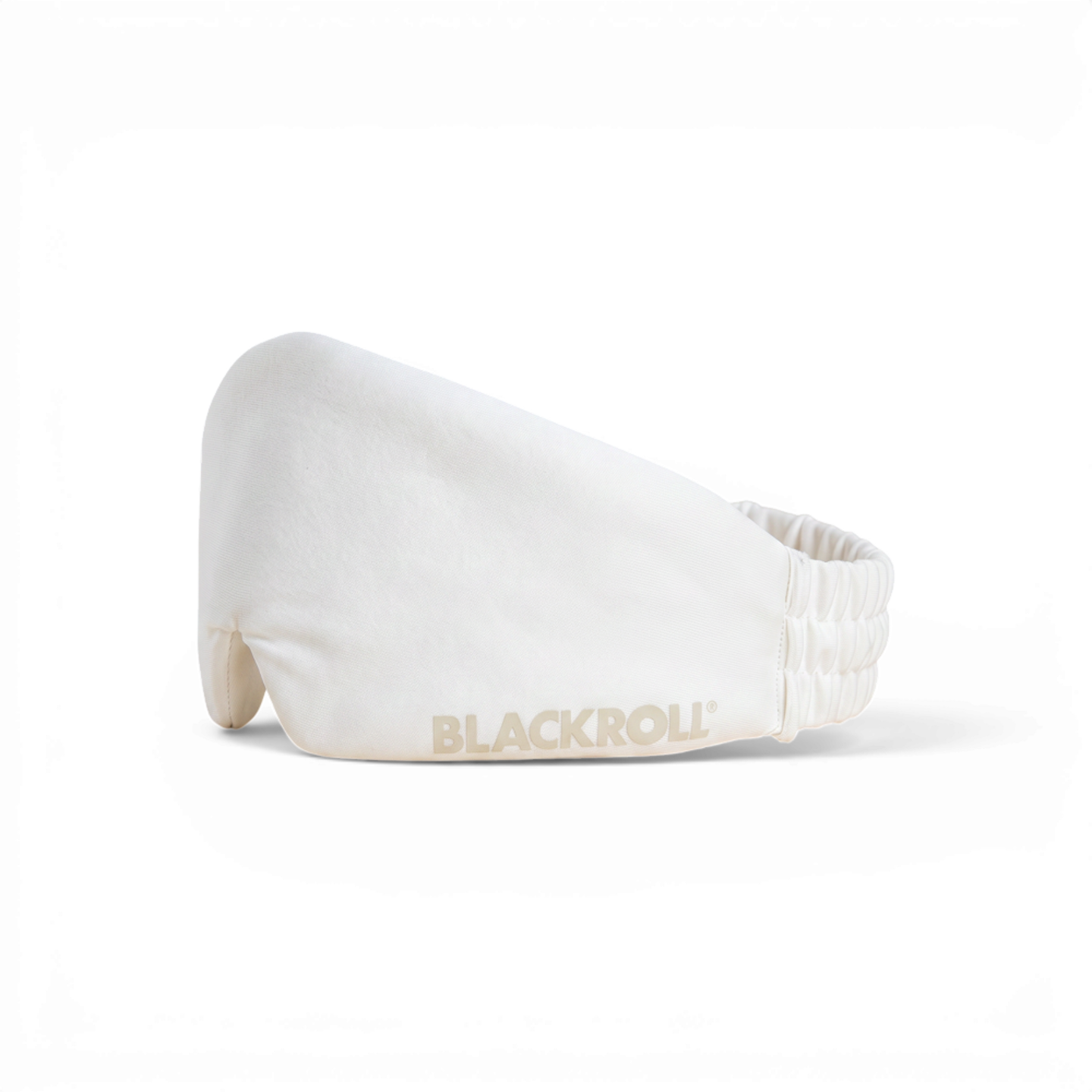
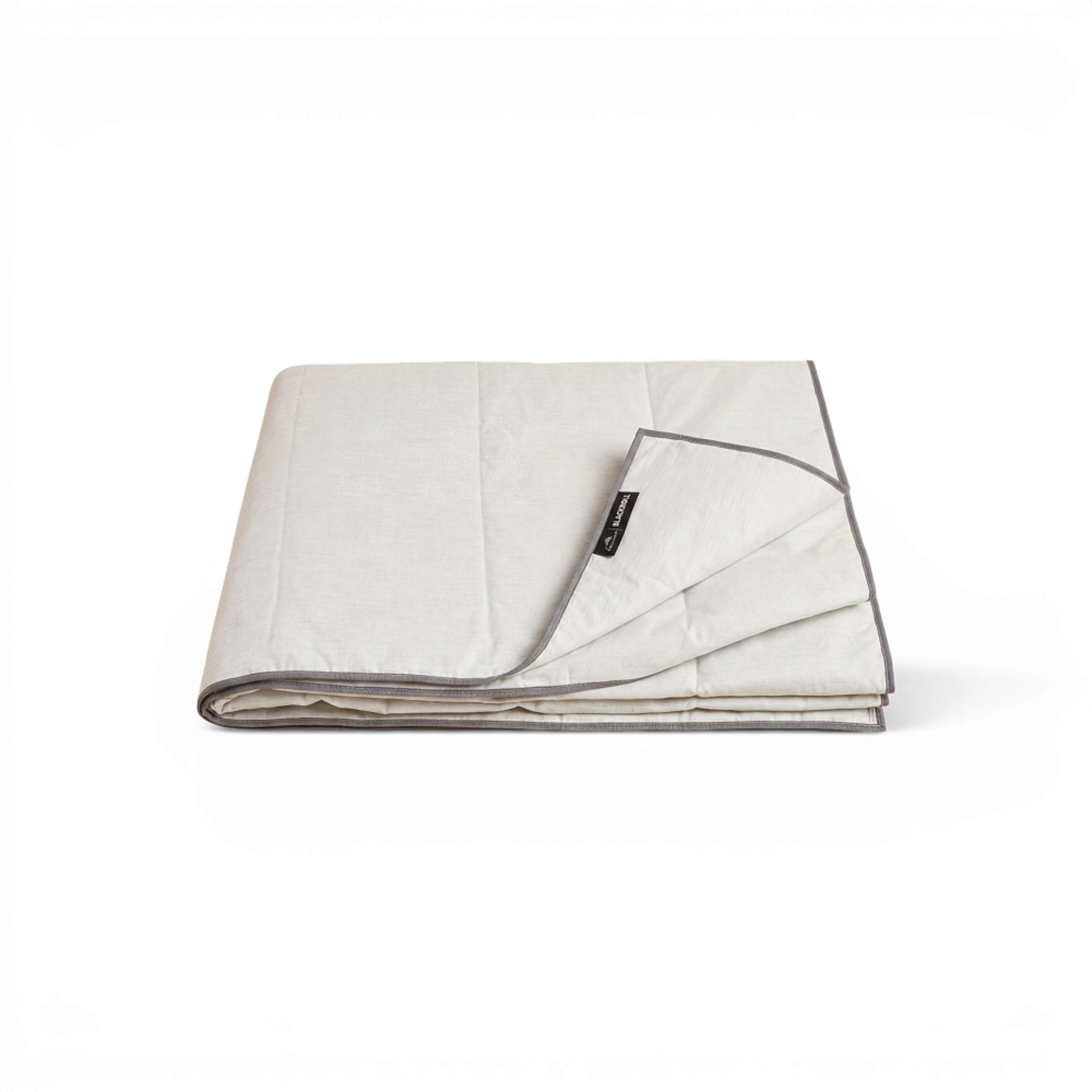
Recovery Blanket Summer
Available in multiple variants
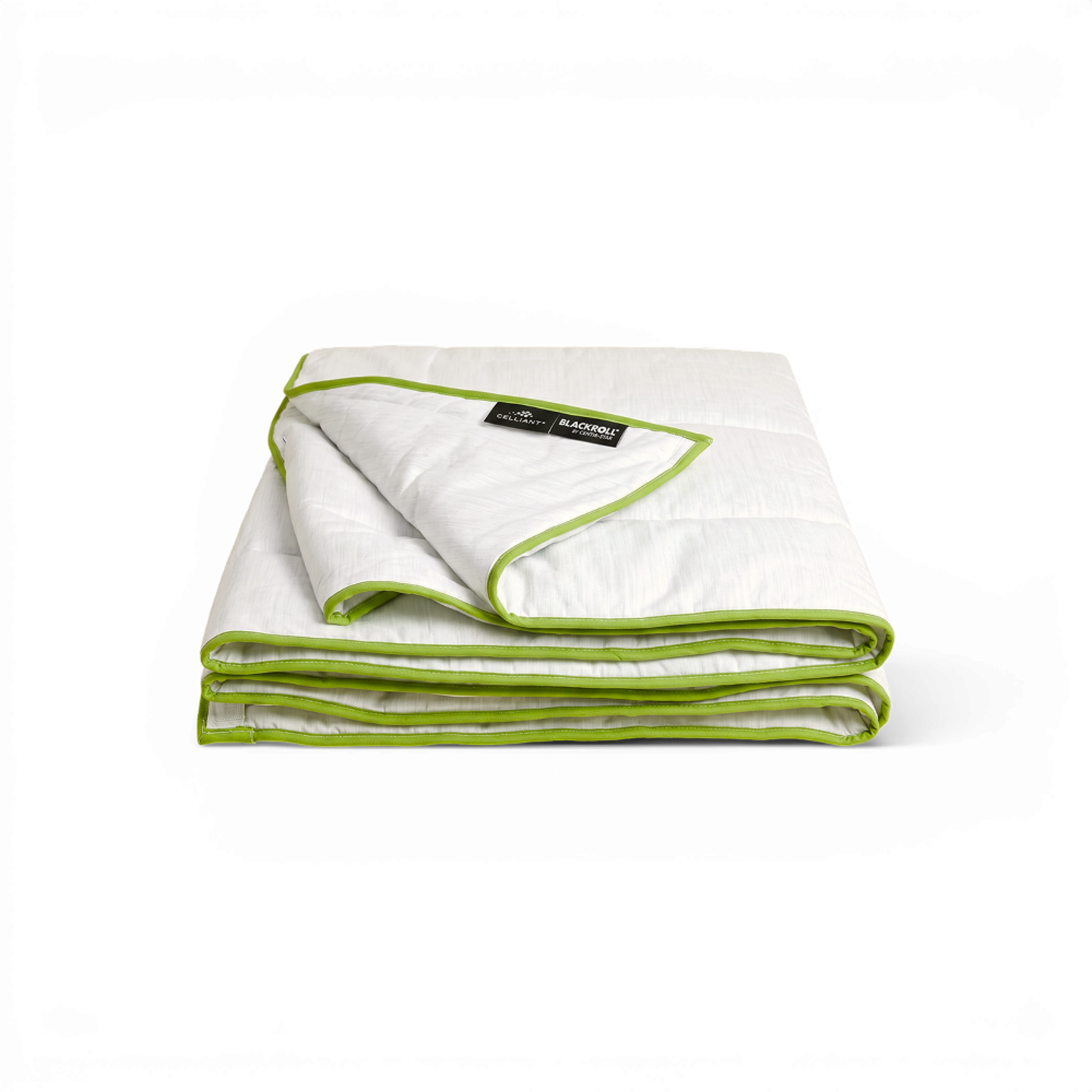
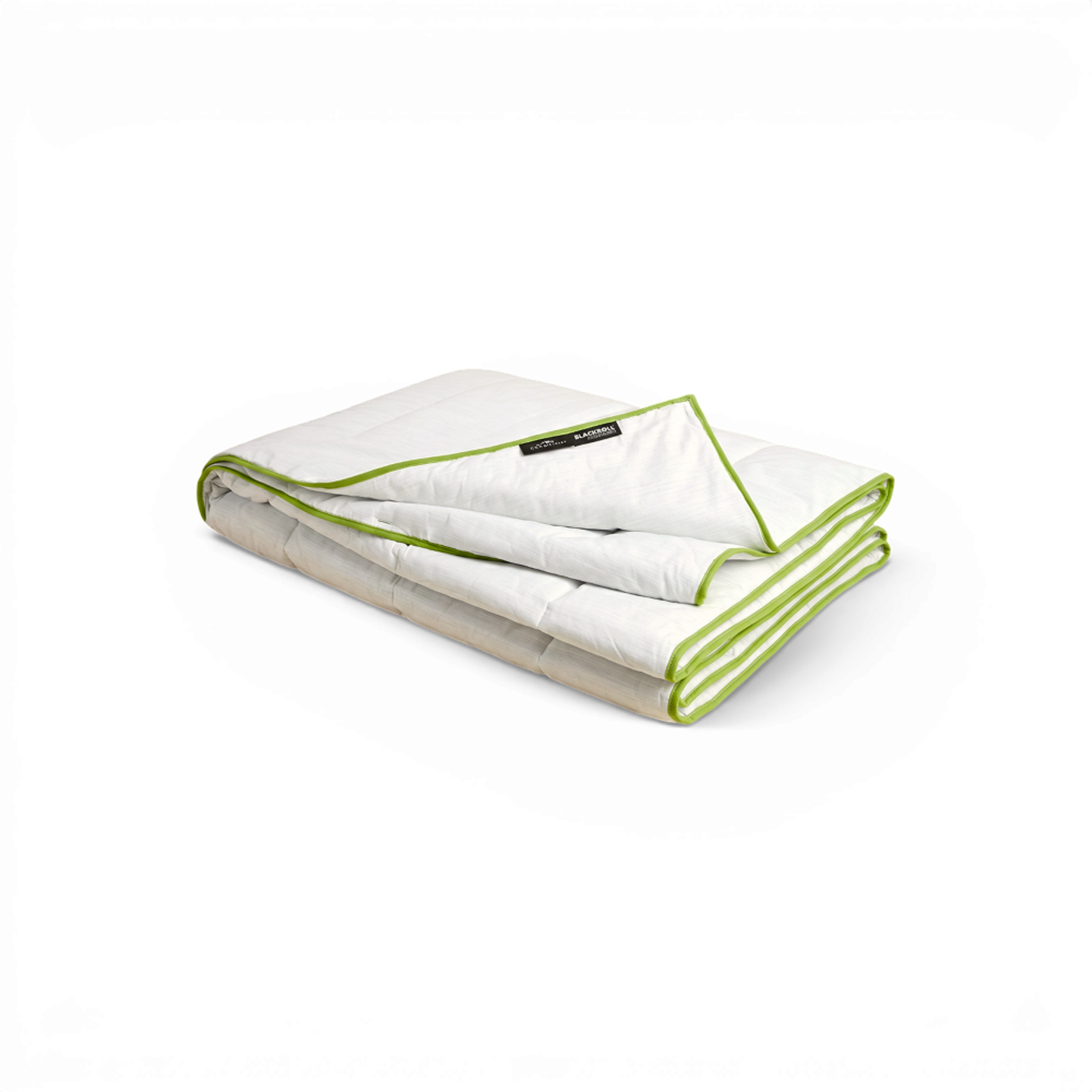
Recovery Blanket All Year
Available in multiple variants
Frequently Asked Questions About the First Night Effect
In unfamiliar environments, the brain reacts more sensitively to noise, light, and movement. From an evolutionary perspective, this increased alertness serves as a protective mechanism—but today, it often leads to restless nights in hotels.
Turn off direct light sources as soon as possible, close the curtains twice, and use a sleep mask if necessary. Especially after late-night travel or evening games, dimmed lighting helps your body wind down.
Light is the most important regulator of your internal clock. Daylight signals to the brain when it should be awake and active, while darkness promotes the release of the sleep hormone melatonin.
That’s why targeted light can help reduce jet lag more quickly: After traveling east, morning daylight is especially helpful for resetting your internal clock earlier. After traveling west, late-afternoon daylight can help you stay awake longer and shift your rhythm later.
Generally speaking, jet lag is perceived as more severe after traveling east than after traveling west. The reason: Your internal clock can shift backward more easily than it can shift forward. Simply put, it’s often easier for the body to stay awake longer than to get tired earlier.
When traveling east, you usually have to go to sleep earlier and get up earlier, even though your body is still biologically operating on the old time zone. Typical consequences include trouble falling asleep, waking up early, and increased fatigue during the day.
After traveling westward, the day tends to feel longer—which many people find somewhat easier to cope with.
References:
- Tamaki, M., Bang, J. W., Watanabe, T., & Sasaki, Y. (2016). Night watch in one brain hemisphere during sleep associated with the first-night effect in humans. Current Biology, 26(9), 1190–1194. https://doi.org/10.1016/j.cub.2016.01.063
- Wick, N., Combertaldi, S., & Rasch, B. (2024). The first-night effect of sleep occurs over nonconsecutive nights in unfamiliar and familiar environments. Sleep. https://pubmed.ncbi.nlm.nih.gov/38457510/
- Herxheimer, A., & Petrie, K. J. (2002). Melatonin for the prevention and treatment of jet lag. Cochrane Database of Systematic Reviews, (2), CD001520. https://doi.org/10.1002/14651858.CD001520
- National Institutes of Health. (April 26, 2016). Explaining the traveler’s first-night sleep problem. NIH Director’s Blog. https://directorsblog.nih.gov/2016/04/26/explaining-the-travelers-first-night-sleep-problem/
- University of Fribourg. (December 31, 2023). Why do we sleep poorly in new places? https://www.unifr.ch/dokpe/en/news/news/31988/trad/
- Brown University. (April 20, 2016). Asleep somewhere new, one brain hemisphere keeps watch. https://www.brown.edu/news/2016-04-21/sleep