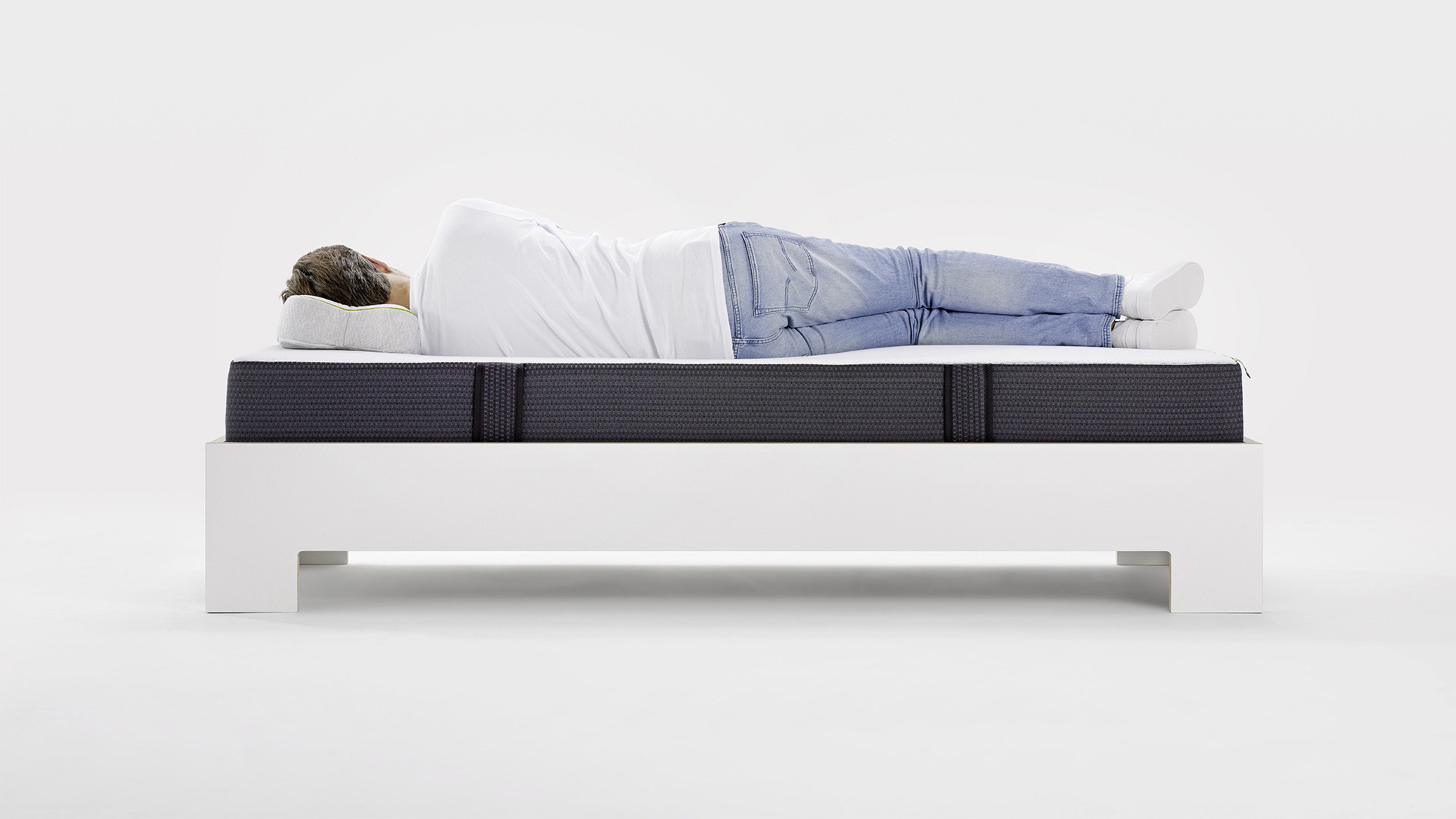
Mattress Firmness: How to Make the Right Choice

Stefan Schneider
In this article
When buying a mattress, there are several factors you should consider. It’s one of the most important purchases you’ll make for your health. After all, you spend a third of your life on your mattress. Firmness is one of the most important characteristics to consider before making a purchase.
Your mattress’s firmness level plays a key role in your sleep, health, and well-being. The right firmness level supports proper spinal alignment without creating uncomfortable pressure points—which is exactly how you should be sleeping. A mattress that’s too soft or too firm can lead to muscle tension, back pain, and other issues.
In this article, you’ll learn about the different mattress firmness levels and which one is right for your individual sleeping comfort.
What does “firmness level” mean when it comes to mattresses?
Firmness is a measure that indicates how soft or firm a mattress feels. However, mattress firmness levels are not standardized and can vary from manufacturer to manufacturer. A mattress’s firmness rating therefore serves only as a rough guide.
Whether a mattress feels firm or soft depends on factors such as material and construction. The ways in which mattresses can be constructed are very diverse. Commonly used materials include innerspring cores, cold foam, memory foam, gel foam, and latex. Thicker mattress systems made of conforming materials give the mattress a softer feel. Systems made of thinner layers and less conforming materials give the mattress a firmer surface.
In addition to mattress firmness, there are, of course, other factors such as durability and temperature management that influence sleep comfort.
What are the different firmness levels for mattresses?
The different firmness levels of mattresses are usually abbreviated with the letter H. H1 stands for very soft, H2 for soft, H3 for medium, H4 for firm, and H5 for very firm. In some cases, the letter H for firmness is replaced by the letter F for firmness. The most common mattress firmness levels are H2 and H3.

What is the difference in mattress firmness?
As mentioned earlier, firmness ratings are not standardized. Some manufacturers distinguish between only two different firmness levels, while others offer models with five different levels of firmness. Therefore, the firmness rating from two different manufacturers does not necessarily indicate the same level of firmness for the mattress. It is possible that an H1 mattress from Manufacturer A is firmer than an H2 mattress from Manufacturer B.
Even firmness ratings from the same manufacturer do not provide a reliable basis for comparison. For example, a spring mattress rated H2 might be firmer than a latex mattress rated H2.
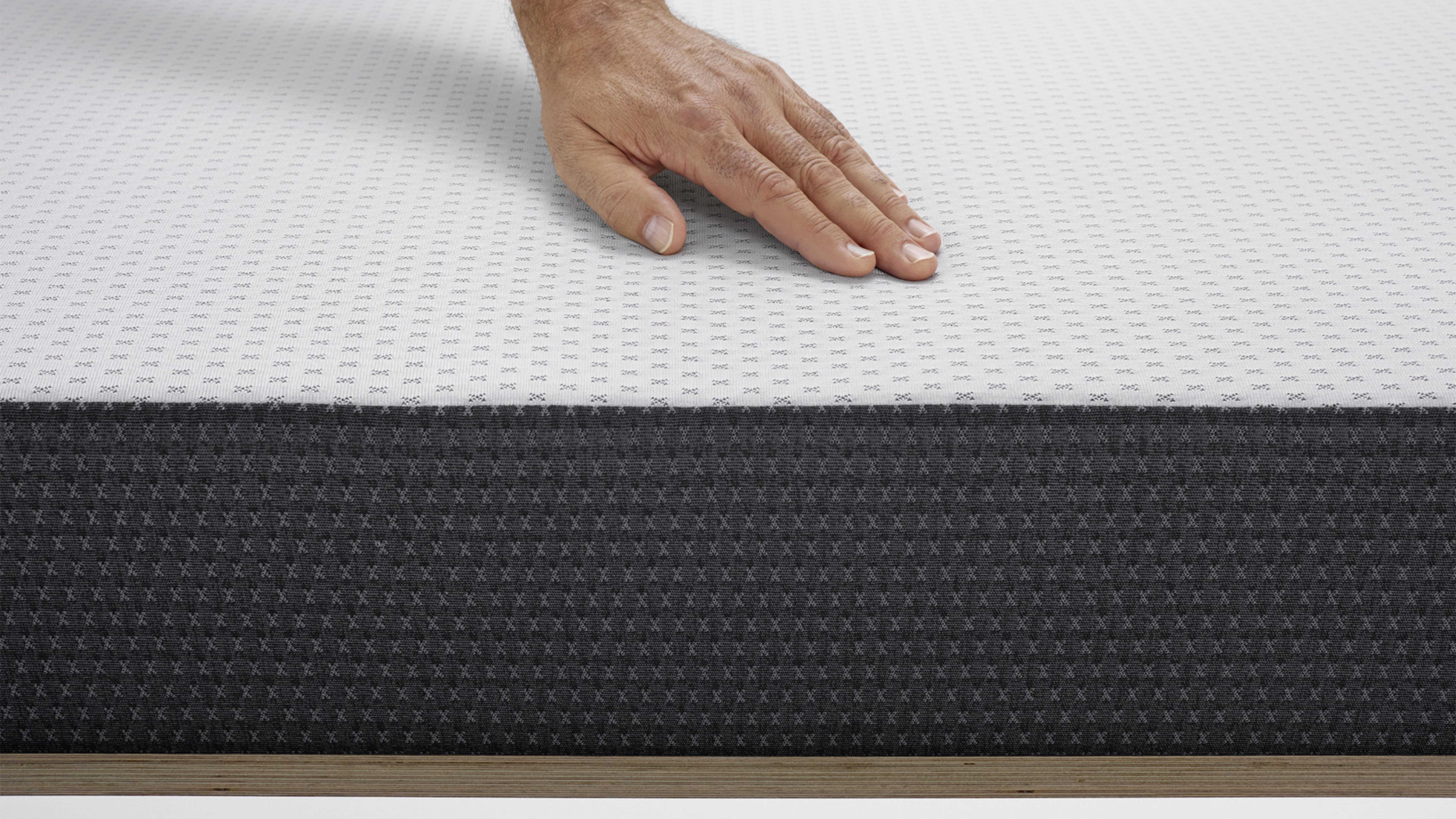
Hard or Soft Mattress—Which Is Healthier?
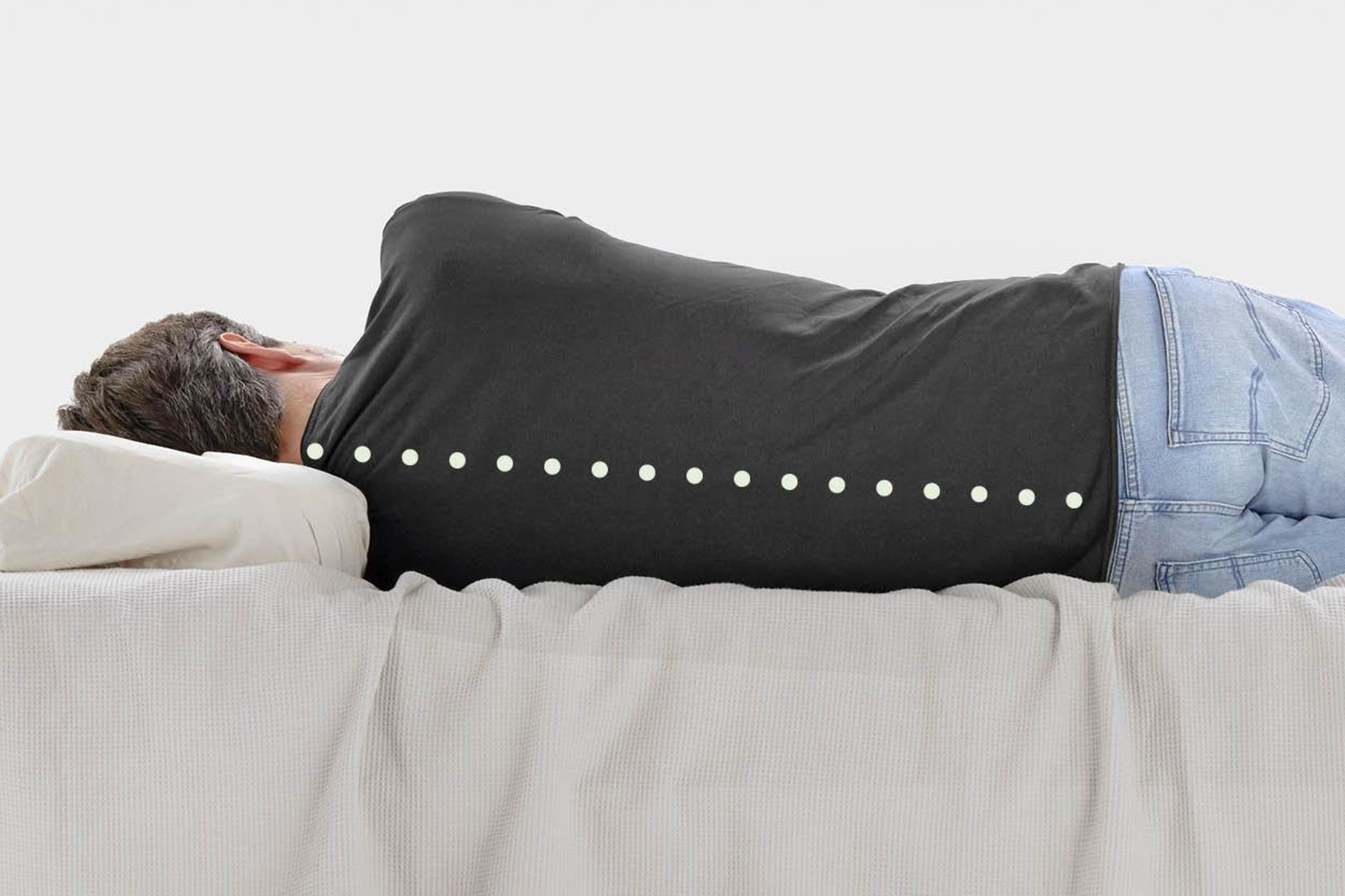
There’s no one-size-fits-all answer to this question. A mattress is healthy if it’s tailored to your body. The alignment of your spine plays a key role here. Your spine’s natural alignment should be maintained, regardless of whether you sleep on your side, stomach, or back.
This can be illustrated using the example of a side sleeper.
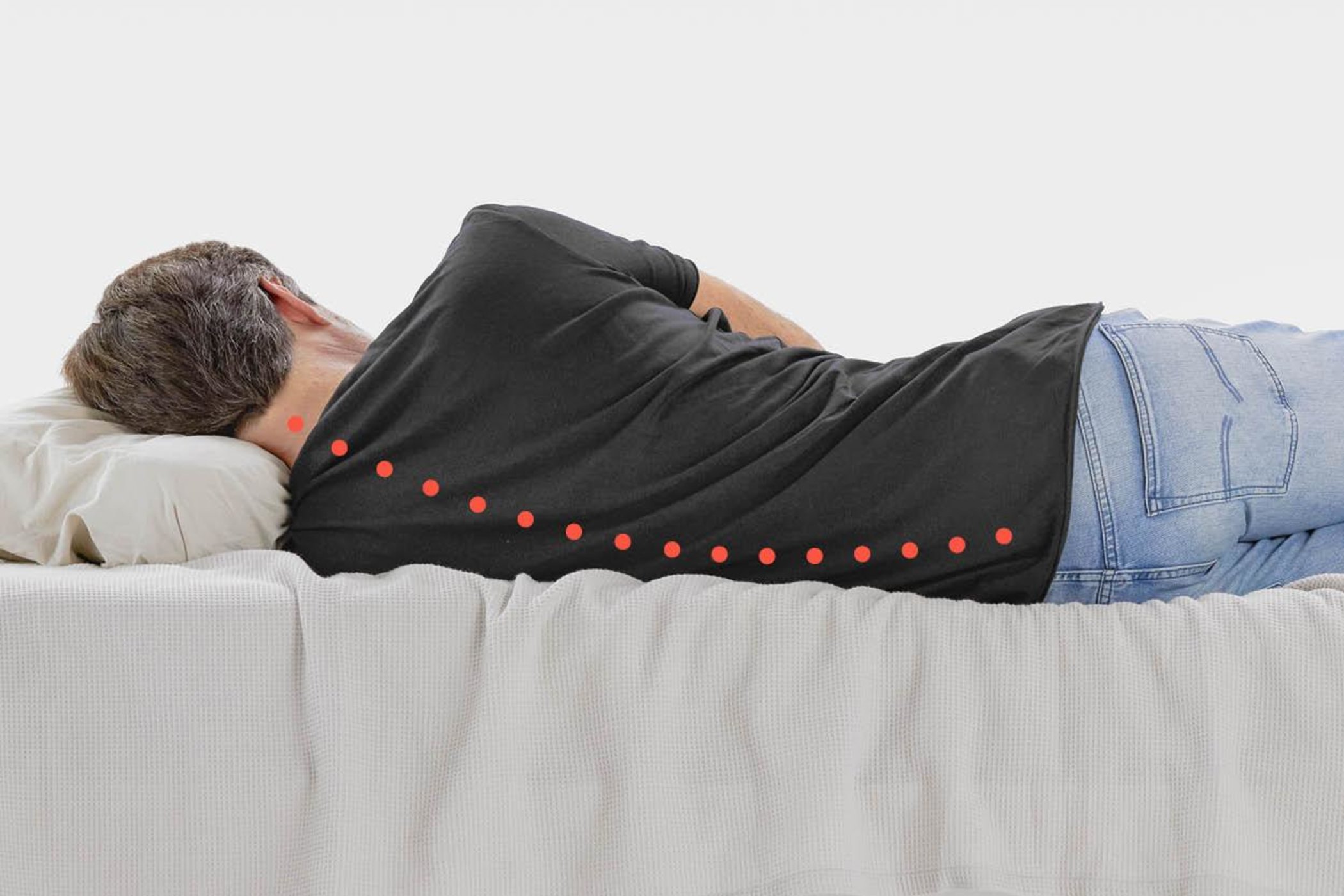
If the mattress is too soft, the pelvis sinks downward. This causes the spine to sag.
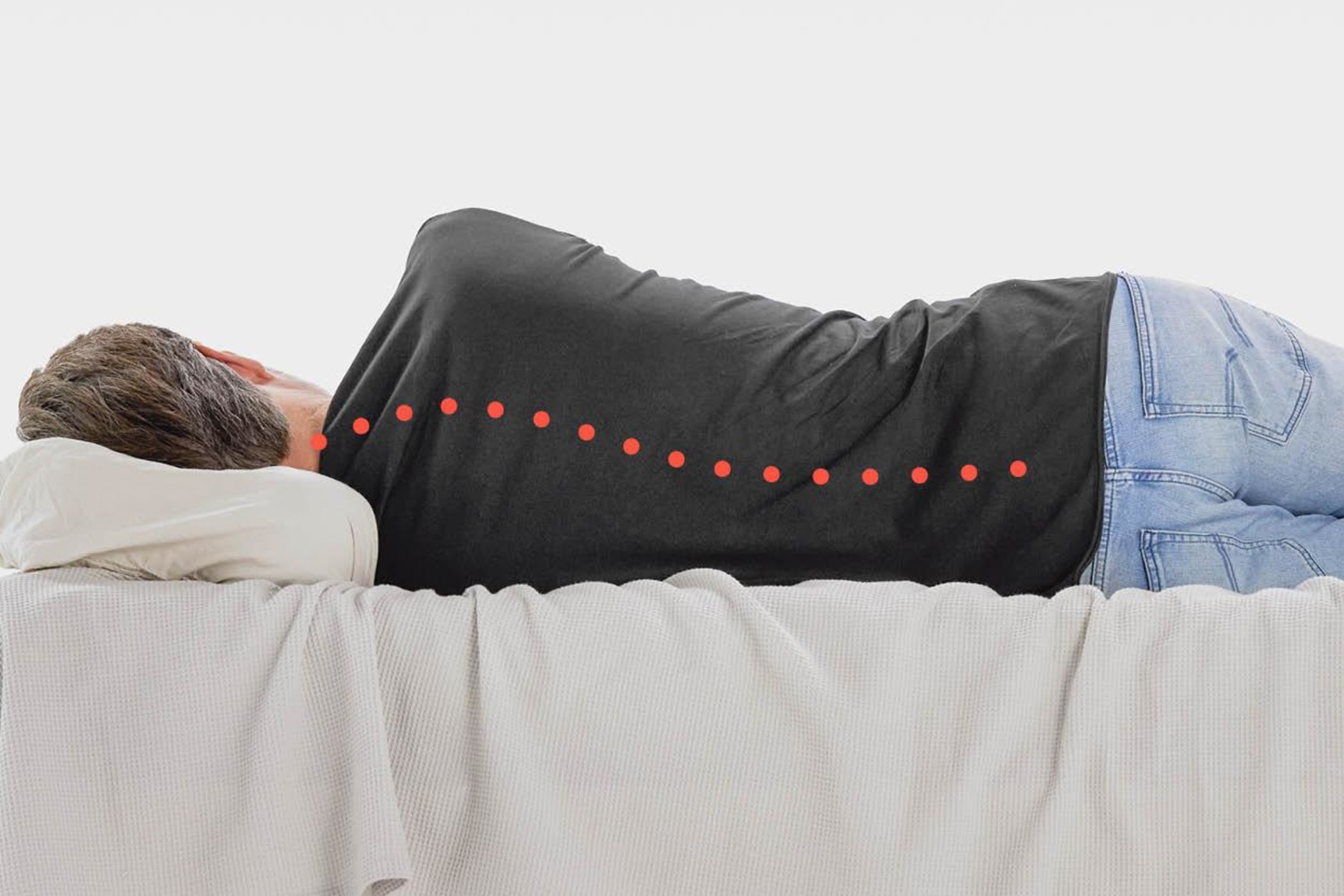
If the mattress is too hard, the pelvis and shoulders cannot sink in, causing the neutral alignment to be thrown off balance.
The same principle applies to back and stomach sleepers. Here, too, it’s important that the spine is kept in its natural position. Compared to side sleepers, stomach and back sleepers need slightly more support in the pelvic area to prevent sinking in too deeply. People who prefer these two sleeping positions should therefore choose a slightly firmer mattress than side sleepers.
Mattress too hard – what to do if your mattress is too firm?
A mattress that’s too firm can significantly impair sleep and cause various discomforts. Those affected often report back pain, muscle tension, or pain along the spine. Body weight, in particular, plays a decisive role in determining which level of firmness is perceived as comfortable. For example, if you choose a mattress with the wrong level of firmness, you run the risk of your back not being able to relax properly during the night.
If your sleeping position is unfavorable and the mattress is too firm, your body cannot sink in sufficiently—this leads to pressure points and disrupts the spine’s natural alignment. This often results in restless sleep and additional strain on certain areas, such as the lower back. In such cases, it can help to make the mattress softer by adding a suitable topper. A high-quality topper adapts better to the body and ensures a more comfortable position in bed.
It’s also worth taking a look at the sleeping surface as a whole: It’s not always just the mattress—sometimes the slatted base or bed frame also affects how comfortable you feel while lying down. Anyone experiencing ongoing problems with their mattress should consider checking its firmness level or choosing a mattress tailored to their individual needs. The goal is to prevent back pain and improve sleep quality in the long term. The ideal mattress provides optimal support for the body and adapts to both body weight and preferred sleeping position.

Optimal mattress firmness for stomach sleepers
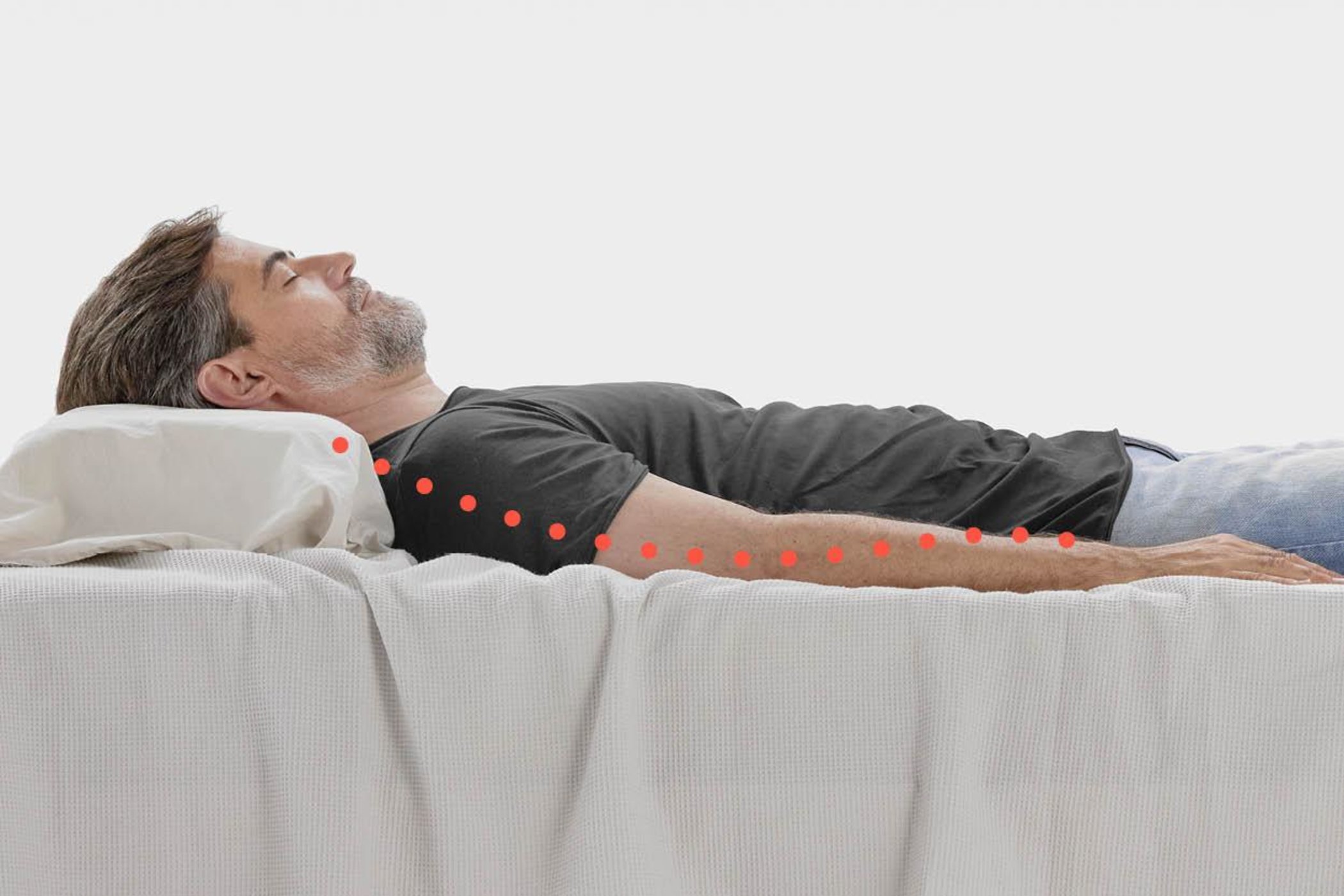
Mattress too soft for back sleepers. The spine sags.
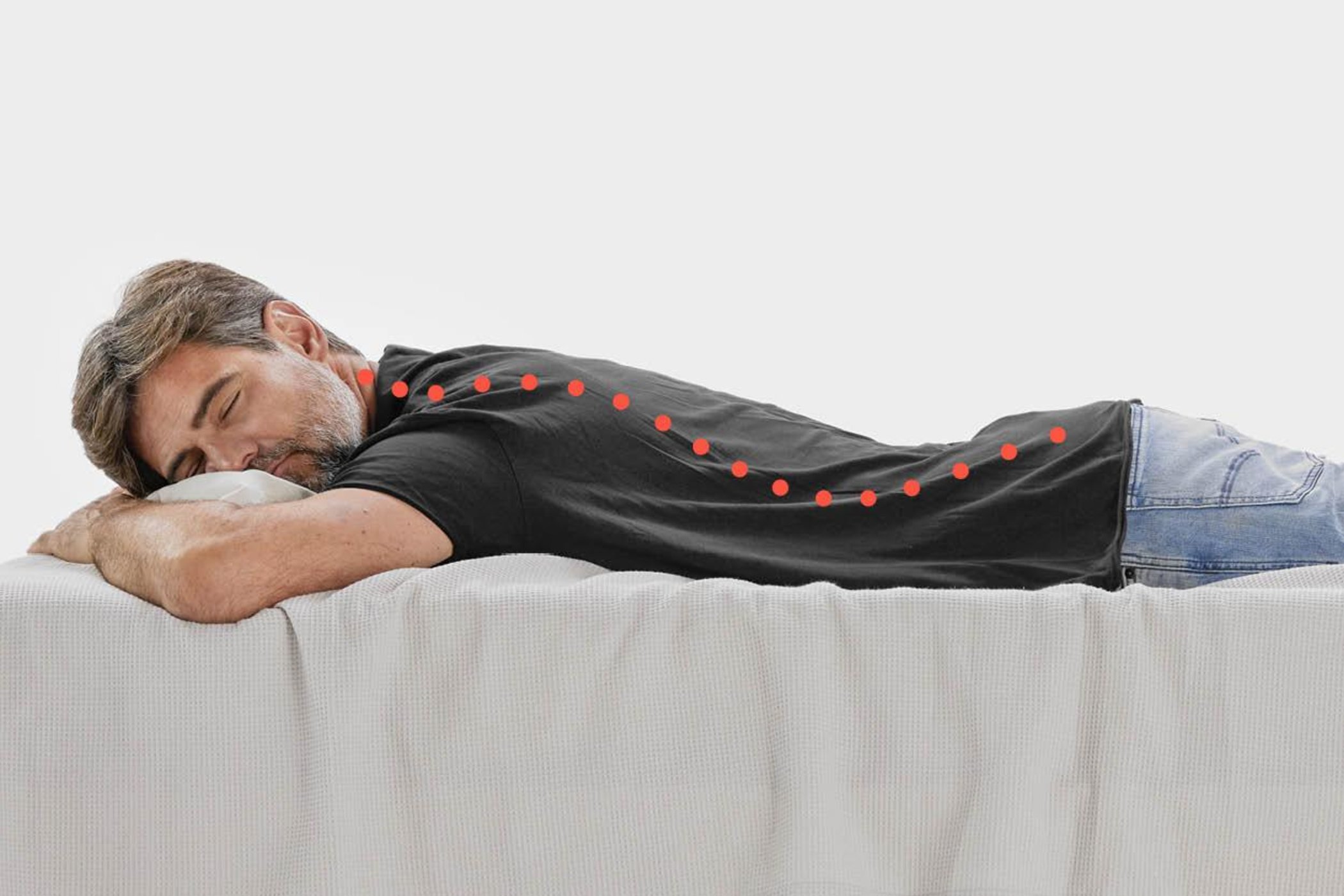
Mattress too soft for stomach sleepers . The spine sags.
"Our bodies are all very different. There’s no such thing as a one-size-fits-all mattress. The most important thing is that we take enough time to test our mattress. After a few weeks on a new mattress, we can then assess whether it’s the right one for us or not. That’s why you should always look for a generous return policy when making a purchase."
Stefan Schneider, Movement & Mindfulness Coach

Advantages and Disadvantages of Firm Mattresses
Firmer mattresses don’t allow the body to sink in as much. This can be both an advantage and a disadvantage. On the one hand, firmer mattresses can be beneficial when it comes to providing optimal support for the spine. However, when it comes to relieving pressure points, firm mattresses aren’t the best solution. Side sleepers, in particular, may experience significant pressure around the shoulders and pelvis on a mattress that’s too firm. Comfort is highly subjective, but many people find a firm mattress uncomfortable.
Who should choose a firm mattress?
- Stomach sleepers
People who sleep on their stomachs most of the time need a mattress that provides sufficient support for their musculoskeletal system. The spine should be in a neutral position.
- Back sleepers
For people who sleep on their backs, medium-firm to firm mattresses are recommended.
- Higher Body Weight
People who are slightly heavier need more support and, due to their increased body weight, are better off with a firmer mattress.
- Feeling too warm
Overheating is a problem that can interfere with rest. Harder mattresses usually keep you cooler while you sleep, as air can circulate more freely around your body.
Advantages and Disadvantages of Soft Mattresses
Most people describe softer mattresses as more comfortable. Soft mattresses are characterized primarily by their pressure point relief. Side sleepers can sink in comfortably to reduce pressure on their shoulders and pelvis. Problems arise when the lack of firmness means there isn’t enough support for the spine. A soft mattress is particularly suboptimal for people with a higher body weight who sleep on their stomach or back. Softer mattresses often wear out faster than firmer ones. This happens especially when the mattress is too soft for the person’s body weight. This can result in sagging or permanent indentations.
Who should choosea soft mattress?
- Side sleepers: If you sleep on your side, you’ll want a mattress that reduces pressure on your shoulders and pelvis. Softer mattresses generally provide better pressure point relief.
- Soft mattress lovers: People who prefer the comfort of a soft mattress should sleep on one. It’s important that your spine remains in a neutral alignment at all times. In some cases, you can also make the mattress softer with a topper without losing its support.
- People who get cold easily: Softer mattresses conform more closely to the body and are usually made of materials that retain heat. If you tend to get cold at night, a softer mattress can help keep you warmer.
- Shoulder and hip pain: People with joint pain in their shoulders and hips are usually better off with softer mattresses. It’s important to ensure adequate pressure point relief in these areas.
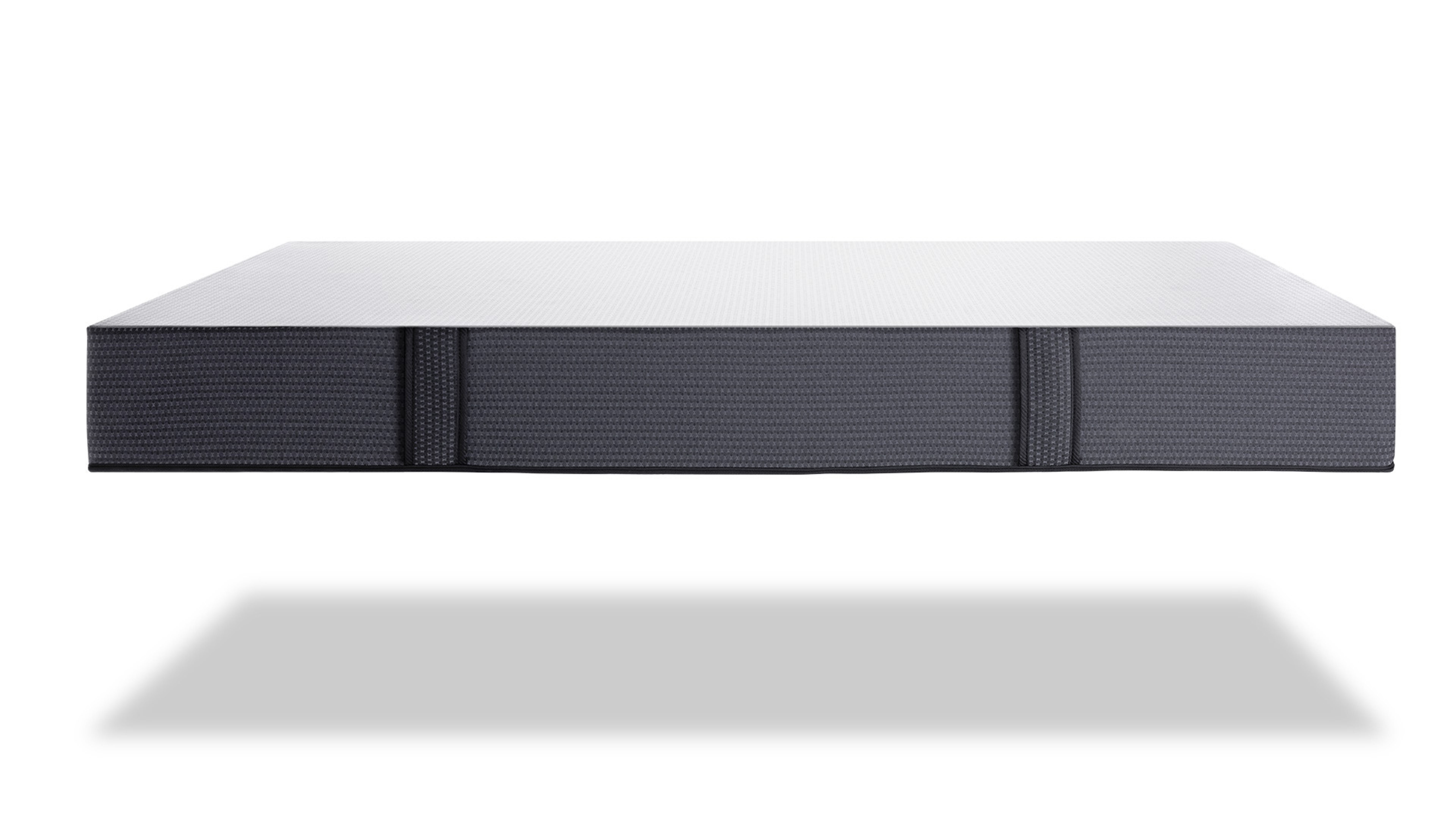
Ergonomic Sleep: What Is an Ergonomic Mattress for the Spine?
An ergonomic mattress strikes the right balance between pressure relief and support. We sleep ergonomically when our spine is aligned neutrally and, at the same time, pressure is relieved from sensitive areas of the body. To achieve an orthopedically correct sleeping position, the mattress must give more at specific pressure points to conform to the body’s contours. When lying on our side, one such contour is the waist; when lying on our back, it is the lumbar spine.
In addition to mattress firmness, it is possible to incorporate zones into the mattress to ensure ergonomic sleep. This means that the mattress is softer in certain areas so that pressure points—such as the shoulders and pelvis in side sleepers—can sink in. In cold-foam mattresses, for example, the firmness zones are created by cuts in the foam core.
Which mattress firmness level is best for which weight?
Manufacturers often provide charts or recommendations to help you determine the optimal firmness level for you. Such recommendations are usually based on height and body weight.
A typical firmness recommendation looks like this:
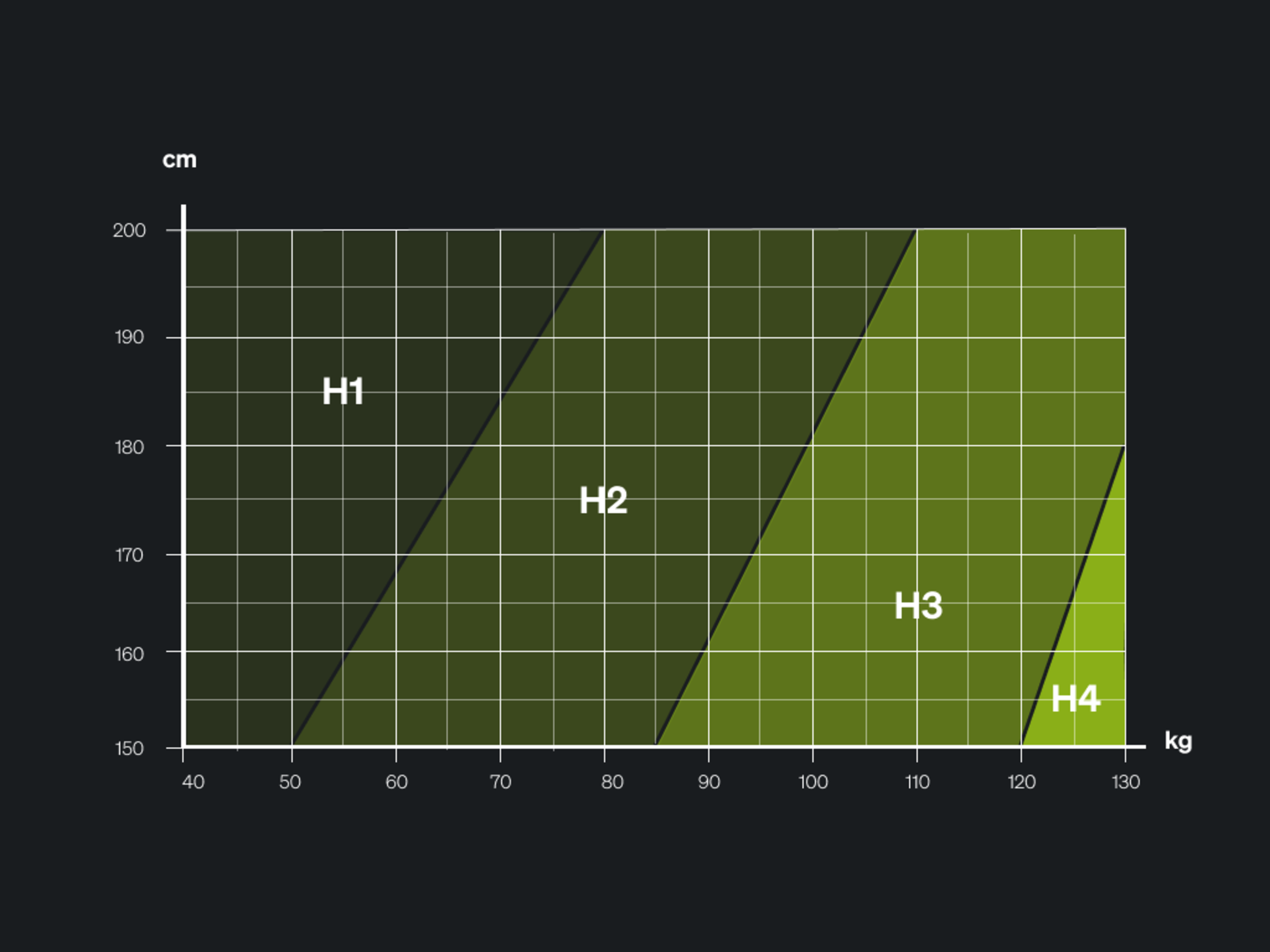
The heavier you are, the firmer your mattress can be. However, the chart also shows that height plays a role. This is because weight is distributed more evenly along the length of the body in taller people. A person who is 1.80 m tall and weighs 100 kg may need to choose a firmer mattress than a person who is 2 m tall and weighs 100 kg.
Note: The recommendation tables are just as unstandardized as the firmness ratings.
It therefore always makes sense to use only the table provided by the specific manufacturer. Incidentally, there are also manufacturers who do not specify a firmness rating at all.
The manufacturer’s specifications are therefore only a general guide. The optimal firmness depends not only on weight and height but also on factors such as sleeping position and personal preferences. The most important firmness levels are discussed in detail below.
Mattress Firmness Level 1: Is the soft H1 mattress right for me?
H1 is the softest firmness level, which is also quite rare. This mattress is primarily suitable for side sleepers with a lower body weight (under 60 kg) and for those who prefer a soft sleeping surface. Heavier individuals should not choose a firmness level 1 mattress.
Mattress Firmness Level 2: Is the medium-firm H2 mattress right for me?
The firmness level 2 mattress is also suitable for light- to normal-weight side sleepers. The H2 mattress might be right for you if you weigh between 60 and 80 kg and primarily sleep on your side. Along with the H3 firmness level, the H2 mattress is one of our bestsellers.
Firmness Level 3 Mattress: Is the medium-firm H3 mattress right for me?
Most mattresses are rated at firmness level 3. This is a standard medium firmness that is widely used by the general population. The H3 mattress generally offers more support than an H2 mattress and is therefore particularly suitable for back and stomach sleepers. However, side sleepers weighing between 80 and 110 kg can also opt for the H3 mattress. In any case, it’s recommended that you try out the H3 mattress for a while.
Mattress Firmness Level 4: Is the firm H4 mattress right for me?
Models labeled with firmness level 4 feel quite firm. You might want to consider buying an H4 mattress if you weigh over 110 kg. For heavier people in particular, this firmness prevents the mattress from sagging. For side sleepers, however, this firmness isn’t ideal because it may not allow the shoulders and pelvis to sink in sufficiently.
Mattress Firmness Level 5: Is the firm H5 mattress right for me?
The H5-firmness mattress represents the highest level of firmness and is even firmer than the H4 mattress. People who are severely overweight (over 150 kg) should consider an H5 mattress.
If you’re having trouble deciding on a firmness level, our BASE—which offers four firmness levels in one—might be the solution. Learn more about how you can adjust the firmness at home.
Can I make my mattress firmer?
Many mattresses become softer over time and lose their support, especially in areas where a lot of weight is placed on the mattress. But even when you first buy it, a mattress can be too soft. Below, you’ll learn whether you can make a mattress firmer. You’ll also get tips on how to deal with a mattress that’s too soft.
01

Exchange the mattress
Of course, this tip only works if you’ve just purchased the mattress. When buying mattresses online, you have a legal right to return them within 14 days. One problem is that it often takes several weeks to realize whether the mattress is too soft. So, when making your purchase, make sure to buy the mattress from a retailer that offers at least a one-month trial period—preferably 90 days. To ensure you find the perfect mattress for your needs, we offer you the opportunity to test our mattress for 90 nights. It gets more complicated if you bought a mattress from a local retailer. Depending on the situation, the retailer may not be obligated to take the mattress back if the mistake was on your part. In any case, you should ask about the retailer’s return policy when making your purchase.
Note: Before you rush to exchange the mattress, check to see if it has different sleeping surfaces. There are more and more mattresses that are firm on one side and soft on the other.
If your return window has already expired, the following tips can help you achieve a firmer sleeping surface.
02
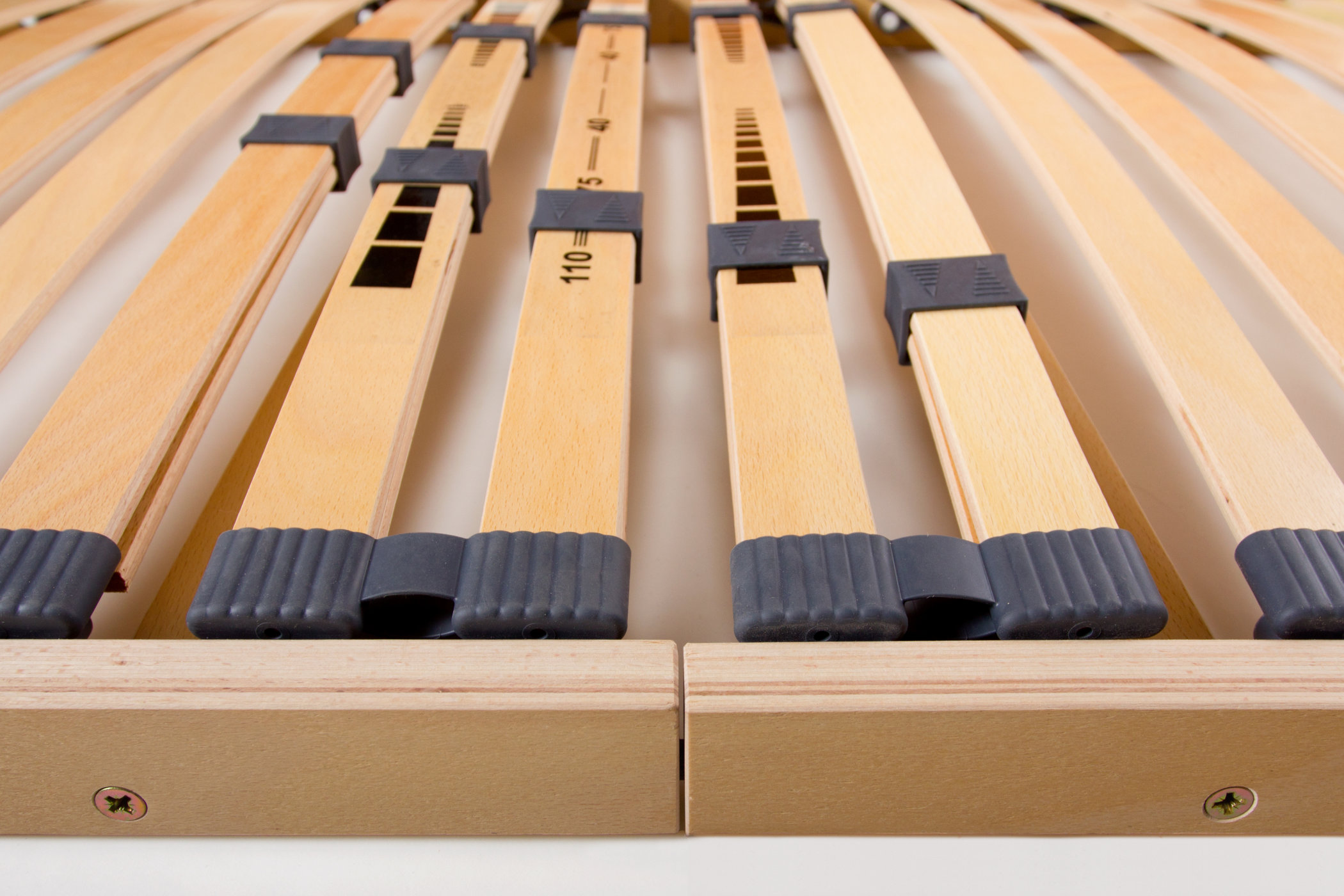
Adjust the slatted frame
Most beds have an adjustable slatted frame. One way to make your mattress firmer is to check the settings on your slatted frame. To do this, lift your mattress off the bed and see if your slatted frame has a slider system. There are two different slider systems used in slatted frames. The most common system consists of so-called O-sliders, which are usually made of plastic and enclose two slats lying one on top of the other. If you have an O-system, you can make the mattress firmer by sliding the sliders outward.
You can recognize the less commonly used T-system by the fact that two adjacent slats are connected by a T-shaped slider. With T-sliders, the principle is reversed. If you slide them inward, the slatted frame becomes firmer. A high-quality slatted frame is characterized by its ability to flexibly adapt to the body. In addition, a slatted frame allows for air circulation under the mattress. This prevents the proliferation of dust mites and the development of odors. This tip works especially well if the mattress is just a little too firm—but, of course, only if you have an adjustable slatted frame.
03
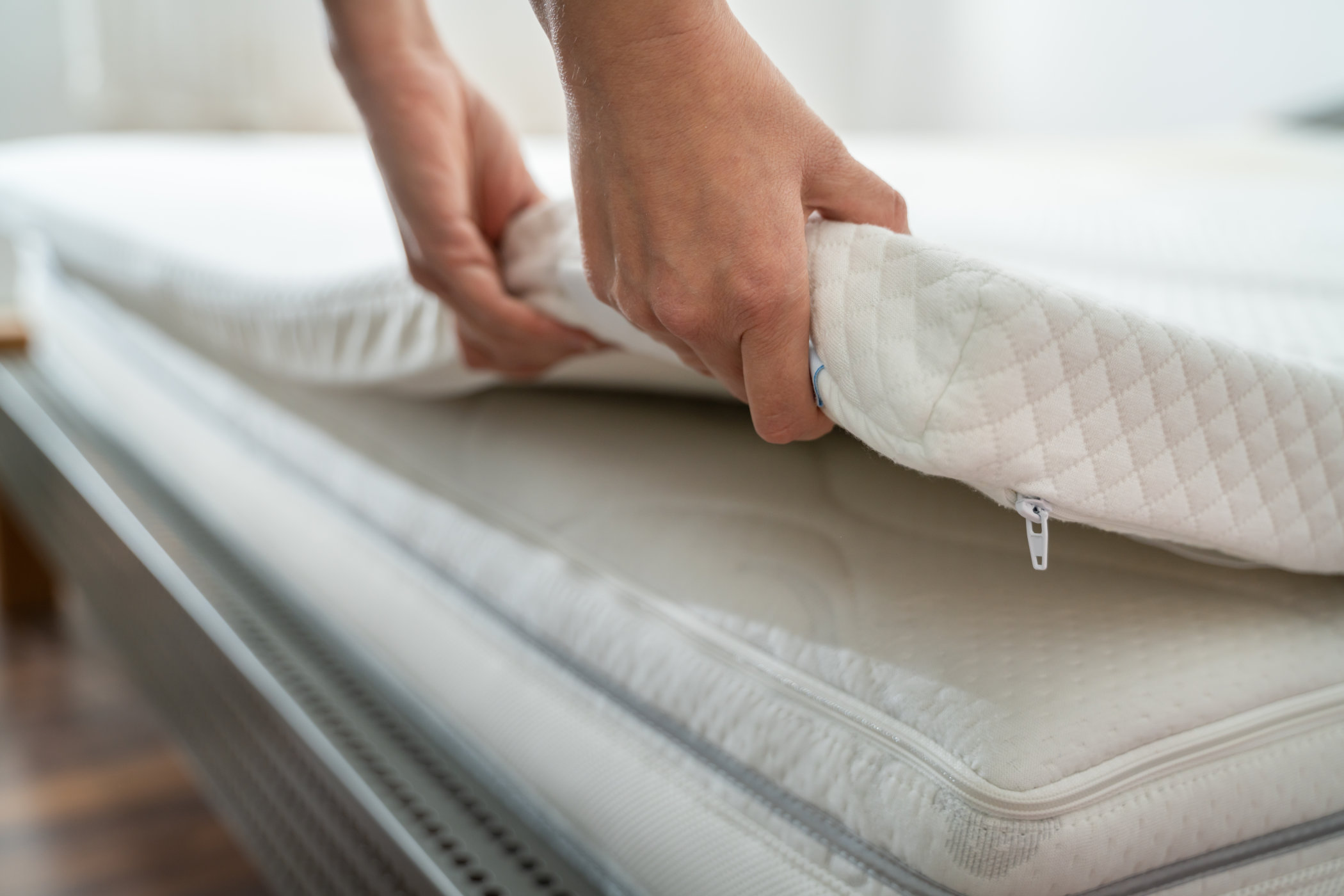
Hard mattress topper?
A common tip found online is to use a firm topper with a firmness rating of H3 or H4 to make the mattress firmer. A topper is a pad a few centimeters thick that is placed on top of the mattress to increase sleeping comfort. In the short term, the mattress may seem firmer with the topper, but since the mattress core is too soft, you’ll still sink in too much. A firmer mattress topper can help temporarily, but it’s not a long-term solution.
If you’re simply looking for comfort and your mattress is firm enough to keep your spine in a neutral alignment, a softer mattress topper can help relieve uncomfortable pressure points. A mattress topper can therefore be used to make a mattress softer. It’s not ideal for increasing firmness.
How can I determine the firmness level of my mattress?
There are several ways to determine the firmness level of your mattress. For one, you can use the firmness charts provided by most manufacturers. For example, you’ll find a firmness recommendation chart earlier in this article.
Other manufacturers also offer configurators that help you determine your ideal mattress firmness. For example , BLACKROLL® provides a mattress configurator that suggests your ideal firmness level based on your weight, sleeping position, and preferences.
If you’d rather calculate the firmness level manually, you can use the following formula as a rough guide. Keep in mind, however, that height and weight are just two factors that influence your choice of mattress in terms of firmness.
Formula for calculating mattress firmness
- Body weight in kg < (Height in cm – 100) → soft (H1 to H2)
- Body weight in kg = (Body height in cm – 100) → medium (H3)
- Body weight in kg > (height in cm – 100) → firm (H4 to H5)
Example:
You are 176 cm tall and weigh 70 kg
Calculation: 70 < (176–100) → 70 < 76
Result: Choose a soft mattress with a firmness level of H1 to H2
Firmness Level of Mattress Toppers: What Is the Right Firmness Level for My Mattress Topper?
A mattress topper is an additional layer placed on top of the mattress to enhance sleeping comfort. For example, a topper can be used to soften a hard mattress. Toppers are typically between 3 and 10 cm thick and vary in material and firmness level. A high-quality mattress topper can even extend the life of your mattress. While a topper won’t work miracles if the mattress is too soft or has sagging spots, it can conceal minor signs of wear and provide additional comfort. The most commonly used materials in toppers include PU foam, cold foam, memory foam, latex, gel, and mesh.
Just like a mattress, a topper can be classified by firmness level. However, this is uncommon because the firmness of the sleeping surface is usually defined by the mattress itself. If a firmness rating is provided, it is generally listed using the same scale as for mattresses (H1, H2, H3, H4, H5). However, some manufacturers use other terms, such as “soft” or “hard,” to distinguish between them.
Among the firmest toppers are cold foam toppers. These are also called HR toppers. In this context, HR stands for “high resilient.” This means that the topper is highly resilient. A firm cold foam topper is therefore recommended for people who prefer a firmer sleeping surface and primarily sleep on their back or stomach. The softer toppers are usually those made of memory foam or gel foam.
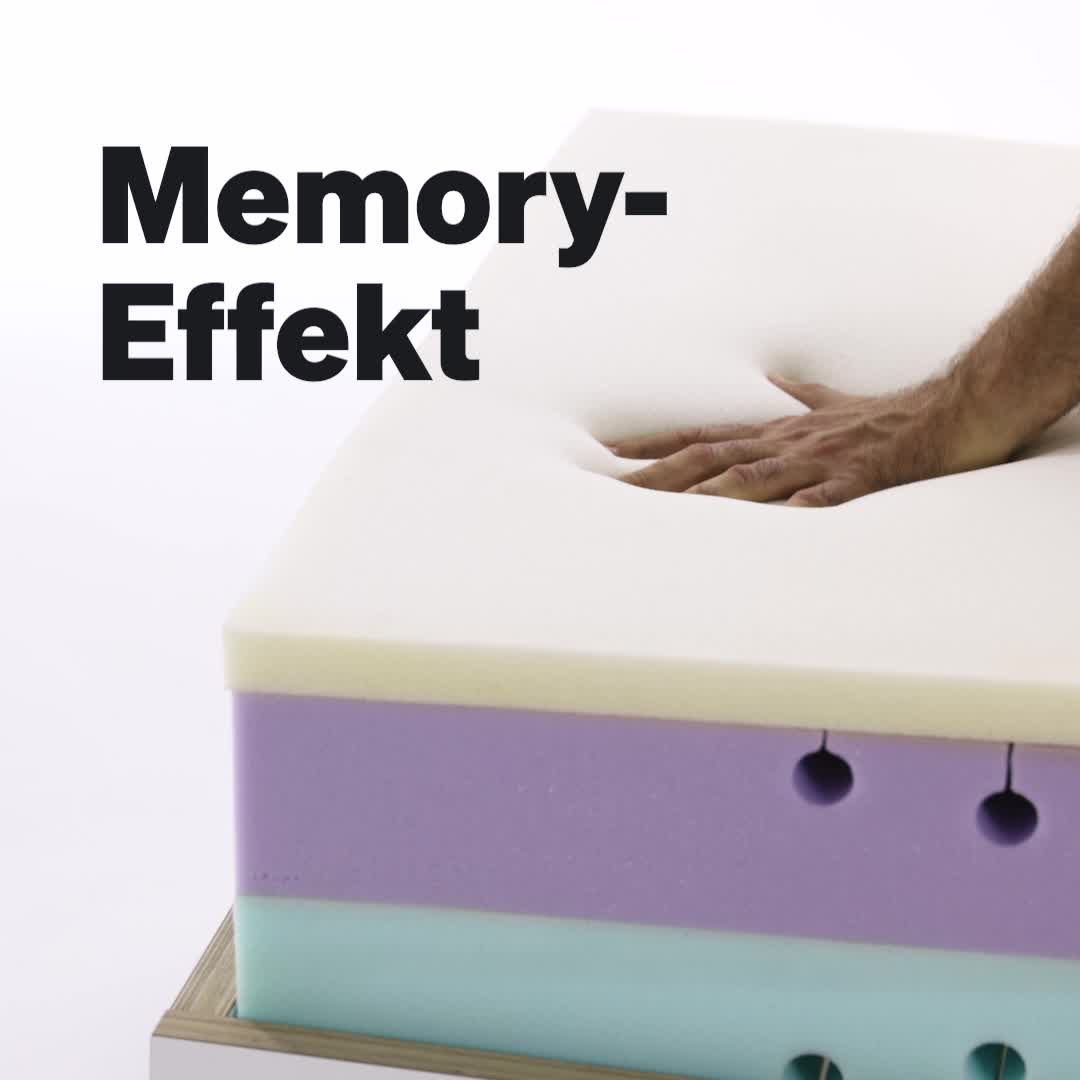
Memory foam conforms specifically to the body. The foam softens in response to your body heat, allowing you to sink in further. This helps relieve pressure points, especially if you sleep on your side.
While a mattress topper can make the sleeping surface feel firmer, it does not change the overall firmness of the mattress. If your mattress is too soft, the topper won’t ensure that your spine is better aligned.
If, on the other hand, your mattress is too firm, a suitable topper can make your sleeping experience pleasantly soft.
What firmness level should a mattress have for two people sharing a bed?
When two people sleep on a single mattress, choosing the right firmness level can be particularly challenging—especially if their weights, sleeping positions, and body types differ significantly. In such cases, it’s best to choose two different mattresses rather than sharing one.
The advantage of having two different mattresses is that each partner can choose their preferred firmness level. Additionally, movements during sleep do not affect the other side of the bed.
The downside of two different mattresses is the gap that forms between them. The “visitor’s gap” or “trench” (as the gap is colloquially called) can make cuddling together difficult. Below are a few tips on how to avoid this uncomfortable gap.

Tip 1: Mattress Wedge
A mattress wedge, also known as a “love bridge” or “gap filler,” is a T-shaped foam wedge that is pressed into the “visitor’s gap” to close the gap. The downside of the love bridge is that, due to the slight elevation, the wedge is usually still noticeable under the bedsheet.
Tip 2: Mattress topper
A mattress topper that covers both mattresses can also help reduce the uncomfortable gap. A mattress topper has the added benefit of protecting the mattress from stains. The topper is secured on the sides with elastic straps, which pull the two single mattresses together. In addition to a classic topper, a mattress pad can also be used to eliminate the gap between the mattresses.
Tip 4: Double Mattress
A couple’s mattress—most commonly available in the 180x200 cm size—eliminates the guest gap entirely. The downside is that, in these cases, the couple usually has to agree on a single firmness level. However, there are also couple’s mattresses with different cores, which are then placed inside a single large cover and glued together if necessary. This also helps prevent the guest gap.
What firmness level is best for back pain?
Waking up with back pain in the morning is a common occurrence for many people. Your mattress could be the cause of the pain. The biggest sign that your mattress is contributing to your back pain is if your back hurts particularly badly in the morning right after you get out of bed. If your spine isn’t properly supported while you sleep, there’s a risk that the muscles around your spine will tense up during the night. This can result in uncomfortable muscle tension. A good mattress for back pain is one that supports the spine’s alignment and promotes its natural curvature. There’s no one-size-fits-all answer for which firmness level is best for back pain. Especially if you suffer from back pain, it’s important to choose a firmness level that suits your weight and your preferred sleeping position.
Note: A poor-quality mattress can contribute to back pain. However, back pain can have many different causes. Not least among these is our predominantly sedentary lifestyle, which places constant strain on our musculoskeletal system. Compensatory exercises and lifestyle changes can work wonders.

What Mattress Firmness Level Is Best for Children?
Infants and children are still growing and, on average, spend much more time in bed than adults. A mattress for children should support the healthy development of the spine. Especially for infants and very young children, it’s important that the mattress isn’t too soft, since the spine hasn’t yet developed its S-shape at this age. As a rule of thumb, a baby shouldn’t sink more than 3 cm into the mattress. You usually can’t go wrong with a medium-firm baby mattress. Toddlers and young children can sink in a bit more; 4 cm is a good guideline for children between 2 and 3 years old. As the child gets a little older, the mattress firmness depends more and more on individual sleeping habits. Most children aged 4 and older are best served by a firmness level of 2. It’s also important here to ensure that, in addition to proper spinal alignment, pressure points are relieved. If your child complains of physical pain in the morning, you should consider a different mattress.
Conclusion: What is the right firmness level for my mattress?
Determining the right mattress firmness level is important for restful sleep and a comfortable sleeping experience. The optimal firmness level supports your spine while relieving pressure points, so you won’t experience any pain or discomfort when you get up in the morning. Since mattress firmness levels aren’t standardized, you should use them only as a rough guide. The key is to choose a mattress that’s tailored to your own needs.
Factors that should influence your mattress purchase include:
- Weight
- Height
- Body type
- Preferred sleeping position
- Personal preferences
- Physical Ailments (e.g., back pain)
A knowledgeable salesperson at a local store will ask you for this information. If you order a mattress online, make sure you can try it out for at least 30 days—preferably 90. For example, you can test our RECOVERY BASE mattress for 90 nights. On average, it takes the body 4 to 6 weeks to fully adjust to a new mattress. Use the manufacturer’s firmness recommendations as a guide and try out the mattress for yourself. The quality of your sleep and how your body feels when you wake up are the best indicators of whether you’re on the right mattress.