
SleepSleep Better8 min read
Which mattress helps with back pain?

Stefan Schneider
In this article
Which mattress is best for back pain?
- Choosing the right mattress plays a key role in maintaining a healthy back and getting restful sleep.
- Mattresses that are too soft or have sagged can lead to poor posture and worsen back pain.
- The ideal mattress supports the natural curve of the spine while relieving pressure points.
- Body weight, sleeping position, and individual symptoms are key factors—there’s no “one-size-fits-all” solution.
Recommendation: The BLACKROLL® RECOVERY BASE —an ergonomic mattress with four built-in firmness levels and eight possible configurations that you can adjust at any time. This makes it easy to find the right sleeping experience—for optimal support of your spine.
Back pain caused by your mattress? Tips for choosing the right mattress to relieve back pain.
Is your life limited by uncomfortable back pain? In Germany, more than 80% of people suffer from back pain at least once in their lives. For many, the discomfort becomes chronic. There are a variety of risk factors that contribute to back pain. The wrong mattress is one of the most common causes.
Sleep is the most important time for your body to recover. Pain in the upper or lower back can severely impair sleep and, as a result, your quality of life. The quality of your mattress can have a major impact on how you sleep and how you feel. However, the right mattress for back pain isn’t the same for everyone. It’s important that your individual body shape is optimally supported while you’re lying in bed.
But it’s not just back pain—shoulder pain is also a common cause of nighttime discomfort. That’s why many people wonder which mattress is best for shoulder pain. Side sleepers, in particular, benefit from mattresses that provide sufficient give in the shoulder area to prevent pressure points and keep the spine straight. This provides optimal relief not only for the back but also for the shoulders.
In this article, you’ll learn which mattress to choose for back pain so you can find relief soon. With these tips, back pain caused by your mattress will be a thing of the past.
Mattress
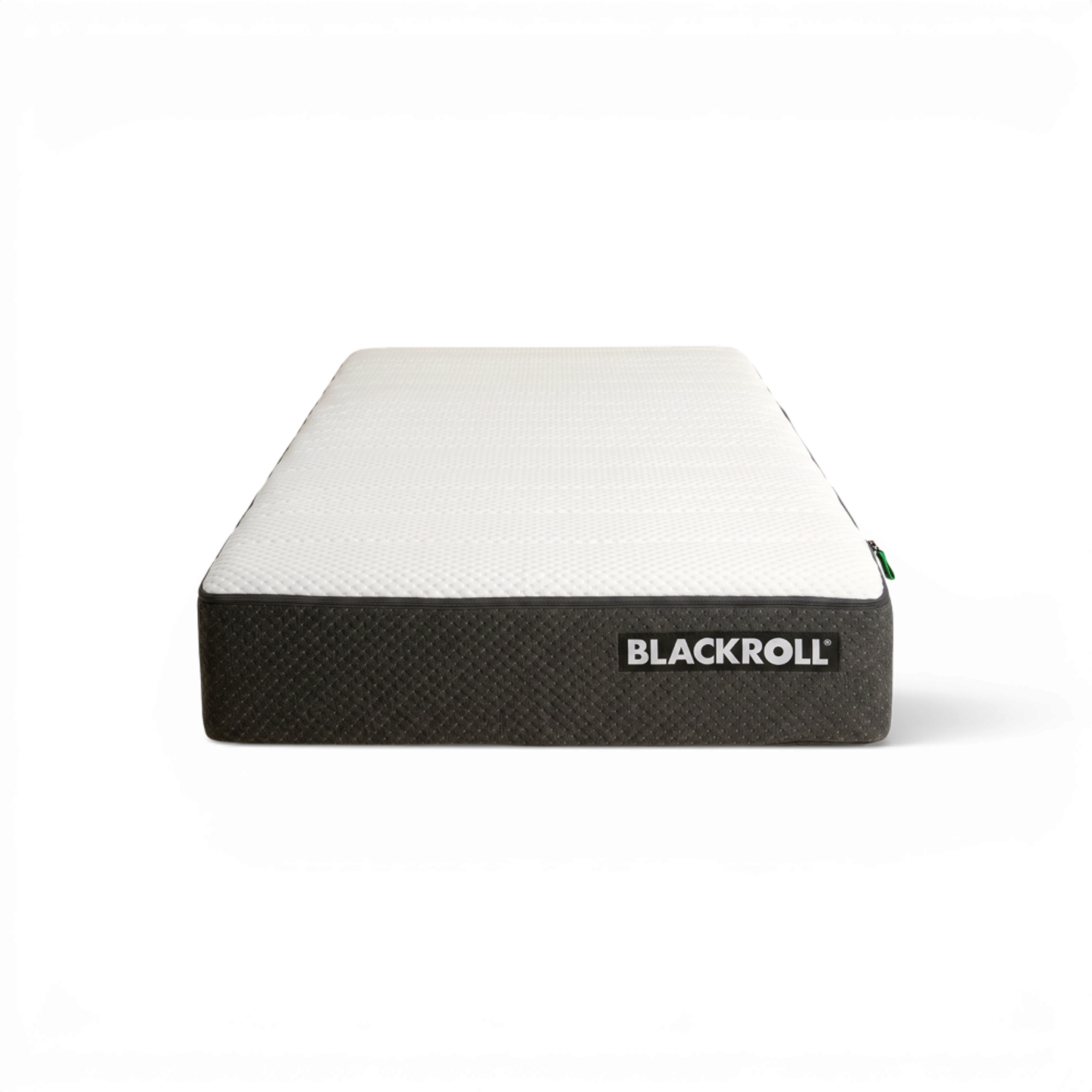
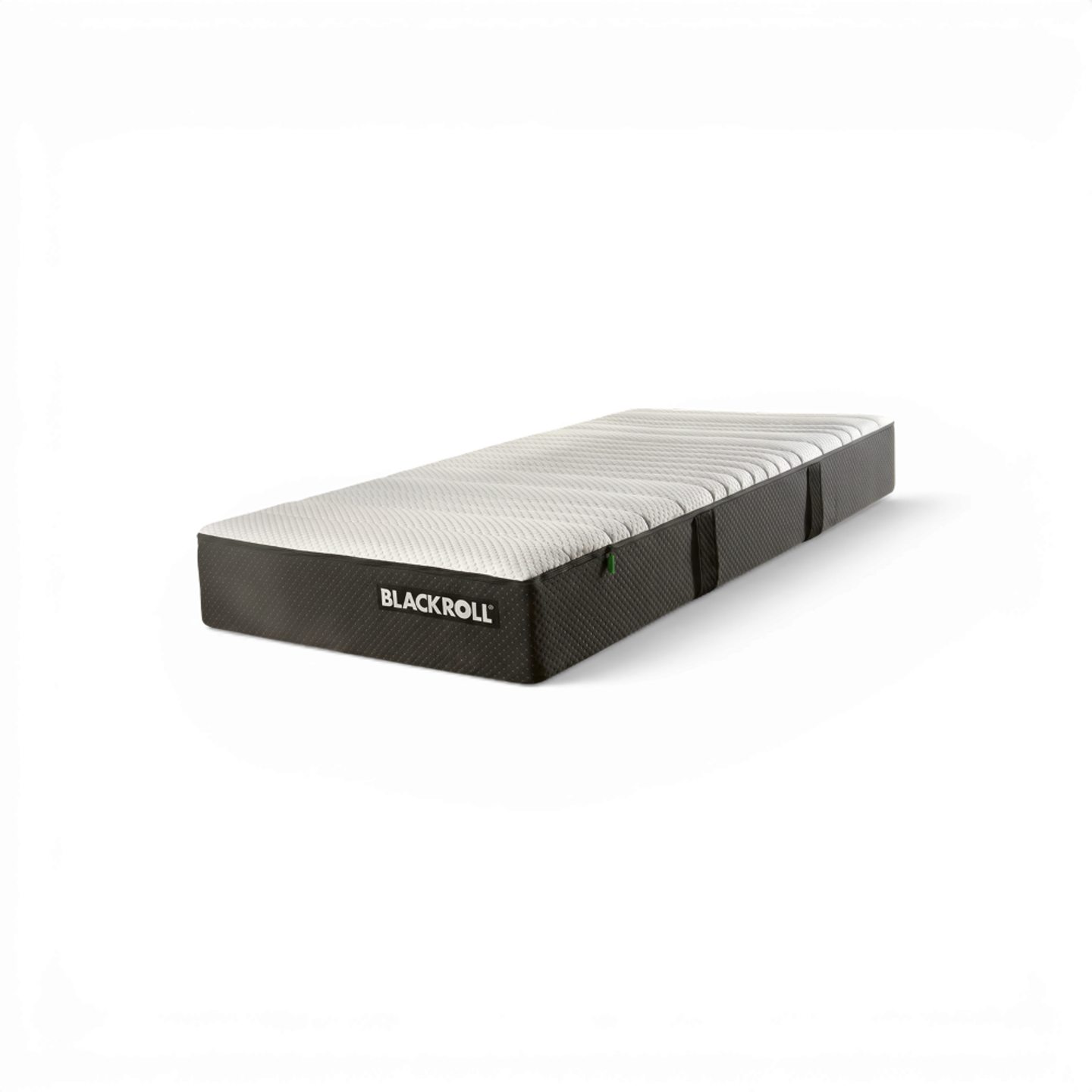
Recovery Base 2.0
Available in multiple variants
from€649.90
Which mattress is good for your back?
Studies have shown that the right mattress can actually help improve sleep quality and reduce the risk of back pain.
You spend a third of your life on your mattress. No wonder the wrong mattress can cause back pain. The reason for this is that the mattress isn’t ideally suited to your personal needs. To allow your back to recover from the stresses of the day, it’s essential that the muscles around your spine can relax at night. The spine can only be relieved of pressure if it is properly aligned. To maintain the spine’s natural alignment, there are several factors to consider when choosing a mattress.
So there’s no one-size-fits-all answer to the question, “Which mattress is good for your back?” It depends on factors such as body weight, height, primary sleeping position, and personal preferences. However, there are a few things you should look for when buying a mattress if you suffer from back pain.
Blanket
Recovery Blanket All Year
Available in multiple variants
from€179.90
What makes a back-friendly mattress?
A back-friendly mattress can help your spine maintain a neutral alignment. We refer to a neutral alignment when the spine assumes its natural double-S shape. For this to happen, parts of the body such as the pelvis and shoulders must sink deep enough into the mattress. Other areas, such as the lumbar and cervical spine, should be adequately supported. Regardless of your preferred sleeping position, this allows the muscles surrounding the spine to relax.

If the mattress is too soft, your body sags.

If the mattress is too hard, you don’t sink in enough, causing your neutral alignment to become unbalanced.
To achieve this optimal spinal alignment, there are several factors to consider when buying a mattress, such as finding the right firmness level for your mattress
Hard or soft mattress for back pain?
It’s often claimed that a firm mattress is better for your back. But is that really true? Not necessarily. A mattress that’s good for your back does one thing above all else: it distributes your body weight evenly so that your spine is properly aligned. At the same time, it relieves pressure on uncomfortable pressure points.
Pain in the upper and middle back often occurs when the mattress is too soft, causing the spine to sag downward. This problem also arises when the mattress has sagged over time due to wear and tear. If you want to avoid back problems, we recommend checking your mattress regularly for indentations. As a general rule, you should replace your mattress every 7–10 years.
A mattress that’s too firm can cause uncomfortable pressure points. The ideal mattress for back pain, therefore, strikes the “sweet spot” between firm and soft. The ideal firmness is individual and depends primarily on body weight, height, and sleeping position.
People with a higher body weight usuallyprefer firmer mattresses, as their weight is better supported and distributed. Lighter people find firm mattresses too hard, causing sensitive pressure points, and prefer to sink into a softer mattress.
For taller people, weight is better distributed across the entire length of the body. This means that taller people can generally choose a softer mattress. However, this only applies if their weight is in a healthy proportion to their height. A person who is 2 m tall and weighs 100 kg may, under certain circumstances, choose a softer mattress than a person who is 1.80 m tall and weighs 100 kg.
Side sleepers usuallyprefer softer mattresses, as their shoulders and pelvis sink in more easily, bringing the spine into a neutral position. Back and stomach sleepers benefit from the stability provided by a firmer mattress.
When buying a mattress, you should consider all these factors.
With the BLACKROLL® RECOVERY BASE, you no longer have to worry about firmness, since it offers all 4 firmness levels in a single mattress. This allows you to easily switch between 8 configurations if you find that the mattress is too firm or too soft.
What firmness level is best for back pain?
There’s no one-size-fits-all answer to which firmness level is best for back pain. Especially if you suffer from back pain, it’s important to choose a firmness level that matches your weight and preferred sleeping position.
Most manufacturers provide firmness recommendation charts as a general guide.

Firmness is usually indicated by the letter H. The higher the number following the letter H, the firmer the mattress.

It’s worth noting that firmness levels are not standardized. Some manufacturers distinguish between only two firmness levels, while others offer as many as five different levels. Such tables should therefore be used as a general guide at best.
The firmness level a mattress should have for back pain depends not only on weight and height but also on factors such as sleeping position and personal preferences.
A scientific review of the literature found that medium-firm mattresses offer the most benefits for people with nonspecific pain.
This was also confirmed by a randomized, double-blind study conducted with 313 people suffering from back pain. After 90 days, the participants who slept on a medium-firm mattress experienced pain less frequently than those who slept on a firm mattress. Participants in the medium-firm group also reported less pain during the day.
You usually can’t go wrong with a medium-firm mattress. Nevertheless, we recommend that you choose a mattress that’s best suited to your needs.
It still happens time and again that a certain firmness level seems ideal when buying a mattress, only to discover at home that it was actually the wrong firmness after all. That’s why our mattress features all four firmness levels in one: our BLACKROLL® RECOVERY BASE.
Cold foam or pocket spring core for back pain?
Mattresses can be made from a wide variety of materials. As you can imagine, the material has a major impact on a mattress’s properties. Latex, memory foam, cold foam, or pocket springs for back pain? No matter which material you choose, quality is what matters most when buying a mattress. Below, we’ll show you how the most popular mattress materials differ.
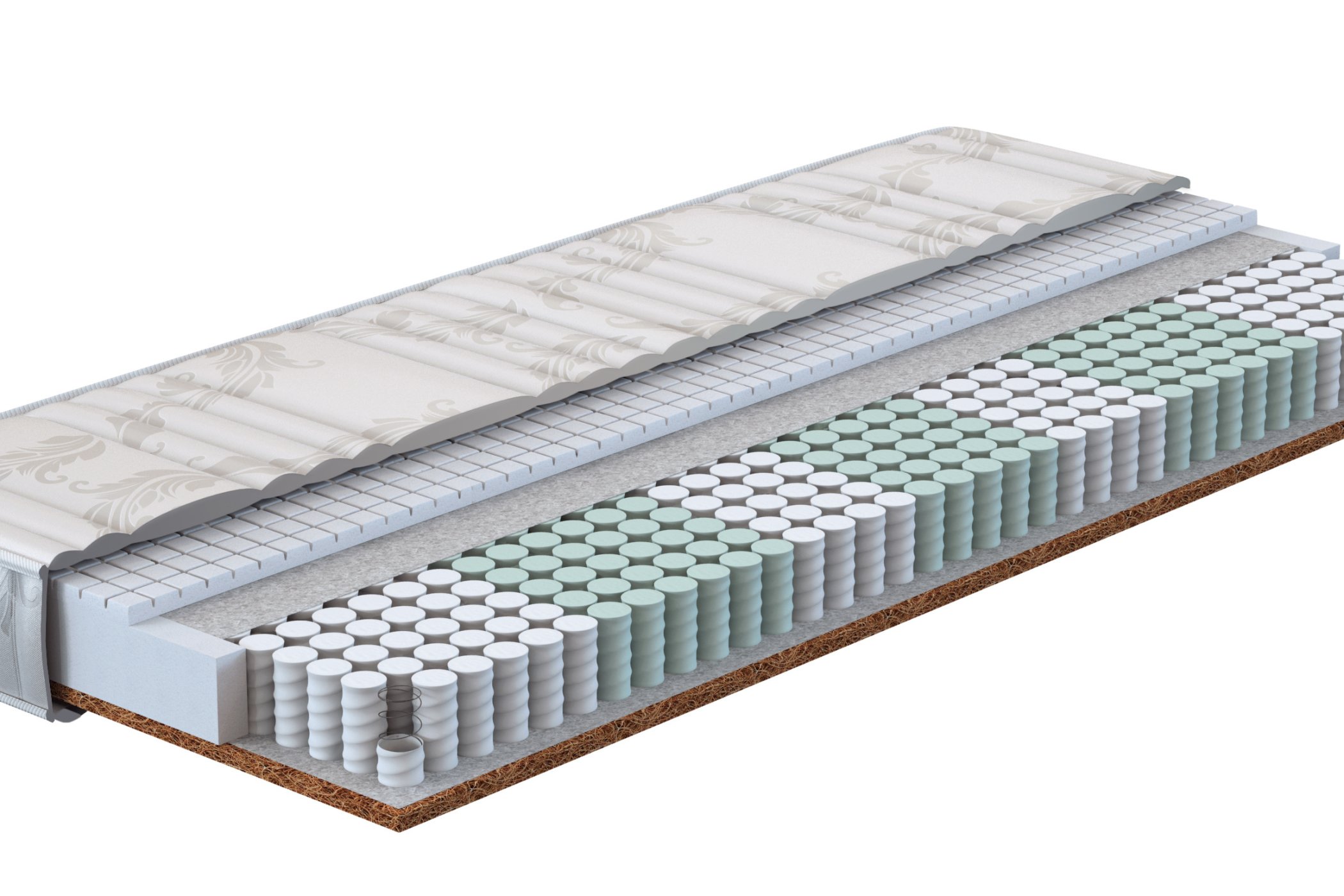
Innerspring Mattress
Inner-spring mattresses consist of a core made up of many metal springs. There are two main types: Bonell and pocket spring mattresses. In the latter, the individual springs are encased in pockets. Pocket springs offer particularly high point elasticity. High point elasticity is beneficial for people with back pain.
Bonell spring mattresses tend to provide more even, surface-level support and are therefore only suitable to a limited extent for people with back pain. A general advantage of spring cores is that they wick away moisture well. If you sweat a lot at night, you should consider a spring mattress.
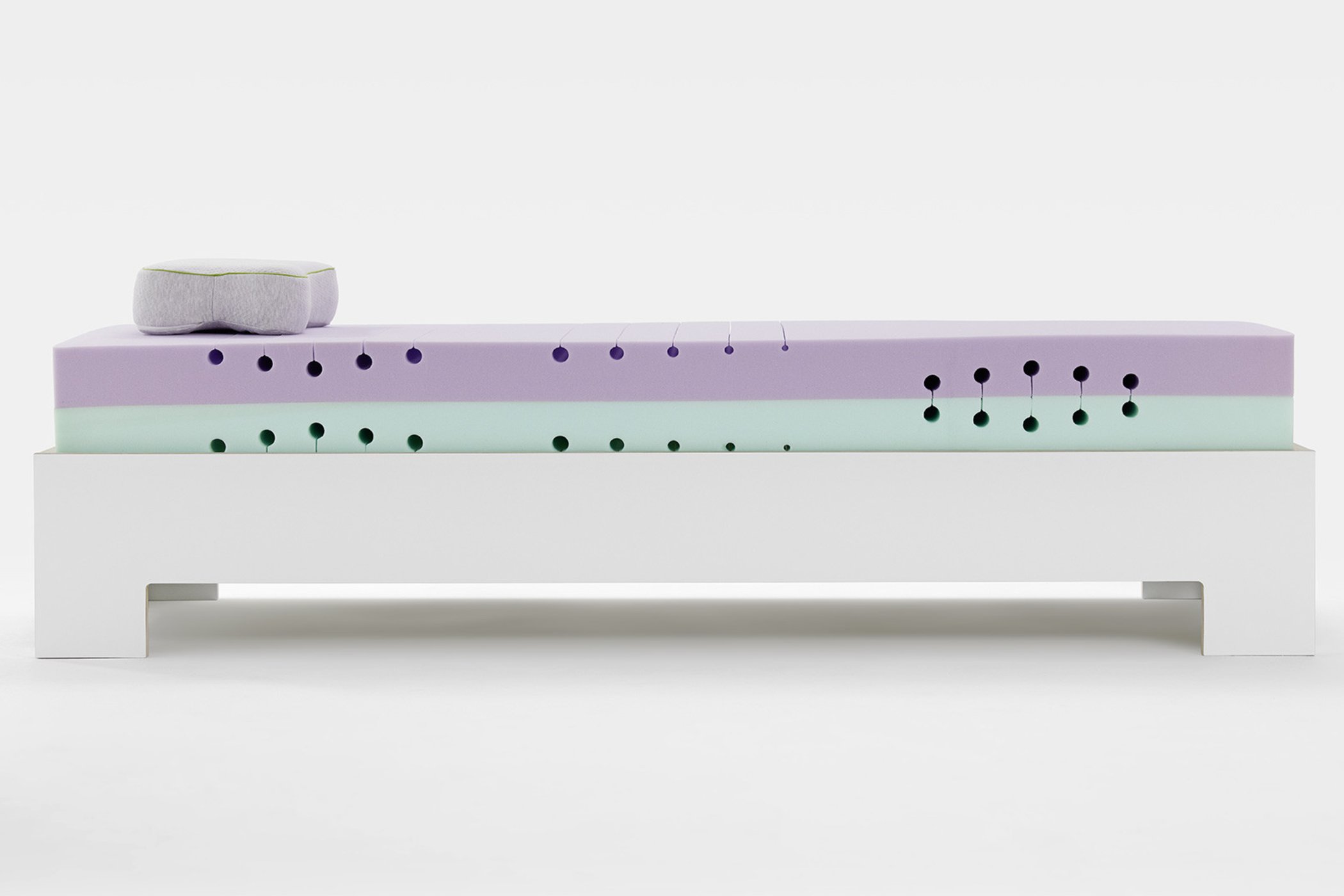
Cold-foam mattress
Cold foam mattresses are also characterized by good point elasticity. A cold foam mattress is particularly ergonomic when it is divided into several support zones. This zoning allows the mattress to conform to the body. Cold foam mattresses are also quite breathable and help regulate temperature. With a cold foam mattress tailored to your needs, you can’t go wrong if you have back pain.
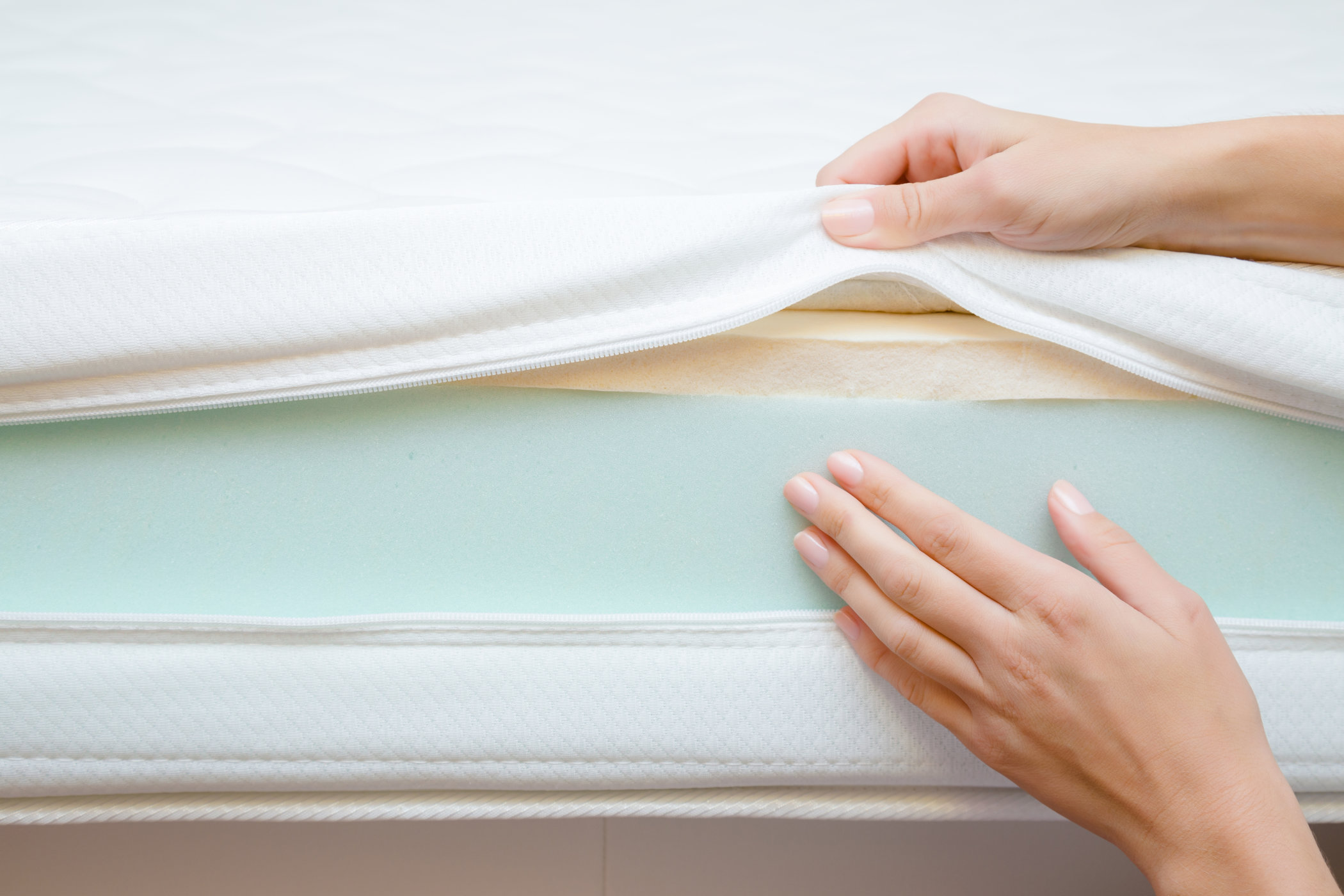
Visco-foam mattress
The visco foam mattress consists of a cold foam core and a layer of visco foam. The visco foam mattress does not require sleep zones, as the material already provides good pressure point relief. Visco foam reacts to body heat and can thus adapt to the contours of the body. The visco foam mattress is also an option for people with back pain. However, people who sweat heavily should probably avoid heat-retaining visco foam.
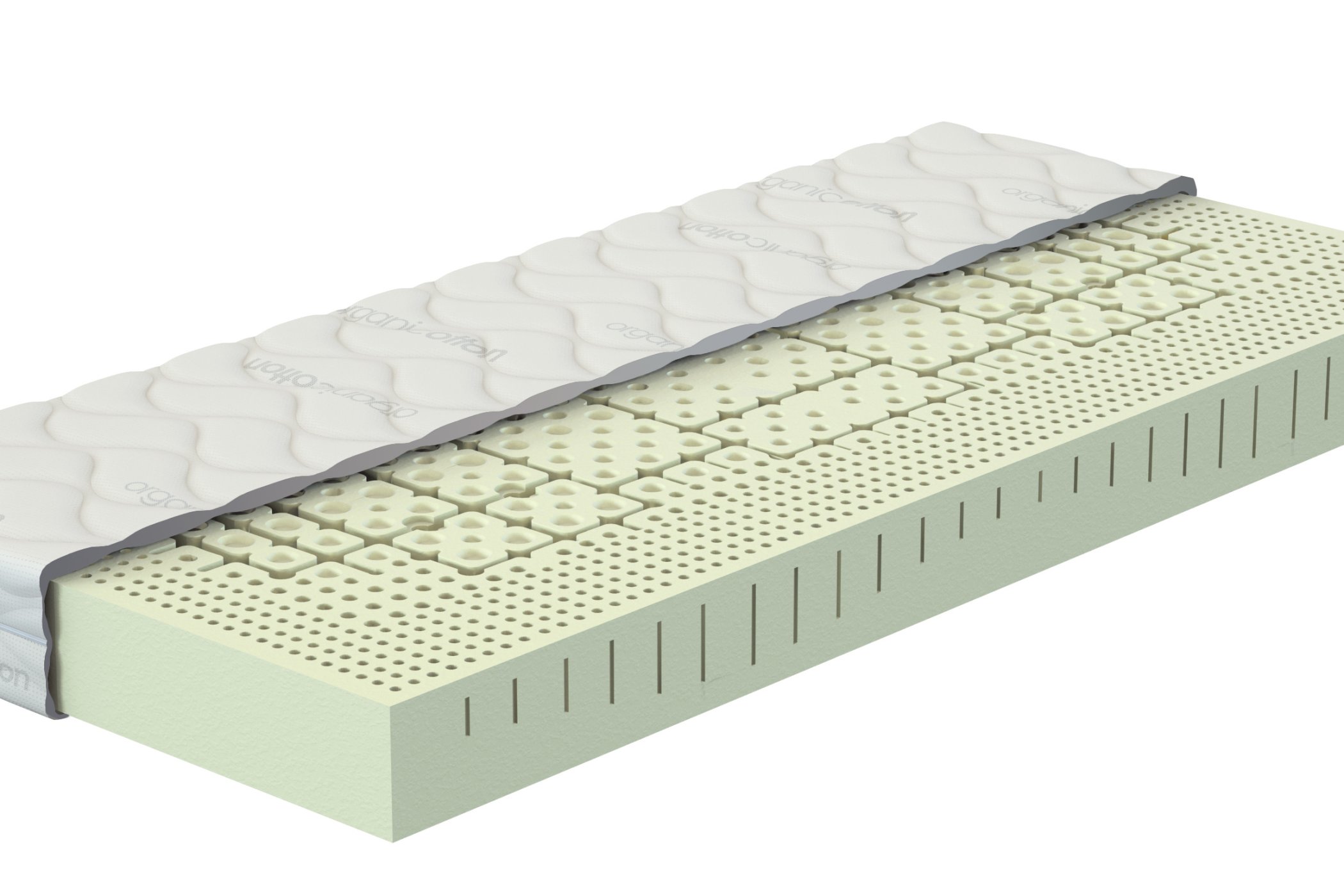
Latex Mattress
Latex mattresses are made from either natural (natural rubber) or synthetic latex. Mattresses made from natural latex generally offer better point elasticity. In general, latex mattresses are also recommended for back pain. One disadvantage of latex mattresses is their high price.
No matter which type of mattress you choose, make sure the manufacturer offers at least a 30-day trial period—preferably 90 days. Studies show that it can take up to four weeks for the body to adjust to a new mattress.
Which mattress is best for back pain in the lumbar region / lower back?
Whether you have pain in your upper or lower back, the most important factor when choosing a mattress is the alignment of your spine. By selecting a mattress tailored to your needs, you can help prevent pain in the lumbar region.
If you suffer from lower back pain, avoid sleeping curled up in a fetal position. This position causes increased hip flexion. If you already spend a lot of time sitting at work, there’s a risk that your hip flexors will be under too much tension. Tense hip flexors contribute to back pain because they throw the body’s natural balance of tension out of alignment. They also inhibit the activity of the gluteal muscles, resulting in lower back pain.
So, especially if you sleep on your side, try to stretch out your legs as much as possible while sleeping so that your hips are in a neutral position. Placing a pillow between your knees also helps reduce hip flexion.
Which mattresses are best for a herniated disc?
The human spine contains 23 intervertebral discs. These discs act as cushions between the individual vertebrae. Each of our intervertebral discs consists of a gel-like nucleus surrounded by a ring of fibrous cartilage. Due to our lifestyle or as we age, tears can develop in this fibrous ring. If the gel-like nucleus breaks through this ring, a herniated disc (prolapse) occurs. Symptoms arise when the protruding disc presses on nerve tissue. The problems manifest as pain, numbness, and paralysis.


In about 90% of cases, a herniated disc occurs in the lumbar spine. Herniated discs in the cervical spine are less common.
Nighttime is when the intervertebral discs reabsorb fluid and nutrients, much like a sponge. This is also why we’re up to 3 cm taller in the morning than in the evening.
To ensure that our intervertebral discs regenerate properly, it is essential that the spine is well aligned at night. Mattresses for herniated discs should not be too soft or too hard, as this can cause the spine to adopt an unnatural alignment. We have already discussed what proper spinal alignment entails.
Orthopedic mattresses are particularly suitable for people with a herniated disc. A mattress is considered orthopedic if it conforms to the contours of the body. In the mattress industry, this is referred to as point elasticity. A point-elastic mattress yields only in the areas where pressure is actually applied. When you lie on your side, this causes your shoulder and pelvis to sink in, while the mattress cradles your lumbar spine comfortably. This point elasticity thus promotes orthopedically beneficial spinal alignment.
Orthopedic mattress for back pain.
The term “orthopedic mattress” can be misleading. The reason for this is that the term is not protected by law. Any manufacturer can decide whether to label its mattress as “orthopedic” or not. As a result, manufacturers can use the term to market their mattresses to customers without the mattress actually possessing orthopedic properties.
A mattress is truly orthopedic if it supports the entire musculoskeletal system, thereby preventing pain. High-quality orthopedic mattresses are characterized by the fact that they are designed for a specific group of people. For example, there are orthopedic mattresses for back pain that support the spine.
A high-quality orthopedic mattress is suitable for preventing and alleviating:
- back pain
- chronic pain
- scoliosis
- Herniated discs
- other muscle pain
Which mattress is best for back pain in the morning?
Mild back pain in the morning isn’t unusual. Often, it’s just the normal stiffness you feel after lying in the same position all night. But if the pain persists even after you’ve gotten out of bed and moved around, that’s a sign your back pain has another cause. Your mattress could be a contributing factor.
Sleeping on an old, unsupportive mattress is a recipe for disaster. If your mattress is more than 7 years old, consider replacing it.
In one study, participants replaced their old mattresses—which were 9.5 years old on average—with new ones. The study’s results showed that new bedding systems improved sleep quality and reduced back pain.
An unfavorable sleeping position can also throw your spine out of its natural alignment and lead to back pain in the morning. Sleeping on your stomach isn’t the best position when it comes to keeping your spine in a neutral alignment. If you suffer from back pain, you should try sleeping on your side or on your back. If you still don’t want to give up sleeping on your stomach, place a pillow under your lower abdomen and bend one leg to take pressure off your spine.
If you like to sleep on your back, you can place a flat pillow under the backs of your knees. This position can help align your spine better and reduce tension in your lower back.
If you’re a side sleeper, you can make your sleeping position more ergonomic by placing a small pillow between your knees.
The best mattress for back pain in the morning depends on many factors that have already been discussed in this article.
What are health mattresses?
As the term suggests, a health mattress is a mattress that is good for your body. A mattress that allows you to rest well at night and wake up full of energy has a positive effect on your health.
Health mattresses are characterized by their orthopedic properties. It’s not just the mattress that matters, but the entire sleep system. A sleep system consists of a slatted frame and a mattress. A health mattress that is well-tailored to a person’s individual needs can help prevent a variety of ailments:
What sets a health mattress apart from a conventional one are various components. In addition to firmness and the materials used, ergonomics is a key factor in a healthy mattress. To ensure you lie in an ergonomic position—especially for side sleepers—it’s important that your shoulders and hips can sink in at specific points so that your spine remains straight. A health mattress provides both support and pressure relief.
Health mattresses are often tailored to very specific needs or medical conditions.
Mattresses for Rheumatism
Rheumatism is the umbrella term for more than 100 diseases of the human musculoskeletal system. Diseases of the joints, bones, tendons, muscles, and connective tissue, as well as vascular inflammation, fall under the category of rheumatic conditions. A rheumatism mattress is often made of memory foam or gel foam. These materials have the advantage of relieving pressure on uncomfortable pressure points. This is particularly important when it comes to protecting affected joints.
Pressure-relief mattress
Pressure ulcer mattresses are designed to prevent pressure ulcers in bedridden individuals. Viscoelastic materials are often used for this purpose. Pressure ulcer mattresses are used, for example, during surgeries, in everyday clinical practice, in nursing homes, or for home care. Even with a specialized medical mattress, regular repositioning is necessary to prevent pressure ulcers.
Alternating-pressure mattress
Alternating-pressure mattresses are special pressure-relief mattresses equipped with an air-chamber system. Through programming, air can be inflated into and deflated from the chambers. When the surface becomes harder or softer, the lying position changes. Although this does not result in a complete repositioning, the body is nevertheless gently repositioned.
Sleeping on the floor—does it help with back pain?
In many Asian countries, sleeping on the floor is nothing out of the ordinary. Even in Western societies, there are an increasing number of advocates who swear by it. But does sleeping on the floor actually help with back pain?
Proponents of sleeping on the floor claim that it reduces back pain and improves posture and sleep quality.
In practice, there is insufficient scientific evidence to suggest that sleeping on the floor helps relieve back pain. Numerous studies indicate that a medium-firm mattress improves spinal alignment and helps reduce back pain.
Sleeping on the floor, on the other hand, has not been studied to the same extent. However, it is certainly possible that the firm support for the spine could have a positive effect on back health.
At the same time, it’s also possible that the lack of cushioning at pressure points increases discomfort and impairs sleep quality. Being closer to the floor also means that people who sleep on the floor are exposed to more dust and dirt.
This increases the risk of an allergic reaction. Consequently, sleeping on the floor is only recommended to a limited extent, especially for people with allergies. In any case, people who sleep on the floor should pay special attention to keeping the floor clean.
Conclusion: Which mattress is best for back pain?
The mattress you lie on every night can either worsen or alleviate back pain. The right mattress supports your spine and ensures comfort while you sleep. It’s tailored to your height, weight, and preferred sleeping position.
When buying a mattress, make sure you can test it out for long enough. If you wake up in the morning feeling well-rested, refreshed, and pain-free, you’ll know you’re on the right mattress. For more tips on improving your sleep environment and sleep quality, check out our article “How to Set Up Your Bedroom Properly”