Yoga Accessories: What You Really Need—and What You Probably Don’t

You want to start yoga, maybe you’ve already picked out a yoga class—and then, faced with the huge selection of straps, blocks, singing bowls, and bolsters, you’ve wondered if you can even get started without placing a massive bulk order? Or maybe you’ve been practicing for a while and are wondering which new yoga accessories can really help you progress?
Don’t worry: To practice yoga regularly and effectively, you need fewer accessories than you think. Here, we’ll tell you which essentials you really need, what’s optional, and what mistakes you should avoid when buying yoga accessories.
In a nutshell
- All you need for yoga is a non-slip mat, comfortable clothing, and enough space.
- Yoga blocks and yoga straps are useful additions: they make it easier to perform poses correctly and compensate for limited mobility.
- Meditation cushions, blankets, and singing bowls are optional—helpful, but not a must.
- At the studio, accessories are usually available for rent—try them out first, then buy.
- Mats that are too thick (8 mm or more) and hastily purchased complete sets are the most common buyer’s remorse purchases.
What Do I Need for Yoga? – The Essentials
You don’t need expensive gear for yoga—but a few items make your practice noticeably easier and safer.
What you definitely need:
- a non-slip yoga mat
- comfortable clothing that allows you to move freely
- about 2 × 1.5 m of floor space so you can stretch out freely in all directions
That’s all you need to get started—whether at home or at the studio.
Yoga is a physical practice with origins and a long tradition in India. According to yogic philosophy, spiritual practice is more important than accumulating material possessions. So don’t worry if you don’t have the best equipment available. Your focus should be on regular, diligent practice—accessories can help, but they aren’t necessary.
Whether you need additional yoga accessories depends on where and how you practice. At the studio, instructors provide mats, blocks, and straps on a rental basis—so you don’t have to invest right away. Still, it’s definitely worth having your own mat, if only for hygienic reasons.
The Most Important Yoga Accessories
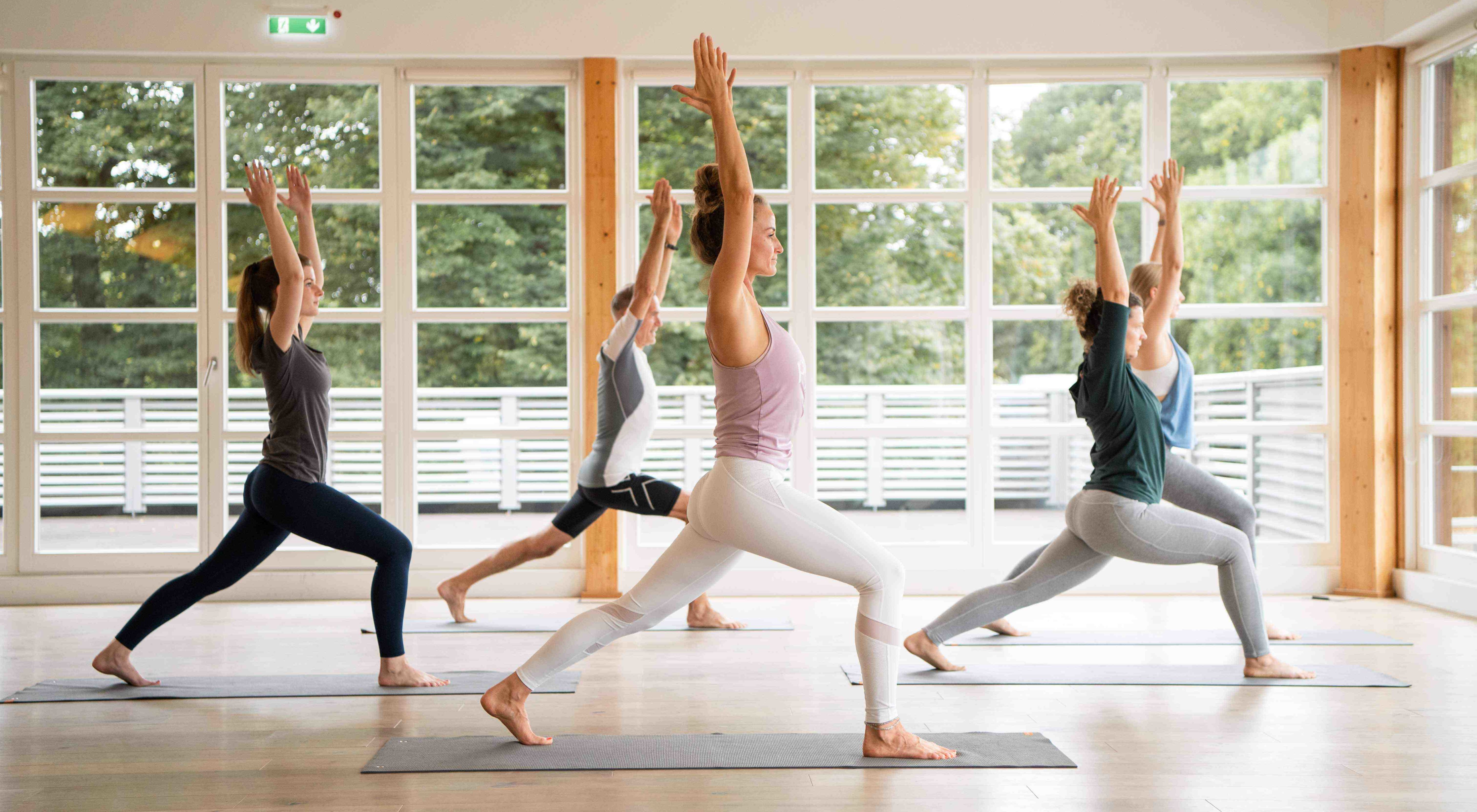
A yoga mat, yoga block, and yoga strap are standard yoga accessories. The block and strap are usually optional and are only needed for certain exercises. However, a yoga mat is highly recommended in most cases.
Yoga Mat – The Foundation of Your Practice
The mat is the only yoga accessory you truly need right from the start—it’s worth making a good investment here. If you’re practicing outdoors, a blanket may sometimes suffice, but otherwise, it’s always better to practice on a yoga mat.
Three factors are key when choosing a mat: thickness, slip resistance, and material. A thickness of 4 to 6 mm is considered standard—it provides enough cushioning for your knees without making you balance on an unstable surface.
At 6 mm and above, the mat becomes softer, which can help with joint pain but makes balance exercises more difficult.
Non-slip properties are especially important in dynamic styles like Vinyasa: natural rubber provides more reliable grip than PVC, particularly in warm conditions and when you’re sweating.
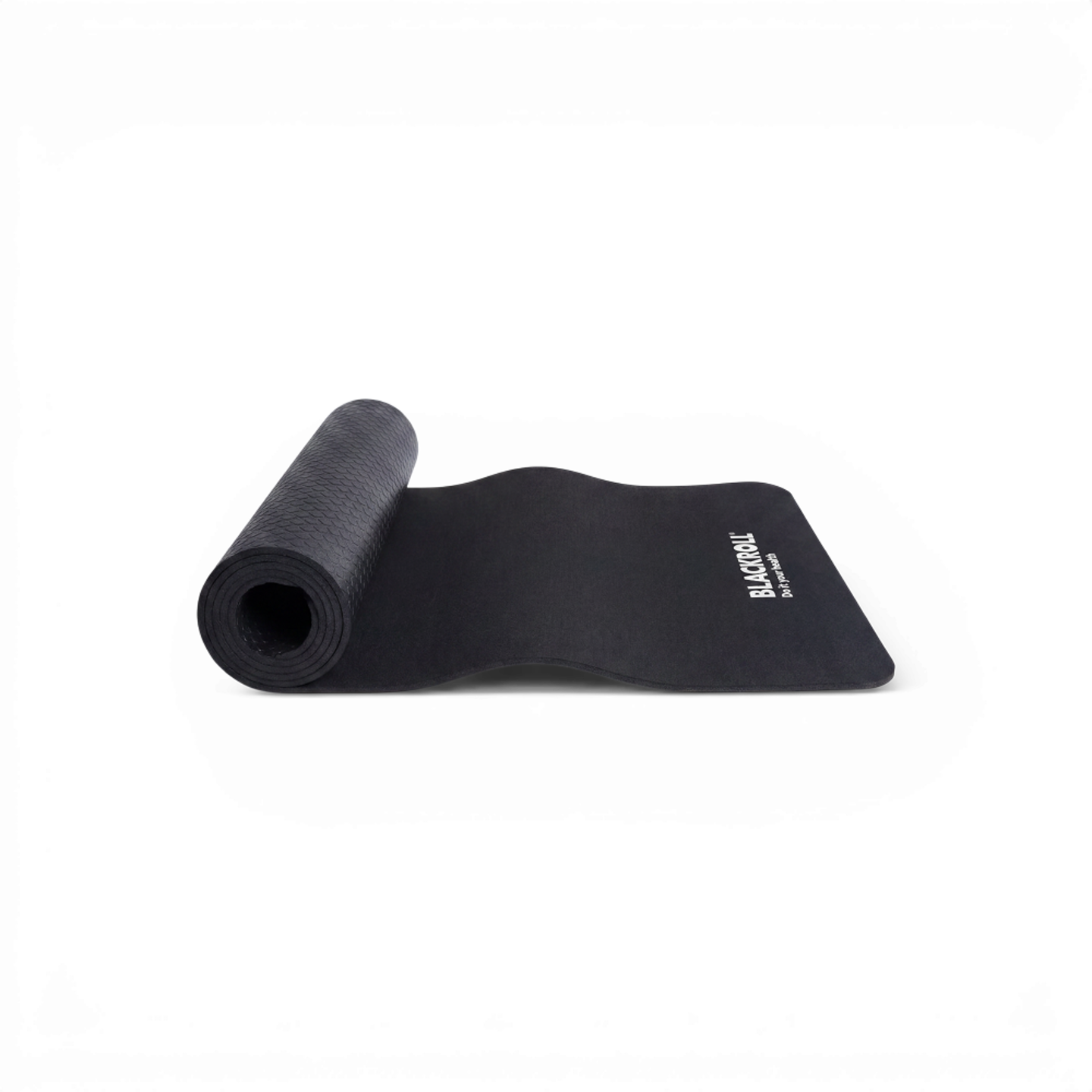
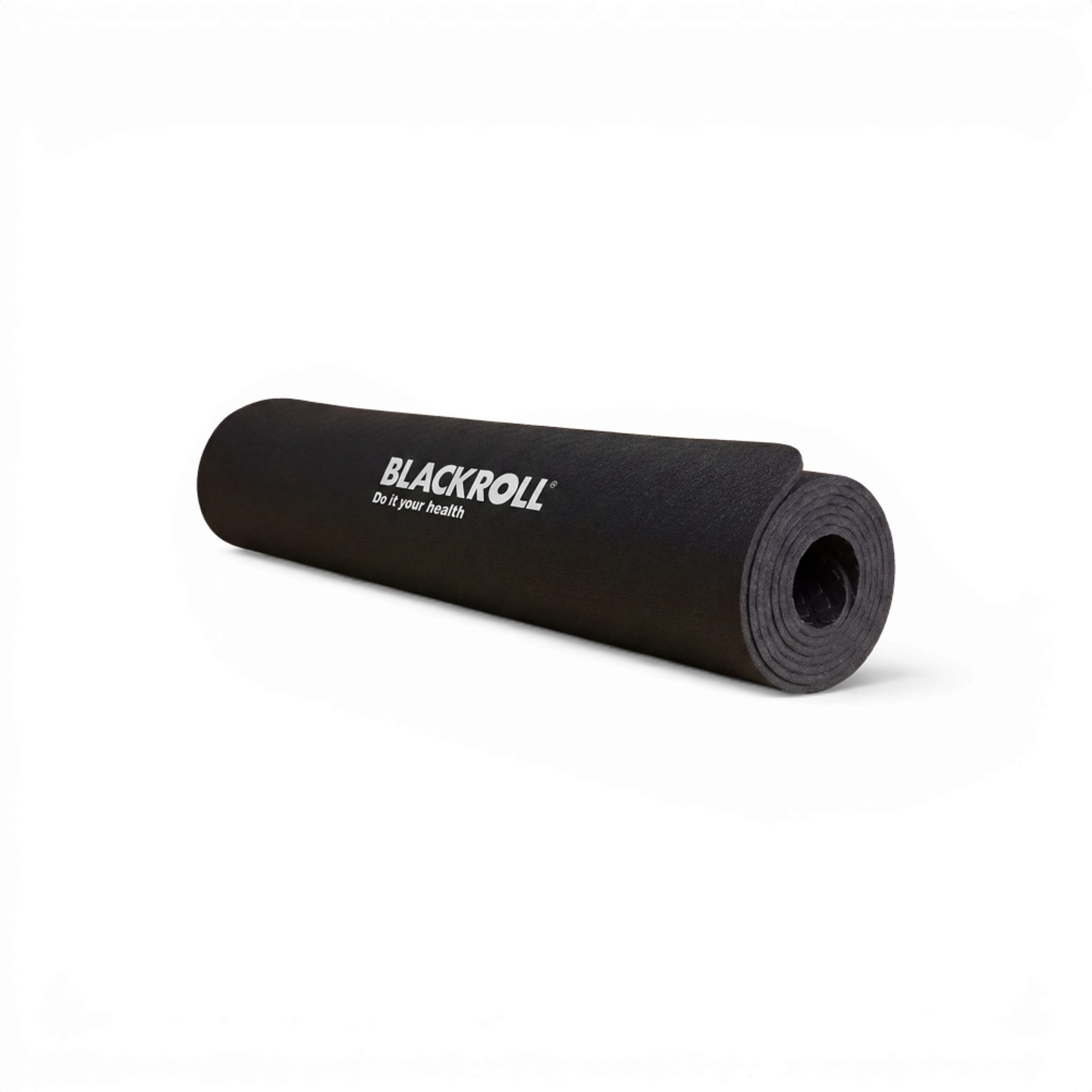
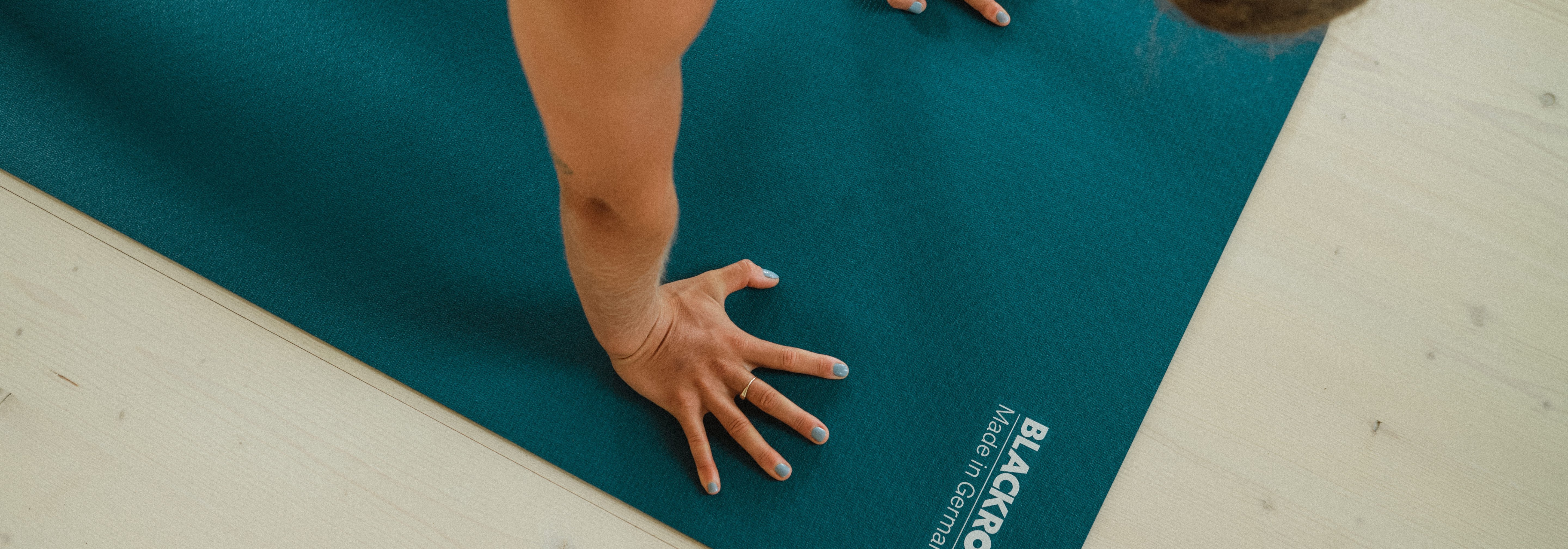
The BLACKROLL® MAT features a non-slip surface, is certified free of harmful substances, and is available in standard sizes—a solid starting point for beginners and for regular use at home.
Yoga Block – Support for Mobility and Alignment
A yoga block is what truly makes many poses accessible.
You use it to:
Bridge the gap in reach
Take pressure off your joints
Maintain proper alignment in standing poses—such as in Forward Bend, Triangle Pose, or when opening the hips.
For beginners, a block is a useful tool; advanced practitioners can use it to perfect more complex asanas.
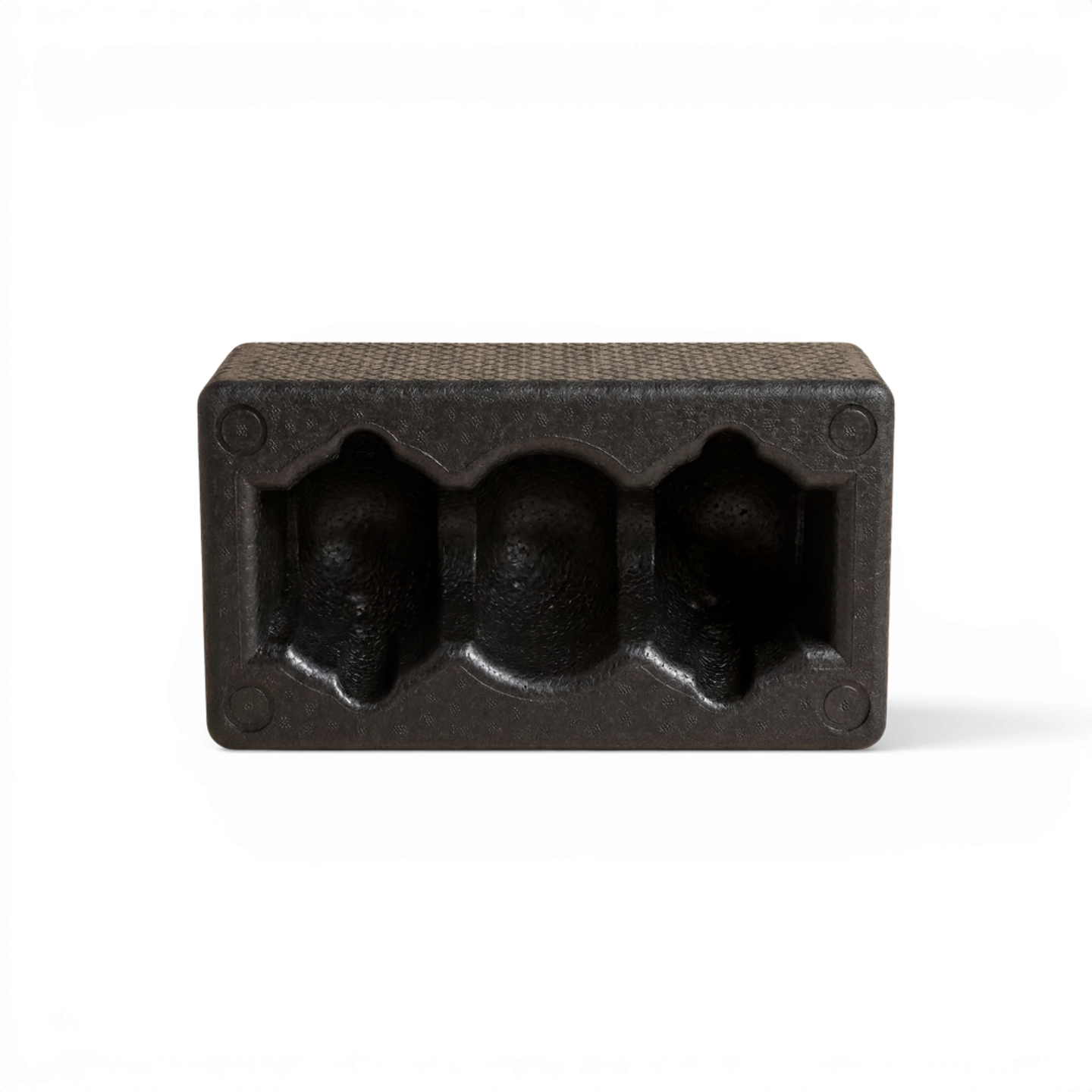
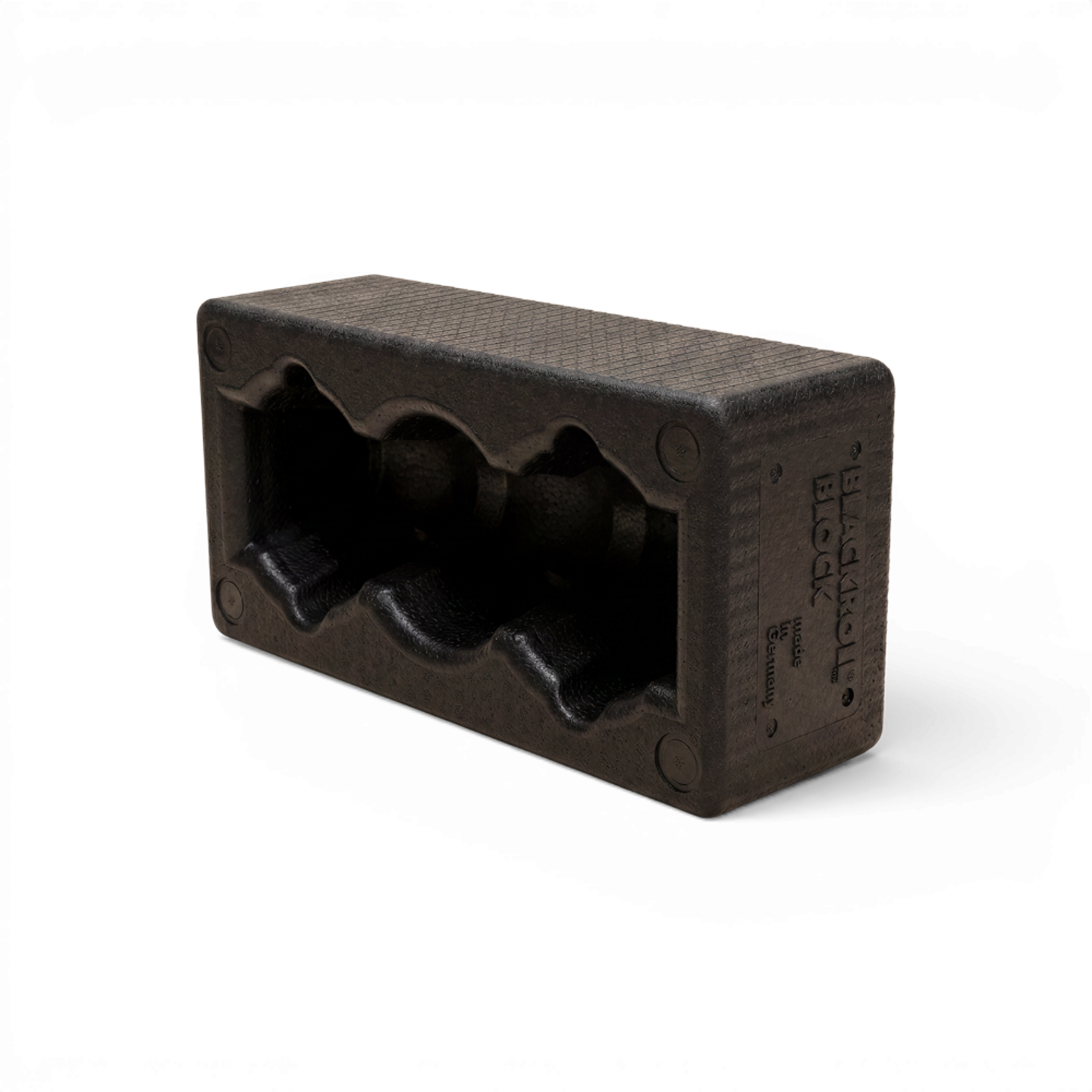
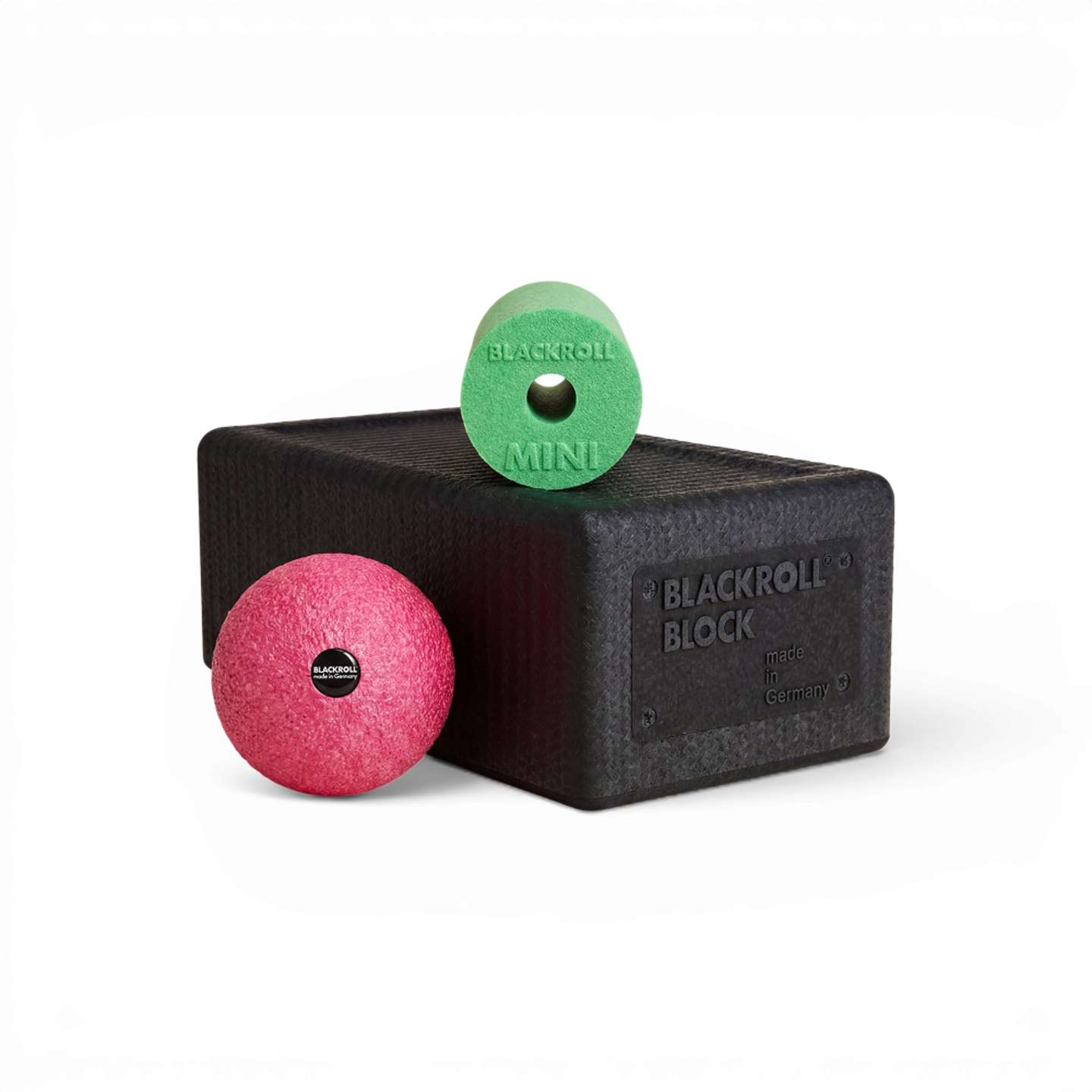
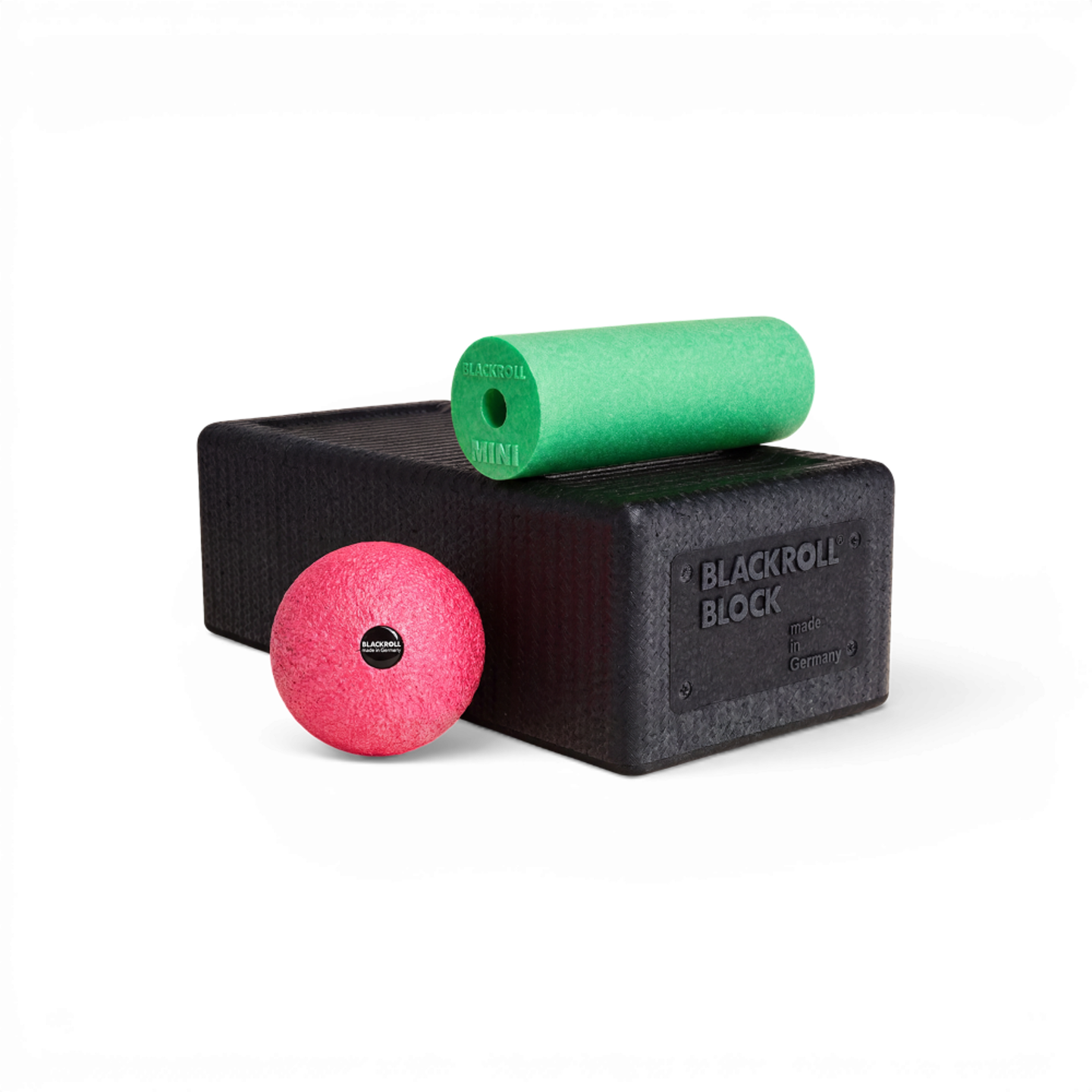
The BLACKROLL® BLOCK is available individually or in the BLOCK SET —two blocks are particularly useful for hip and shoulder exercises. You can find specific applications in our yoga block exercises.
Yoga Strap: Greater Range of Motion for Stretching Exercises
If you can’t reach your toes during a forward bend, you might make mistakes in your stretch—a yoga strap solves this problem without compromising your posture.
Use it when your hands can’t meet during a stretch, such as in shoulder openers, lying leg stretches, or binds. Especially if you have limited mobility in your hips, hamstrings, or shoulders, the strap gives you the extra length needed to hold a pose correctly—rather than forcing it.
We’ll show you suitable exercises in our yoga strap exercises.
Are yoga and meditation accessories useful?
You can practice meditation—even more so than yoga—without any props at all. There are numerous optional products that can support your practice or make your session more comfortable.
Meditation cushions and seat pads
Sitting meditation in the cross-legged or lotus position is more strenuous than it looks. A meditation cushion can help you sit still for longer periods of time.
When sitting cross-legged on the floor, the pelvis often tilts backward. The lower back rounds, the core muscles work against gravity, and the back gets tired. A meditation cushion under the buttocks tilts the pelvis slightly forward, relieves pressure on the spine, and makes it easier to open the hips. Alternatively, a regular pillow or a folded blanket can also help.
Blankets and Eye Masks for Savasana
As you relax, your body temperature may drop—a light blanket prevents the cold from disrupting your relaxation.
Savasana is an important part of your yoga practice. In this pose, you lie flat on your back and consciously relax your body and mind. Depending on your surroundings, it can get cold quickly—especially after a strenuous yoga session. A light blanket in your yoga gear can keep you warm.
An eye mask, or sleep mask, can also help block out visual stimuli and help you relax more quickly.
Singing bowls and gentle music
- Sounds and music can create a pleasant atmosphere during your yoga session or meditation and help you get into the flow and relax.
- Singing bowls and gongs can be incorporated into your yoga routine to create soothing vibrations. They’re often used to begin and end a session.
- There is a wide selection of music and sounds that can accompany yoga exercises. You can find suitable songs and playlists on nearly all online music platforms.
Yoga Gear for Beginners—What Should You Look For?
Many beginner yogis make the mistake of stocking up on too many accessories right from the start. Start with a good mat and a block —that’s enough for most beginner classes. You can temporarily replace a block with sturdy books. That works for the beginning.
Common Mistakes to Avoid
- You should only buyspecialized accessories like bolsters or yoga wheels if you regularly do exercises that require them.
- A yoga mat that’s too thick: A soft mat feels comfortable, but it makes balance exercises more difficult. A thickness of 4 to 6 mm is usually ideal.
- Buyinga full set of gear before your first class: Many studios offer basic equipment for rent—take advantage of that before you buy anything.
Yoga for Recovery: Which Accessories Can Help You?
Yoga can support physical and mental recovery—but it also requires its own recovery periods. The right accessories can help you practice in a more focused and relaxed way.
In some yoga styles, such as Hatha Yoga and Yin Yoga, you hold challenging poses for several minutes. During this time, your connective tissue—fascia, tendons, and joint capsules—is stretched and supplied with blood. BLACKROLL® products have been specifically designed to promote the recovery of these areas—even during activities like yoga.
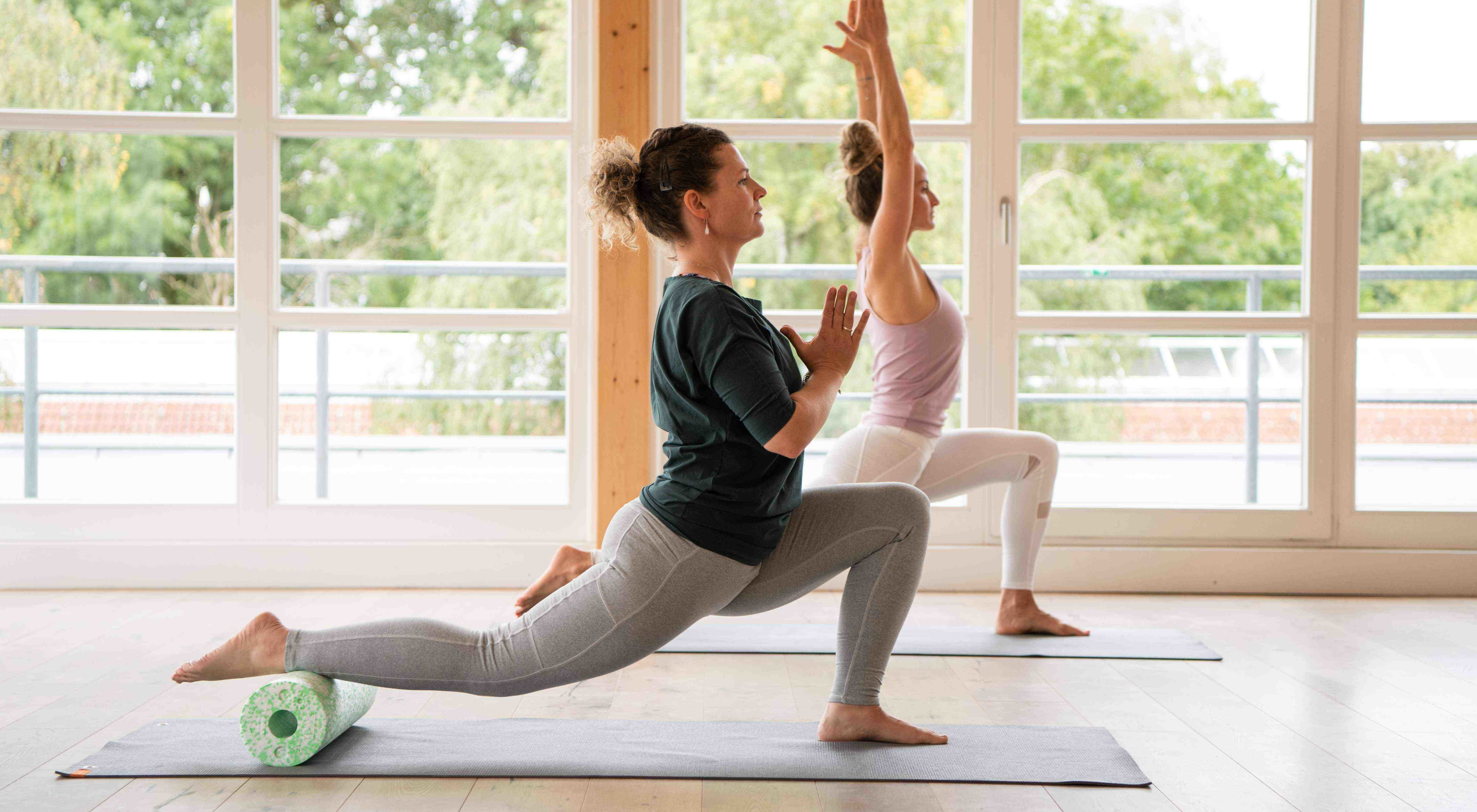
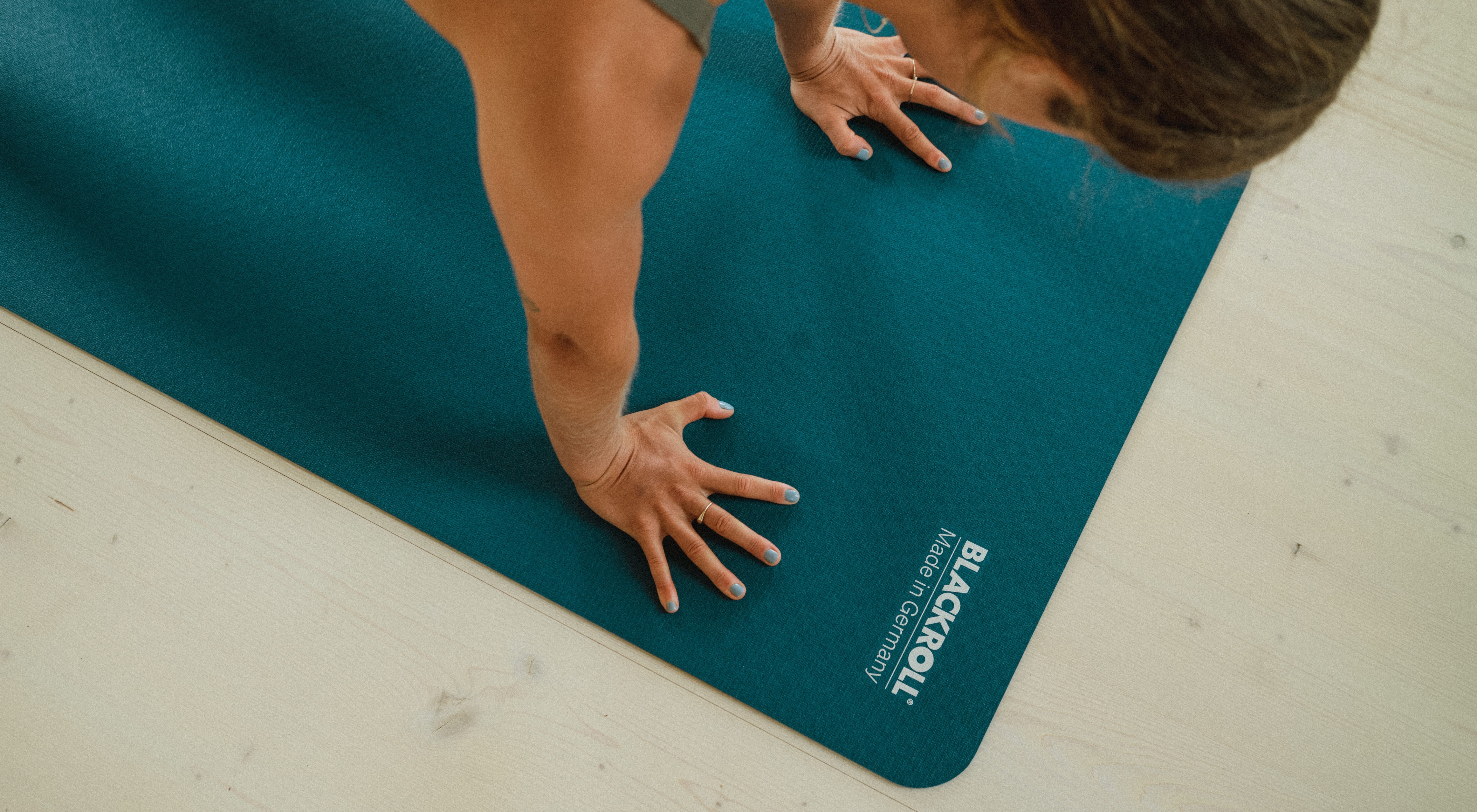
Yoga mat: A non-slip, lightly padded mat is especially important for long floor poses. The BLACKROLL® MAT is ideal for yoga and provides stability, slip resistance, and joint protection.
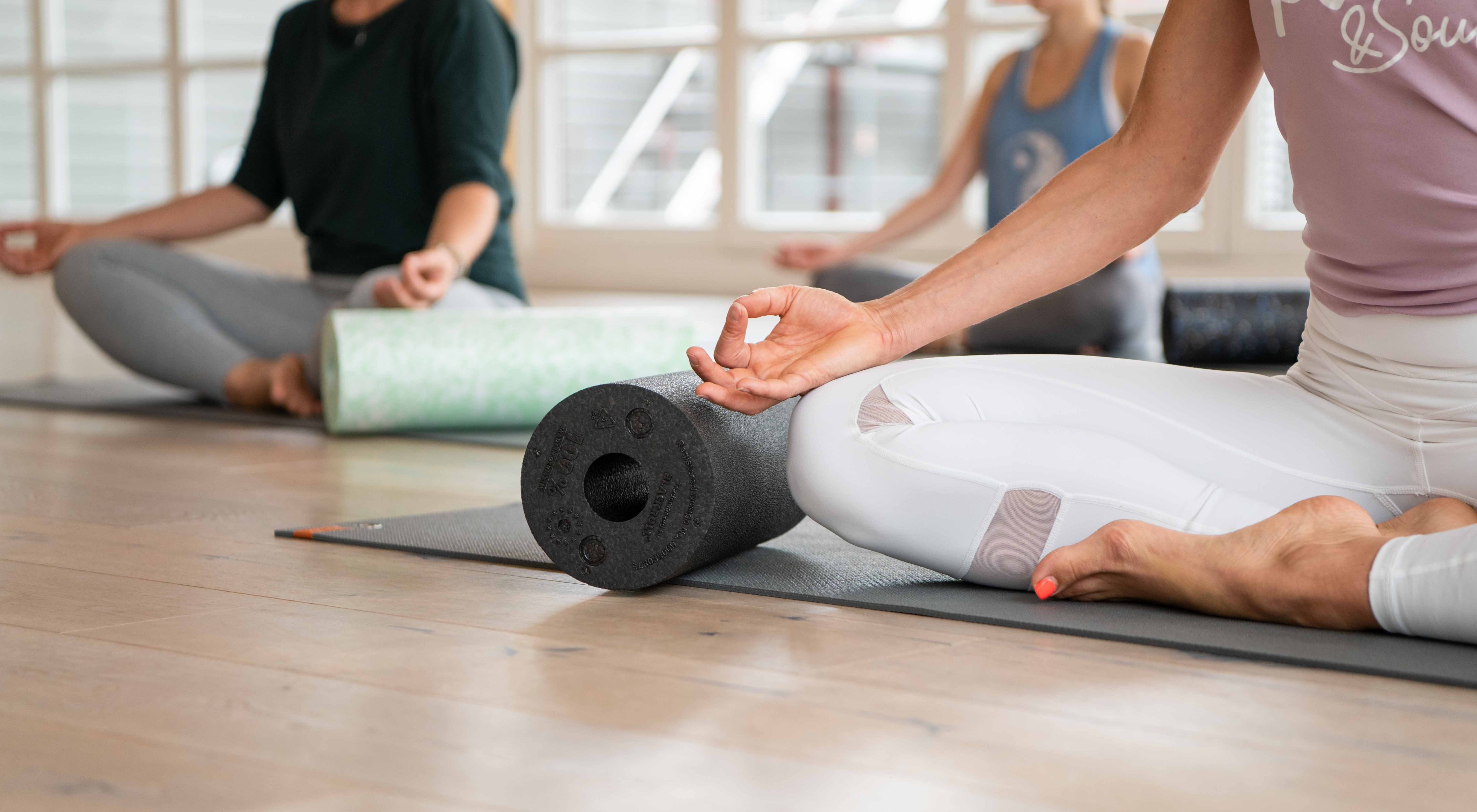
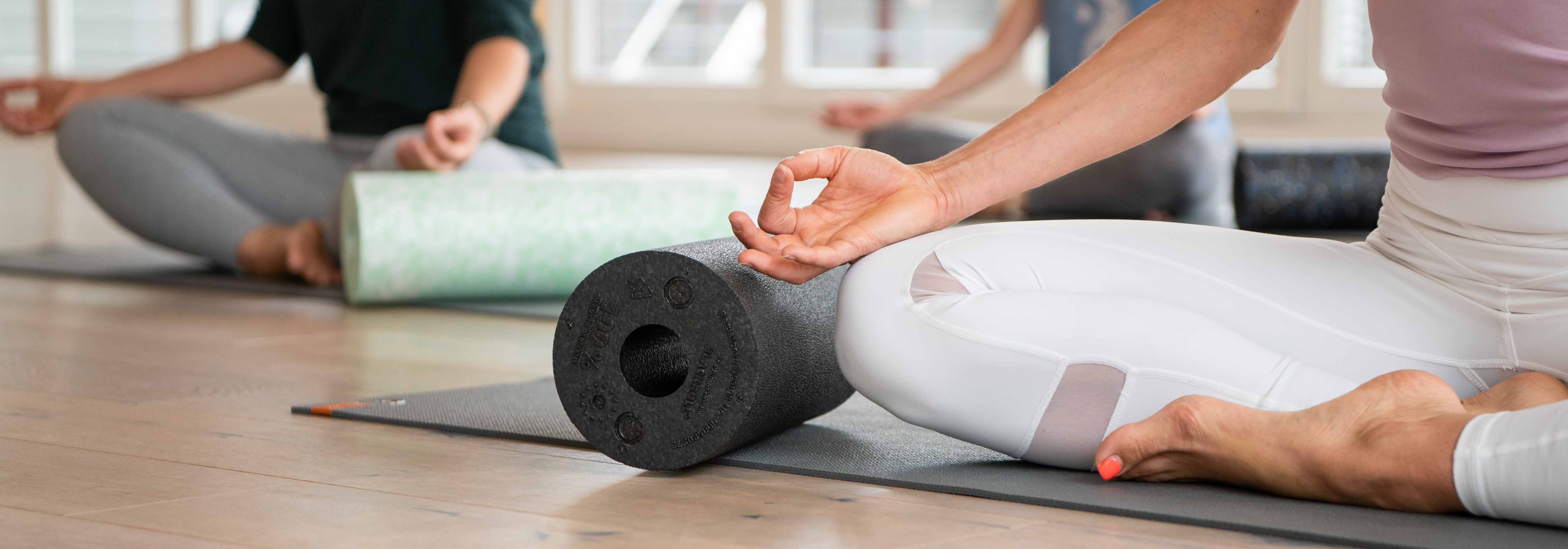
Yoga block: Brings the floor closer, relieves pressure on joints, and enables proper alignment even in deep poses. The BLACKROLL® BLOCK is made from 100% recyclable EPP and is sturdy enough to support your body weight.
BLACKROLL Ball 12: Used before or after a yoga session, the BLACKROLL® BALL 12 can specifically relieve tension in the feet, calves, or glutes—as a quick myofascial release.


FAQ – Yoga Accessories
A non-slip mat and comfortable clothing are the most important purchases. A block, used as a supplement from the very beginning, makes it easier to perform many poses correctly. A strap, bolster, and meditation cushion are useful once you know which style of practice suits you—but they’re not a must-have to get started.
A mat that’s 4 to 5 mm thick, has good traction, and is about 180 cm long is the right choice for most beginners. Natural rubber offers more grip than PVC, especially during dynamic exercises. Avoid mats thicker than 8 mm—they feel soft but make balance exercises noticeably harder.
There’s no mandatory set—but a bolster, block, and blanket make a noticeable difference during intense sessions. Yin poses are held for 3 to 5 minutes. These props help you relax more deeply in the poses, which is beneficial for your connective tissue. Those who practice Yin regularly benefit the most from these three tools.
At most studios, comfortable clothing and water are sufficient—mats and blocks are provided on loan. Bringing your own mat is recommended for hygiene reasons, but it’s not a must for your first class. Practicing barefoot is standard; yoga socks with non-slip soles are optional.
Sets are often attractively priced, but check the mat thickness, material, and block size before buying. A solid individual item is better than a mediocre complete set. A set makes sense if the mat, block, and strap are all made of high-quality materials—and you already know you’ll use all three regularly.