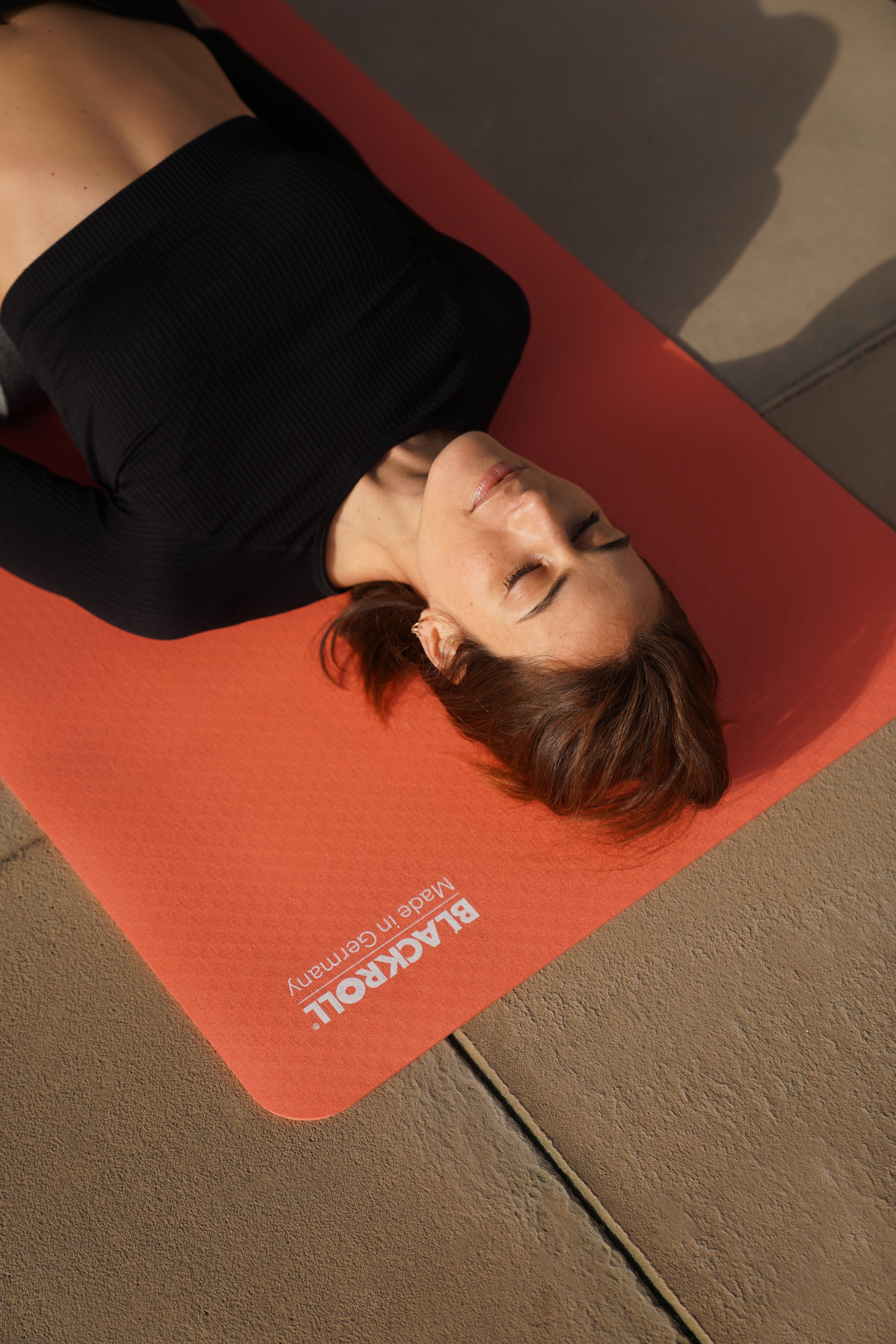
Buying the Right Yoga Mat: What to Look For

Whether you’ve just signed up for your first yoga class or aren’t satisfied with your current equipment, the question of which yoga mat is right for you is one that both beginners and advanced practitioners ask themselves. Many people choose their first yoga mat based solely on price or color—and only realize afterward that their choice wasn’t the best. To help you avoid making that mistake, we’ve compiled the most important information about yoga mats to help you make an informed purchasing decision.
In a nutshell
- The most important criteria when buying a yoga mat are slip resistance, thickness, material, and the absence of harmful substances.
- The right thickness (3 to 5 mm for most people) affects stability and joint protection.
- You can identify mats free of harmful substances by the OEKO-TEX® STANDARD 100 label.
What makes a good yoga mat?
The most important criteria when choosing a good yoga mat are slip resistance, thickness, material, and sustainability—specifically, the absence of harmful substances.
Have you already taken a few yoga classes and perhaps tried out several yoga mats? Then you know just how much the mat affects your well-being during practice. Since yoga places great emphasis on the balance between exertion and relaxation, it’s best to choose the right yoga mat for your individual needs.
Non-slip properties
A good grip isn’t just important for performing the asanas correctly—it also helps prevent injuries. When it comes to slip resistance, two different characteristics are often lumped together.
- The mat’s slip resistance on the floor
- The grip that keeps your hands and feet—even when sweaty—securely on the mat
Which material and surface texture perform better here also depends on your yoga practice. More on that in the next section.
Thickness and cushioning
How many millimeters thick a good yoga mat should be depends on whether you need extra cushioning for your knees and elbows and whether space and portability are important to you. A good yoga mat should provide protection on hard floors but not be too soft.
- 1 to 2 mm: Foldable travel mats are often extra thin to save space. This comes at the expense of cushioning, which you’ll notice especially on hard stone floors.
- 3 to 5 mm: Most yoga mats are 3 to 5 millimeters thick, which is ideal for most yogis. They’re thin enough to provide good grip and protect your joints on hard floors.
6 to 8 mm: Thicker yoga mats are gentler on your joints, but this comes at the expense of stability. You’ll have less grip, for example, when standing on one leg. Thick mats also take up more space and weigh more, making them impractical to transport.
Material
The choice of material determines grip, weight, durability, and what comes into direct contact with your skin during practice.
- PVC – affordable, durable, good grip. Often contains plasticizers. Not biodegradable.
- TPE – Thermoplastic elastomers are plasticizer-free, latex-free, and easier to recycle than PVC. Moderate grip, a good compromise for beginners.
- Natural rubber – good grip, biodegradable, slightly more expensive than plastic mats. If you have a latex allergy, look for “latex-free” labels.
- Cork – becomes less slippery when sweaty, not more slippery. Natural product, biodegradable.
- Virgin wool – soft, warm, but offers little grip. Suitable for meditation and gentle styles, but not for dynamic practice.
Toxin-Free and Sustainable
- When you practice on a yoga mat, your body is in direct contact with the material. Since yoga is often practiced in harmony with nature, you should look for materials that are free of harmful substances and sustainable.
- PVC and similar plastics are not biodegradable and often contain harmful plasticizers. Mats made of TPE do not contain these plasticizers and are therefore a sensible alternative.
- Natural materials such as cork, jute, hemp, and bamboo are renewable resources. When buying a yoga mat, however, be sure to check whether other materials have been used in its production.
- The OEKO-TEX® STANDARD 100 is considered a reliable certification, awarded to products that have been tested and found to be free of harmful substances.
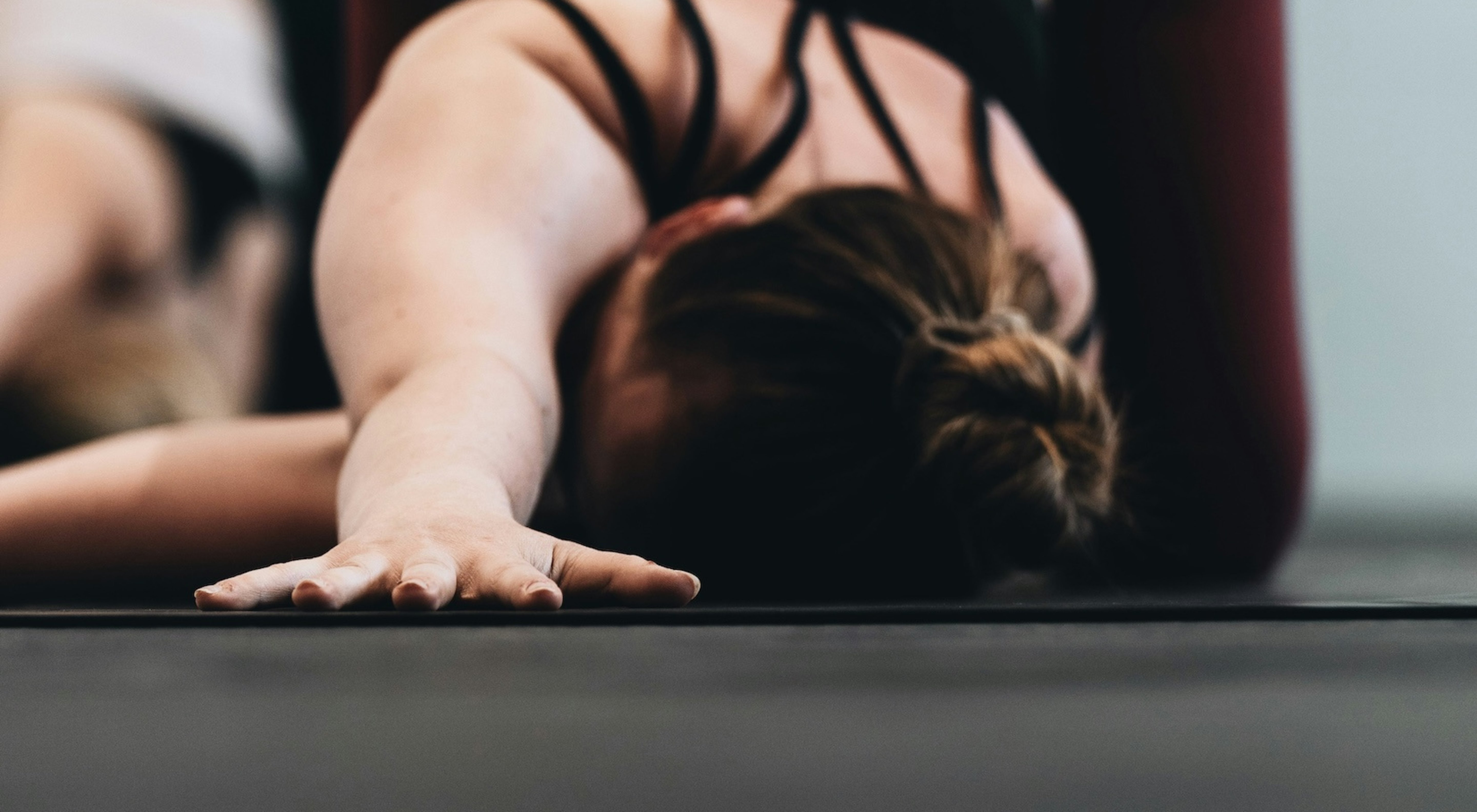
Non-Slip Yoga Mat – with Grip
When it comes to yoga mats, slip resistance means two things: The mat stays on the floor. And: Your hands and feet stay on the mat.
Non-slip properties are arguably the most important feature of a yoga mat. After all, if the mat shifts on the floor with every step, or if your hands and feet slip off it, you won’t be able to perform the exercises correctly—and you might even risk injury.
Dry vs. wet: Which material provides grip under pressure?
Not every material behaves the same way when exposed to sweat.
- PVC—good grip in dry conditions, but grip decreases when wet
- TPE – moderate stability in both dry and wet conditions
- Natural rubber – strong in dry conditions, remains reliable even when wet
- Cork – grip improves with moisture, best grip during intense play
- Virgin wool – no significant grip, not suitable for dynamic styles
For hot yoga, power yoga, or sweaty Vinyasa sessions, you should opt for cork, natural rubber, or TPE.
Surface: rough or smooth?
Some mats have perforated or textured surfaces for extra traction—jute-like, studded, or open-cell textures. This increases grip but can feel uncomfortable on your knees and palms. If you’re more sensitive, opt for natural rubber, cork, or soft TPE instead of rough surfaces.
Foldable yoga mat: practical for travel?
A foldable yoga mat has the advantage of being easy to carry in a backpack or suitcase.
If you travel a lot or frequently move between the yoga studio, work, and home, a foldable yoga mat is a sensible purchase. When buying one, make sure it has a minimum thickness of 1.5 mm. Otherwise, it could be painful on hard surfaces. Check to see if the dimensions when folded fit in your bag.
Buying a yoga mat: What should you look for?
The right yoga mat for you depends on how often you practice, where you practice, what your body can handle—and how much you’re willing to spend for better quality.
Body Weight and Intended Use
If you practice daily and intensely, you’ll need a more durable material than someone who does Yin Yoga twice a week. If you’re heavier, opt for a high-quality, thicker mat starting at 5 millimeters.
Indoors vs. Outdoors
For indoor use, the flooring is the deciding factor: On hardwood or tile floors, the underside needs to be slip-resistant. For outdoor practice, UV resistance and easy cleaning are key—natural rubber is sensitive to direct sunlight and is less suitable.
Allergies and Material Compatibility
If you have a latex allergy, be sure not to use natural rubber unless it’s explicitly labeled “latex-free.” TPE and cork are safe alternatives. PVC may have a slight odor when you first unpack it—letting it air out for a few days helps.
Price vs. Quality
A yoga mat doesn’t have to be expensive. Even in the lower price range, you can find mats suitable for a safe and regular practice. If you practice yoga regularly, you can also invest in higher quality, durability, and products free of harmful substances.
- Under €25 – A good entry point, but with compromises in grip and durability
- €30–60 – solid quality for regular practice
- €60–100 – Premium quality—durable and tested for harmful substances
- Over 100 € – often high quality, but poor value for money
Which yoga mat is best for which yoga style?
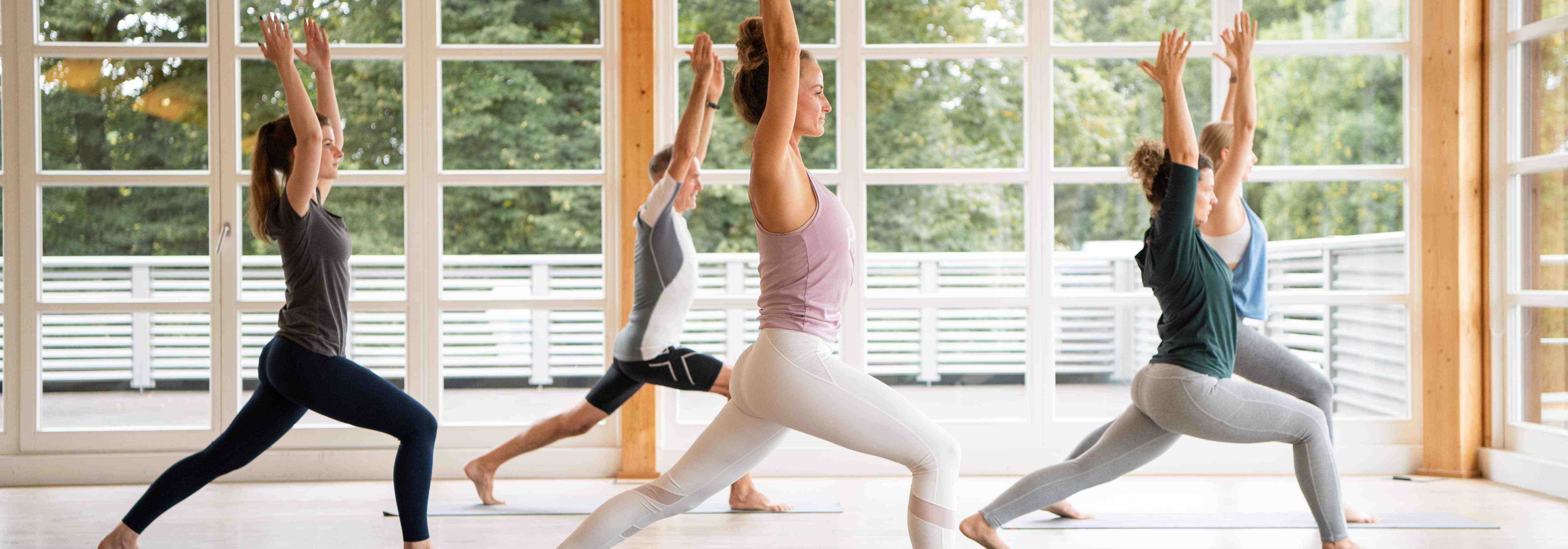
Yoga styles can vary greatly in intensity and focus. Therefore, choosing the right yoga mat also depends on your preferred style.
Vinyasa, Power Yoga, Ashtanga – Grip over cushioning
Flowing movements, jumps, and standing poses under load: If the focus is on flow and power, you should prioritize grip over cushioning.
- 4 to 5 mm thickness for stable floor contact
- Material: Natural rubber or cork, both sweat-resistant
Suitable exercises: Fascia yoga, yoga for runners —Vinyasa yoga
Hot Yoga, Bikram Yoga – When things get sweaty
In heated rooms and during very intense sessions, you’ll sweat more—the mat needs to compensate for that.
- Cork is the top choice: Its open-cell structure becomes more slip-resistant when wet
- Natural rubber with a microfiber overlay as an alternative
Yin Yoga, Hatha Yoga, Recovery – Comfort over grip
Asanas held for long periods require cushioning. If you’re also heavier, thicker mats are recommended.
- 6–8 mm, natural rubber or TPE for a comfortable feel
- Pure new wool is an option for floor-based practice only
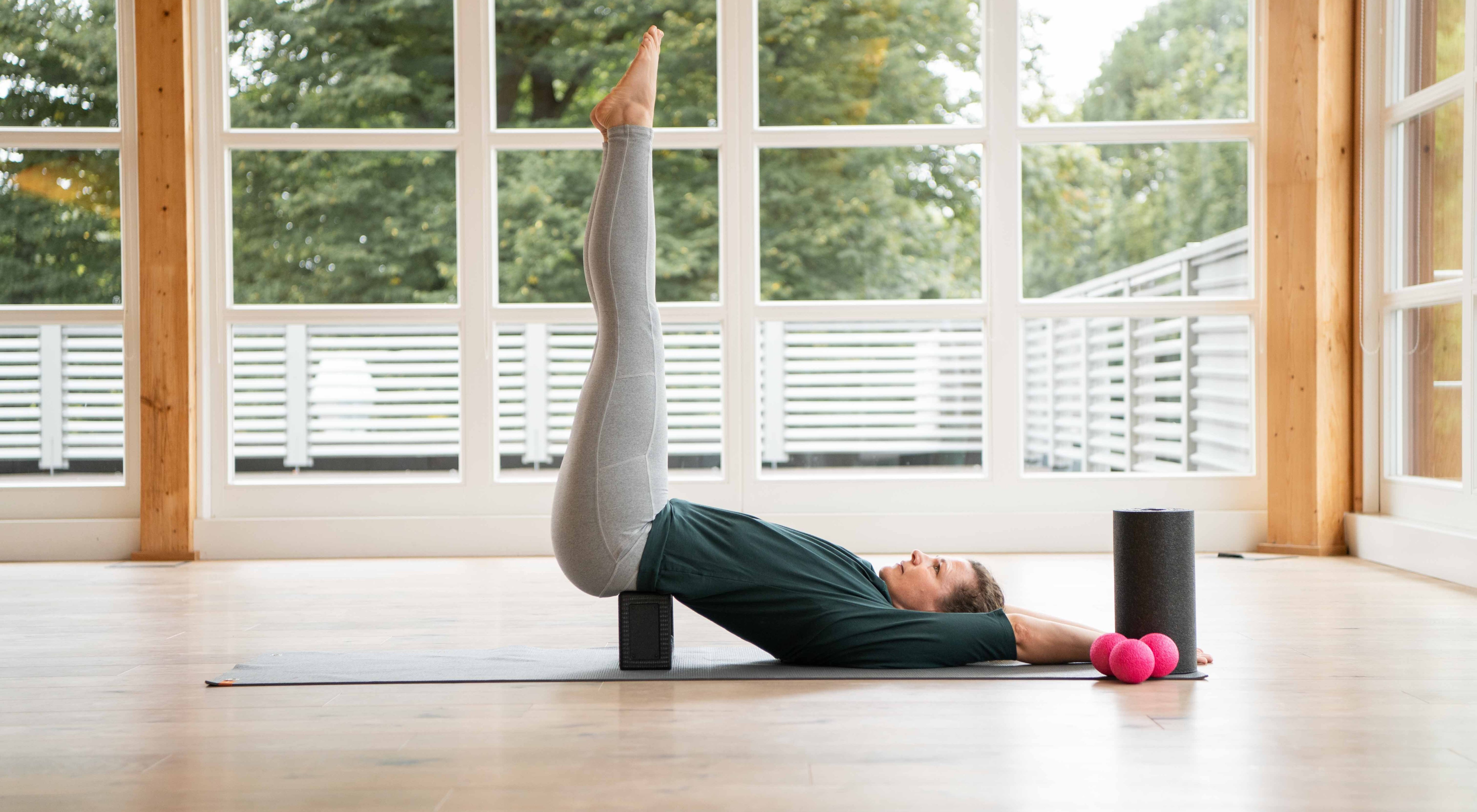
For deep Yin poses without joint pressure: The BLACKROLL Block provides support where the mat alone isn’t enough.
Related links: Evening yoga, yoga block exercises
Meditation and gentle practice
If you meditate for long periods while sitting or lying down, you need a comfortable, soft surface that still feels pleasant after an hour.
- Cork or virgin wool for a warm, comfortable feel when sitting
- 6–8 mm or a standard mat with the BLACKROLL BLOCK to elevate the pelvis and align the spine.
Related links: Yoga in bed, yoga strap exercises
How to Properly Clean and Store a Yoga Mat
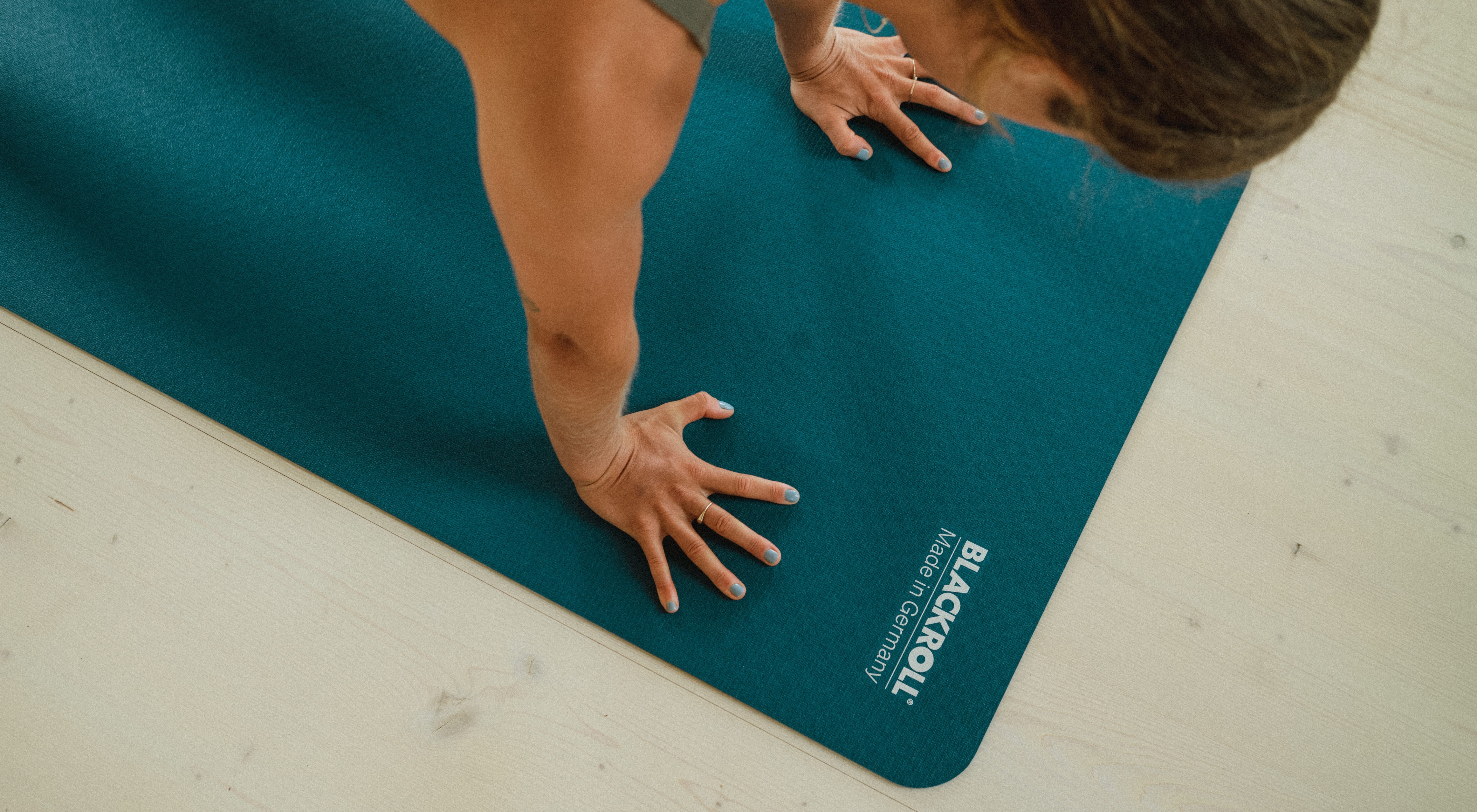
A yoga mat should be maintained regularly to extend its life and ensure a more comfortable practice.
It’s best to wipe the mat down with a damp cloth after each session. You can use mild soap or a water-vinegar mixture (4:1) for this.
For deep cleaning, keep the following in mind: PVC and TPE can withstand a longer wash with detergent, but natural rubber cannot—for natural rubber, simply dab it with a damp cloth; never soak it. You can clean cork with a mild, damp cloth, but do not use harsh cleaners.
After wiping it down, let the yoga mat air dry. When storing it, make sure it’s always dry before rolling or folding it. Do not place heavy objects on the yoga mat.
If you like to leave your yoga mat outside, keep in mind that UV light and weather conditions can shorten the mat’s lifespan.
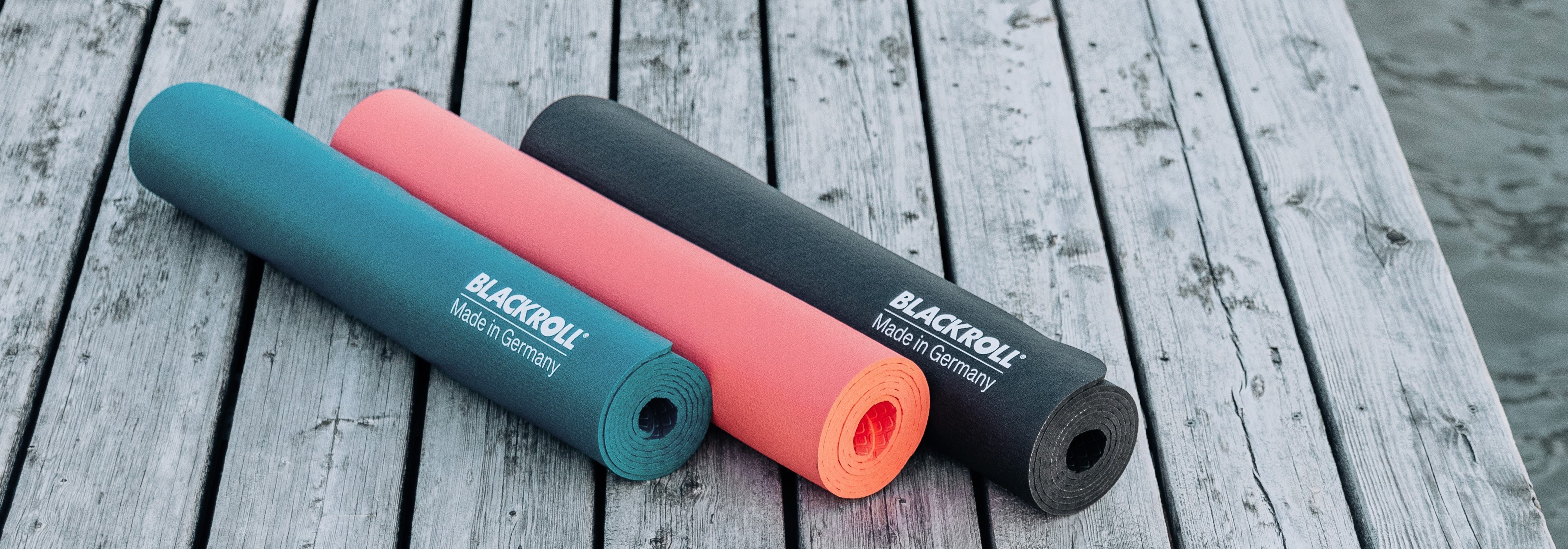
The Mat as a Training Partner
A yoga mat isn’t just a passive accessory—it affects how stable you are when standing, how relaxed you are when lying down, and how well your body recovers after a session.
Stability comes from the right balance of grip and cushioning: if it’s too soft, standing poses require unnecessary effort; if it’s too hard, prolonged floor poses put strain on your joints. A mat that suits your practice reduces the need for compensatory movements—and lets you truly feel your breath and movement, rather than focusing on a slippery surface.
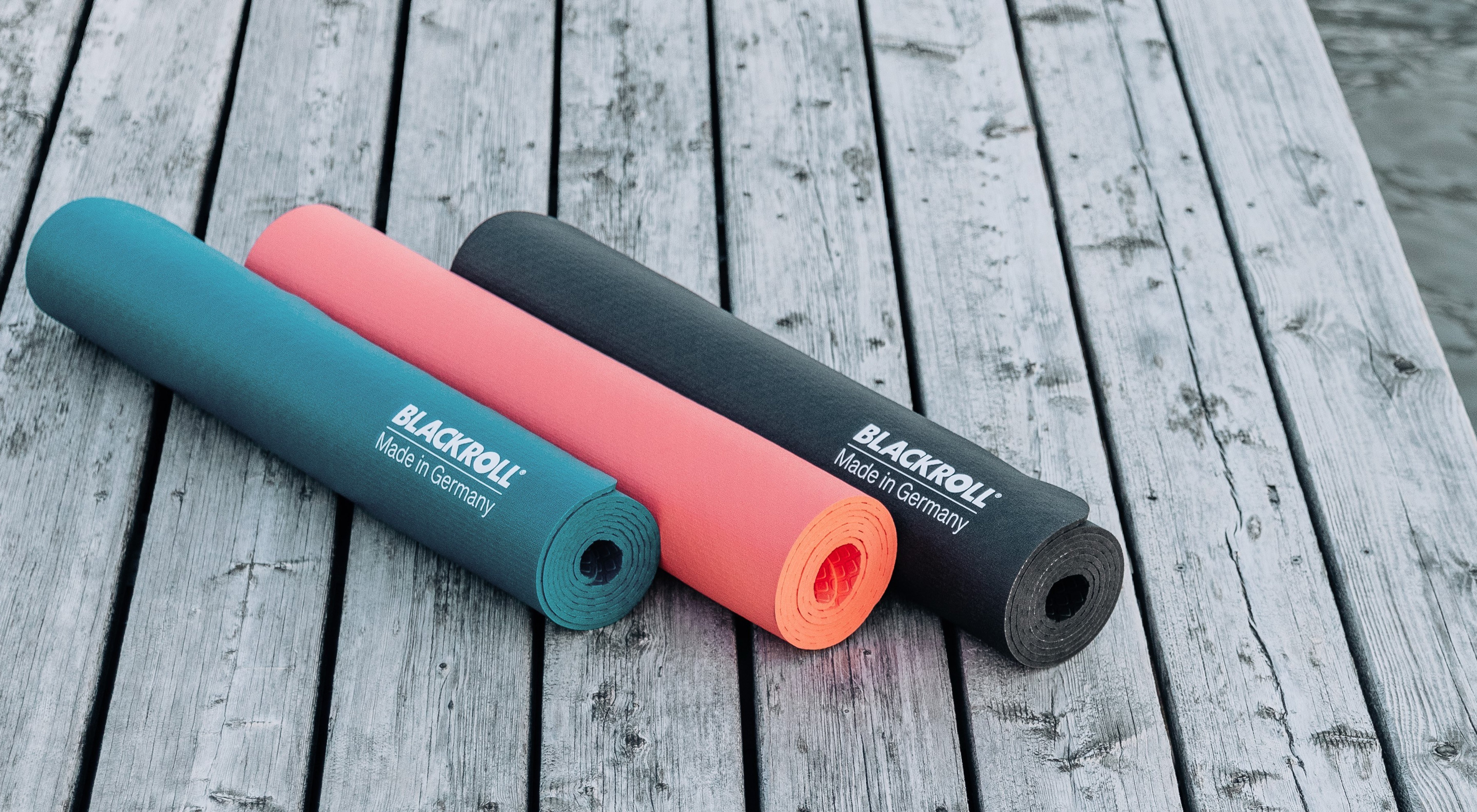
The BLACKROLL MAT is a high-quality mat designed to strike a balance between joint-friendly cushioning and stability. It serves both as a yoga mat and as a workout mat for various exercises. Thanks to its STANDARD 100 by OEKO-TEX® certification, you can be sure that the material is completely free of harmful substances.
When you combine yoga with a fascia routine, you give your body what it needs after a session: targeted recovery of the structures that have been worked. The BLACKROLL Block helps you hold deep poses that are difficult to maintain on the mat alone.
Find the right yoga mat for your practice
The right yoga mat depends on your body, the intensity of your practice, your style, and your environment. Grip, thickness, and material determine how stable you are, how well your joints are protected, and how long the mat will last. Those who practice regularly benefit from a toxin-free, durable mat—such as the BLACKROLL MAT, certified according to STANDARD 100 by OEKO-TEX®.


FAQ – Yoga Mats: The Most Important Questions
For beginners, a TPE mat with a thickness of 3 to 5 mm is ideal. It’s phthalate-free, offers solid grip in both dry and wet conditions, and is priced in the mid-range. If you’re still unsure which style you prefer, a TPE mat is a good choice—without having to invest too much or make the wrong compromises.
Grip, thickness, and material must suit your individual yoga practice. A good yoga mat stays in place on the floor, provides a secure grip for your hands and feet, and protects your joints. It’s important that the mat is free of harmful substances because it comes into direct contact with your skin. The OEKO-TEX® STANDARD 100 label is considered a reliable guide when making a purchase.
Non-slip properties are the most important feature of a yoga mat. Without them, asanas cannot be performed correctly—and the risk of injury increases. When dry, most materials provide sufficient grip. For intense practice involving sweat, cork and natural rubber are the more reliable options, as they do not lose their grip when wet.
Wipe it down with a damp cloth after each session—using mild soap or a 4:1 mixture of water and vinegar. PVC and TPE can withstand a more thorough wash, but natural rubber should only be dabbed with a damp cloth; never soak it. Always let it air dry before rolling up or storing the mat.
For anyone who frequently switches between the studio, the office, and home—or travels a lot—a foldable travel yoga mat is practical. Make sure it’s at least 1.5 mm thick; otherwise, it will be uncomfortable on hard floors. Before buying, check that the folded dimensions fit in your bag.