



Fascia & Self-Massage5 min read
What Is Fascia? Explained Simply and Clearly.
published by Prof. Dr. Robert Schleip in Fascia & Self-Massage on 28/01/2021 - updated at 23/06/2026

Prof. Dr. Robert Schleip
Fascia is a fascinating tissue that has long been underestimated—yet it permeates our entire body like a fine-meshed net. It envelops muscles, organs, and nerves, providing our body not only with support but also with elasticity, mobility, and structure.
According to renowned fascia researcher Dr. Robert Schleip, the average weight of fascia in humans is 18 to 23 kilograms.
In recent years, both research and clinical practice have recognized that fascia is far more than just “packaging.” It influences our posture, pain, performance, recovery, and even our mental well-being.
In this article, you’ll learn:
- what fascia actually is and how it’s structured
- why they are considered our largest sensory organ
- what role they play in pain, sports, and movement
- how you can keep your fascia elastic and healthy
In short: If you want to understand how your body really works—there’s no getting around fascia.
01. Fascia Explained Simply
Fascia is a network-like connective tissue that envelops muscles, organs, and nerves and runs throughout the entire body. It stabilizes, transmits forces, and is rich in nerve cells— much like a sensory organ.
The term “fascia” comes from the Latin “fascia” and means something like “band,” “bundle,” or “binding.”
This accurately describes its function: Fascia consists of connective tissue sheaths that extend throughout the entire body like an elastic, three-dimensional network—down to the deepest regions. It surrounds muscles, organs, nerves, blood vessels, and bones— connecting everything together.
Imagine fascia as an internal full-body bandage: it gives the body shape, support, and elasticity without stiffening it. It holds the organs in place, provides stability at rest, and supports everyday movements—whether you’re standing, walking, sitting, or lying down.
Good to know: When fasciae become stuck together or harden, they can cause pain or restrict mobility. That’s why regular exercise—ideally combined with fascia training—is important for keeping the tissue supple.
The so-called tensegrity model, which originated in architecture, illustrates this particularly well. It describes structures that are stable solely through the balance of tensile and compressive forces. In the human body, the bones play the role of the rigid elements, held in place by the tensioned fascial network— not through rigid muscle force, but through a finely tuned interplay of elastic tensions.
In short: Fascia connects, supports, and stabilizes—and it does so with astonishing ease and precision.
Tensegrity Model
This can be explained using the tensegrity model from architecture. In this model, rigid elements are held together and stabilized purely through the balance of tensile forces. Using the body as an example, the rigid elements are the bones, which essentially float freely within the tensioned fascial network.

A Sliced Grapefruit
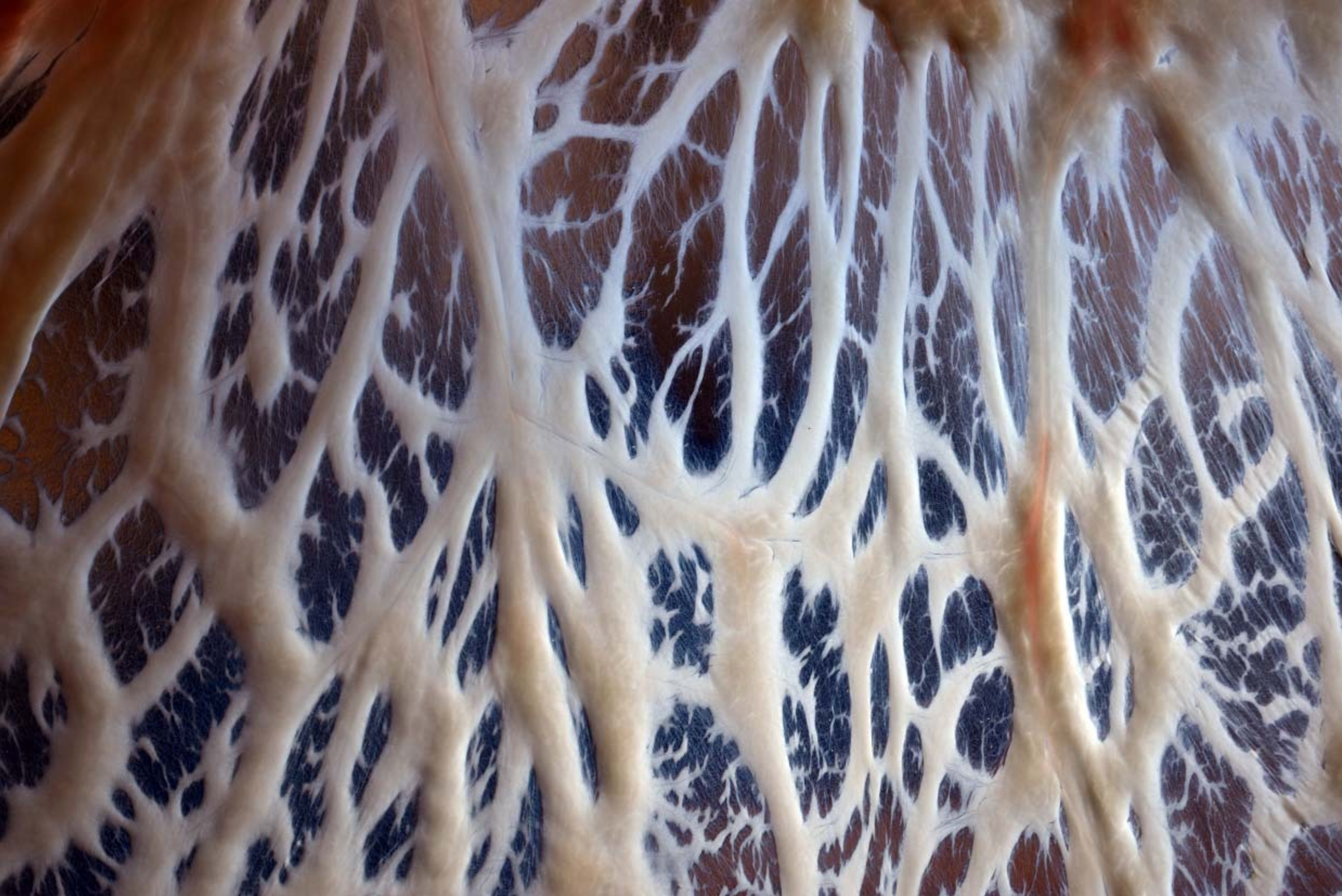
In a piece of raw meat, the fascia are the white membranes that surround and permeate it. In plants, such as oranges and grapefruits, they can be recognized in a similar way. Here, too, membranes shape and separate the fruit flesh.

Fascia Tools
02. How It All Began with Fascia
Today we know that fascia is much more than just “packaging material”: Fascia plays an active role in pain, recovery, and movement. New studies in fascia research show how closely fascia is linked to the nervous system, mental health, and sleep quality.
For a long time, fascia was considered insignificant in medical research. The fine, white connective tissue was usually removed during anatomical dissections to gain access to muscles, organs, nerves, or blood vessels—the actual “stars” of bodily research. Fascia was regarded as mere “packaging material” with no function of its own. Only a few naturopathic approaches, such as osteopathy, had already suspected a deeper significance—though without a clear scientific basis.
It was not until the last two decades that a fundamental shift in thinking began: Scientists discovered that fascia is far more than just a covering. It plays an active role in force transmission and body awareness and can even cause or exacerbate pain. The international
breakthrough came in 2007 with the first Fascia Research Congress in Boston, where researchers from the fields of anatomy, neurology, sports medicine, and physical therapy exchanged their findings. One of the leading international experts was the German human biologist and fascia researcher Dr. Robert Schleip.
Today, even though not all of its functions have been fully elucidated, one thing is certain: fascia is a distinct, dynamic organ that plays a crucial role in health, mobility, and freedom from pain.
03. Fascia—a Special Type of Connective Tissue
Like other connective tissues, fascia consists of cells (primarily fibroblasts) and a surrounding extracellular matrix. This matrix contains collagen and elastic fibers as well as a high proportion of hyaluronic acid, which acts as a natural lubricant.
A key difference from other tissues:
Fascia consists of about 70% water.
This high water content is crucial to its function—because only when well-hydrated is it elastic, flexible, and able to glide smoothly. The hyaluronic acid it contains becomes more fluid during movement, ensuring that the individual layers of fascia glide smoothly past one another. If there is a prolonged lack of movement, this substance solidifies—which can lead to adhesions, stiffness, or even pain.
Structure Determines Function
The main components of fascia are two types of protein fibers:
- Collagen fibers (2–20 μm thick): These give the tissue high tensile strength but are hardly stretchable.
- Elastic fibers (approx. 2 μm thick): They are highly stretchable and can extend to twice their length.
Depending on the ratio of these fiber types, the fascial tissue is either firmer and more stabilizing —or more elastic and flexible. This allows the fascia to adapt specifically to the needs of the respective body region.
An example of particularly thick fascia is the fascia thoracolumbalis in the lower back: It can be up to 3 millimeters thick and plays a central role in stabilizing the spine. The iliotibial tract —a connective tissue reinforcement on the outer side of the thigh—is also part of a specialized fascial pathway and ensures force transmission and protection during running and jumping movements.
Conclusion: Fascia are more than just passive connective tissue—they are highly specialized, dynamic structures that actively adapt to movement, stress, and training.

Iliotibial tract
04. The 3 Layers of Fascia
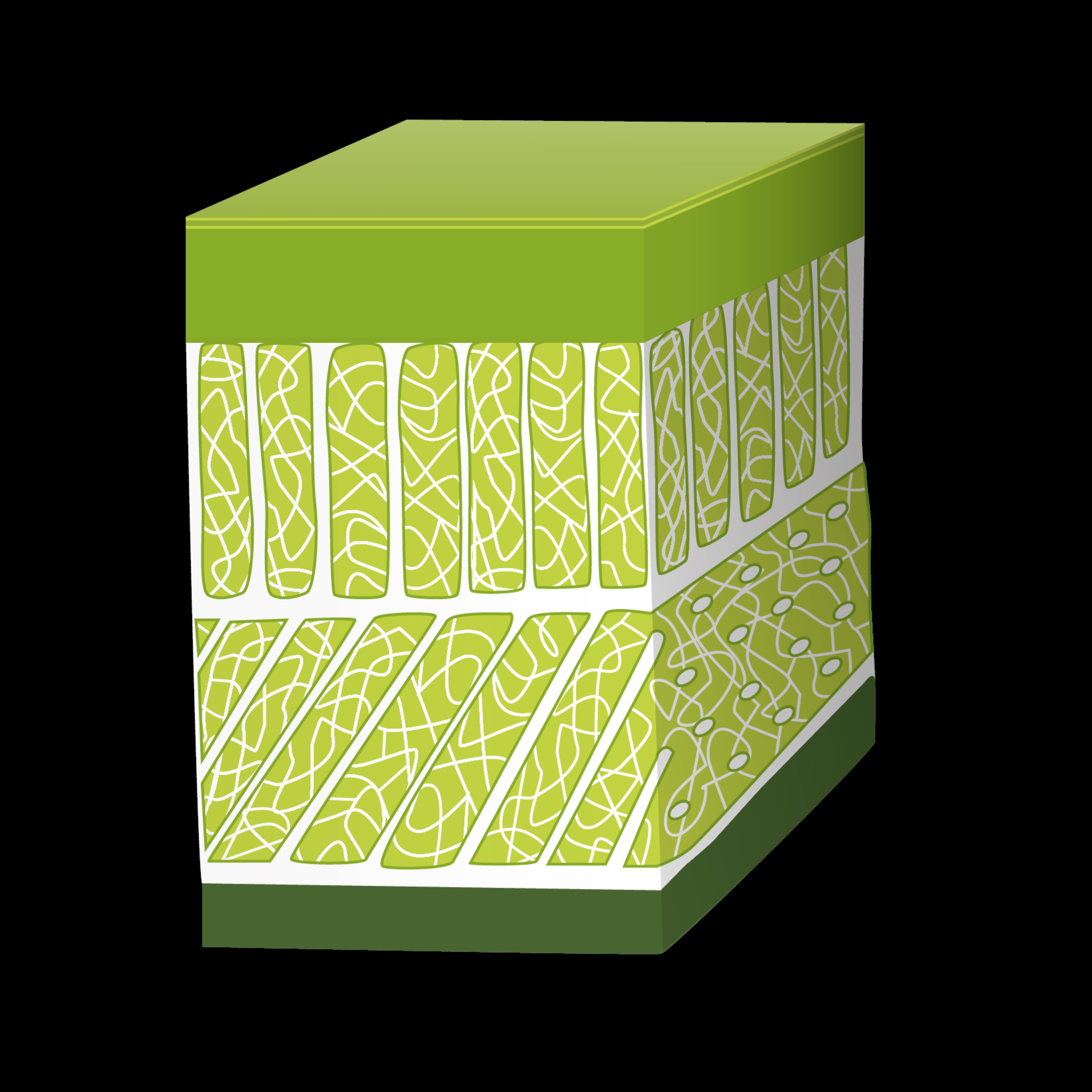
Fascia forms a three-dimensional network within the body—and can be divided into three main layers: the superficial, deep, and visceral layers of fascia. Each of these layers fulfills its own function—together, they ensure stability, mobility, and body awareness.
Superficial Fascia
This layer lies directly beneath the skin and consists of loose, elastic connective tissue. Thanks to its high proportion of elastic fibers, it is particularly stretchy —for example, during weight gain or pregnancy.
It envelops the entire body and is permeated by:
- lymphatic vessels
- Blood vessels
- Nerve pathways
- Glands
The superficial fascia acts as a buffer and provides cushioning (e.g., when running) and, due to its interconnected network, is considered a type of communicative tissue that can transmit changes occurring within the tissue to the outside.
Deep fascia
This layer is firmer, more resistant to tension, and less elastic —it consists primarily of collagen fibers. The deep fascia envelops and permeates:
- Muscles
- Tendons and ligaments
- Joints and bones
- Blood vessels and nerve pathways
It is highly functionally organized —with specific names depending on its structure:
Particularly fascinating: The deep fascia contains a high density of sensors, including mechanoreceptors and pain receptors— significantly more than the musculature itself. This sensory system makes the fascial system our largest sensory organ for movement, tension, and bodily signals.

Visceral fascia layer
The visceral fascia surrounds the internal organs (e.g., heart, lungs, stomach, intestines) and connects them to one another as well as to the trunk. It ensures the stability and mobility of the organs —for example, during breathing, digestion, or physical activity. It protects sensitive organs and holds them in place via fine fascial strands (mesos).
Conclusion: Not all fascia are the same—each layer fulfills its own unique function. Together, they ensure a perfect balance of flexibility, stability, and body awareness.
05. Fascia as a sensory organ
Did you know that fascia contains more sensory nerve endings than muscles? Fascia is now considered the body’s largest sensory organ —even more so than the skin—and is responsible for tension, pain, and body awareness.
The reason: It contains an exceptionally high density of receptors that detect stimuli from within the body and transmit them to the central nervous system. This sensory network is central to our perception of movement, sensation of pain, and emotional responses.
What types of receptors are found in the fascia?
Fascia contains various specialized types of receptors:
- Nociceptors: Detect potentially harmful stimuli—such as pressure or inflammation—and trigger pain sensations via the brain. They make fascia an important source of pain during tension or injury.
- Proprioceptors: Inform the brain about posture, movement, and balance —they are essential for coordination, body awareness, and movement control.
- Mechanoreceptors: Respond to mechanical stimuli such as pressure, tension, or vibration —for example, when using a fascia roller or during manual therapy.
- Chemoreceptors: Detect chemical changes in the tissue —for example, during inflammation, acidosis, or increased cellular activity.
- Thermoreceptors: Detect temperature changes in the tissue and are involved in processes such as thermoregulation and sensitivity to cold.
This sophisticated system makes the fascia an information network for our inner life —it senses tension, regulates responses, and is closely connected to the autonomic nervous system.
Fascia as a Carrier of Emotion and Memory?
It has long been knownthat fascia and the psyche influence each other. More recent hypotheses go even further: fascia may possess a kind of emotional memory. Stress, pain, or traumatic experiences may leave traces in the tissue —for example, in the form of chronic tension or adhered fascial layers. These “memories” can lead to restricted movement, chronic pain, or a general sense of unease.
That is why, in bodywork and fascia therapy, it is important not only to physically release tension but also to create space for emotional relief —for example, through mindful fascia training, meditation, or targeted breathing techniques.
Conclusion: Fascia is not just passive connective tissue—it is a highly active sensory organ that allows us to feel, react, and heal. Those who care for their fascia also strengthen their body awareness, their resilience —and ultimately their well-being.
06. Fascia—Like a Muscle
Fascia is not just a passive structure—it can also actively contract. It owes this ability to so-called myofibroblasts: small, star-shaped cells within the deep layer of fascia that respond to stimuli much like muscle cells and generate tension in the tissue.
This ability to contract plays an important role in body stability —for example, when we stand for long periods, straighten up against gravity, or coordinate rapid movements. The basic fascial tension (tone) thus actively supports our posture and movement—independently of the muscles.
Sore muscles? Often a case of fascial soreness
New scientific findings suggest that muscle soreness is not—as previously assumed—primarily caused by lactic acid or microtears in muscle fibers. Instead, microscopic injuries within the muscle fascia itself are suspected of triggering the painful reaction after exercise. This irritation leads to hardening and stiffness of the fascial sheath, which explains the pain during stretching and movement.
As a result, the term “fascial soreness” is being used more and more often .
Fascia transmits force—over long distances
In addition to their tension-generating function, fasciae also play a central role in force transmission throughout the body. Through so-called fascial lines —that is, interconnected fascial tracts that extend across multiple joints—movement is coordinated not only locally but throughout the entire body.
Example: Tension in the thigh can travel via the posterior fascial chains all the way to the back or even the neck. This explains why local symptoms often occur far from the actual cause —and why holistic movement and mobilization are so important.
When Tension Becomes a Problem
It becomes problematic when this tension remains chronically elevated—for example, due to:
- persistent psychological stress
- physical overexertion
- a lack of recovery periods
- poor nutrition or dehydration
As a result, myofibroblasts continuously produce contraction signals, causing the fascial tissue to stiffen.
The result: increased tissue stiffness, restricted joint mobility, and an increased risk of pain or improper strain.
Especially in people with chronic stress or who sit for long periods, an increased fascial tone is observed—noticeable, for example, through tense neck, back, or shoulder muscles, even without a direct muscular cause. The fascial network is then in a constant “tension mode,” which can negatively impact freedom of movement, well-being, and sleep.
Conclusion: Fascia behaves like a muscle: it actively contracts, transmits forces across different regions of the body, and is likely even partly responsible for muscle soreness. An elastic, well-nourished fascial network is therefore essential for healthy movement—and for being pain-free afterward.
But as with any system, too much tension is harmful.
That is why targeted relaxation, movement, and rest are essential for a healthy fascial network.
07. Fascia – Like a Tendon
Fascia not only serves to envelop and support the body—it also acts like an elastic spring system, similar to tendons. In fact, from an anatomical perspective, tendons are considered part of the fascia —they consist of dense, collagen-rich connective tissue and are integrated into the body’s fascial network.
Storing Energy and Moving More Efficiently
When jumping, sprinting, or making quick changes in direction, fascia helps store and release kinetic energy. Like a spring, kinetic energy is first “stored” in the tissue and then released as recoil—this reduces strain on the muscles and increases movement efficiency.
A well-known example from nature is the kangaroo: Its tendon and fascia system enables it to perform high and long jumps with surprisingly little muscular effort—the fascia acts as a biomechanical catapult.
In humans, too, well-trained fascia help ensure that movements:
- be more economical (requiring less muscle effort),
- appear more fluid,
- and reduces the risk of injury because the tissue better cushions impacts.
Force Transmission Through the Fascial Network
Fascia also plays a key role in the transmission of force from muscles to bones —not only locally, but also via long fascial chains that connect multiple regions of the body. For example, tension in the thigh can be transmitted all the way to the back or foot—which explains why pain is often felt in a different location than the cause would suggest.
Conclusion: Fascia acts like tendons—it stores energy, transmits force, and increases the efficiency of your movement. An elastic fascial system is therefore a real performance booster—not just for athletes.
08. Stay active
Movement is the best way to keep your fascia healthy and supple. If you’re not active enough, the fascial tissue loses its elasticity, and the layers can stick together —which can lead to tension, restricted movement, or pain.
Even just a few minutes of movement each day can help keep your fascia:
- stay hydrated and flexible,
- improve the glide between tissue layers,
- and improve your overall body awareness and mobility.
Fascia Training for Greater Elasticity and Well-Being
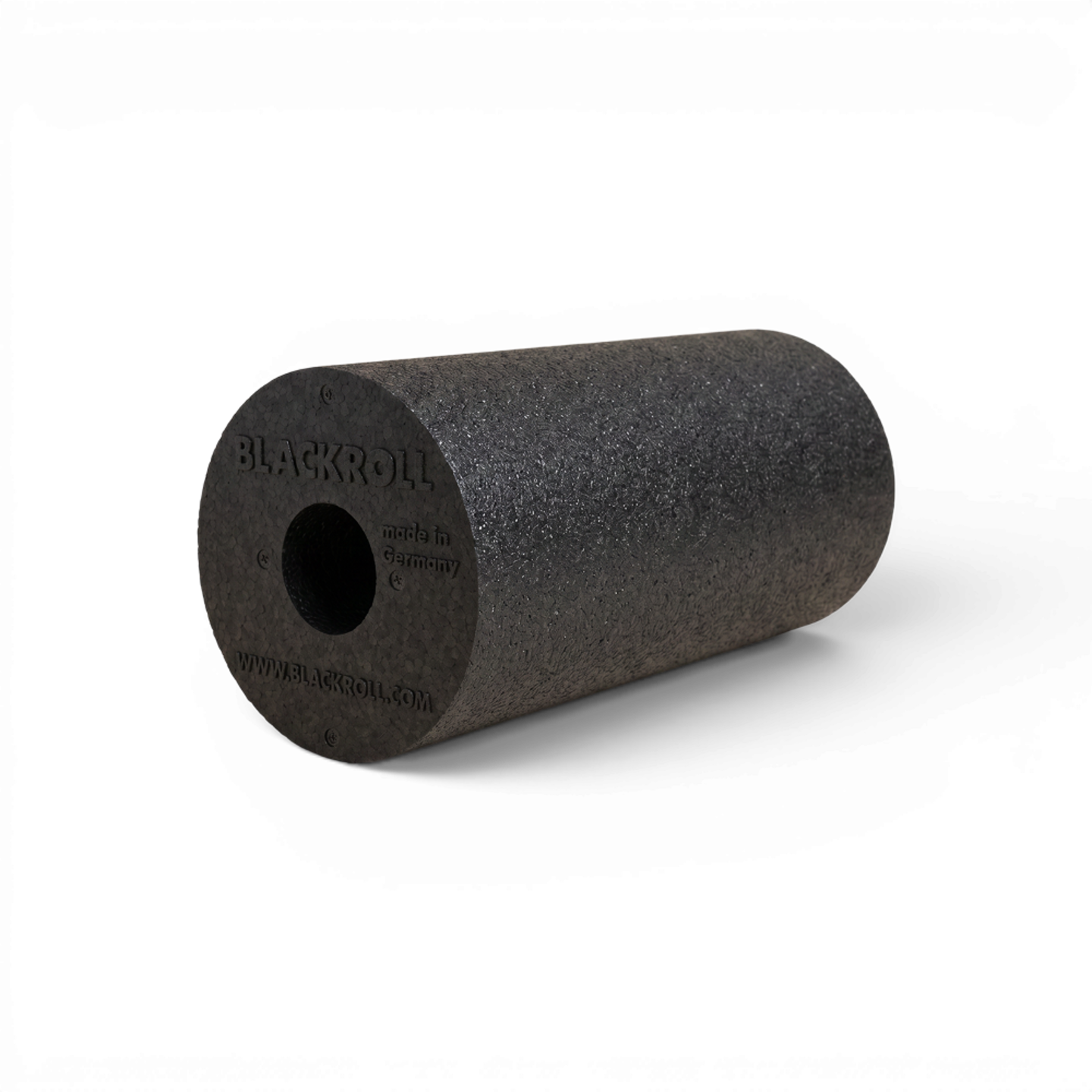
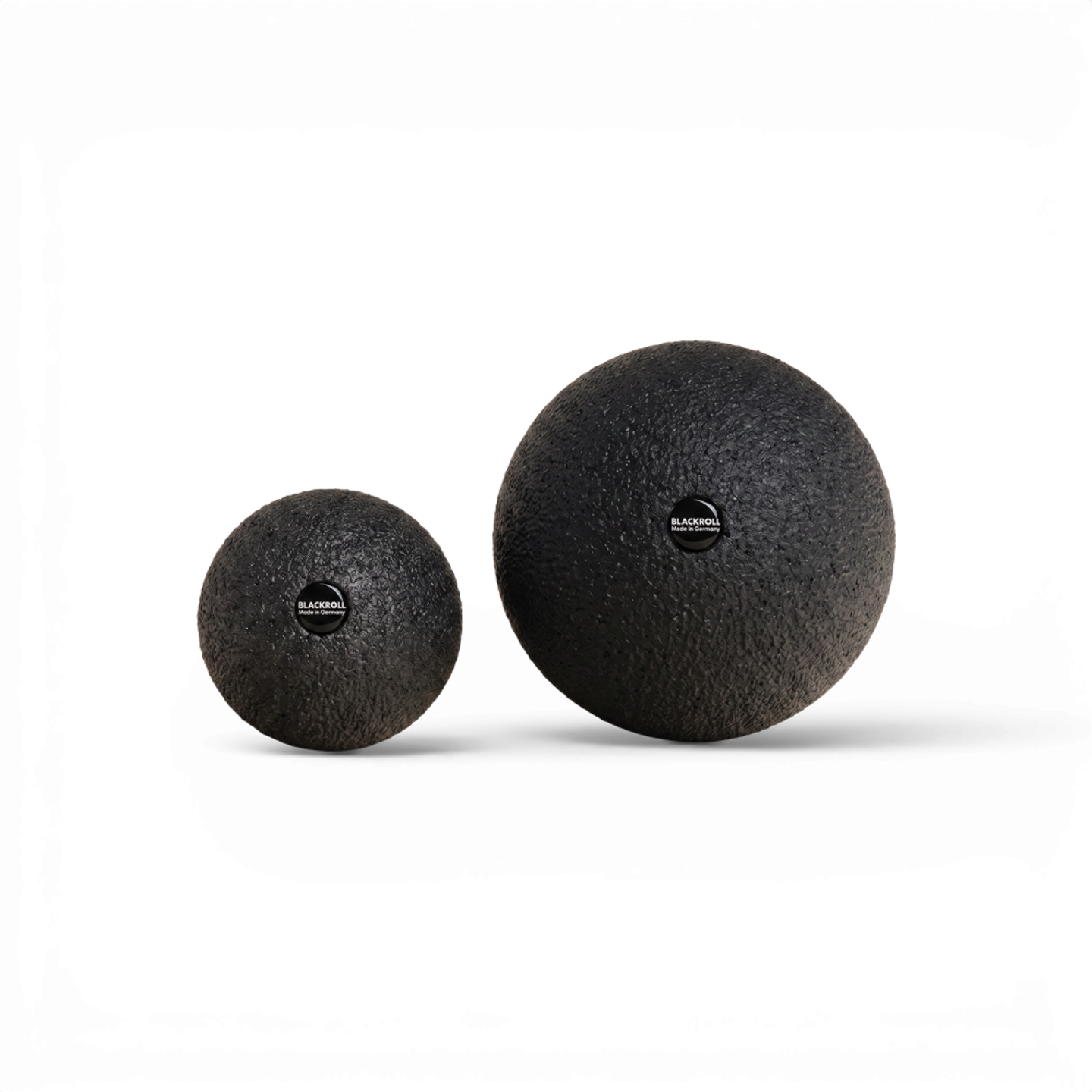
With targeted fascia training —such as using a foam roller, a massage ball, or dynamic stretching exercises —you can mobilize your fascia, release tension, and strengthen your tissues. This has a positive effect not only on your muscles but also on your posture, organ function, and recovery.
👉 Our tip:
Grab your foam roller, take a few minutes—and get your connective tissue moving. Whether in the morning after waking up, after a workout, or in the evening to unwind:
Regular fascial movement is the key to greater ease in everyday life.
Have fun working out—and keep moving!
Relaxing Fascia with Foam Rolling Exercises


09. New Scientific Findings
Long underestimated, now the subject of intensive research: In recent years, science has rediscovered the fascial system—yielding exciting insights for medicine, sports, pain management, and even psychology.
Fascia as an Active Organ
Recent studies show that fascia:
- isnot just passive connective tissue, but an independent, tension-regulating organ,
- can contract (myofibroblasts),
- play an important role in force transmission across joints,
- and contribute significantly to the stabilization of the spine —in some cases more so than the back muscles themselves.
Fascia as a Cause of Pain
Fascia contains a particularly high number of nociceptors (pain sensors)—more than the muscles—so fascia can be the cause of pain.
Studies show:
- Pain, e.g., in the back, can arise solely from fascial changes,
- adhered or inflamed fascia can often be treated with manual therapy, exercise, or foam rolling,
- the common diagnosis of “nonspecific back pain” could be attributed to myofascial causes in many cases.
Fascia influences recovery and sleep
After exercise or in the event of injuries, important healing processes take place in the fascia: Fascia absorbs water, incorporates new collagen, and regulates inflammation. Exercise, sleep, and nutrition are crucial for these processes. Studies show:
- Foam rolling can reduce muscle soreness, increase flexibility, and improve recovery.
- Lack of sleep inhibits fascial recovery and can permanently increase fascial tension.
Connection to the Mind
Fascia is closely linked to the autonomic nervous system. It reacts to stress with increased tension—similar to an internal protective armor.
New research suggests that:
- chronic stress can lead to fascial stiffness,
- people with depression exhibit measurably altered fascial structures,
- targeted fascia work (e.g., stretching, rolling, mindful movement) can improve body awareness and even positively influence mood.
Conclusion: Modern fascia research is changing our view of the body. Fascia provides structure, acts as a sensory organ, serves as a storage system, functions as a protective system, and acts as an emotional interface —and deserves significantly more attention in medicine, sports, and everyday life.
Do you have questions about fascia? Here you’ll find the most frequently searched-for answers—explained concisely, clearly, and in a practical way.
FAQ: The 15 Most Common Questions About Fascia—Explained Simply
Fascia is a three-dimensional network of connective tissue that envelops, stabilizes, and connects muscles, organs, and nerves. It is rich in nerve cells and plays a key role in force transmission, posture, and body awareness.
Adhesions in fascia can be released through regular fascia training using a fascia roller, ball, or targeted stretching exercises. Staying well-hydrated, heat treatments, and professional fascia therapy also help improve the tissue’s glide.
Yes—a massage gun can use vibration and percussion to loosen connective tissue and stimulate blood flow. It’s particularly effective for superficial tension. Be sure to use it regularly (2–3 times a week) and with the appropriate attachments.
Massage guns penetrate deep into the tissue, release localized adhesions, and promote recovery. Ideal before and after workouts. Important: Use appropriate pressure and don’t “hammer away” at painful areas.
Typical symptoms:
Pulling or pressing pain
Limited mobility
A feeling of tension or “stiffness”
Pain on pressure or radiating pain
Lumps or hard areas felt under the skin
The best methods:
Self-massage with a fascia roller or ball
Dynamic stretching and mobilization
Alternating heat and movement
Drink plenty of fluids (at least 2 l daily)
Regular exercise (3–5 times per week, 5–10 minutes each time)
Not exactly. Trigger points are localized areas of muscle stiffness that often develop at the junction with the fascia. Adhesions in the fascia can contribute to trigger points—and vice versa. Both should be treated together.
A pulling sensation or pain during movement
Tenderness or nodules
A “rolling” sensation during massage
Limited range of motion when bending or lifting
Pain may radiate to the knee or hip
Here's how:
Slowly roll the ball over the body area
Apply localized pressure with small movements
Work on tender spots for 20–30 seconds
2–3 minutes per area is usually sufficient
💡 Ideal for feet, buttocks, neck, and shoulders!
Recommended:
Usea foam roller or Duoball along the spine
Gentle stretching (e.g., cat-cow pose, rotation)
Targeted massage with a ball
Heat + mobilization (e.g., “cobra” movement)
If needed: physical therapy or osteopathy
With a holistic approach:
Regular self-massage
Hydration + a balanced diet
Exercise + intentional breaks
Stress reduction & sleep
By:
Targeted stretching, pressing, and movingthe fascia
Using tools such as a foam roller, ball, or massage gun
working slowly and with sensitivity
gradually increasing your intensity over several weeks
→ Consistency > Intensity!
Sources:
- Schleip R (2022) The fascial network – our richest sensory organ. Massage & Bodywork, September/October 2022, pp. 40–51
- Schleip R, Stecco C (2021). Fascia as a sensory organ. In: Schleip R et al.: Fascia in Sport and Movement, Jessica Kingsley Publishers, Edinburgh, pp. 169–179.
- Schleip R (2022). Fascia as an organ of communication. In: Schleip R et al.: Fascia – the tensional network of the human body. Elsevier Limited, London, pp. 156–159.
- Michalak, Johannes & Aranmolate, Lanre & Bonn, Antonia & Grandin, Karen & Schleip, Robert & Schmiedtke, Jaqueline & Quassowsky, Svenja & Teismann, Tobias. (2022). Myofascial Tissue and Depression. Cognitive Therapy and Research. 46. 10.1007/s10608-021-10282-w.
- Suarez-Rodriguez, V., Fede, C., Pirri, C., Petrelli, L., Loro-Ferrer, J. F., Rodriguez-Ruiz, D., De Caro, R., & Stecco, C. (2022). Fascial Innervation: A Systematic Review of the Literature. International Journal of Molecular Sciences, 23(10), 5674.
- Castro-Sánchez, A. M., Matarán-Peñarrocha, G. A., Granero-Molina, J., Aguilera-Manrique, G., Quesada-Rubio, J. M., & Moreno-Lorenzo, C. (2011). Benefits of massage-myofascial release therapy on pain, anxiety, quality of sleep, depression, and quality of life in patients with fibromyalgia. Evidence-Based Complementary and Alternative Medicine: eCAM, 2011, 561753. https://doi.org/10.1155/2011/561753
- Bordoni, B., Mahabadi, N., & Varacallo, M. A. (2023). Anatomy, Fascia. In StatPearls. StatPearls Publishing.
- Konrad, A., Nakamura, M., Tilp, M., Donti, O., & Behm, D. G. (2022). Effects of Foam Rolling Training on Range of Motion: A Systematic Review and Meta-Analysis. Sports Medicine (Auckland, N.Z.), 52(10), 2523–2535. https://doi.org/10.1007/s40279-022-01699-8