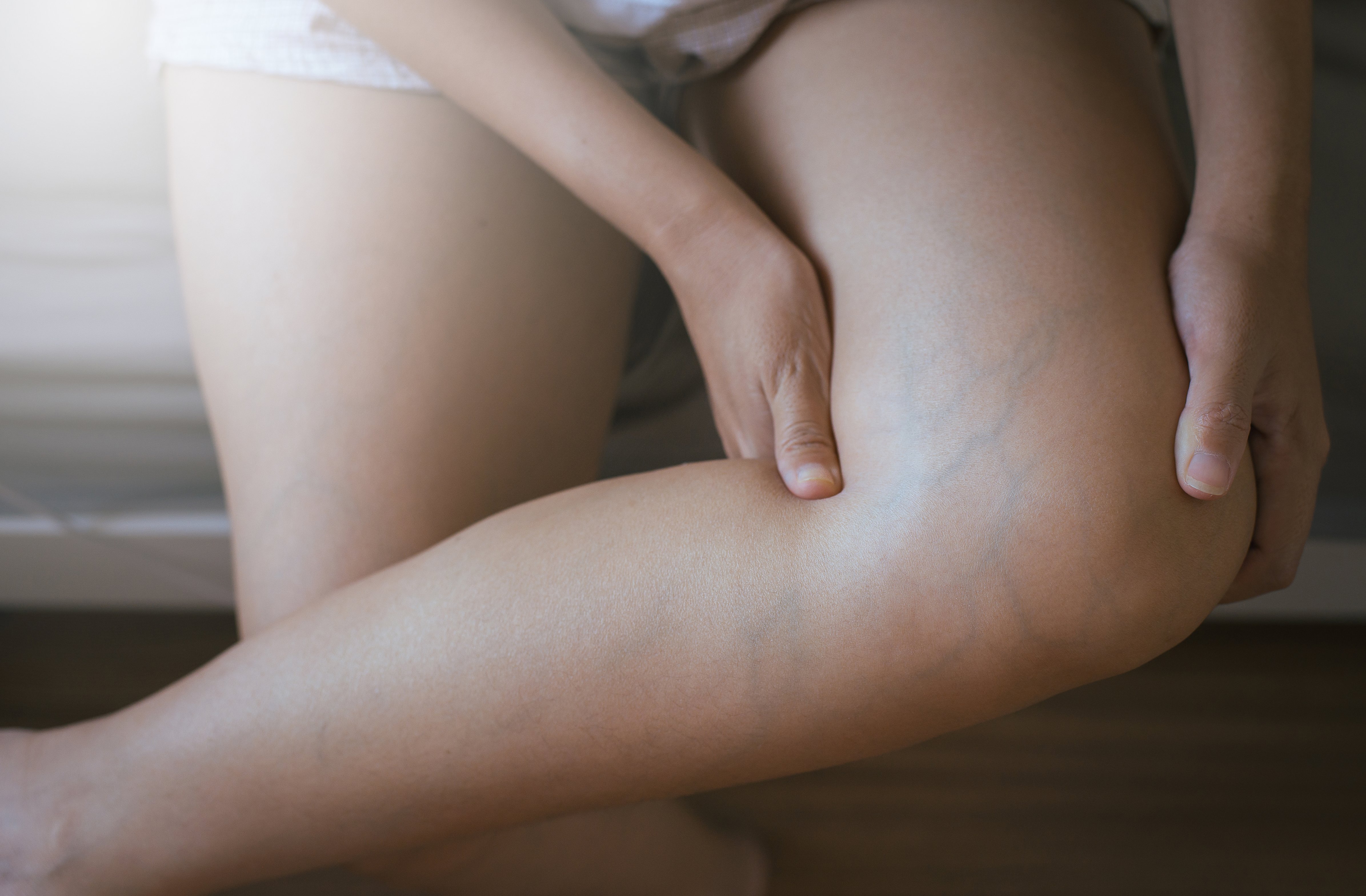
Venous Insufficiency: Causes, Symptoms, and Treatment Options

Venous insufficiency is a condition affecting the veins in the legs, which is most commonly noticeable in the lower legs and ankles. Various treatment approaches have proven effective in preventing or slowing the progression of the condition and reducing swelling and pain. In this article, we’ll tell you about the causes and symptoms and give you the most important tips on how to prevent venous insufficiency or what to do in an acute case.
01. Causes of Venous Insufficiency
In medical terms, venous insufficiency is also known as chronic venous insufficiency. This condition involves a reduction in the functionality of the venous system in the legs. This is because the blood vessels (veins), whose job is to transport blood from the legs to the heart, are weakened in cases of venous insufficiency—and as a result, blood flow is restricted and blood flows back toward the feet.
Venous insufficiency can be caused by various factors and is more common in older adults. Women are often affected after pregnancy or as a result of taking birth control pills. However, a congenital weakness of the venous valves or connective tissue can also cause venous insufficiency. Additionally, venous insufficiency often runs in families. Other causes include obesity, prolonged standing or sitting, lack of exercise, and certain medical conditions such as thrombosis or heart failure.
02. Symptoms and Signs
The symptoms of venous insufficiency are varied. Those affected often complain of tired, heavy legs that cause pain and itching or may tingle. However, the most common symptoms are swelling, varicose veins, and skin changes such as spider veins, which are recognizable by their net-like branching patterns on the skin. Symptoms of venous insufficiency often worsen after prolonged standing or sitting and improve when lying down.
Summer heat can also exacerbate the problem. This is because warm temperatures cause blood vessels to dilate and slow down blood circulation, causing the veins to lose elasticity. As a result, fluid flows into the surrounding tissue and is less effectively drained through the veins. This manifests as swollen legs and/or ankles.
03. Diagnostic Procedures
Do you regularly suffer from heavy legs and swollen ankles in the evening, and does the problem get worse in the summer? Do you often have leg cramps or feel a restless sensation? These could be early signs of venous insufficiency. If you notice these symptoms in yourself, consult your primary care physician just to be safe, or see a vein specialist right away. A phlebologist is the right specialist to see.
The diagnosis of venous insufficiency usually begins with a thorough medical history, during which a doctor will ask you about your symptoms and medical history. Afterward, they’ll examine your legs for any visible changes. In addition to swollen ankles, venous insufficiency can also manifest as spider veins, which may develop a brownish discoloration as the condition progresses.
Varicose veins or bruises may also become more frequent and are usually signs of a venous disorder. Using a special ultrasound device, the condition and function of the venous valves can then be assessed, and venous blood flow can be evaluated (Doppler sonography).
04. Lifestyle Changes for Prevention
To prevent venous insufficiency, slow its progression, and reduce swelling, certain lifestyle changes can be helpful. For example:
- Regular exercise is key to preventing venous insufficiency or slowing its progression. And you don’t even have to do strenuous workouts to achieve this. Regular walks, jogging, swimming, or cycling are enough to activate the muscle pump. You can also incorporate more movement into your daily routine by changing a few of your current habits. So instead of taking the escalator or elevator, try taking the stairs, or get off the bus one stop early to walk to the office or home.
- If you have a sedentary job, be sure to take regular breaks to move around by standing up every now and then or doing seated exercises that activate the venous pump—such as foot exercises. To do this, alternately curl your toes toward you and then stretch them out again. Or lift your feet and rotate your ankles eight to ten times. Then switch directions.
- In addition, a balanced, fiber-rich diet can positively influence or even prevent venous disorders. Make sure to eat plenty of fresh fruits and vegetables, whole grains, nuts, seeds, and fish, and limit your meat intake to small amounts. Ideally, you should eat a colorful mix of fresh fruits and vegetables every day. However, since fruit contains a lot of fructose, vegetables should make up the majority of your intake. Foods high in vitamin C are also considered ideal for strengthening vein walls and vein valves. Examples include citrus fruits, broccoli, spinach, and bell peppers. Also make sure you get enough minerals and antioxidants, such as zinc and vitamin E. For good blood circulation, your body also needs plenty of fluids—preferably plenty of still water. On the other hand, it’s best to avoid alcohol and cigarettes.
- Also, avoid being overweight, as excess weight increases pressure on the veins in your legs, which in turn raises the risk of vein problems.
- Are you one of those people who likes to cross your legs while sitting? Then, for the sake of your veins, you should break this habit. Crossing your legs can compress the veins in the backs of your knees and thereby impede blood circulation.
- Regularly elevating your legs ( above head level) can also help prevent venous insufficiency and provide relief from swelling, because it allows blood to flow back to the heart more easily, thereby reducing the swelling.
- Take regular contrast showers on your legs. This stimulates blood circulation, relieves varicose veins, and reduces swelling.
05. Conservative Treatment Methods
The goal of any treatment for venous insufficiency is to help the venous valves close more effectively, thereby improving blood circulation and allowing blood to flow from the legs back up to the heart. The choice of treatment depends on various factors, such as the severity of the venous insufficiency, the patient’s individual symptoms, and their personal preferences.
Conservative treatment of venous insufficiency involves various measures, primarily including the use of compression stockings and compression bandages, as well as manual lymphatic drainage. If the venous insufficiency is already advanced, minimally invasive or surgical procedures, as well as medication, may be considered. More on this below.
Lymphatic drainage can play a supportive role in the treatment of venous insufficiency by helping to transport lymphatic fluid and blood away from the legs, thereby gently relieving congestion in the legs. Lymphatic drainage is a specialized massage technique designed to remove excess fluid and metabolic waste products from the tissue and promote lymphatic flow. Using gentle, circular movements along the lymphatic pathways, a therapist stimulates the movement of lymph fluid, which aids in the removal of fluid and waste products from the tissue. Ideally, manual lymphatic drainage is combined with compression therapy to enhance its effectiveness.
Important: Lymphatic drainage must not be performed in cases of acute thrombosis.
06. Compression Stockings and Bandages
Compression stockings serve as a form of basic therapy and are an important part of treating venous insufficiency; they are custom-fitted for you at a medical supply store. The stockings apply external pressure to the tissue and the damaged venous and lymphatic systems. This relieves pressure by strengthening the veins’ muscle pump. In this way, the stockings support venous return to the heart and also prevent too much blood from flowing in the wrong direction and fluid from accumulating in the tissue.
Tip: To keep your veins healthy, you should wear compression stockings during long trips (for example, on a plane) even if you don’t yet have venous insufficiency.
As an alternative to compression stockings, you can also wear a compression bandage , which likewise reduces swelling and promotes blood circulation. This elastic wrap is applied tightly to the leg. It has the advantage of being adjustable to the leg’s level of swelling. A compression bandage is generally used only for short periods to relieve swelling in acute cases. For long-term use, however, compression stockings are the better choice, as they are easier for patients to put on by themselves.
If you want to support your compression therapy, we recommend using the COMPRESSION BOOTS by BLACKROLL at home. These are compression boots with individual air chambers that inflate alternately, providing a 360° compression massage—similar to a manual lymphatic massage. This promotes blood circulation and can thus not only stimulate fluid and lymphatic drainage but also accelerate recovery.
07. Surgical Procedures: Minimally Invasive Procedures for Venous Insufficiency
Depending on the stage of venous insufficiency, surgical procedures may also be used to treat affected sections of the veins. Depending on the procedure, these are often performed by a vascular surgeon under local anesthesia rather than general anesthesia.
When varicose veins develop, they may initially seem like nothing more than a cosmetic issue. However, if left untreated, varicose veins can lead to thrombosis (blood clots in a blood vessel or the heart) and, in the worst case, pulmonary embolism—and should therefore not be taken lightly.
Vein stripping or mini-phlebectomy were long the most common methods for removing varicose veins and are still considered safe and gentle today. Vein stripping is colloquially referred to as “pulling out varicose veins,” because the affected veins are first clamped off and then pulled out (stripped) through small incisions in the skin. However, other treatment methods have since proven effective; they are similarly efficient but involve less invasiveness (minimally invasive). These include endovenous laser therapy, radiofrequency ablation, and sclerotherapy/foam sclerotherapy. In all of these procedures, diseased sections of the veins are closed off or sealed using injections or heat treatments.
Important: Venous insufficiency cannot be cured by vein surgery. Patients should continue to wear compression stockings even after surgery to support the positive effects of the procedure.
08. Medication Options
Medications that effectively treat phlebitis and thrombosis primarily include blood thinners, which are available as injections (heparin) or in tablet form (Sintrom, Marcoumar, or new-generation anticoagulants). They thin the blood and improve its flow. They are typically taken for a limited period of time. The treating physician should always decide whether taking them is necessary.
Pharmacies and drugstores also carry a wide variety of over-the-counter vein remedies in the form of ointments and tablets that are intended to provide relief. They usually contain herbal extracts, such as horse chestnut, butcher’s broom, or grapevine leaves. And even though scientific evidence has shown that some of these substances can reduce swelling in the legs, they are ineffective for chronic venous disorders and varicose veins. Therefore, those affected should use vein remedies only as a supplement to conservative therapies and should carry out treatment in consultation with their doctor.
Important: If venous valves and vein walls are already damaged, they cannot be “repaired” even with ointments or tablets; however, these products can effectively complement conservative therapy.
09. Follow-up Care and Long-Term Management
Proper follow-up care is crucial in the treatment of venous insufficiency to achieve positive long-term results. This includes wearing compression stockings after surgical procedures, attending regular follow-up appointments with your doctor to monitor the venous insufficiency, and maintaining a lifestyle that promotes vein health.
This includes not only an active daily routine but also a balanced, fiber-rich diet and avoiding alcohol and smoking. You should also make sure to avoid being overweight. If necessary, treatment may be continued with medication for a short period during the follow-up care phase.