Venous Diseases: Causes, Symptoms, and Treatment Options

Heavy legs and swelling are often the first signs of a venous disorder. In addition to conservative treatments and surgical procedures, there’s a lot you can do on your own to prevent venous disorders or relieve symptoms. In this article, we explain how venous disorders develop, what types exist, and how to recognize them—and we provide tips for self-care.
01. Overview of Venous Diseases
Venous diseases is an umbrella term for all conditions that impair the function of the veins. The most common venous diseases include varicose veins, thrombosis, and phlebitis.
To understand the importance of the venous system, it’s worth taking a look at how our veins function in the body. Every day, they transport approximately 7,000 liters of blood back to the heart. The veins in the legs, in particular, do the heavy lifting—after all, blood must be transported from the lower extremities back to the heart against gravity. The muscles of the feet and legs act as a natural venous pump for blood flow in the legs. With each contraction, the muscles push the blood upward against gravity toward the heart. Numerous venous valves ensure that the blood does not flow back down when the muscles relax.
You can think of it like a valve: as soon as the blood flows toward the heart, the venous valves open; when the muscles relax, however, they close to prevent the blood from flowing backward. Problems arise when the veins dilate too much due to a venous disorder, preventing the valves from closing reliably. As a result, blood pools in the veins, causing them to dilate even further.
02. Causes of Venous Diseases
According to the World Health Organization (WHO), venous disorders are among the most common conditions worldwide—and, contrary to widespread assumptions, they do not necessarily occur only in older adults. Although the risk increases with age, according to the Bonn Vein Study, one in six men and one in five women between the ages of 18 and 79 in Germany are affected by symptoms of leg vein weakness (chronic venous insufficiency).
Venous diseases are therefore among the most prevalent conditions in our population. Venous insufficiency and venous diseases can thus affect any of us. However, some people also have a family history of these conditions or contribute to the development of venous disease through their lifestyle.
Above all, our daily habits have an enormous impact on vein health. In particular, a lack of exercise, prolonged standing or sitting, being overweight, an unbalanced diet, and alcohol and nicotine consumption can place increased strain on the veins. These are among the greatest risk factors for the development of venous disease.
Women also generally have a higher risk of developing venous disorders. This is because their connective tissue is weaker than men’s, which makes them more susceptible to venous disease. Hormonal changes, such as those during pregnancy or menopause, can also significantly affect the venous system. A family history of venous disease can also increase your risk. If venous conditions run in your family, you may be more susceptible to developing them yourself.
03. Symptoms and Early Detection
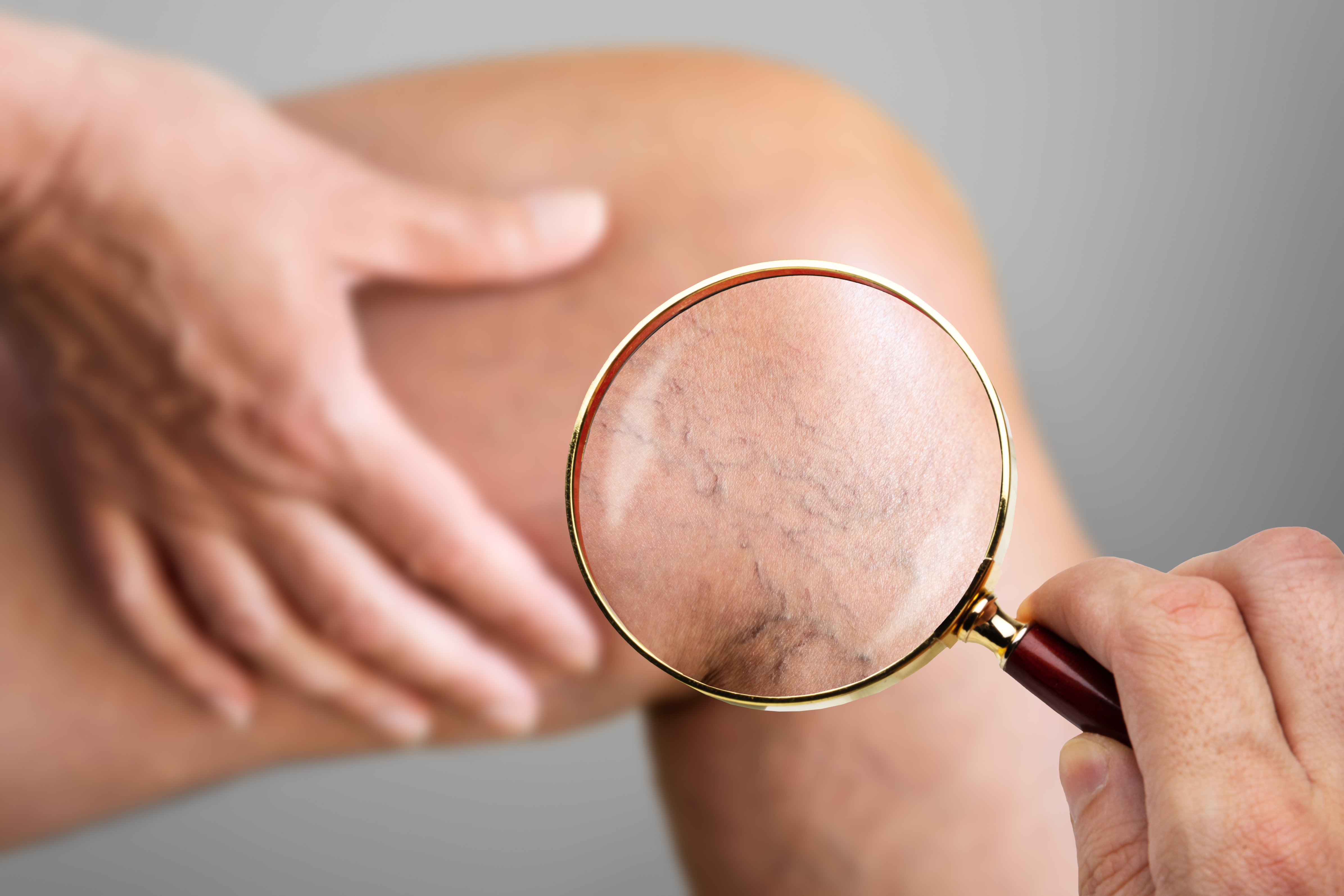
Do you often experience heavy legs and/or swollen legs and ankles in the evening after a long day? Do your legs tingle and/or itch? Do you see fine, branching veins that show through your skin as a bluish hue (spider veins)? If so, these may already be the first signs of a developing venous condition that you should take seriously. Early detection is key when it comes to venous insufficiency—the sooner you take action, the better you can stop or at least slow the progression of a venous disease.
If, on the other hand, you ignore the symptoms, this could have negative consequences for your entire leg venous system. Seemingly harmless spider veins can be symptoms of deep vein insufficiency; varicose veins increase the risk of phlebitis; and there’s also the possibility of developing a venous thrombosis—which, in the worst-case scenario, can trigger a life-threatening pulmonary embolism.
So if you suspect that the symptoms mentioned above could indicate a venous problem, to be on the safe side, have yourself examined by a primary care physician or, better yet, a specialist—a phlebologist. They are best qualified to diagnose a venous disease and assess the extent to which your symptoms require treatment.
04. Types of Venous Diseases
Venous diseases are diverse and cannot be reduced to a single clinical picture. Here are 5 different types of venous diseases:
- Varicose veins: Varicose veins are enlarged and twisted veins that usually occur in the legs. They develop when the venous valves do not function properly, leading to a backward flow of blood. Varicose veins can cause pain, swelling, and a feeling of heaviness in the legs.
- Thrombosis: Thrombosis occurs when a blood clot forms in a vein, often in the deep veins of the legs. This can lead to swelling, pain, and inflammation. A potentially serious complication is a pulmonary embolism, which occurs when the blood clot breaks loose and blocks the fine blood vessels in the lungs.
- Chronic venous insufficiency (CVI): CVI, also colloquially known as venous insufficiency, occurs when the venous valves no longer function properly, leading to backflow of blood and increased pressure in the veins. Symptoms may include swelling, skin changes, and open sores (ulcers) (see below).
- Venous ulcers: These are open wounds (ulcus cruris) that often occur around the ankles and are a common complication of CVI. They can be painful and heal only slowly.
- Phlebitis: The term phlebitis refers to inflammation of superficial veins, which is often accompanied by a blood clot. Pain, redness, and swelling are common symptoms.
05. Diagnostic Procedures
The diagnosis of venous insufficiency typically begins with a thorough medical history, during which a doctor will interview the patient about their symptoms and medical history and then perform a physical examination. The focus is on externally visible changes to the skin and palpation of the legs and ankles. This allows a doctor to identify swelling, spider veins, varicose veins, scaly patches, spots, and skin discoloration, all of which may indicate venous disorders.
Ultrasound examinations are also used to assess the condition and function of the venous valves and to evaluate venous blood flow. These include procedures such as cross-sectional ultrasound, Doppler sonography, and duplex sonography. They provide a clear image of the venous system and can measure the direction and speed of blood flow.
Possible venous thromboses can also be diagnosed through a blood test , which allows for the assessment of individual blood clotting factors. If a thrombosis is suspected, computed tomography (CT) can be used to visualize the deeper veins through imaging.
06. Conservative Treatment Methods
The goal of any treatment for venous insufficiency is to help the venous valves close more effectively, thereby improving blood flow and ensuring that blood is transported from the legs back to the heart. The choice of treatment depends on various factors, such as the severity of the venous insufficiency and individual symptoms.
If you have venous insufficiency—meaning the venous system in your legs is not functioning properly—you can alleviate your symptoms primarily by wearing compression stockings and compression bandages . This is essentially the basic treatment, which should always be supplemented with manual lymphatic drainage.
Lymphatic drainage can play a supportive role in treating venous insufficiency by helping to transport not only lymphatic fluid but also blood away from the legs, thereby gently relieving swelling in the legs. Lymphatic drainage is a specialized massage technique designed to drain excess fluid from the tissues and promote lymphatic flow.
Using gentle, circular movements along the lymphatic pathways, a therapist stimulates the movement of lymph fluid, which helps remove fluid and waste products from the tissue. Ideally, manual lymphatic drainage is combined with compression therapy to enhance its effectiveness.
Important: Lymphatic drainage must not be performed in cases of acute thrombosis. Consult a physical therapist for comprehensive advice on which treatment is appropriate for your specific situation.
If you’d like to supplement your compression therapy on your own, we recommend the COMPRESSION BOOTS by BLACKROLL for home use. These are compression boots with individual air chambers that inflate in sequence, providing a 360° compression massage—similar to a manual lymphatic massage. This promotes blood circulation and can thus not only stimulate fluid and lymphatic drainage but also accelerate recovery.
07. Minimally invasive treatment options and surgical procedures
If venous insufficiency is advanced, spider veins or varicose veins may have already formed, which should be surgically removed. This is because, if left untreated, varicose veins can lead to thrombosis (blood clots in a blood vessel or in the heart) and, in the worst case, to pulmonary embolisms—and should therefore not be taken lightly. Depending on the procedure, they are often performed by a vascular surgeon not under general anesthesia, but only under local anesthesia. Numerous minimally invasive procedures allow for the removal of varicose veins without leaving large incisions or causing pain.
The best-known methods available for removing varicose veins are vein stripping, sclerotherapy (venous sclerosis), and endovenous laser therapy. Vein stripping is the traditional varicose vein surgery, in which the diseased vein is pulled out through the skin via an incision in the back of the knee or the groin. In the other two procedures, diseased sections of the vein are sealed from the inside using injections and are broken down by the body within a few weeks, or they are closed off using heat treatments.
Important: Vein surgery cannot cure venous insufficiency; it can only halt its progression. Patients should continue to wear compression stockings long-term even after surgery to support the positive effects of the procedure.
08. Prevention and Lifestyle Changes
- Activity: To prevent venous disorders—and even if you already have symptoms—“exercise” is THE key to prevention and alleviating symptoms. Exercise keeps blood flowing throughout your body and helps drain fluid from your legs. After all, exercise engages your leg muscles and activates the muscle pump. Only through this mechanism can our veins transport blood upward toward the heart. If your daily routine consists mainly of sitting and standing, taking regular breaks to move around and participating in a fitness program during your free time are even more important for supporting your venous system. You can reap the benefits through activities such as jogging, cycling, swimming, or even walking.
- A Balanced Diet: You can positively influence your vein health through your diet. Focus on plenty of fresh fruits and vegetables, whole grains, nuts, seeds, and fish. You should generally consume meat only rarely. Ideally, you should eat a colorful mix of fresh fruits and vegetables every day. However, since fruit contains a lot of fructose, vegetables should make up the majority of your intake. To strengthen your vein walls and valves, you should also eat foods high in vitamin C, such as citrus fruits, broccoli, spinach, and bell peppers. Also make sure to get enough minerals and antioxidants, such as zinc and vitamin E. For good blood circulation, your body also needs plenty of fluids. Therefore, make sure to drink enough fluids daily—preferably still water. On the other hand, it’s best to avoid alcohol and cigarettes.
- Avoid being overweight : Every kilogram increases the pressure on the veins in your legs—which also raises the risk of vein problems.
- Don’t cross your legs: Most people do it, but crossing your legs while sitting is anything but beneficial for your vein health. This is because it squeezes the veins in the backs of your knees and impedes blood circulation.
09. Measures to Support Vein Health
- Regularly elevating your legs ( above head level) can also help prevent venous insufficiency and provide relief from swelling, as it allows blood to flow back to the heart more easily, thereby reducing the swelling.
- Always wear compression stockings on long trips and take regular breaks to stand up and move around.
- Regularly alternate hot and cold showers on your legs. This stimulates blood circulation, relieves varicose veins, and reduces swelling.
- Incorporate small exercises into your daily routine. So-called “venous exercises” promote the drainage of venous blood and, consequently, excess fluid from the tissues. Here are five exercises:
1. While standing, rock back and forth, alternating between your toes and heels.
2. Swing your legs back and forth in a figure-eight pattern.
3. Walk in place as if you were marching, swinging your arms as you go. Try to lift your knees as high as possible.
4. If you’re sitting at a desk, you can alternately flex and extend your ankles all the way to your toes, or circle your ankles.
5. Do a lunge and support yourself with your arms extended against a wall or door. Keep your front leg slightly bent and your back leg straight. Hold this position for a few seconds, then switch sides.
10. Summary
If you notice symptoms that could indicate a venous disorder, consult a doctor for a thorough evaluation. Conservative treatment options can help slow the progression of venous disorders and relieve symptoms. Depending on the stage and severity, surgical interventions may also be necessary—for example, if the venous disorder has led to varicose veins.
If you’re affected by this condition, make sure to get enough exercise to keep activating the venous pump and support blood circulation. This will also help you avoid becoming overweight, which can put additional pressure on your veins. A healthy, fiber-rich diet with plenty of vegetables and fruit can also strengthen your veins. In addition, avoid alcohol and cigarettes as much as possible. Although venous disease is incurable, the treatment methods available today can help those affected lead a life that is as symptom- and pain-free as possible.