Lipedema: Causes, Symptoms, and Treatment Options

Lipedema, a chronic fat distribution disorder, is often accompanied by painful swelling and changes in body shape. Despite its prevalence and its impact on the quality of life of those affected, lipedema often goes undiagnosed and is mistaken for other conditions. In this article, we explain the causes and symptoms and discuss the treatment options available to those affected.
The Federal Ministry of Health estimates that approximately three million women in Germany are affected by this condition. However, it is often not diagnosed until years later, which can severely limit those affected both physically and mentally. Yet the earlier the condition is detected, the easier it is to learn how to manage it and halt its progression.
01. Definition of lipedema
Lipedema is a fat metabolism disorder that occurs exclusively in women. This disorder of fat distribution manifests as an uncontrolled accumulation of fatty tissue on the legs, hips, and buttocks. Numerous scientific studies have shown that lipedema is a complex condition in which subcutaneous fatty tissue grows excessively as fat cells—and, in more advanced stages, fluid—accumulate there (lipo-lymphedema).
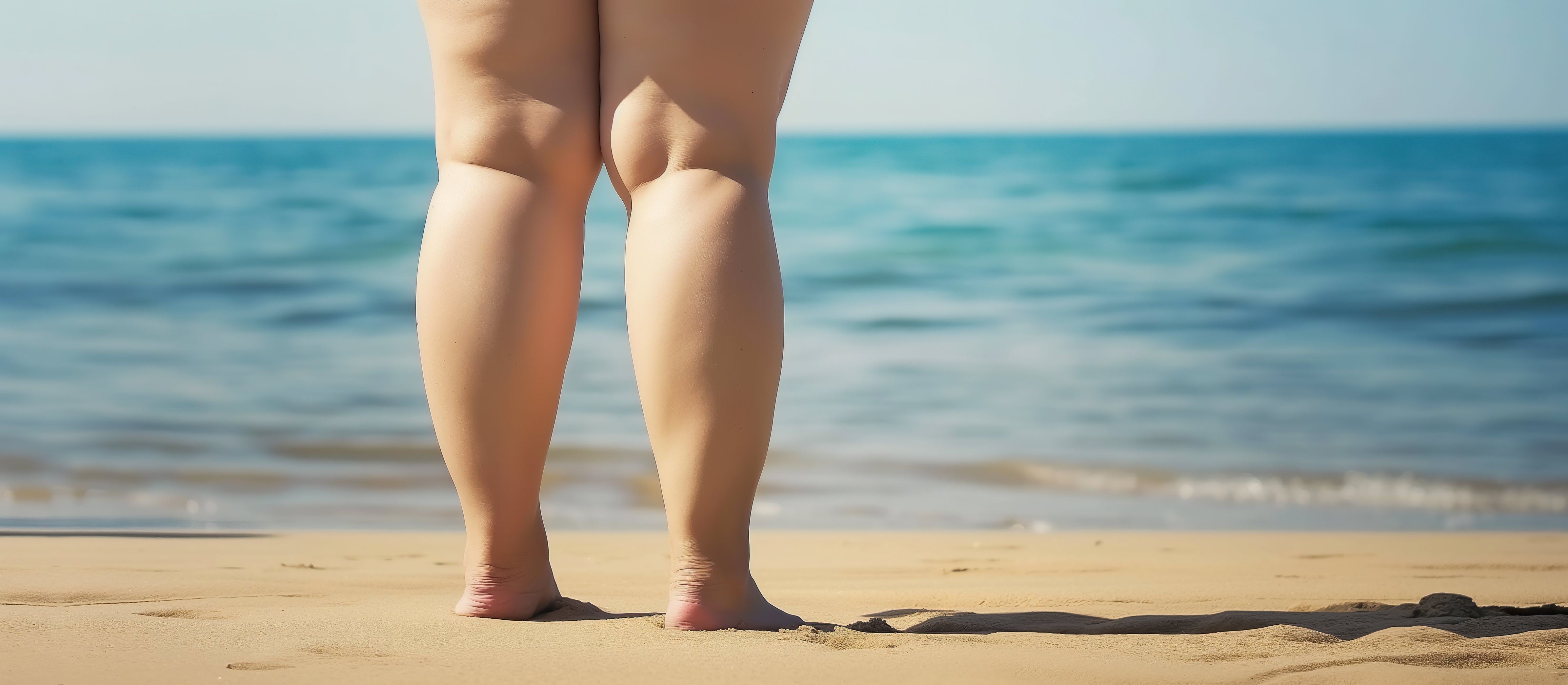
Lipedema always occurs symmetrically. This means that column-like changes and deformities develop, primarily in the legs. A very typical feature is the so-called “saddlebags” on the buttocks and hips. If the condition extends further downward, it is referred to as “suave pants,” since the deformities typically end at the ankles, but the fat overlaps them.
Although the condition is more common in the lower extremities, the arms can also be affected.
The feelings of tightness, sensitivity to touch and pressure, and pain in the affected areas resulting from the condition can lead to sometimes severe physical and psychological problems for those affected and significantly limit their daily lives.
Depending on the clinical presentation and the extent of fat accumulation, the condition is classified into three stages. As a long-term consequence, lipedema can trigger complications and lead to changes in gait, joint misalignment, and premature joint wear.
02. Causes and Risk Factors
The exact cause of lipedema is unknown, but medical professionals believe it is linked to genetic predisposition and hormonal changes (such as those occurring during puberty, after pregnancy, or during menopause), as lipedema affects women exclusively. If close relatives—such as a mother or sister—have lipedema, there is a tendency to develop it oneself. A lack of physical activity or poor nutrition, however, are not believed to play a role in this fat distribution disorder and cannot significantly influence it even after it has developed. Even slim, athletic women can be affected.
03. Symptoms and Signs of Lipedema
Lipedema manifests through various visible characteristics and physical symptoms. To enable early diagnosis and treatment, you should closely monitor the symptoms from the outset and consult a specialist in a timely manner. Possible symptoms and signs of lipedema may include:
- Disproportionate distribution of fat tissue on the body. Affected women often have slender upper bodies, while their hips, buttocks, and legs increase significantly in circumference due to fat deposits with nodular structures under the skin. They must wear larger sizes for pants than for tops. This phenomenon, often referred to as “riding breeches” or “pillar legs,” is characterized by an unusual accumulation of fat and a change in the subcutaneous fat tissue that affects the shape of the legs. Those affected often have an elevated body mass index (BMI) despite regular exercise and a healthy diet.
- In addition to the external changes, women with lipedema may also experience tension pain and increased pressure sensitivity on the skin’s surface in the affected areas. Heavy, tired legs—especially as the day progresses—and bruising even from minor impacts are also typical. This can lead to limitations in physical activity and a reduced quality of life. Early intervention can halt the progression of the condition and alleviate symptoms. This includes treatments such as liposuction and lymphatic drainage.
Important: The symptoms of lipedema can vary from patient to patient. Some women may have only mild symptoms, while others may suffer from severe symptoms such as significant swelling or fluid retention.
04. Diagnosis of Lipedema
Lipedema is often not immediately recognized as such, especially in its early stages. The wide range of symptoms makes a quick diagnosis difficult, as lipedema is frequently confused with other conditions such as lymphedema or obesity (adiposity). If you notice changes in your body that could indicate lipedema, consult your primary care physician or a specialist right away. A phlebologist (vein specialist) or lymphologist is the right person to consult if lipedema is suspected.
Physical Examination Is Crucial
Laboratory or imaging tests that can definitively diagnose the condition are not currently available. However, they are usually used for further evaluation. Therefore, a doctor will conduct a thorough physical examination and review your medical history. They will also look into your family history and your personal medical history, noting the exact symptoms, and ask you about possible changes in your hormone levels.
During the physical examination , a doctor will pay particular attention to your body proportions and whether the fatty tissue has increased symmetrically. Through palpation, the doctor can determine whether indentations remain when the tissue is pressed. If this is not the case, lipedema is likely. Another sign of lipedema is that pinching the outer side of the thigh causes more pain than pinching the inner side—normally, the opposite is true. The Stemmer test is used to distinguish between lymphedema (which results from a disruption of lymph flow in the body) and lipedema: If the skin fold over the second and third toes or the index and middle fingers cannot be lifted, this rules out lipedema.
Keep in mind that diagnosing lipedema is often complex and requires collaboration among various medical professionals. A multidisciplinary approach, in which physical therapists, nutritionists, and other healthcare providers work together, can be helpful in developing a comprehensive treatment plan.
Treatment Options for Lipedema
Lipedema can have a significant physical and psychological impact on those affected. However, since it cannot be cured at its root cause, treatment aims to alleviate symptoms, improve the quality of life for those affected, and slow the progression of the condition. The appropriate treatment also depends on the stage of the edema. In the following section, we’ll introduce you to the common conservative therapies used to treat lipedema.
Important: There is currently no medication available that treats the underlying cause of lipedema. Medications can only be used as an adjunct to alleviate symptoms.
05. Conservative Treatments
Conservative therapies include non-surgical treatments. If lipedema is still in its early stages, conservative therapies are the first line of treatment to improve the condition and associated symptoms and to prevent further accumulation of fat deposits. If treatment is started early and carried out consistently, there is a good chance of achieving these treatment goals. Here, we’ll introduce you to the most common conservative therapies used to treat lipedema.
Compression Therapy and Lymphatic Drainage
Conservative therapy combines compression therapy with manual lymphatic drainage—a specialized form of physical therapy aimed at improving lymphatic flow and reducing swelling. While this does not cure lipedema itself, it does alleviate the symptoms. You can have manual lymphatic drainage performed by a physical therapist or a therapist with additional training.
In addition to lymphatic drainage, compression therapy is also an essential part of successful conservative treatment. This is because wearing compression garments can control swelling, alleviate symptoms, and thereby halt the progression of lipedema. Compression garments increase pressure in the tissue, causing less fluid to leak from the blood capillaries into the tissue. Additionally, they improve the function of the lymphatic valves and the flow dynamics of the lymphatic vessels. Since the pressure distributes existing edema over a larger area, the drainage of lymphatic fluid from the connective tissue is facilitated.
In addition to wearing stockings or sleeves, BLACKROLL’s COMPRESSION BOOTS are also suitable for use at home. These are compression boots with individual air chambers that inflate alternately, thereby providing a continuous 360° compression massage—similar to a manual lymphatic massage. As a result, they promote blood circulation and can thus not only enhance lymphatic flow but also accelerate recovery.
Physical Therapy and Exercise Therapy
To prevent lipedema and its debilitating symptoms from worsening, overweight individuals should lose weight through diet and exercise, while those of normal weight should definitely maintain their weight and optimize their metabolism. Exercise and physical activity are therefore central components of treatment, even though they have no direct effect on the amount of fat tissue in lipedema.
A balanced diet can lead to weight loss and further support the health of connective tissue. Regular, low-impact exercise promotes lymphatic flow and also improves muscle strength. This allows for gentle decongestion of the affected areas.
All water-based sports are considered ideal for lipedema—such as swimming or water aerobics/aqua-jogging. The water pressure helps gently decongest lymphatic fluid. On land, walking, cycling, and jogging are recommended for people with lipedema. In addition to exercise therapy, those affected should regularly undergo manual lymphatic drainage, during which physical therapists use gentle movements to direct lymph flow from the body’s tissues into the lymphatic vessels.
Liposuction
Surgical intervention is one of the non-conservative treatments for lipedema. Surgical liposuction is the only way to reduce the pathologically increased subcutaneous fat tissue. Using techniques such as water jets, vibrations, or ultrasound, a doctor performs liposuction to separate the fat cells from the surrounding tissue and then suctions them out through a thin tube—the endoscope. Liposuction may be considered in advanced stages of lipedema to remove excess fatty tissue. In preparation for liposuction, patients should undergo lymphatic drainage once or twice a week.
06. Follow-up Care and Long-Term Self-Care
Follow-up care and long-term self-care for lipedema play a crucial role in alleviating symptoms, improving quality of life, and slowing the progression of the condition. First and foremost, you should wear your compression garments consistently to reduce swelling, improve lymphatic flow, and support tissue structure.
A balanced diet rich in nutrients can help control weight and support the health of connective tissue. This is because maintaining a healthy weight can also reduce pressure on the lymphatic system. Additionally, incorporate regular, low-impact exercise into your daily routine to promote lymphatic flow, strengthen your muscles, and improve your overall fitness. Continue with regular lymphatic drainage treatments to promote lymph flow and manage swelling. An experienced therapist can help you determine the right frequency and intensity of sessions for you.
Your therapist can also show you techniques and stretching exercises that you can use at home to support the effectiveness of lymphatic drainage. The psychological stress caused by lymphedema can add to your burden. Connecting with others who are also affected by lipedema can support you on your journey. Online communities or support groups offer a platform for sharing experiences and receiving emotional support. Alternatively, you can seek counseling with a psychologist to reduce emotional stress, learn to accept yourself more fully, and boost your self-esteem.
07. Summary
Lipedema, a disorder characterized by an uncontrolled accumulation of fatty tissue—particularly in the legs, hips, and buttocks—occurs exclusively in women and, according to experts, is likely attributable to genetic predisposition and hormonal changes.
Depending on the stage of the condition, different treatment approaches are considered. At the forefront of conservative therapy are manual lymphatic drainage and the use of compression garments to improve lymphatic flow. Weight loss and weight maintenance are important measures that those affected can take to support their treatment.
Above all, a balanced diet and regular exercise play a major role in this process. Those affected can therefore proactively contribute to alleviating their symptoms. If the condition is diagnosed early, these measures can help relieve symptoms and halt the progression of the disease.
In advanced stages, surgery to remove the diseased subcutaneous fat tissue can provide relief. Seek comprehensive advice from a doctor and therapist on what steps you can take yourself to support your body and go about your daily life with greater well-being.