
Grounding: How to Ground Yourself and Connect with Nature

Imagine walking barefoot along the beach, your toes digging deeper and deeper into the sand, feeling first the dry warmth, then the damp chill. In moments like these, we feel deeply connected to the Earth’s energy. Similar effects occur when swimming in the ocean or during forest bathing. What these experiences in nature have in common is that they ground us. The phenomenon behind this is called grounding or earthing.
Grounding allows us to center our own energy. Figuratively speaking, we put down roots and find protection and stability in the midst of nature. This can create a sense of calm and balance. And there’s more: Grounding has a physical effect and is said to help with certain conditions such as cardiovascular diseases, sleep disorders, and chronic pain. In this article, you’ll learn why you should “ground” yourself every now and then, how grounding works, and what science says about its effects.


What is grounding?
The term “grounding” is derived from the English word “ground,” which means “soil” or “earth.” It describes the regulation of the body’s own energy through the Earth’s energy. Grounding involves establishing a direct connection between the body and the Earth, for example, by walking barefoot. Put simply, this allows the Earth’s electrons to influence the charge of the atoms in the body. You’ll learn more about this in the next section.
Environmental medicine, among other fields, focuses on the interactions between nature and humans. Physical contact with the Earth’s surface is said to have a balancing and calming effect. Grounding may also have positive effects on stress, pain, and inflammation, as well as help with sleep disorders.


How does grounding work?
To understand how grounding works, we must first realize that all matter—that is, all materials, including us humans— is made up of atoms. These building blocks, in turn, consist of positively charged protons, uncharged neutrons, and negatively charged electrons. In their normal state, atoms are electrically neutral. This means the number of protons and electrons is balanced. However, if an atom loses electrons, this leads to an imbalance.
The theory of grounding posits that atoms with unpaired electrons become free radicals in the body. In principle, free radicals are completely natural and not inherently harmful. They are continuously produced as metabolic byproducts and can, among other things, support the immune system. However, if too many free radicals form, this puts a strain on the body over time. This is because when the balance between free radicals and radical scavengers—known as antioxidants—is disrupted in the body, oxidative stress occurs. And this stress, in turn, could contribute to inflammation and chronic diseases, among other things.
So how does grounding come into play? The Earth’s surface carries a negative charge. Through direct skin contact with the ground, electrons from the Earth’s electric field can transfer into the body and neutralize free radicals there. This is said to help restore the body’s balance.


Why do we need the Earth’s energy?
You now know how grounding works. But why does an excess of free radicals build up in the body in the first place—free radicals that can throw us off balance and harm our health? For one thing, the body produces free radicals itself during various metabolic processes. But they’re also caused by external factors, such as:
- infections
- Environmental toxins, such as exhaust fumes
- Cigarette smoke
- Alcohol consumption
- an unbalanced diet
- UV radiation from the sun
In principle, the body is capable of regulating itself—but only to a certain extent. If there aren’t enough free radical scavengers —antioxidants—in the body, the organism can become unbalanced. This can lead to various ailments, diseases, and general malaise. The theory of grounding posits that the Earth’s energy could help restore our balance and reduce harmful oxidative stress.


What are the benefits of grounding?
Our bodies are constantly working to regulate and maintain themselves. However, the multitude of negative environmental stresses we face today—from electromagnetic pollution to UV radiation—can overwhelm our bodies. A physical connection with nature can therefore play an important role in balancing the body’s own energy.
People who “ground” themselves regularly—for example, by making contact with the earth’s surface with their hands or feet—are said to not only enhance their well-being but also support their health.
Possible positive effects of grounding include:
- Grounding can promote a sense of calm and balance.
- Grounding can help you reduce stress.
- Grounding techniques can calm the nervous system.
- Grounding may improve sleep quality.
- Grounding is said to promote recovery after physical exertion.
- Grounding exercises may help alleviate anxiety and depression.
- A direct connection to nature may improve blood circulation.
- Regular skin contact with the earth’s surface is said to reduce inflammation in the body.
- Grounding methods may help relieve (chronic) pain.


Who should practice grounding?
Most of our daily lives take place indoors. And even when we do go outside, we spend most of our time wearing sturdy shoes with plastic soles. So we rarely establish direct contact with the earth anymore—at most on vacation, when we walk along the beach and go swimming, or in the summer, when we run barefoot across the lawn. Yet nature can support our bodies in various processes. That’s why grounding is generally a recommended practice for everyone.
Especially if you suffer from one or more of the following symptoms or conditions, grounding techniques could have positive effects:
- Sleep problems
- Chronic pain and inflammation
- Stress
- High blood pressure
- Exhaustion and low energy
- Muscle tension
- Headaches
- Hormonal problems
- Anxiety
- Depression
- Weakened immune system
- Slow-healing wounds
- Circulatory disorders
- Cardiovascular disease
- Autoimmune disease


Grounding: What Does Science Say?
The body of research on grounding is still quite limited. So far, there have been only a small number of scientific studies, most of which were conducted with just a few participants. The effectiveness of grounding is therefore not yet established and requires further research. Nevertheless, the initial studies already provide evidence that grounding may indeed have positive effects on certain symptoms and medical conditions, as well as on overall well-being.
Several studies on the effects of grounding on sleep, regulation, and regeneration show that regular grounding can have a positive influence on sleep quality, stress reduction, pain relief, and blood viscosity. (1–3)
A study specifically on stress and sleep concluded that skin contact with the earth can lower cortisol levels and improve sleep. (2)
Of particular interest to athletes is a study from the University of Salzburg: Grounding may promote rapid recovery and long-term regeneration after intense physical exertion. (4)
The results of studies involving infants are also intriguing. According to a study at Pennsylvania State University Children’s Hospital, grounding premature infants can have a positive effect on their nervous system. Through the use of special grounding patches, an improved balance between the sympathetic and parasympathetic nervous systems was achieved in the babies tested, which can have a positive impact on the regulation of inflammatory and stress responses . (5)
Since chronic diseases, stress, and recovery are major issues of our time, grounding is likely to become increasingly important as a key factor in health in the coming years. The scientific community will adapt to this and conduct further studies to investigate the effects of grounding more closely. Until then, you’re welcome to experiment on your own with the various techniques we’ll introduce below.


Grounding Practices: What Grounding Exercises Are There?
Grounding—that is, skin-to-earth contact—can support your body and mind in many ways. But how exactly can you strengthen your connection to nature and connect with the Earth’s energy in your daily life? We’ll show you various grounding rituals:
7.1. Walking Barefoot as a Grounding Ritual
Walking barefoot is the simplest and most effective way to connect with the Earth. Direct skin contact with the Earth’s energy field allows for an immediate exchange of energy between the Earth’s surface and your body. Many people report feeling more balanced and calm after just a few minutes of walking barefoot. Ideally, for this grounding practice, you should go out into nature—for example, to a meadow, the forest, or the beach.
Our tip: Try to take off your shoes as often as possible in your daily life and stand and walk on grass, sand, forest floor, or stones. Even during the cold season, you can walk across a snow-covered or icy surface and benefit from the positive effects. Just make sure to warm up well afterward so you don’t catch a cold.
7.2. Grounding Meditation as a Grounding Technique
Meditation is one of the most effective techniques for reducing stress and restoring inner balance. This effect can be enhanced even further if you meditate in the midst of nature while maintaining direct skin contact with the earth. For example, you can sit barefoot in silence or place your palms on the ground to connect with the earth’s energy.
On your next walk, just take a few minutes to find a quiet spot in the woods, in a park, or by a lake, and close your eyes. You can find guidance on meditation here: Learning Meditation: An Introduction to Meditation
7.3. Yoga, Qigong, or Tai Chi in Nature
You can also take active relaxation techniques like gentle yoga, qigong, or tai chi outdoors to get even more benefits from your practice. To do this, take off your socks or shoes and practice barefoot—preferably directly on the ground. At the end, lie down on the grass or sand without a mat for deep relaxation, and imagine yourself connecting with the earth and putting down roots.
Tip: Do you practice autogenic training or progressive muscle relaxation? You can also do these relaxation methods outdoors to help you ground yourself.
7.4. Swimming in a Natural Lake or the Ocean
You can also connect with the earth’s energy in the water. If you’re lucky enough to have a lake or the ocean nearby, go for a swim as often as possible. You can even stick to this grounding ritual in winter— ice swimming is said to have many other positive health benefits.
Alternatively, simply dipping your feet in the water or submerging your hands beneath the surface is enough. Any contact with nature can have a balancing effect.
7.5. Grounding Through Forest Bathing
So-called “forest bathing” isn’t just about taking a walk outdoors, but about consciously immersing yourself in nature. You take in your surroundings with all your senses, moving slowly and mindfully step by step, taking longer breaks, leaning against a tree trunk, or—if you like—hugging a tree. Feel free to take off your shoes to make even more contact with the earth and its energy through the soles of your feet. Perhaps you’ll come across a body of water and can literally “forest bathe” or at least cool your feet off.
Learn more about this grounding technique here: Forest Bathing: How Nature Boosts Our Health
7.6. Gardening for Grounding
Do you have a garden or a balcony with planters? Wonderful! Gardening is an effective grounding practice. When you dig your bare hands into the soil and touch plants, you make intense contact with nature—and that grounds you. It’s important not to wear gloves while gardening .
If you live in the city and don’t have your own balcony, you can look for community gardens or maybe even rent an allotment garden. Sometimes there’s also the option of creating a garden bed in the backyard or in front of your house.
7.7. Gathering Wild Herbs or Mushrooms
Similar to forest bathing and gardening, gathering wild herbs or mushrooms also allows you to consciously connect with nature. For anyone unfamiliar with edible wild plants and the world of mushrooms, many regions offer guided tours you can join to learn more.
When you set out on your own, you can walk barefoot to feel even more grounded during your walk and take a meditative break in a meadow along the way.
Want to feel grounded and relaxed? Here, we’ll introduce you to the most effective relaxation techniques.

Tools and Resources for Grounding
Most of us spend the majority of our daily lives not in nature, but indoors. This is where we sleep, eat, and work. Even exercise often takes place indoors. That’s why there are now a number of grounding tools and aids you can use on a regular basis to help you feel more grounded in your daily life.
Please keep in mind that the potential positive effects of these tools have not yet been scientifically proven, but are based on anecdotal evidence.
8.1. Grounding Mats
There are conductive grounding mats designed specifically for your workspace that connect to an outlet via a grounding cable. These special mats are intended to protect against electromagnetic pollution and charge the body with free electrons. You can place them under your bare feet while working at your desk or position them under your computer keyboard so that your arms and hands make contact with the surface as you type. It’s important that you touch the grounding mat with your bare skin.
8.2. Grounding Bed Sheets
To ground yourself while you sleep, you can use special grounding mats for the bed or grounding bed sheets. They’re designed to act as a protective shield against electromagnetic pollution while simultaneously supplying your body with electrons overnight that can neutralize free radicals. This type of grounding is said to promote deeper sleep and help you wake up feeling more refreshed.
We’ve put together more practical tips on sleep for you here: Sleep Better: Simple Tips for Restful Nights
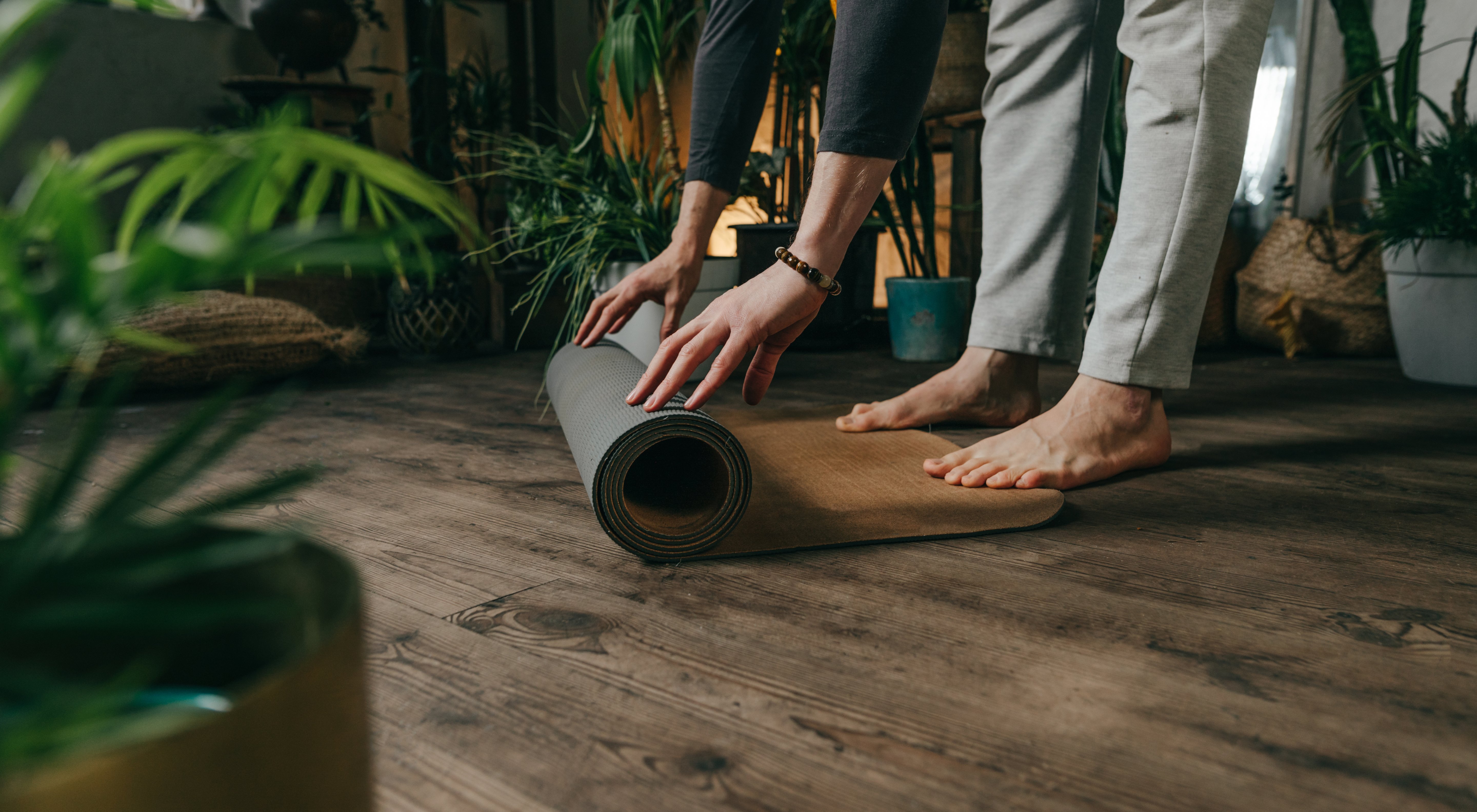
8.3. Grounded Yoga Mats
Just like grounding mats and conductive bed sheets, there are grounding exercise mats that you plug into an outlet. You can then use them to practice yoga, do autogenic training, and meditate. Of course, it’s simpler and more effective to practice outdoors in nature.
8.4. Grounding Shoes
There are now many other grounding tools available, such as grounding shoes, conductive socks, and grounded heel straps or shoe straps. These gadgets are designed for anyone who doesn’t like walking barefoot outdoors or who wants to ground themselves through their feet even during the colder months. For these tools to work, you need to be in contact with a grounded surface—meaning you should be outdoors or use a grounding mat.


Conclusion: What is grounding, and what are its benefits?
Grounding is about establishing direct physical contact with the earth. Walking barefoot is one of the most effective methods of grounding, but you can also ground yourself by swimming in a natural lake or the ocean, gardening (without gloves), and forest bathing . Grounding technologies, such as grounding mats and grounding shoes, are also effective.
On a physical level, grounding involves an exchange of electrons. The Earth’s surface is surrounded by an electric field that is negatively charged. The theory of grounding posits that when contact is made through bare skin, electrons flow from the Earth into the body, where they neutralize excess free radicals. Some studies show that grounding can have an antioxidant effect, inhibit inflammation, reduce stress, promote recovery, and improve sleep. For example, walking barefoot can have a positive impact on mental well-being.
In addition, a regular grounding practice can enhance your well-being. Many people who spend time in nature and consciously experience it feel more balanced and calm. The bottom line is that grounding can help you bring your body and mind into balance. Whether technical aids such as grounding mats are necessary for this is debatable. We recommend that you get outside as often as possible and connect directly with your surroundings—whether by walking barefoot, taking a bath, or gathering wild herbs. Find grounding rituals that suit you and fit into your daily life.