
How often should you do myofascial training?

Your body is a true marvel: so that you can sit, stand, hop, or run, hundreds of muscles, tendons, bones, and joints work in perfect harmony every day.
To maintain and promote this mobility, it’s worth training your fascia regularly. This not only helps release adhesions in the connective tissue but also makes your fascial structures stronger and more elastic as a preventive measure.
But how often does it actually make sense to do fascia training? And when and for how long should you roll out your fascia to keep it supple?
We’ll answer these questions about the optimal timing for your training with the fascia roller right here.
01. Training Parameters for Foam Rolling
It has been known for many decades that strength training must be performed not just any way, but according to specific training parameters (such as intensity, repetitions, and sets) in order to achieve a desired goal.
For example, to build muscle, one must perform 6–12 repetitions across 2–5 sets at approximately 70–85 percent of one’s maximum strength. If the parameters are altered—for example, 90–100 percent of maximum strength with 1–5 repetitions across 3–5 sets—this results in less muscle growth but a more significant increase in absolute strength.
This means that, first and foremost, the training parameters determine the goal achieved through strength training.
The situation is similar with foam rolling, although the scientific basis for it is less well-established. Nevertheless, there are studies that have examined foam rolling using various training parameters.
The following table shows the most important parameters as used in most studies and how they produced a positive effect, primarily in improving flexibility.
02. How often should you do fascia training?
For effective fascia training, just a few short sessions per week on the roller are usually sufficient. Depending on whether you want to strengthen your fascia through training or release adhesions in the connective tissue, we recommend using the fascia roller at different frequencies.
Here’s how often you should use the fascia roller for your specific goal:
- Tone & strengthen connective tissue: Perform fascia training about every two days to strengthen collagen and make your fascia more tear-resistant. To do this, roll out the tissue on the fascia roller with asfirm movements as possible. Tip: Dynamic, springy, and sweeping movements have proven particularly effective for strengthening connective tissue.
- Soften & release connective tissue: It’s best to use the fascia roller daily if you want to break down old collagen and release adhesions. We recommend performing fascia training with gentle, slow movements.
03. How often per week should you do fascia training?
Current research suggests that it is crucial to roll out the fascia as regularly as possible over an extended period to achieve lasting results.
So, it’s best to plan for at least three sessions per week to benefit from the positive effects of this practice. If your main goal is to release adhesions in the connective tissue, you’ll likely notice more pronounced effects if you train your fascia even more frequently—in this case, we recommend rolling out the affected areas daily.It’s important to note that the ideal training frequency can vary from person to person. Some people may respond better to more frequent training, while others achieve good results with less frequent sessions.
The key lies in consistency and adapting to your body’s needs. If you incorporate fascia training into your routine, you may also benefit from shorter, daily sessions.
Short, targeted sessions can be effective for addressing specific areas of connective tissue and releasing tension. This could be particularly relevant if you lead a sedentary lifestyle or engage in regular physical activity.
Remember that with any exercise, quality comes before quantity, and make sure you’re using the correct technique.
04. What should the intensity be when foam rolling?
Training on the foam roller should be uncomfortable but by no means too painful. As a guideline, think of a pain scale from 1 to 10, where 1 means “I don’t feel anything” and 10 means “Help, my muscle is about to tear!” You shouldn’t exceed a level of 7. If the pain is too intense, your body will unnecessarily release stress hormones.
Your tissues will tense up even more. It’s better to reduce the intensity a little and stay within the range of what’s known as “pleasant discomfort.”
You can vary the pressure in different ways:
- by adjusting the amount of body weight you apply to the foam roller. For example, if you lie on your back on the roller on the floor, you’ll apply more pressure to the fascia than if you roll while standing against a wall.
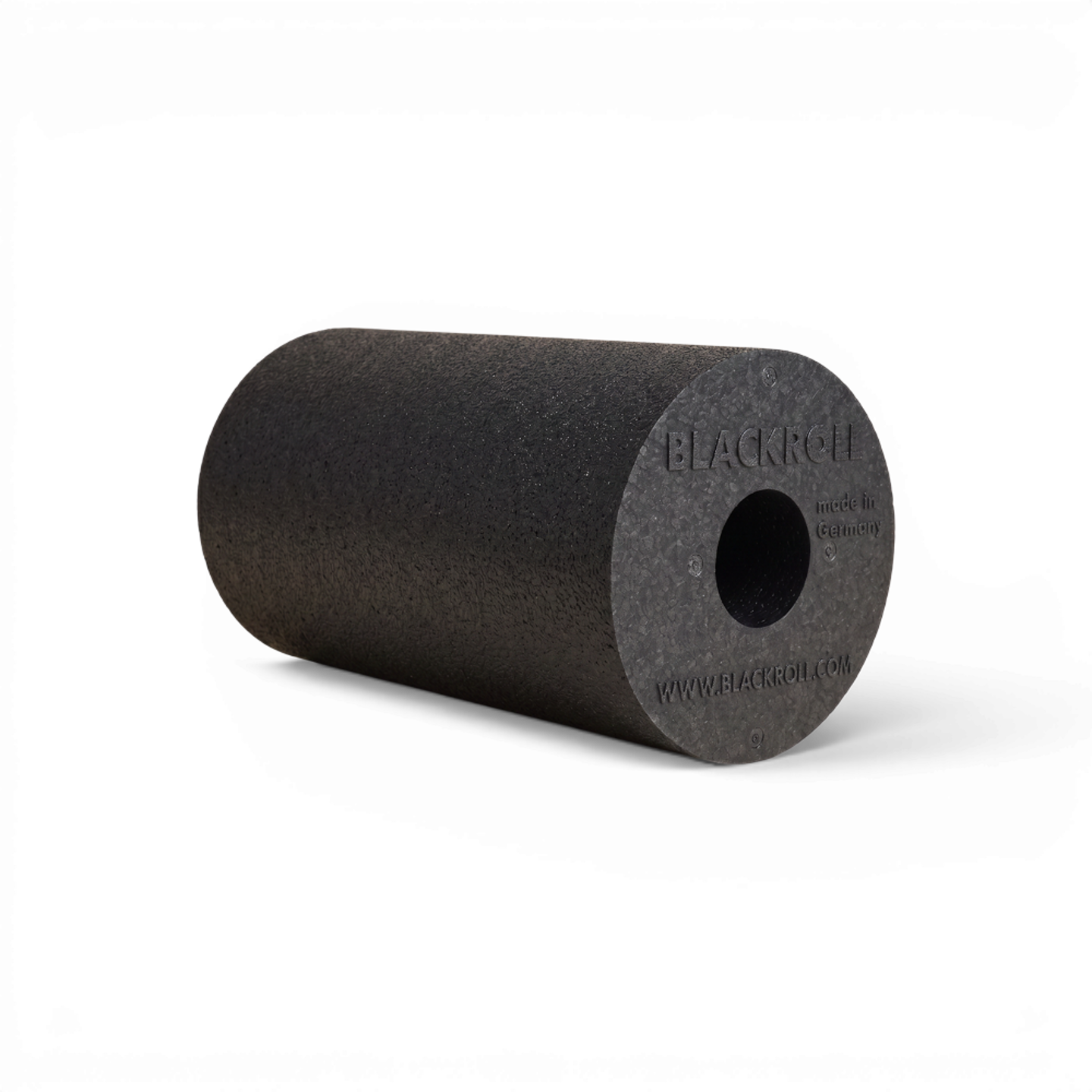
- by adjusting the firmness of the roller.
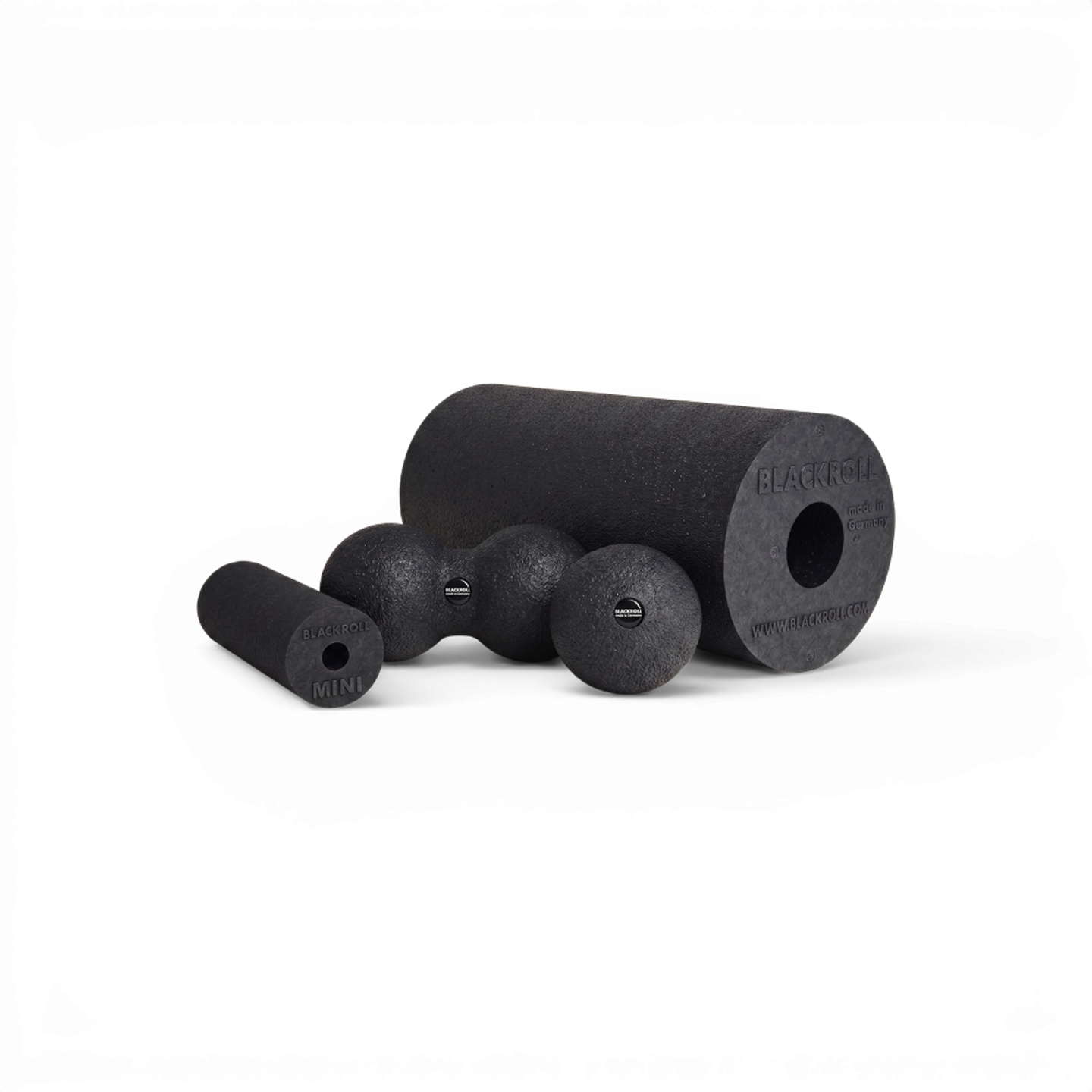
- by the size of the contact surface. (The smaller the surface, the more intense the pressure.)
05. How long should you roll out your fascia?
To keep your fascia supple, you only need to spend a few minutes per body part. As a general guideline, we recommend rolling forabout one to three minutes in one area before moving on to the next.
When training with the fascia roller, focus primarily on how your body feels: As soon as you feel the pressure on the treated area significantly ease, you can continue rolling. Pay a little more attention to particularly painful areas.
The duration of your fascia training can vary depending on your personal needs and goals. If you’re using fascia training as a way to relax, shorter sessions may be sufficient.
06. What is the right rolling speed?
Not only can a regular schedule and sufficient duration of fascia training have a positive effect on your body, but so can the right rolling speed.
Scientific studies have shown that a speed of 1 cm per minute is optimal. However, since this is hardly practical, we recommend 10 to 60 rolls per minute per body section, depending on your training goal. Fast rolling tends to have a short-term mobilizing and warming effect, whereas fewer rolls per minute are advisable for a regenerative effect and for relieving tension.
- For recovery and tension: roll back and forth for about 10 seconds
- For activation: As quickly as possible, while still maintaining a fluid motion.
In practice, it has also proven helpful to tune into your body’s response and linger on a painful spot until the pain subsides significantly. If you encounter a painful spot while rolling, focus on it and don’t continue rolling until only one-third of the pain remains. This serves as a natural way to slow down
07. Should you use a foam roller before or after your workout? When is the best time?
The optimal time for fascia training depends on your personal goals. This is because you can use the foam roller both to warm up your muscles before exercise and to promote recovery after a long workday or an intense workout.
The key factor ishow you use the roller:
If you wantto release tension and adhesions caused, for example, by sitting all day or physical exertion, we recommend slowly rolling out your fasciaafter exercise.
If the self-massage is intended more for short-term mobilization, warming up, and performance enhancement, you can also use the roller before exercise with quick movements to stimulate blood flow and improve body awareness.
It’s also possible to divide fascia training into different phases to make the most of its many benefits. Before exercise, you can use the roller for faster mobilization, while after a workout or in the evening, you might consider a slower, restorative session to relax your muscles and support recovery.
Remember that the intensity of your fascia training should always be tailored to your individual needs. Pay attention to your body’s needs and be especially mindful of sensitive or painful areas. If you’re unsure about how to use the roller or experience pain during the exercises, you should consult a professional. Always make sure your fascia training is optimally aligned with your personal goals and needs.
08. Fascia roller: before or after stretching?
The question of whether myofascial training should be done before or after stretching depends on your individual goals and the context of your workout. However, here at BLACKROLL®, we prefer to do myofascial training before stretching.
Myofascial release before stretching:
Fascia training before stretching can be an effective way to reduce muscle tone (tension in the muscles). Through self-massage, you signal the nervous system to release tension. As a result, your range of motion increases, and you can achieve a deeper stretch. It can also be beneficial to roll out a bit with a fascia roller before yoga to reach deeper into the stretching positions.
Individual Adaptation: It’s important to note that there are no hard and fast rules, and the best order for myofascial release and stretching can vary from person to person. However, when considering the body’s biomechanical principles, it makes sense to roll out first and then stretch.
Holistic Approach: A holistic approach could also involve combining myofascial release and stretching in a single session. For example, short myofascial release exercises could be integrated between stretching exercises to achieve comprehensive mobilization and flexibility.
Ultimately, the decision of whether to start with myofascial training before or after stretching should depend on your personal preferences, your training goal, and how your body feels. Experiment with different sequences and see which order is most effective and comfortable for you.

Discover the variety of foam rollers.
Fascia Rolls09. Conclusion: How Often Should You Do Myofascial Training?
There are many ways to skin a cat. Unlike strength training, you can achieve the same goal using different parameters. The training parameters recommended here are based on the current state of scientific knowledge and have been supplemented by our experience. If you use these when training with a fascia roller, you’re sure to benefit.
The frequency of your fascia training depends on various factors, including your individual goals, your fitness level, and your overall physical condition. However, there are some general guidelines that might help you create your own personal training plan.
If you want to use the foam rollers as a means of relaxation and to prevent muscle tension, we recommend scheduling short training sessions with the BLACKROLL® on a regular basis—ideally several times a week. You can do these sessions both before and after exercise, or even independently of it, to improve your flexibility and enhance your overall well-being.
If you want to address specific problem areas or adhesions, more intensive use—such as a longer foam rolling session twice a week—could be effective. This allows you to target specific regions of the body and achieve a deeper relaxation of the fascia.
When doing fascia training, always pay attention to how your body responds and be flexible with your training plan. Fascia training offers a wide range of ways to promote the health and performance of your connective tissue. If you regularly incorporate the BLACKROLL® into your training routine, you can benefit from positive effects in the long term and thereby contribute to your overall well-being.