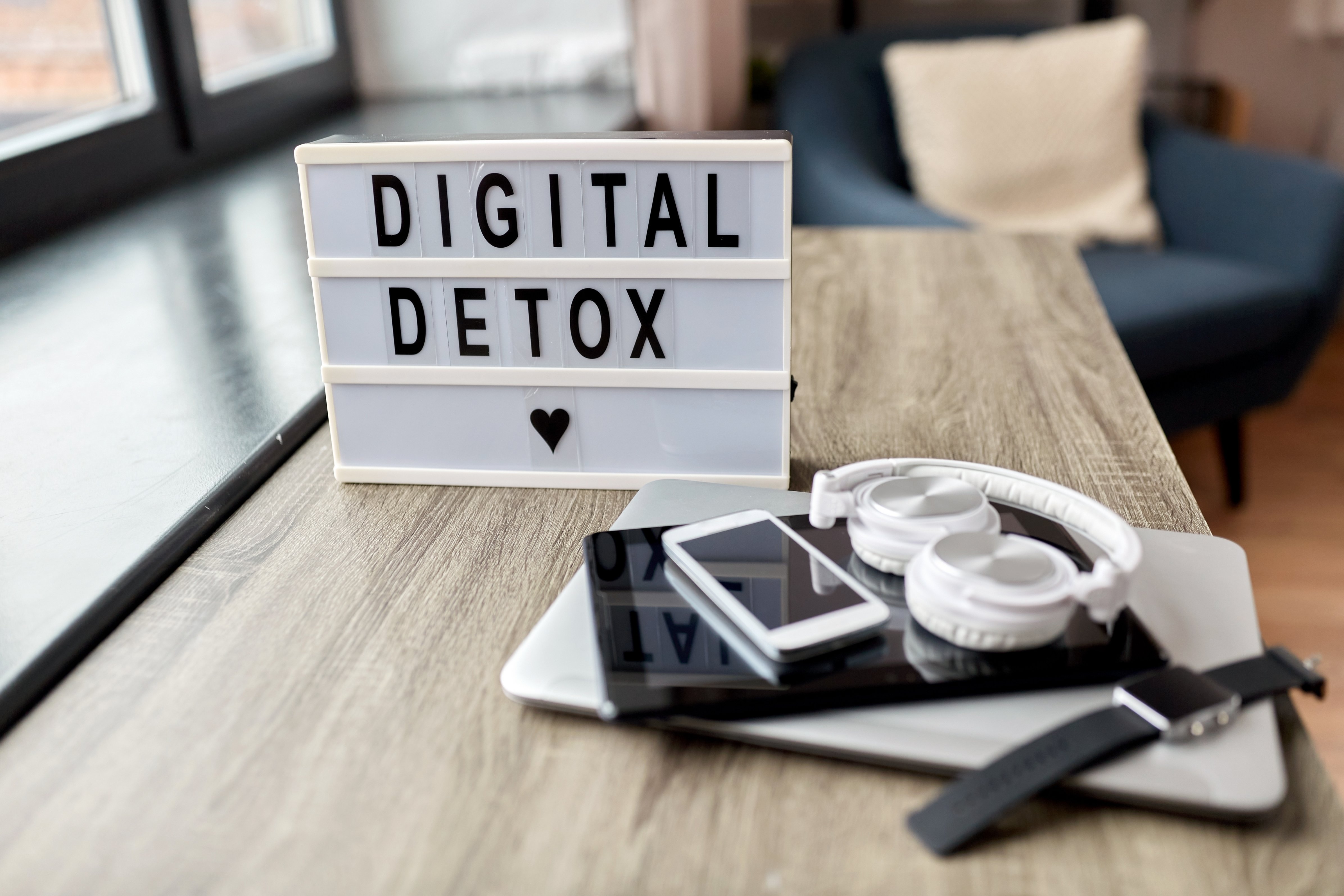
Digital Detox: The Best Tips for Reducing Screen Time

When people talk about health in this day and age, they’re talking about a digital detox. But what exactly is a digital detox? It’s the conscious decision to cut back on screen time, digital devices like smartphones, and other online activities.
A digital detox is intended to provide a temporary break from the constant flow of information and digital connectivity. The concept is seen as a response to the growing challenges associated with the excessive use of smartphones, social media, and other electronic devices.
In this article, we’ll show you how a digital detox can have a positive impact on your physical, emotional, and mental health. Cutting back on screen time or online activities like social media can help you refocus and improve your quality of life.
Why is a digital detox important?
As you read this article, you’re obviously sitting in front of a screen or holding your smartphone in your hand. As is so often the case. Probably too often. We’re always on, constantly available, bombarded with information, and perpetually connected on social media.
The result: We’re becoming dependent on electronic devices. This can lead to stress, sleep disturbances, concentration problems, and social isolation. To prevent this, intentional periods of digital abstinence are important. This allows you not only to promote your mental health but also to build a more mindful relationship with your surroundings.
A digital detox allows you to focus on personal interactions, creative activities, or moments of rest to regain your inner balance. Avoiding digital overstimulation can boost your well-being in the long run.
Give it a try!

Cell Phone Detox – Not Without My Smartphone.
Or maybe I should? A cell phone detox refers to temporarily giving up mobile devices such as smartphones or tablets. The conscious decision to take a break from constant screen time and put your smartphone down not only provides physical relief but also has a positive effect on your mental health.
By consciously putting your smartphone away, you can escape the constant flow of information and digital sensory overload, reduce your stress levels, and improve the quality of your sleep.
In our article“Trouble Falling Asleep,” we’ll show you strategies and methods that can help you fall asleep more easily.
Taking a break from your Apple iPhone, for example, opens up new space for personal interactions, creative activities, and self-reflection. You’ll rediscover your surroundings without constantly glancing at your laptop or smartphone, allowing you to form a deeper connection to the real world.
Taking a break from being constantly connected also promotes mindfulness in your daily life, allowing you to consciously focus your attention on the present moment.
During the detox phase, read a book, do yoga, or exercise, and you’ll see how much it relaxes you. Staring at a screen and swiping through Instagram Stories has the opposite effect.

Media Detox
Most of the news we consume through the media is negative—news about war, disasters, financial crises, and so on. This naturally affects our well-being. Consciously stepping away from media can therefore have a liberating effect.
A media detox phase means temporarily stepping away from the news, the latest content on social media, and other digital platforms. During this phase, you have the opportunity to clear your head, relieve mental stress, and find inner peace. Taking a break from the constant stream of news, app notifications, and visual stimuli gives you space for mental regeneration.
During the detox phase, you should consciously shift your attention away from digital headlines. Instead, focus on direct, personal relationships, creative activities, and self-reflection.
A media detox not only promotes your mental peace but also helps reduce stress, lower the risk of burnout, improve your sleep quality, and restore your emotional balance—which may have become unbalanced. By avoiding media consumption, you have the chance to gain a clearer perspective on your own well-being and strengthen your interpersonal relationships in everyday life.
It is therefore not just a temporary break, but a conscious investment in your own well-being, your mental health, and your inner balance.
Internet Detox
“The Internet won’t catch on.” That’s what former IBM CEO Thomas J. Watson is said to have remarked at the dawn of the digital age. An incredible misjudgment, because today, almost nothing works without the Internet.
But it can also make us sick. With an Internet Detox, we can counteract that. Just sign off, log out, turn on airplane mode, and ignore social media apps like Instagram, Facebook, WhatsApp, or YouTube. This creates space for physical and mental recovery. A conscious break allows you to refocus on the important things in life. In the end, time spent with friends and family is far more valuable than the constant temptations of the online world.
During an internet detox, for example, you can unleash your creativity—the motto here is “do instead of want.”
Doing without constant access to information allows you to get to know yourself better, reflect on your life, and gives you time to pursue your personal hobbies.
Sports with friends, micro-adventures, craft and building projects: there’s plenty to do.
And it will improve your productivity and quality of life. Perhaps after a conscious break, you’ll rethink your relationship with the internet as a whole—and find a healthier balance between the virtual and real worlds.
A digital detox has proven to be an effective way to improve mental health. Constant digital overstimulation—whether from social media, the news, or constant screen time—can lead to stress, anxiety, and sleep disturbances.
Deciding to take a break, on the other hand, can help you relax, reduce stress hormones, and improve your concentration.
Furthermore, a digital detox promotes a more mindful lifestyle, creates space for personal reflection, and enhances your awareness of your surroundings.
This break allows you to focus on interpersonal relationships, discover creative activities, and better understand your own mood. The result is a positive impact on your emotional stability.

Constant availability and a steady stream of information can impair your concentration and hinder your workflow. By consciously turning off electronic devices, a digital detox allows you to focus on your tasks.
Taking a break from digital stimuli—for example, by turning on airplane mode on your device—creates space for focused work without interruptions and allows you to devote yourself fully to your professional challenges. Additionally, reducing digital multitasking contributes to a more efficient way of working.
A digital detox also promotes a healthier work-life balance by setting clear boundaries between work and personal activities. The resulting rest boosts your energy and motivation. Give it a try and discover how it positively impacts your performance.

A digital detox—especially a social media detox—has the potential to improve your interpersonal relationships. The conscious decision to set aside digital devices for a while allows you to have deeper and more meaningful conversations.
Without the constant distraction of screens, you’ll be able to focus better on the people around you, better understand their emotions, and build genuine connections. Want to bet? A digital detox thus not only promotes more active communication but also offers you the chance to strengthen your empathy and your interpersonal relationships.
The time spent together—whether going for a walk or having dinner—becomes more valuable because it’s free from digital interruptions.

Signs That You Need a Digital Detox
There are some clear signs that you need a digital detox. One alarming sign that points to excessive use of digital devices, for example, is the inability to tear yourself away from screens.
If reaching for your smartphone or tablet becomes a reflexive action—even in social situations—this suggests excessive digital dependence. Do you reach for your phone when it vibrates while you’re having dinner with friends? Do you feel an urgent need to check Instagram one last time before going to bed? Busted!
Stress and digital exhaustion are other serious warning signs. Being constantly connected, the pursuit of more and more likes and clicks, keeping up with every new trend, and the general information overload can lead to persistently high stress levels. The pressure from notifications can be a cause of emotional exhaustion. Digital exhaustion often manifests as irritability, difficulty concentrating, and a general feeling of being overwhelmed.
Sleep disturbances are another clear sign that a digital detox is needed. Exposure to blue light from screens before bedtime has been shown to disrupt the natural sleep-wake cycle and can lead to insomnia. The inability to disconnect can lead to a downward spiral of poor sleep and increasing exhaustion.

These signs should serve as a wake-up call to reevaluate your digital habits and, if necessary, take steps toward a digital detox.
Consciously reducing screen time, engaging in exercise, yoga, or meditation as a balance, introducing digital breaks, and establishing an evening ritual free of electronic devices can help restore your balance between the digital and real worlds and promote your health and well-being in the long term.

3 Tips for a Successful Digital Detox
Set clear goals, establish firm boundaries, and consciously incorporate offline activities into your life. These are the first steps toward a digital detox. Reduce your daily screen time, for example, by introducing offline time blocks or creating digital breathing room. Setting realistic goals helps you structure the process and break habits so that you can ultimately “detox” successfully.
Setting Boundaries
Boundaries play a central role in making a digital detox work. It’s important to establish clear rules for your cell phone and screen use, especially during essential rest periods like bedtime. Establishing “no-phone zones” not only promotes physical distance from digital devices but also strengthens your interpersonal relationships. No-phone zones can include, for example, the bedroom or the dining table.
Offline Activities
Incorporating offline activities into your daily routine is another key aspect. Walks, hobbies, meditation, or social gatherings without digital distractions create space for personal growth and relaxation. Or you could travel—go on vacation, leave Germany, explore the world—turn off your smartphone, and be unreachable. Not via WhatsApp, email, or work—instead, live in the moment and be fully present. Offline activities not only foster creative development, but also serve as an effective counterbalance to digital sensory overload.

Less Screen Time
Reducing screen time is a fundamental part of a digital detox. This can be achieved by setting clear time limits for watching videos, using social media, news apps, and online entertainment. Your conscious decision to step away from screens allows for greater focus on your surroundings and promotes physical and mental well-being.
Overall, a successful digital detox requires a fresh perspective on many things, ongoing self-reflection, and the determination to establish new habits. The combination of clear goals, firm boundaries, and the conscious integration of offline activities creates a balanced approach to your sustainable digital detox. If you can put this into practice, you’ll see your quality of life improve.
You can figure out for yourself how long your digital detox should last. An evening without your phone, or maybe a weekend? Try out what works best for you.
Long-Term Strategies for Digital Balance
Of course, completely cutting out digital media, social media, and the like isn’t a solution either. That’s why you should develop long-term strategies for digital balance and a mindful approach to digital media.
- Digital-Free Zones
A key component here is establishing digital-free zones. To do this, designate specific areas in your home—such as your bedroom or dining room—that should be free of digital devices. This way, you create intentional spaces for yourself, undisturbed interactions, and relaxation. - Mindful Media Use
Using digital media mindfully means setting clear goals and boundaries for your screen time. These goals can include reducing online activities, setting aside offline time, or limiting digital activities to specific times of the day. By consciously managing your digital interactions, you gain more control over your time and energy. - Wellness Tools
Using digital wellness tools can also help promote your digital balance. These are apps designed to monitor your screen time, improve your sleep, and promote your overall health. These tools serve as supportive measures to help you monitor and, if necessary, adjust your own digital behavior. “Digital Wellbeing” on Android or “Screen Time” on Apple are examples of apps that can help you reduce your screen time.
Research on Digital Detox
For every study, there is a counter-study, so the research on digital detox is inconclusive. While recent case studies highlight the positive effects of digital detox on mental health and quality of life,
However, a study by a team of psychologists at the University of Carolina found in an experiment that abstaining from smartphones or social media had no positive effect on either general well-being or depressive tendencies.
These findings suggest that complete abstinence from digital media can lead to social exclusion or “Fear of Missing Out” (FOMO)—the fear of missing out on something. Stress is the result. A balanced use of digital media is therefore advisable.
According to a study commissioned by AXA from the polling firm YouGov, one in five people (20 percent) wanted to spend less time in front of a screen in 2023. Hostility, hate, and sex on social media are reasons for limiting screen time. This figure is a clear indication that there is widespread awareness in society of the need for mindful use of digital media.
Other studies and personal accounts also suggest that mindful use or temporarily abstaining from digital media has positive effects on stress, sleep quality, mental health, creativity, and interpersonal relationships.
Conclusion: Digital Detox
We are digitally connected, and technological progress is unstoppable. Since this isn’t going to change—and since it also has its benefits—we need to think about how we deal with it. Digital detox is becoming increasingly important for maintaining our physical and mental health. After all, digital overload, stress, and sleep disturbances are just a few of the multifaceted problems that can be alleviated through a digital detox.
The key to a successful digital detox lies in consciously shaping how you interact with technology. Set clear goals and boundaries. This allows you to reduce screen time and shift your focus to offline activities. Consciously integrating leisure activities and personal interactions into your daily routine not only creates space for your personal growth but also fosters a lasting connection to the real world. Completely avoiding digital media, however, is not advisable, as this can also lead to stress.
Looking ahead, a digital detox is not just a passing trend but an essential strategy for maintaining our balance between the digital and analog worlds. It’s about regaining control over our digital lifestyle and consciously deciding when and how we use digital technologies.
A temporary digital retreat can have positive effects on mental health, improve interpersonal relationships, and promote a balanced lifestyle. A digital detox gives us the opportunity to enjoy the benefits of technology while staying healthy.
Let’s give it a try.
Sources:
https://www.ncbi.nlm.nih.gov/pmc/articles/PMC8862700/
https://osf.io/preprints/psyarxiv/c3phw/
https://www.axa.de/presse/studie-digital-detox