Neck Stretches: 5 Exercises to Relieve Tension

Exercises to Relieve Tension
Time
- 17 minutes
- 5 exercises
Exercises - Neck Stretches
In this video, Master Trainer Stefan shows you targeted neck-stretching exercises to help you relax your neck.
Why is it important to stretch your neck muscles?
The neck muscles are subjected to various strains every day, whether from sitting at a desk for long periods, stress, or poor posture. However, by actively stretching the neck muscles, we can relieve tension, improve blood circulation, and increase the flexibility of our neck. Properly stretched neck muscles help prevent neck pain and improve the mobility of our cervical spine. It’s a simple and effective way to promote well-being and relaxation in our neck and ensure a more comfortable physical state in everyday life.
- Can relieve tension and pain: A randomized controlled trial demonstrated that a regular stretching program over four weeks can reduce neck and shoulder discomfort and improve neck function in office workers with chronic moderate to severe neck or shoulder pain. Another study even demonstrated that a regular stretching program (5 times per week) achieves similar pain relief to regular manual therapy (2 times per week).
- Increases flexibility: Regular neck stretching increases the flexibility of the neck muscles and improves range of motion. A flexible cervical spine is important in everyday life—for example, when we glance over our shoulder while driving.
- Can reduce headaches: Tension in the neck can often lead to headaches, as the tension in the muscles can spread all the way to the head. Stretching the neck can help release this tension and thus also relieve headaches.
Stretching Exercises for the Neck & Shoulders with the BLACKROLL® STRETCH BAND
You can also perform other effective stretching exercises for your neck and shoulders using the BLACKROLL® STRETCH BAND. The band allows you to specifically stretch the most important parts of your neck muscles.
Hold each stretch for at least 60 seconds.
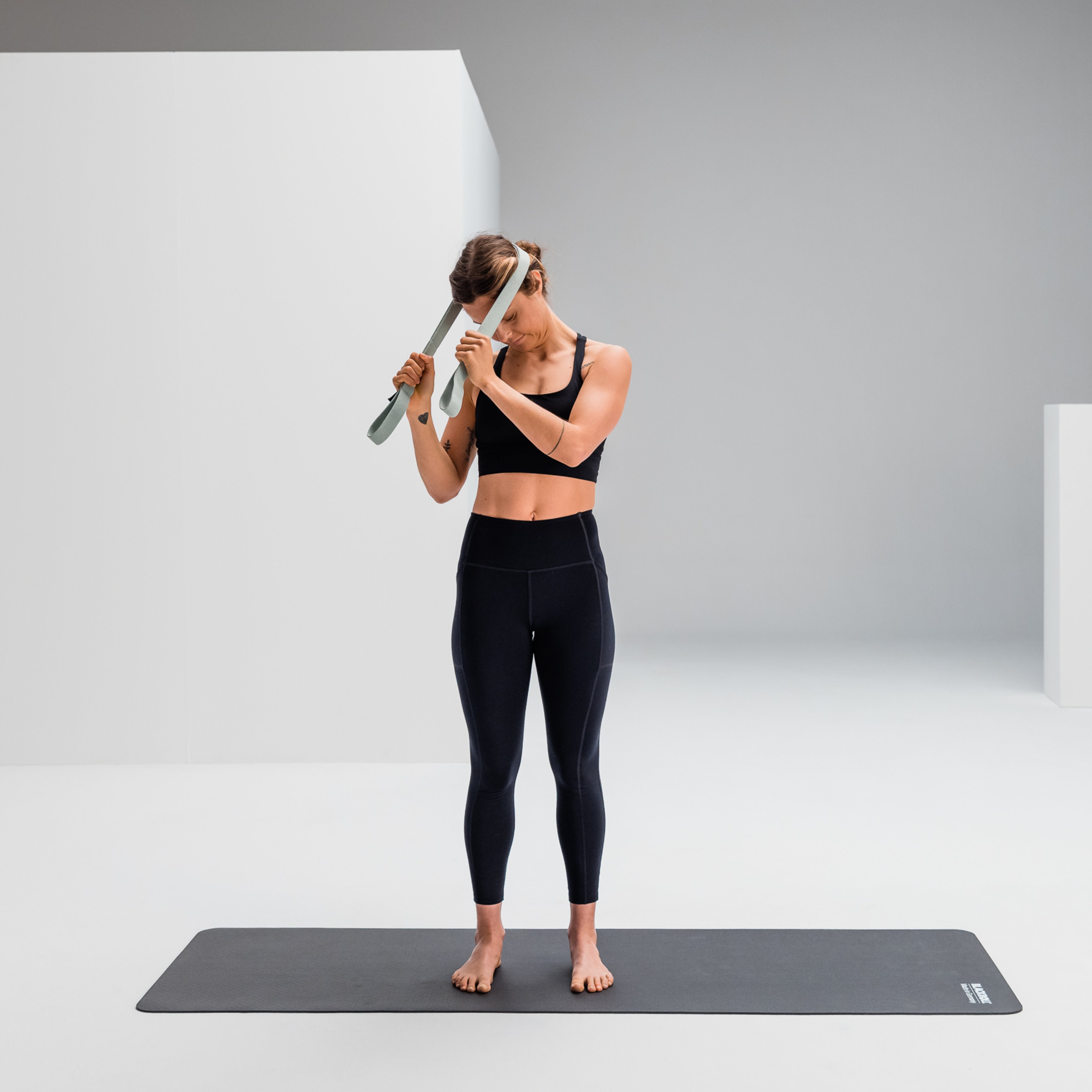
Side Neck Stretch
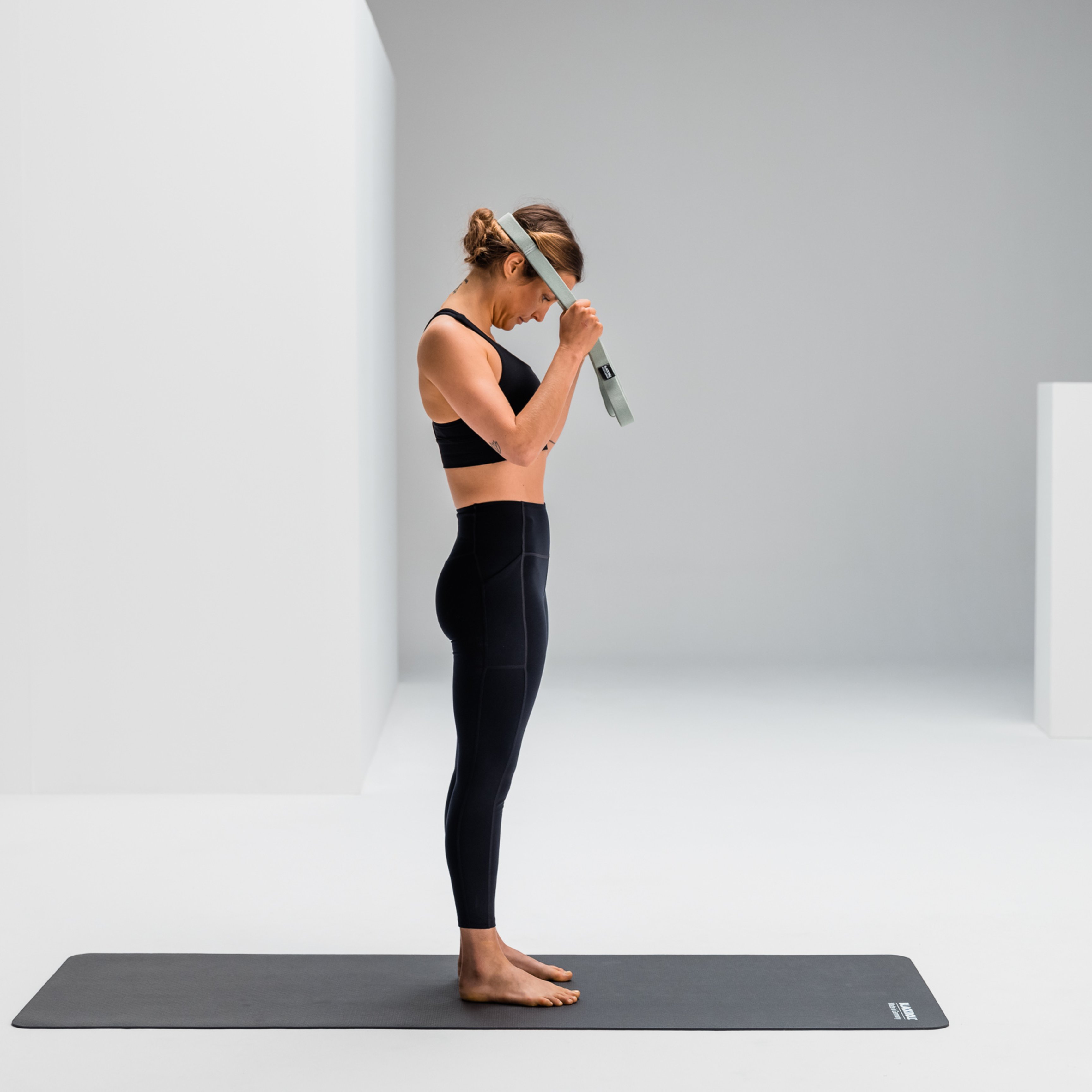
Take the STRETCH BAND in your hand and place it on the side of your head so that it runs across your forehead. Tilt your head to the side and try to push the band upward. Don’t pull too hard on the band during the stretch. It serves as a tactile cue. Your neck muscles should remain engaged throughout the exercise. Alternatively, you can also do this exercise while sitting in a chair.
Stretching Tight Neck Muscles
Grasp the band with both hands. Place the STRETCH BAND around the back of your neck. Lower your chin toward your chest. Try to push the band upward. Pull the band only slightly toward the floor. Keep your arms and shoulders relaxed throughout.
Loosening the Neck Muscles and the Lateral Neck Muscles
If you want to loosen up your neck muscles, targeted exercises for the cervical spine are also effective. In this video, Master Trainer Stefan shows you which exercises you can use to effectively loosen your lateral neck muscles.
Tips for Stretching Your Neck Muscles
Before you start the neck exercises, take the following tips to heart. If you want to stretch your neck muscles, please keep the following in mind:
- Always stretch below your personal pain threshold. Imagine a scale from 1 to 10 and perform the stretch in the range of 5 to 6. Stretching may feel slightly uncomfortable, but it should not cause pain.
- Perform the neck exercises slowly and in a controlled manner.
- Pay attention to how your body feels during and after stretching your neck: Does it feel comfortable? If not, try a different exercise.
- You can further promote muscle relaxation by applying heat after your neck stretches.
- And finally, the most important thing: Incorporate these neck stretches into your daily routine on a regular basis to ensure that you continue to benefit from them.
Is neck stretching dangerous?
If you’re the type of person who tends to err on the side of caution, you might be wondering if neck stretching is dangerous.
The short answer to this question is that neck stretching is safe for most people. The reason for this is that the cervical spine is more resilient than most people realize. Problems arise when the stretches are overdone. Since there are many nerves in the cervical spine area, this can lead to symptoms such as dizziness or nausea, among other things. This is especially true if your body isn’t used to the stretching. The most important thing is to take it slow and listen to your body’s signals.
However, there are contraindications, such as acute injuries or herniated discs. In these cases, you should not stretch without further consideration or, at the very least, seek the advice of a doctor.
Caution is also advised for people with hypermobility in the cervical spine. These individuals are better suited to stabilizing exercises for the cervical spine.
Prevent neck tension with these tips:
Neck tension can result from various factors, such as poor posture, stress, lack of exercise, and poor ergonomic habits. Here are some tips to prevent neck tension:
- Ergonomics at work: Make sure your workspace is ergonomically designed. Your monitor should be at eye level.
- Maintain good posture: Be mindful of your posture, especially when sitting or standing for long periods. Keep your back straight, relax your shoulders, and keep your neck in a neutral position.
- Takeregular breaks: Get up regularly, stretch, and move around while you work. Avoid staying in the same position for long periods of time. Your legs will thank you, too.
- Proper sleeping position: Choose a mattress and pillow that provide support for your spine.

- Movement and stretching: Perform regular stretching exercises for your neck and shoulders to keep your muscles supple and improve flexibility.
- Stress management: Stress can lead to neck tension. Try relaxation techniques such as meditation, breathing exercises, or yoga to reduce stress.
- Massage and Heat: Occasional massages or the application of heat (e.g., with a hot water bottle or a warm towel) can promote blood circulation and relieve muscle tension.
- Physical Therapy: If you’re already experiencing neck tension, professional physical therapy can help you learn the right exercises and treatments.
Conclusion
Stretching your neck is an effective way to relieve tension, improve flexibility, and prevent injuries. By regularly performing neck and shoulder stretches, you can loosen your neck muscles and alleviate tension. However, be sure to perform the exercises correctly and be aware of potential risks. If you have any concerns, you should consult a doctor or physical therapist before you start stretching your neck.