Exercises for a Rounded Back

Effective Exercises for a Strong & Healthy Back
Focus areas
- Oberer Rücken
- Schultern
- Nacken
- Rücken
Time
- 17 minutes
- 8 exercises
Correcting a Hunchback
A hunched back is one of the most common postural problems. In most cases, poor posture and a lack of exercise cause the spine to curve between the neck and upper back, resulting in a hunchback. If it’s purely a matter of poor posture, a hunched back can be corrected through targeted training. In the following video, Master Trainer Stefan shows you how to correct your hunched back with simple exercises.
The following exercises can also help counteract a hunched back. The rule of thumb is: stretch first, then strengthen.
Spinal Mobilization
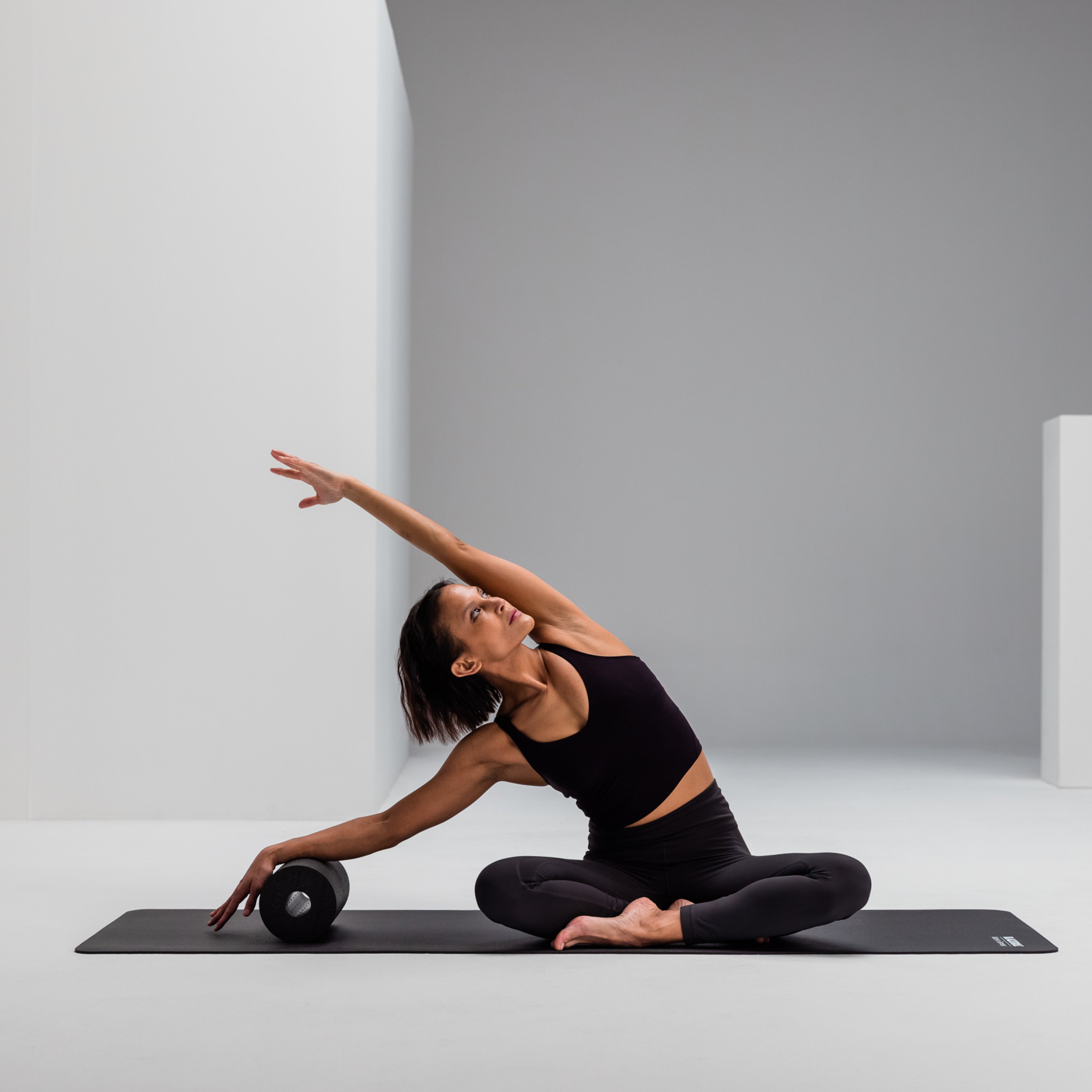
Start in a cross-legged position. Place the BLACKROLL to your right. Place your right hand on the roll. Extend your left arm over your head while leaning your upper body to the right. Hold this position before switching sides. Your upper body should only perform a lateral bend during this exercise. Be careful not to tilt forward or backward. Hold for 30 seconds on each side.
Wall Angel
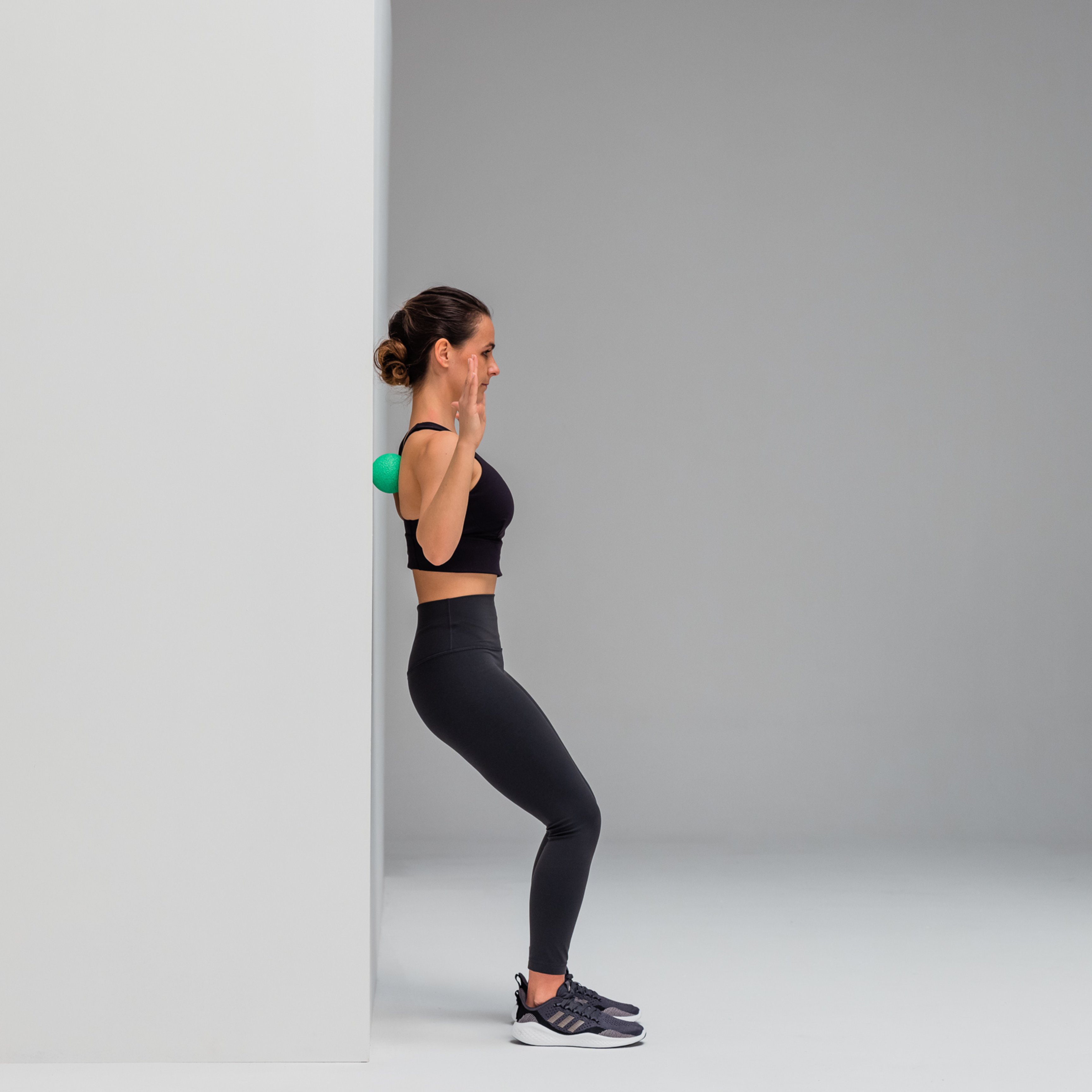
Stand against the wall. Place the BALL between your upper back and the wall. Now move your arms overhead. Return to the starting position. Perform the exercise for one minute.
Preacher Stretch
Start on all fours. Place your hands on the BLACKROLL. Now slowly roll forward with the roller. Lower your chest to the floor between your arms. Throughout the entire exercise, push your sternum forward to straighten your thoracic spine. To further mobilize your shoulders, you can rotate your hands outward and inward. Hold the stretch for 60 seconds.
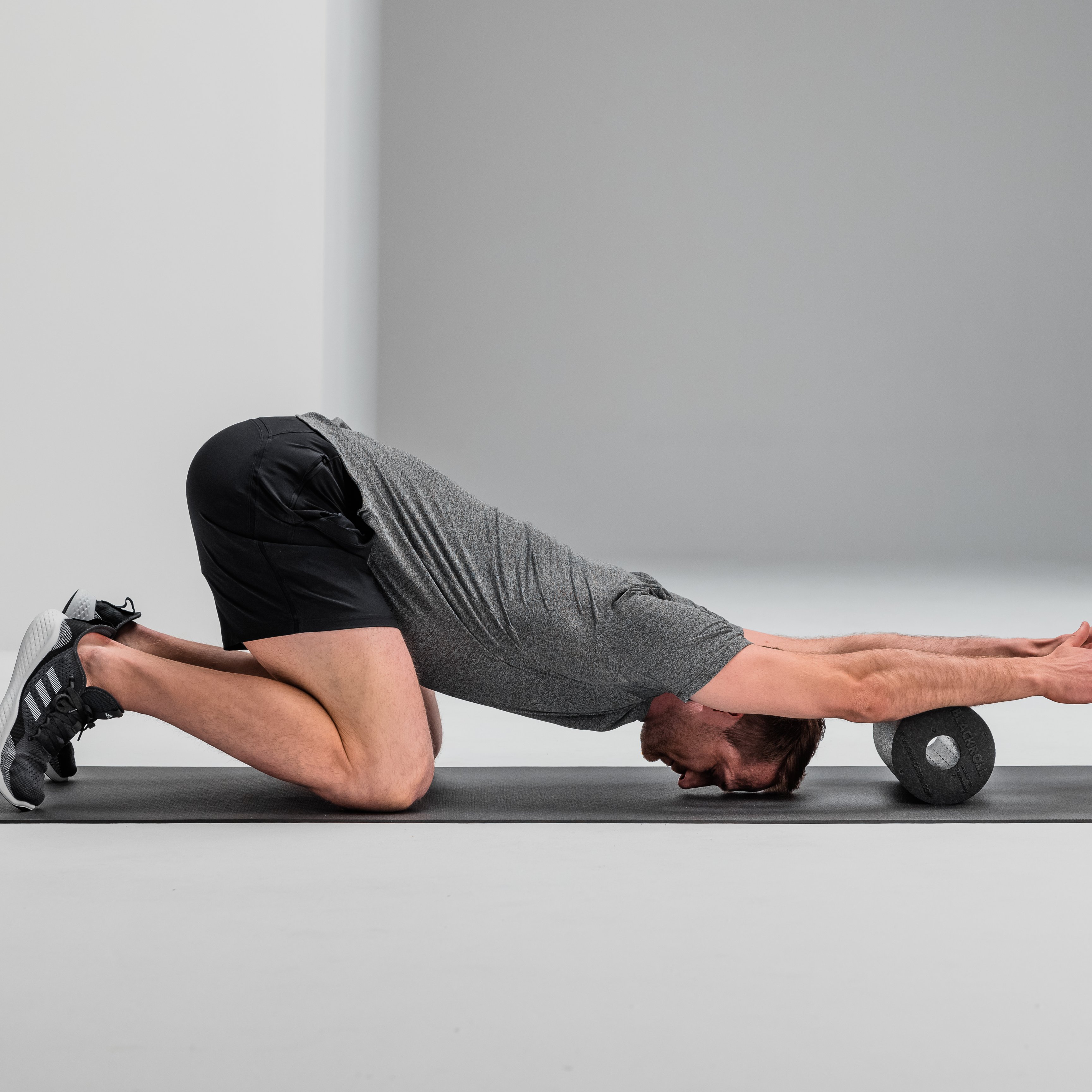
Scapula Push
Start in an upright standing position facing a wall. Place the BLACKROLL at neck height. Secure it with your wrists. Apply pressure with your forearms. Let your shoulder blades slide forward as a result. Push the BLACKROLL upward while maintaining the pressure. Keep your core engaged and your torso straight throughout the entire movement. The movement is generated exclusively from your shoulders and shoulder blades. Perform 12–15 repetitions for 2–3 sets.
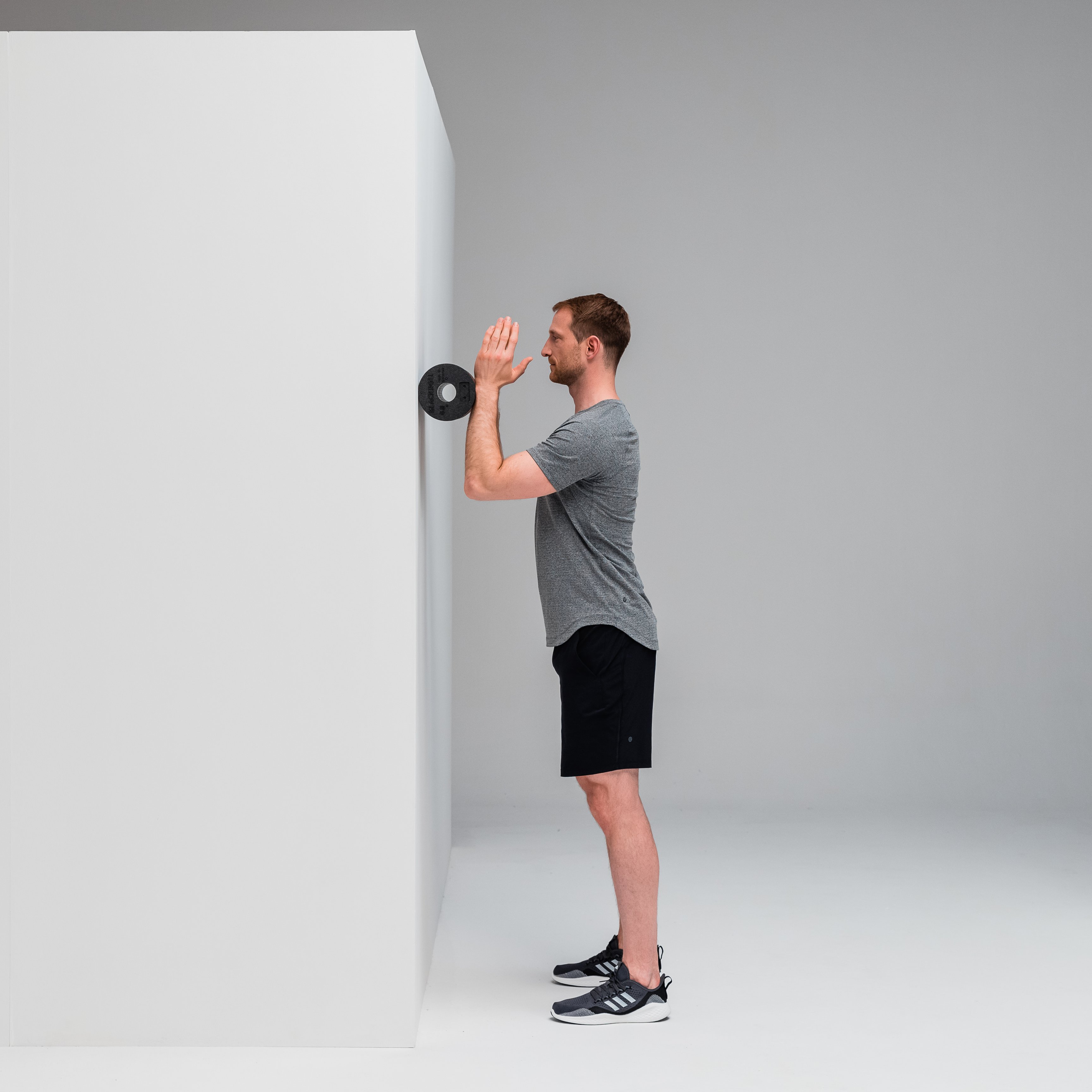
Scapular Push-Ups
Start in a push-up position. Lower your upper body, keeping your arms straight. Then push yourself back up as far as possible. Hold the position for a few seconds. Repeat the movement. Make sure your body forms a straight line. You can stay on your knees at first. Let your shoulder blades slide forward as you push yourself back up.
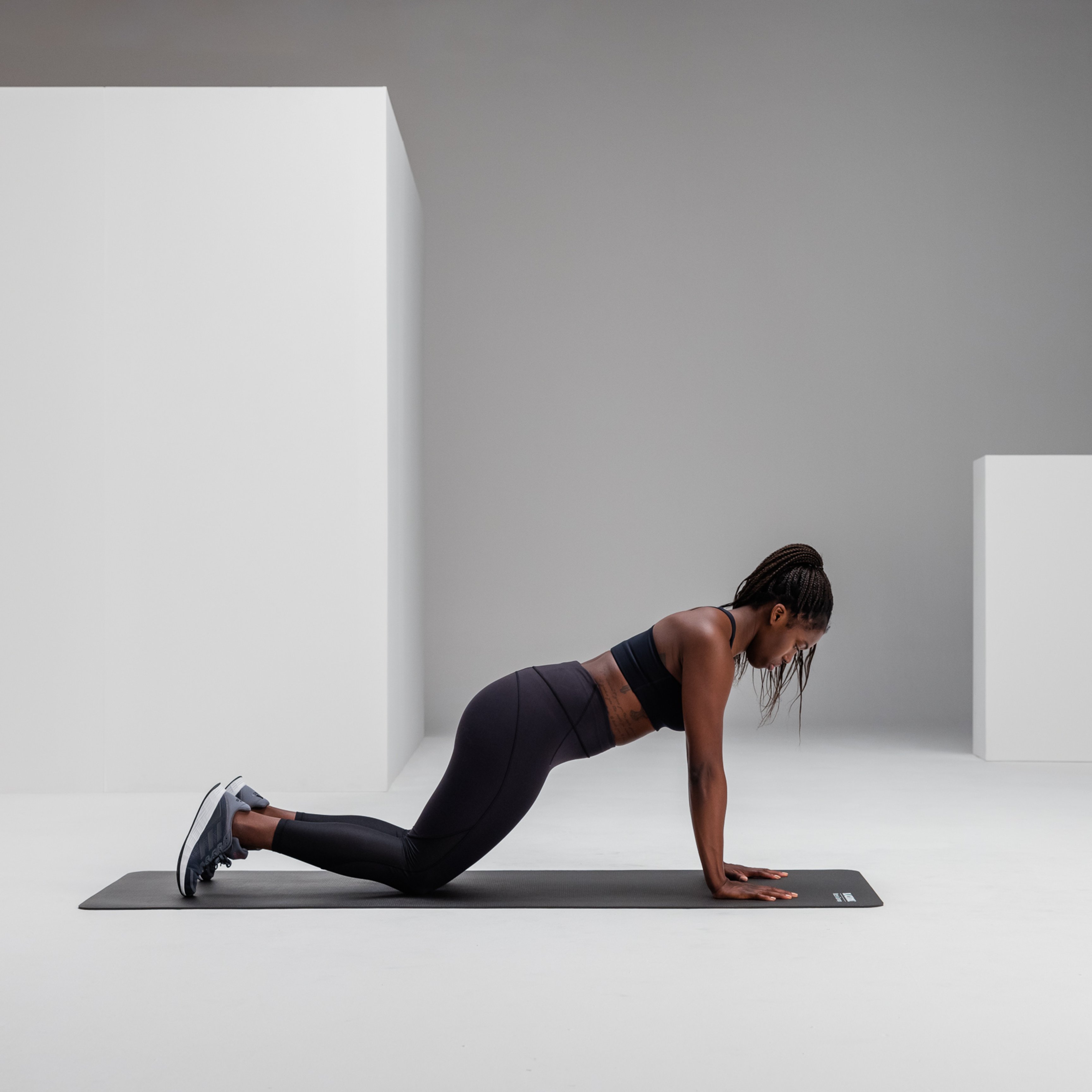
T-Arm Raises
Lie face down on the GYMBALL. Keep your feet on the floor. Raise your arms straight out to the sides and lower them again. Hold the tension for a moment at the end of the upward movement.
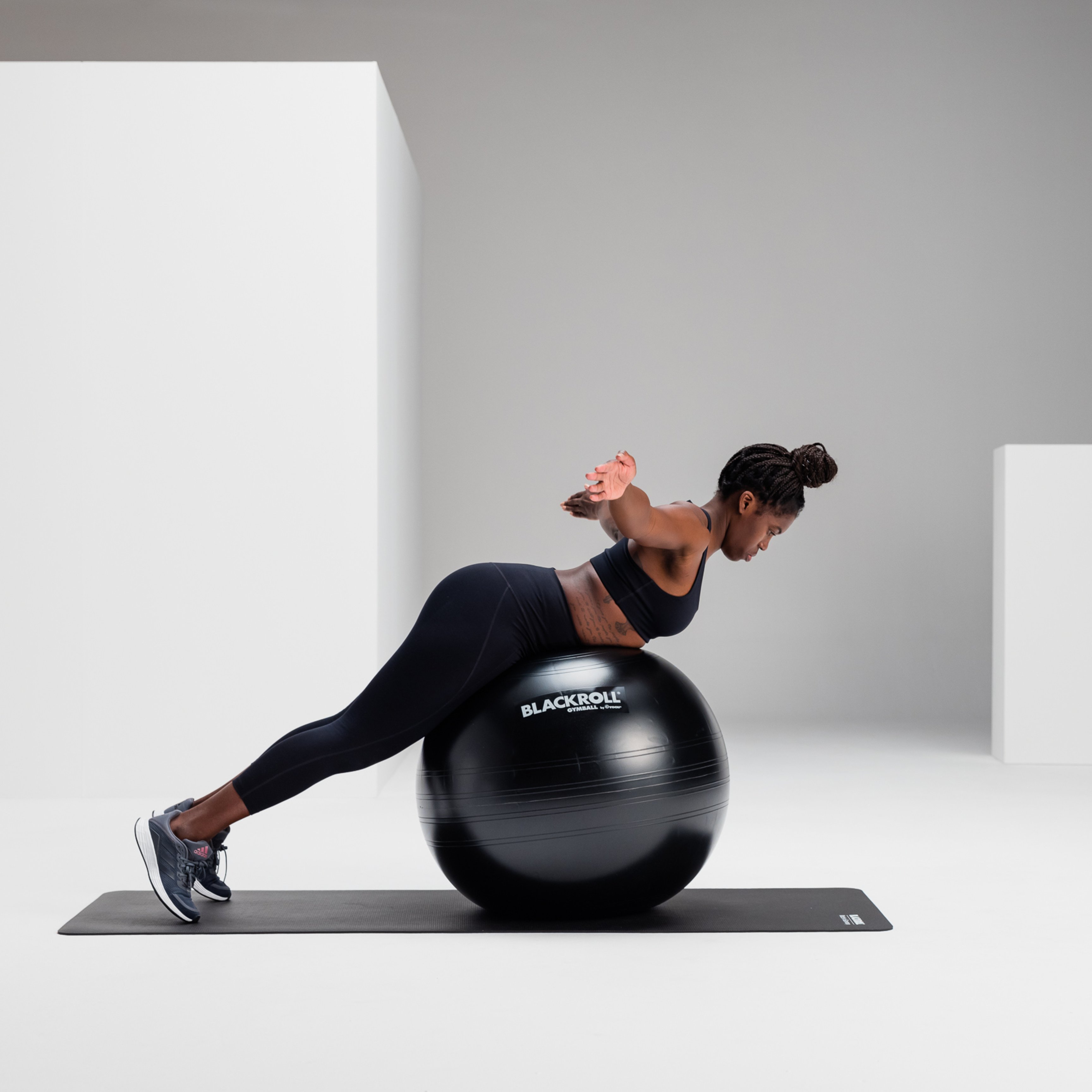
Superman
Lie face down on the GYMBALL. Keep your hands and feet on the floor. Alternately lift one arm and the opposite leg. Try to keep your torso as still as possible.

If other conditions, such as osteoporosis or ankylosing spondylitis, are the cause of your rounded back, you should discuss treatment with your doctor. In this case, comprehensive therapy is usually necessary.
Exercises for Widow’s Hump
When doing widow’s hump exercises, it’s important to open up and relax your chest. Due to the forward-leaning posture, the chest muscles are often shortened or stiffened. Here are some exercises for you that help counteract this:
Our various resistance bands are ideal for these exercises
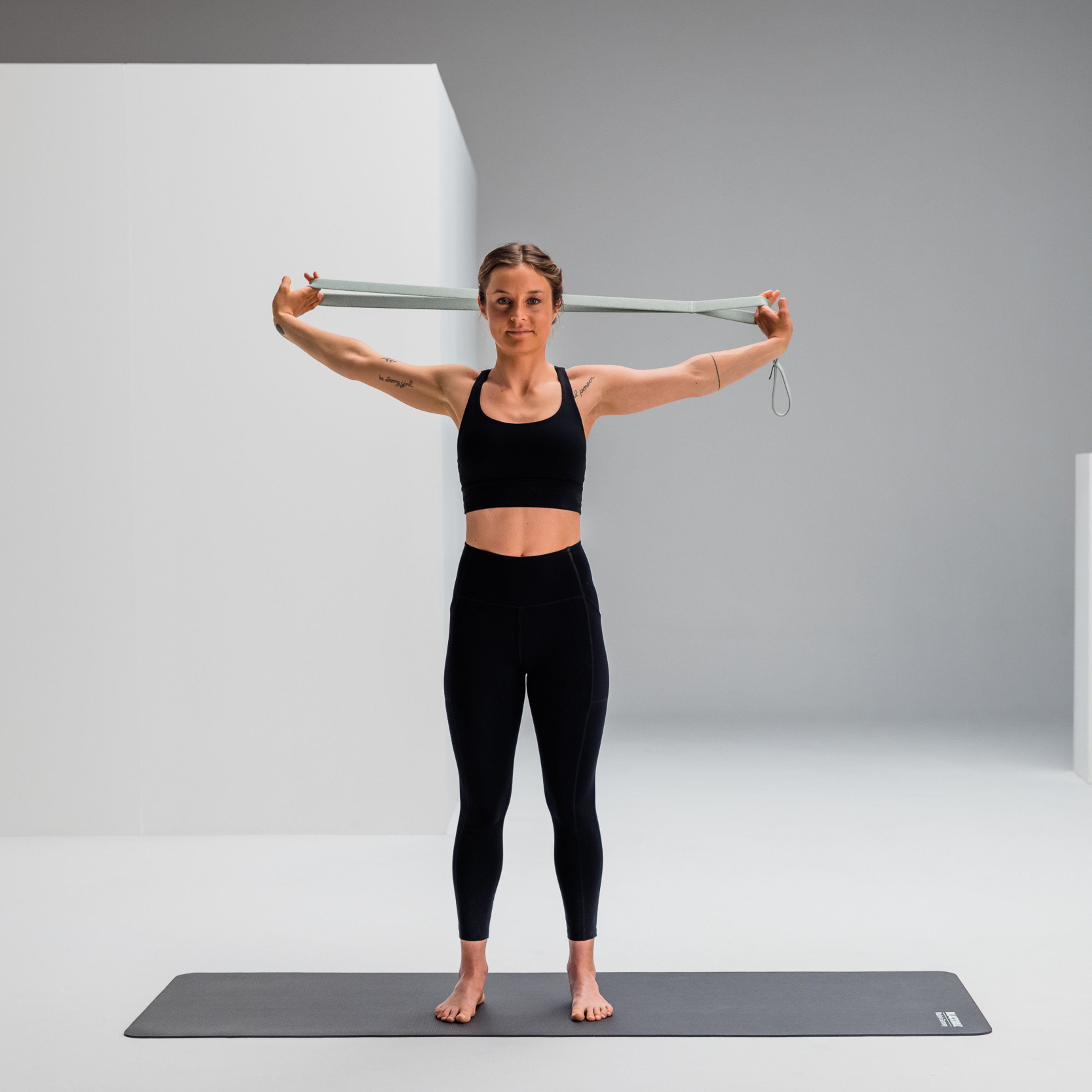
Shoulder-Chest Opening
Grasp the STRETCH BAND with your fingertips. Slide your arms through it. Move the band over your head and back until it’s level with the back of your head. Lift your sternum upward. Hold the position. If the exercise is too challenging, start with your arms lower. It’s important to keep your elbows straight. You can also easily do this exercise while sitting. Hold the stretch for 2 sets of 30 seconds.
Reverse Fly
Stand with your feet hip-width apart. Grab the SUPER BAND in front of your chest. Pull the band apart and bring both hands backward. Return to the starting position. Perform 12–15 repetitions for 2–3 sets.
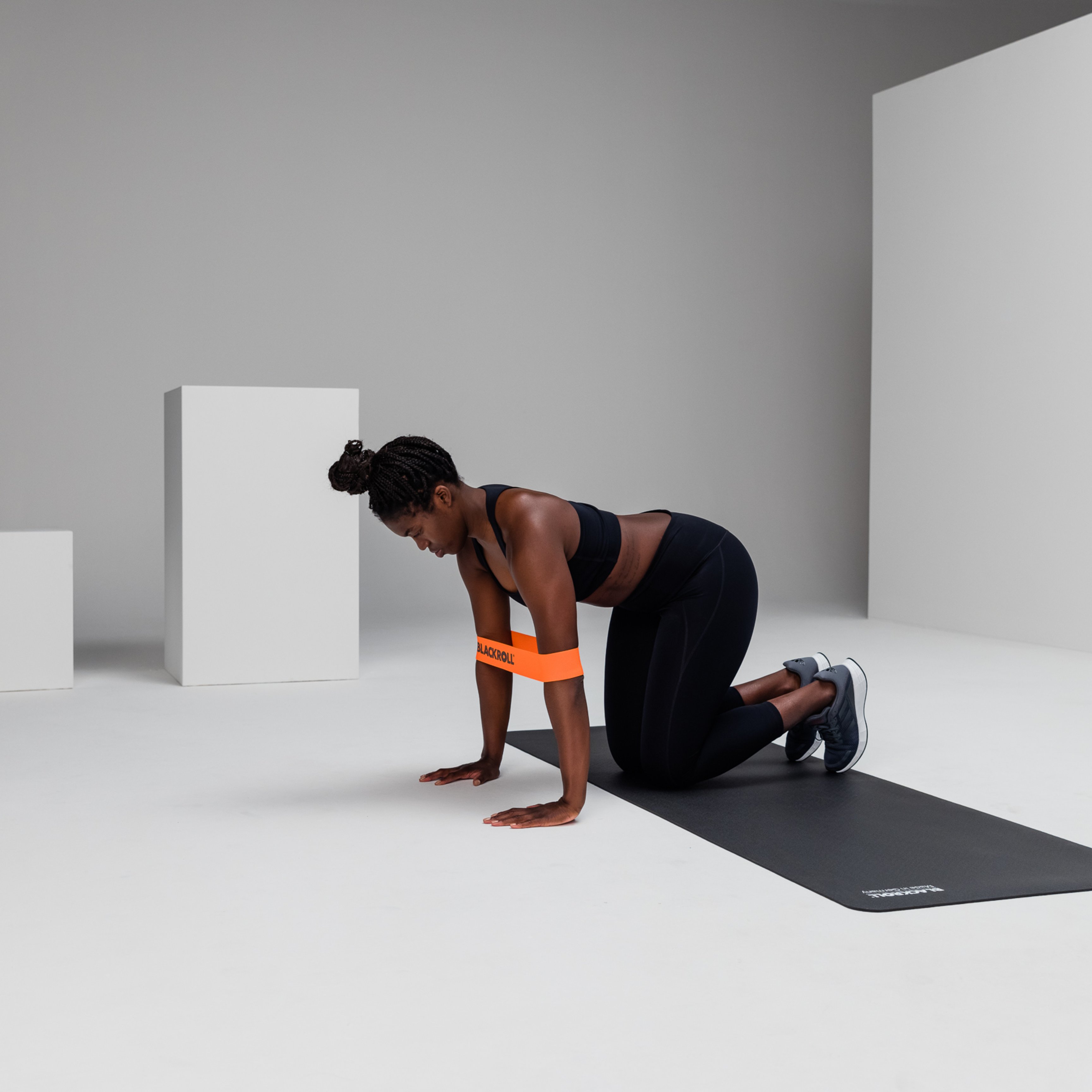
Side-to-Side Walk
Place the LOOP BAND around your elbows in a bench position. Bring your hands and legs together. Move sideways by alternating steps with your arms and legs.
But you canalso work on the mobility of your thoracic spinewithout using bands
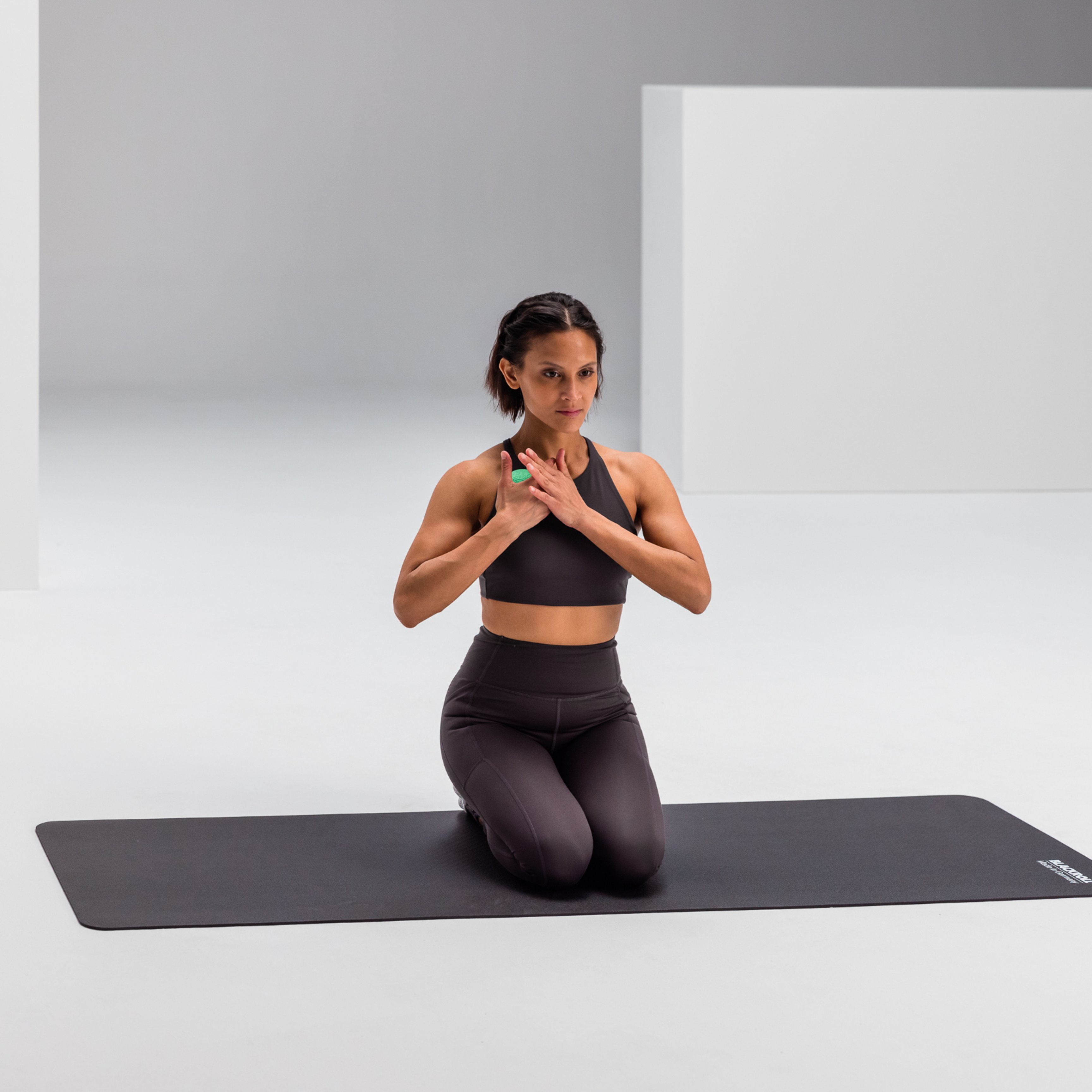
Chest Massage
Sit upright. Place the BALL 08 on your chest muscle. Slowly move the ball in circular motions over your chest muscles. You can vary the pressure as desired. If you are a woman, make sure to roll only over the muscles and avoid the mammary glands. Perform the exercise for 60 seconds on each side.
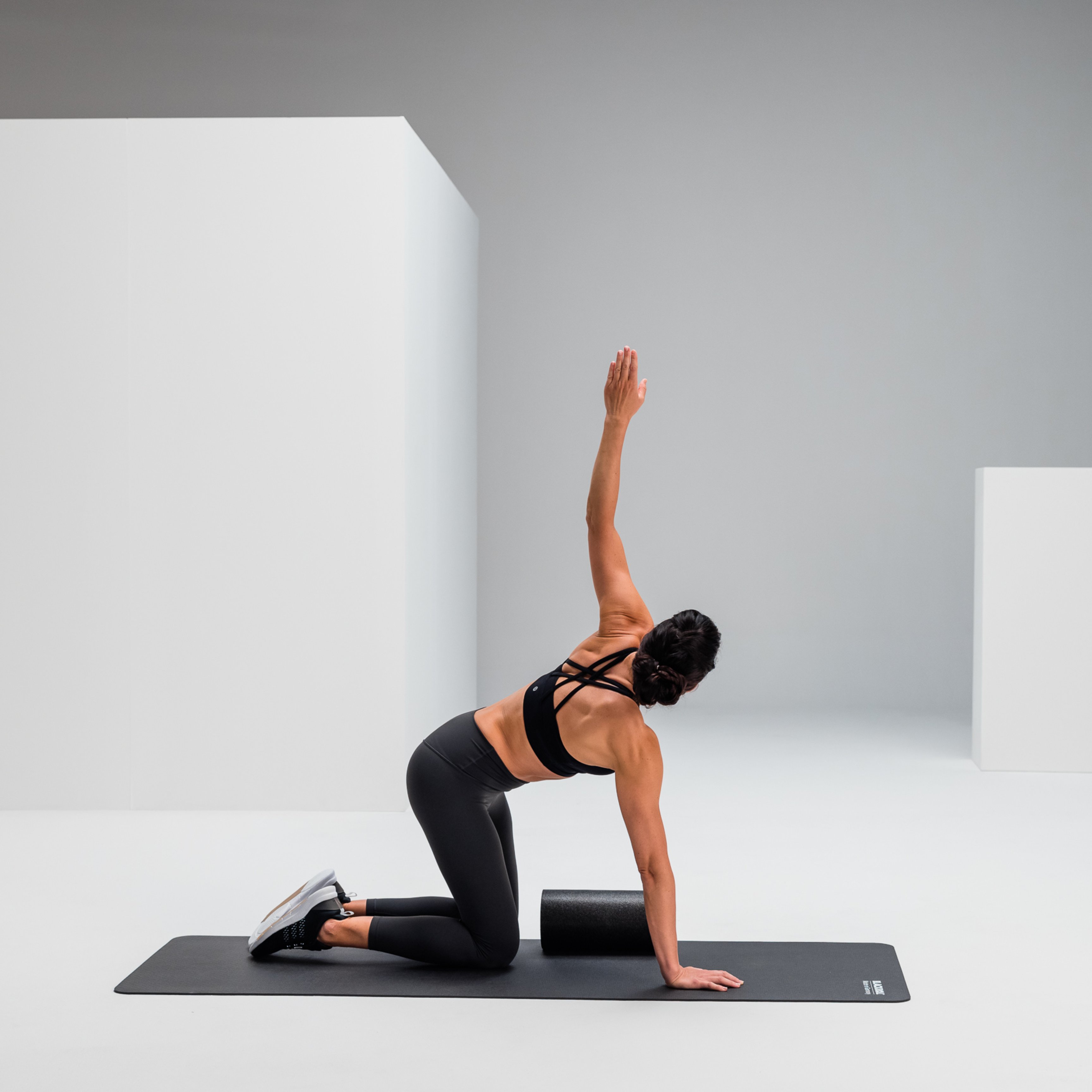
Lying Windmill
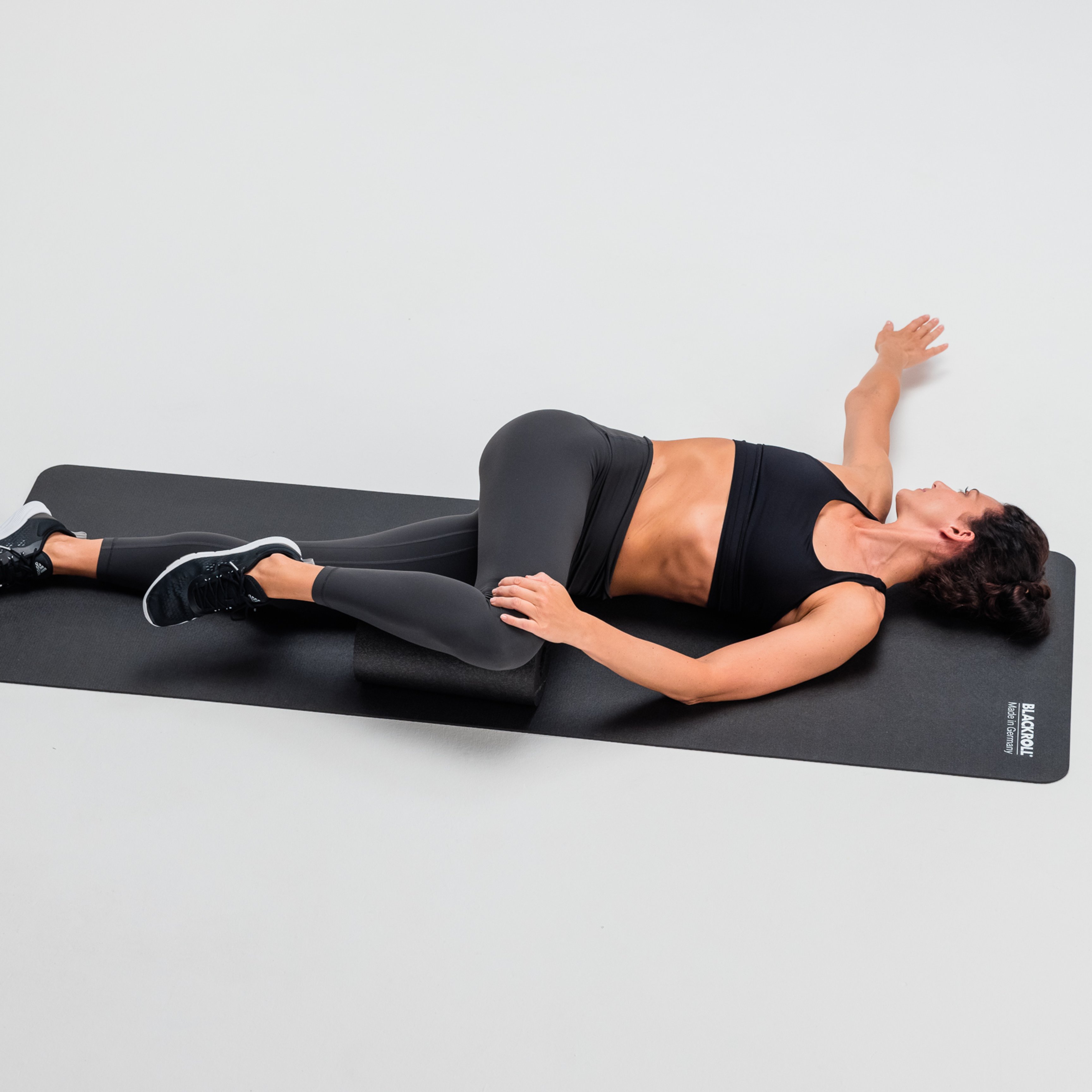
Start by lying on your side on the floor. Bend your top leg at a 90° angle. Place it in front of your body on the BLACKROLL. Use your lower hand to hold your bent knee down. Extend your top arm straight. Rotate backward toward the floor from your thoracic spine and shoulder. Keep your gaze following your rotating arm. Perform the exercise for 45 seconds on each side.
Chest Muscle Stretch
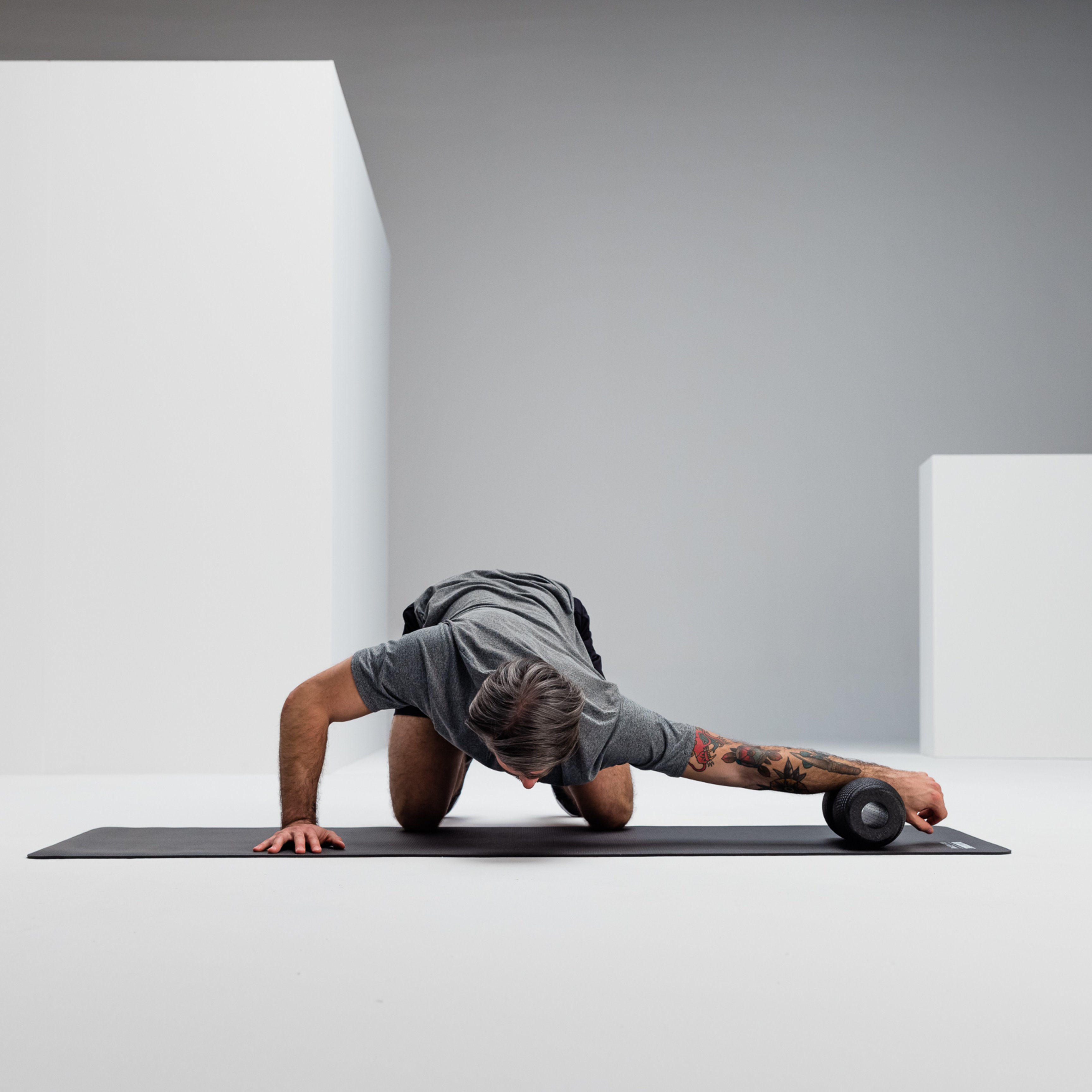
Place the BLACKROLL next to the mat. Start on all fours. Extend your arm to the side. Place your forearm on the BLACKROLL. Push the foam roller away to the side. Let your upper body sink toward the floor. To increase the stretch, you can twist your torso through the thoracic spine toward the opposite side. Hold the stretch for 60 seconds.
Kyphosis Exercises for Everyday Life
Do you suffer from kyphosis? Do you experience upper back pain every day and are looking for a simple method and tips to counteract it? There are kyphosis exercises that are very easy to incorporate into your daily routine. Here are some exercises for a rounded back that you can do at home—why not give them a try right away:
- Chest muscle stretch: Lean one forearm against the wall. Your bent elbow should be slightly above shoulder height. Now turn your upper body and head to the side until you feel a stretch in your chest.
- Standing backbends: Pull your shoulders back while simultaneously pushing your chest forward.
- Backbends while lying on your stomach: Extend your legs and tense them. Keep your arms close to your body, with your elbows pointing backward. Now lift your shoulders several times and lower them again.
Ideally, you should try to incorporate these exercises into your daily routine. You can easily do them at home or in the office.
Symptoms and Causes of a Hunchback?
Stressful events or psychological tension in everyday life can contribute to poor posture with shoulders hunched forward. This mirrors the feeling of carrying a heavy burden or bowing to fate—hence the term “widow’s hump.”
When is it considered a rounded back?
If you have a pronounced curvature in the thoracic spine, this is referred to as hyperkyphosis, a rounded back, or a “widow’s hump.” A curvature in the thoracic spine is completely normal; however, if the curvature exceeds 40 degrees, it is considered a rounded back.
Hyperkyphosis (rounded back) is often accompanied by the following symptoms:
- Pain in the upper back or neck
- Tension in the shoulder and neck area
- Pain that radiates into the arms
- Shoulders hunched forward
- Limited range of motion
- Breathing problems may occur due to restricted chest expansion
- Possible digestive problems
There are significantly more symptoms than those listed above. However, these are the most common ones. Pain often doesn’t develop until years later, once the kyphosis has fully set in. That’s why you should work on your posture as a preventive measure.

A hunched back can have many different causes; in most cases, kyphosis develops over the years—but it can also result from medical conditions such as:
- Ankylosing spondylitis (an inflammatory rheumatic condition affecting the spine)
- Scheuermann’s disease (a growth disorder of the adolescent spine)
- Osteoporosis (bone loss)
However, there are often no serious medical reasons for the curvature of the thoracic spine. In many cases, poor posture during childhood and early-onset stress on the spine are considered the cause. Additionally, prolonged sitting in adulthood and a lack of physical activity in daily life can lead to a hunched back.
There are, however, other factors that can be associated with a hunched back, such as:
- Muscular imbalance
- Body proportions
- Genetic predisposition
- One-sided postures in daily life and sports
- One-sided training of certain body parts
- Lack of exercise
- Injuries and accidents involving the thoracic spine
Correcting a hunched back—Duration
There’s good news: It’s possible to partially straighten the spine at any age, especially if the rounded back is caused by functional issues such as imbalances in the muscle-fascia system.
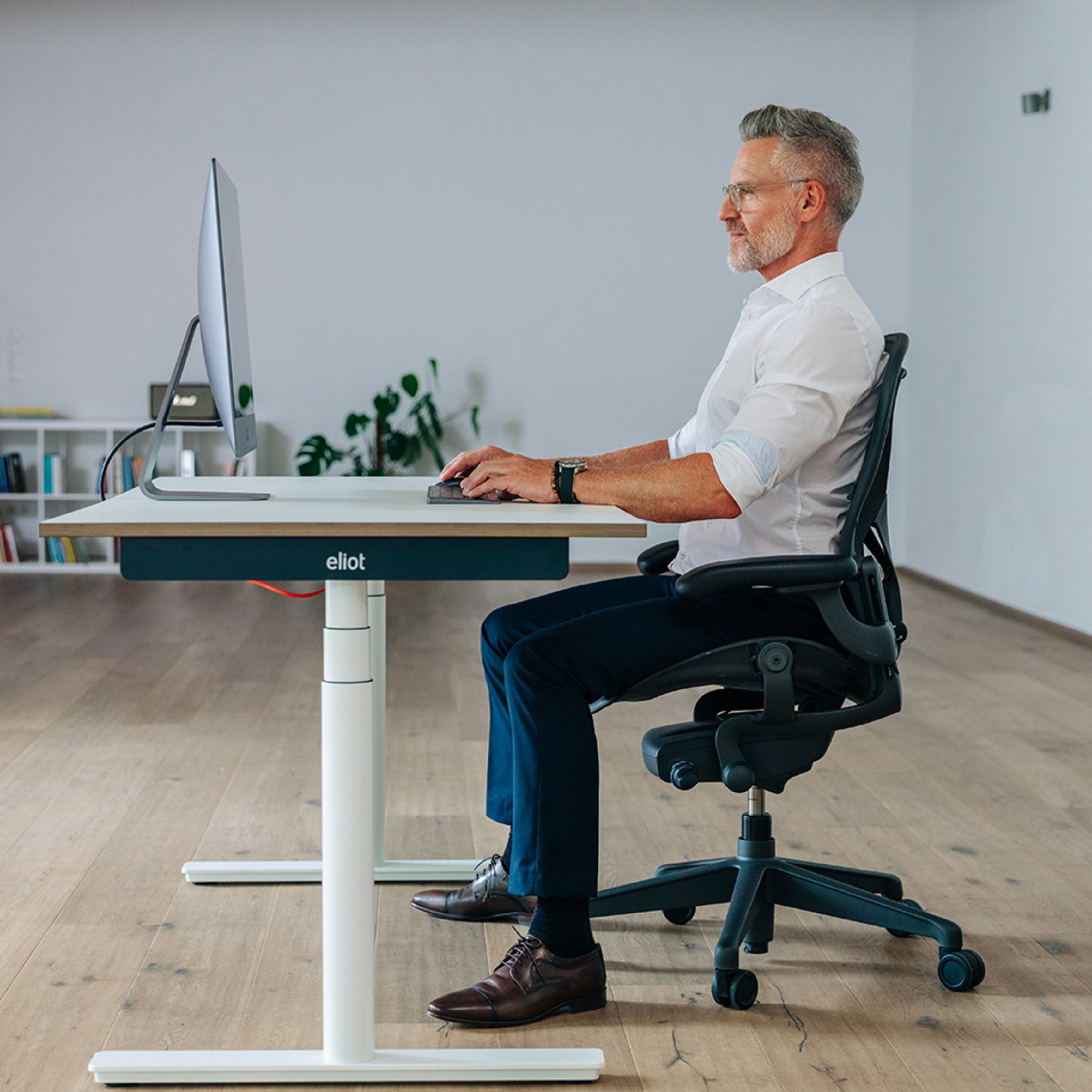
If you want to correct your rounded back, it’s crucial to perform corrective exercises regularly—ideally at least twice a week. Also, pay attention to your posture in everyday life. This way, you can see initial results relatively quickly. The most important thing is to stick with it and develop an awareness of your posture in daily life.
Hunchback Test for Home
There’s a very simple test to help you determine whether you have a rounded back. All you need is yourself and a straight wall:
- Stand upright with your back against a straight wall and lean against it
- Now, the back of your head, your upper back, your buttocks, and your heels should all touch the wall at the same time.
If the back of your head isn’t touching the wall, you may have a rounded back.

Improving Your Posture Made Easy
Find out why proper posture is so important and how you can work on it.
Tips for a Healthy Back
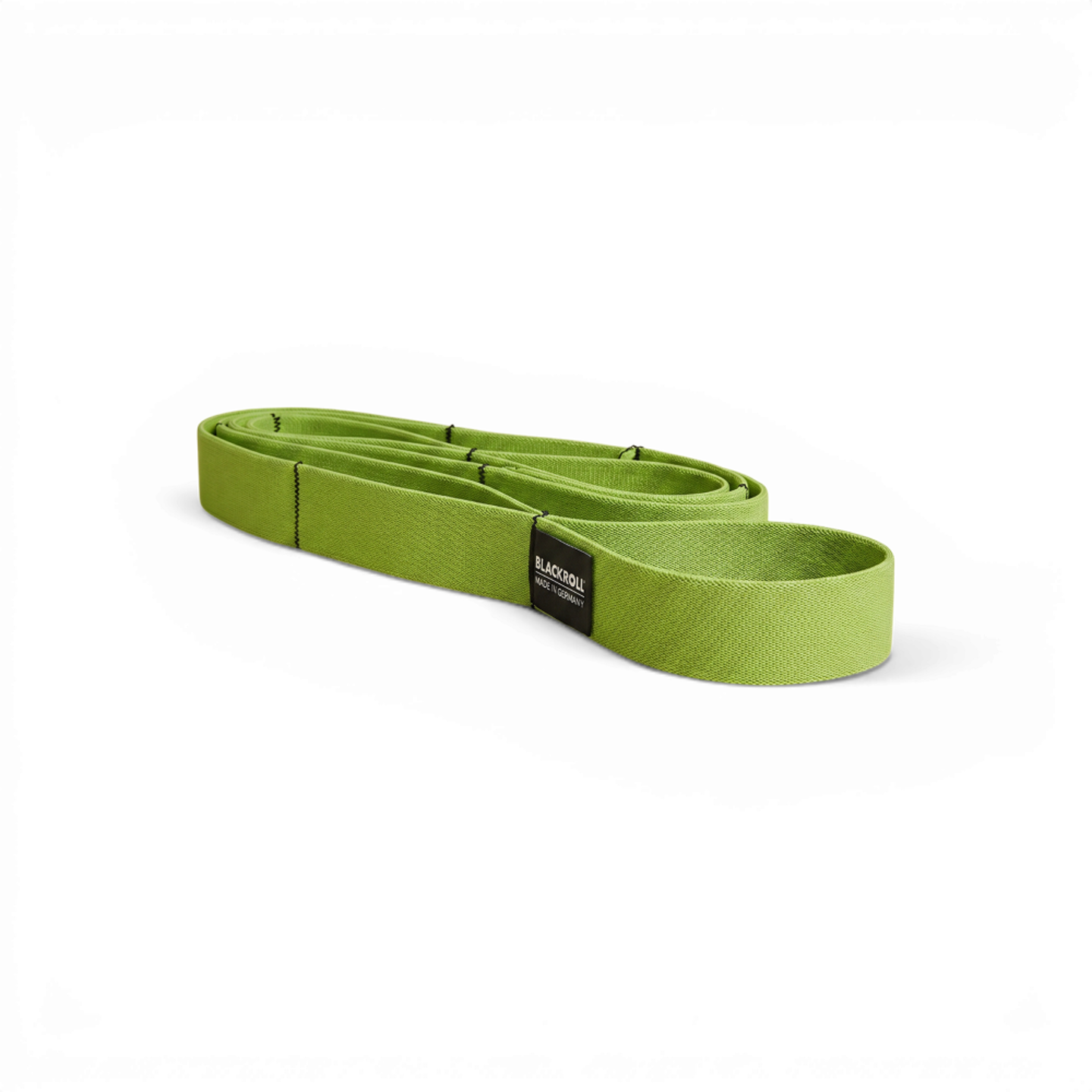


Loop Band
Available in multiple variants
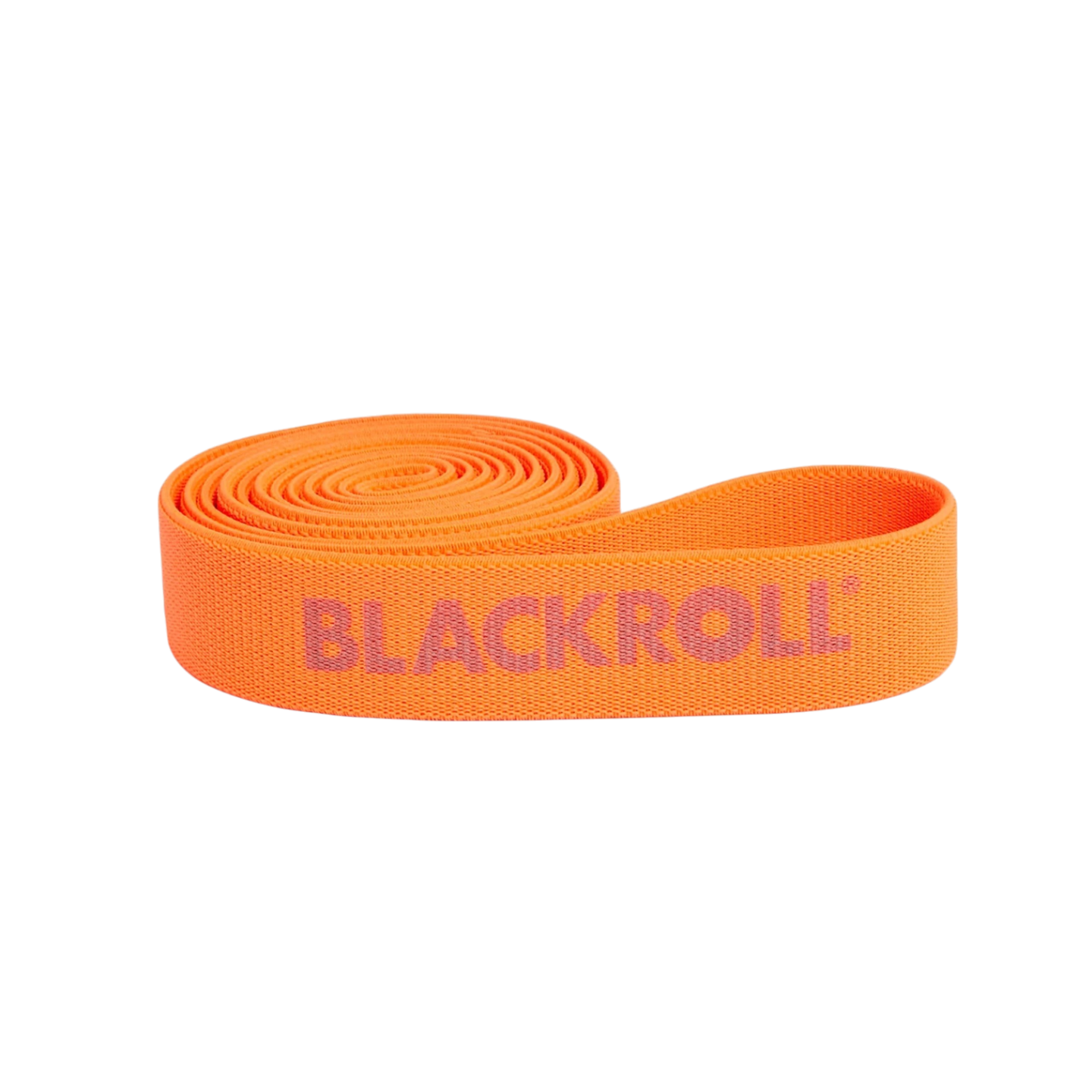

Super Band
Available in multiple variants
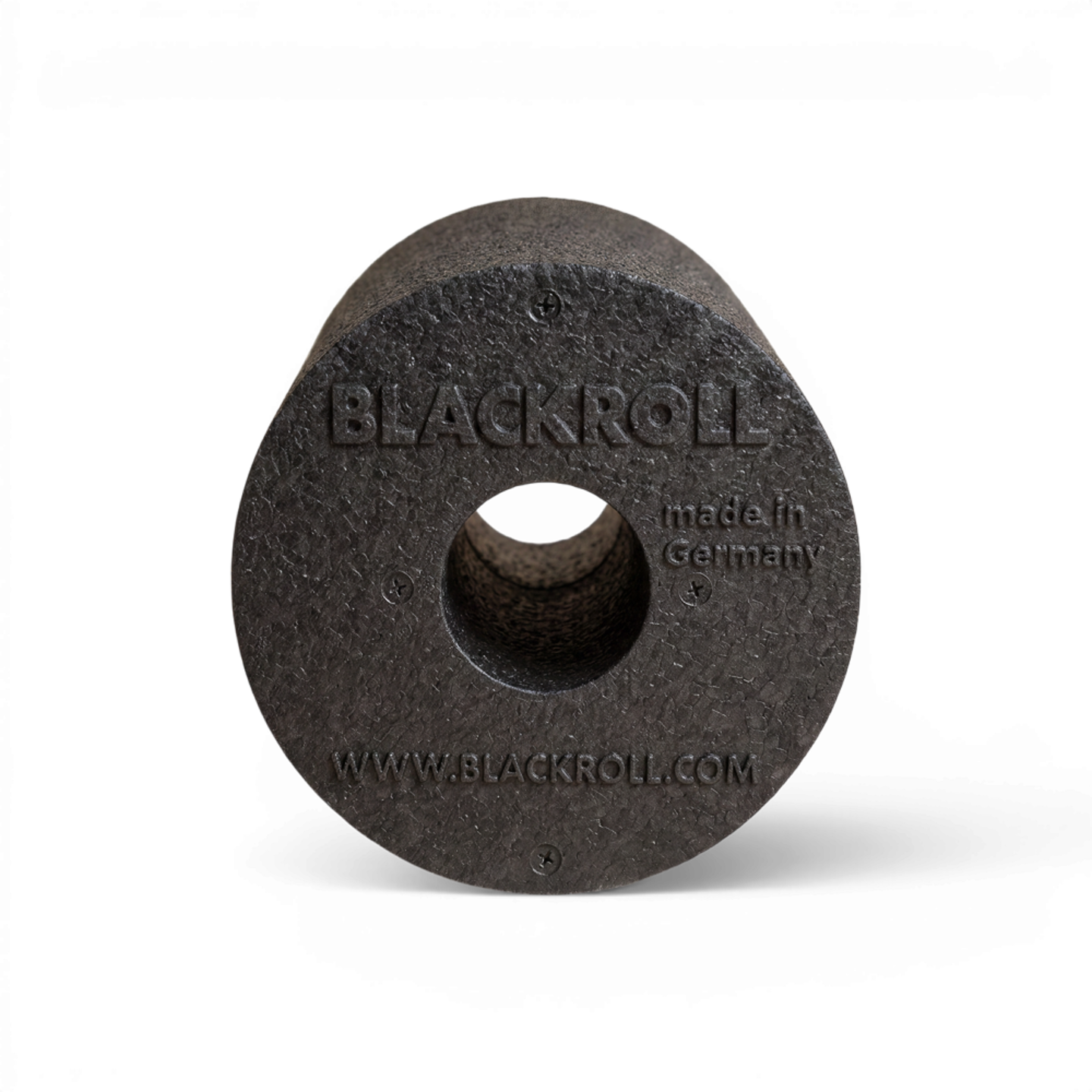
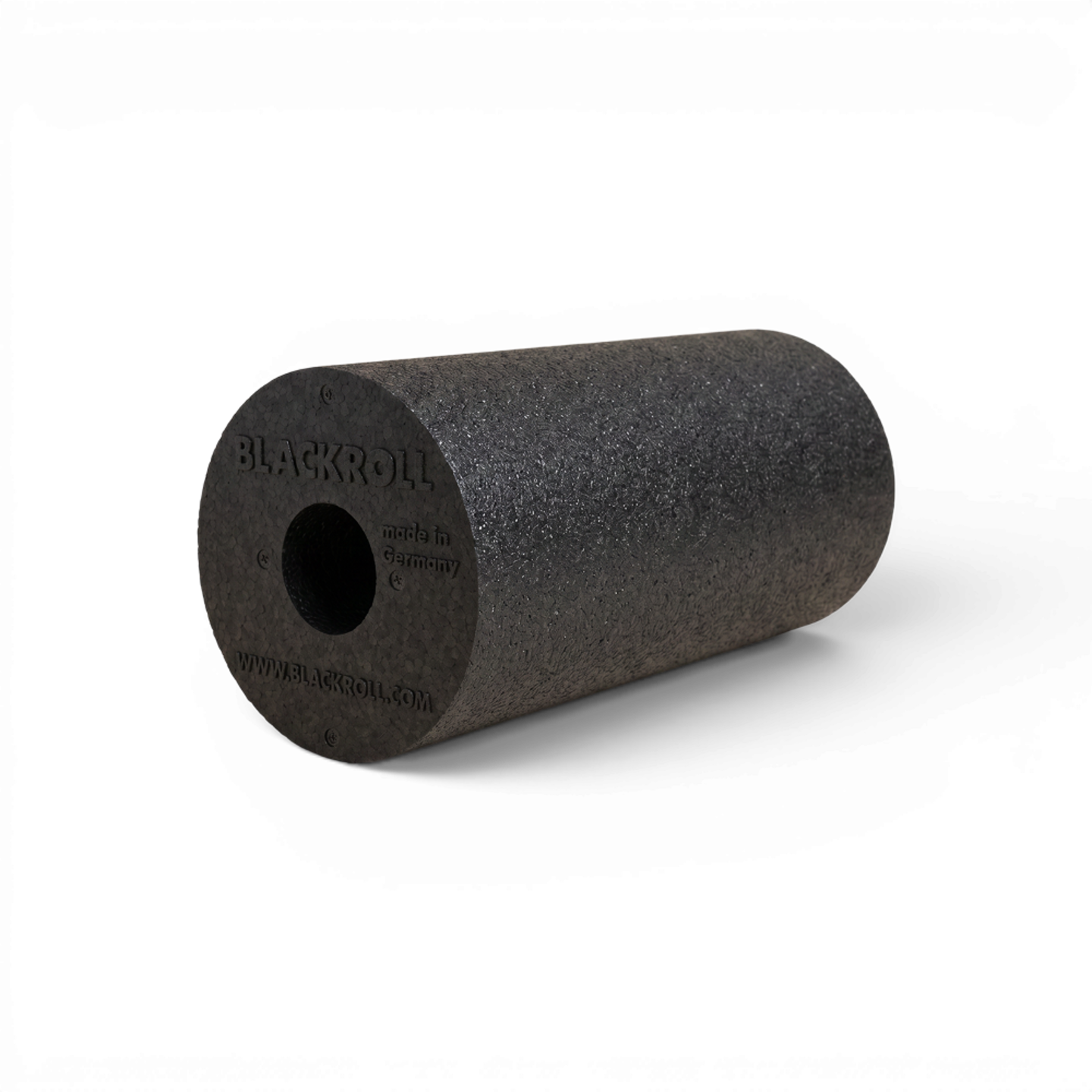
Standard
Available in multiple variants