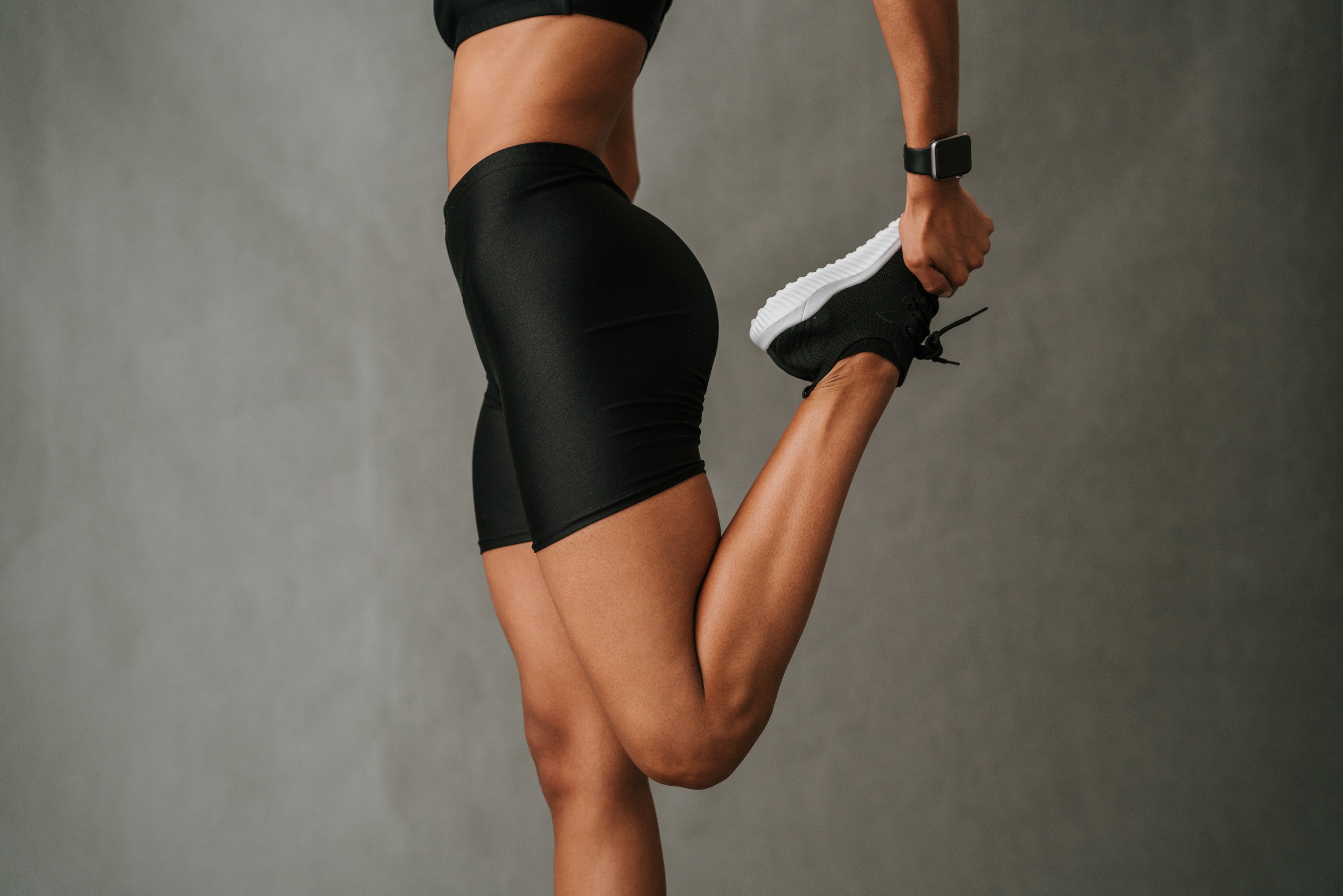
Stretch Better

The Importance of Stretching for Your Health and Fitness
Your back is aching, your neck is stiff, your knee hurts, and you haven’t been able to touch your toes with your fingertips while keeping your legs straight in a long time. If you’re nodding right now, you should keep reading. And: Stretch. Because stretching is a simple but extremely effective way to improve flexibility, relieve muscle tension, and boost your overall well-being. In this article, you’ll learn why it should be an important part of your balanced workout routine and how stretching can help you improve your flexibility and relax your muscles.
Stretching Properly
Whether you’re an experienced athlete, a fitness-conscious person, or someone dealing with physical discomfort, regular stretching is beneficial for everyone and should be incorporated into your daily routine. Stretching can even help with mental health issues caused by excessive stress, as it triggers the release of endorphins—the “feel-good” hormones.
Stretching doesn’t take much time, and you can make progress even with regular, short exercises. Plus, it’s easy to incorporate into your daily life—you can do it practically anywhere—and you don’t need any special equipment. You can achieve great results with very little effort.
In this article, we’ll take a closer look at the importance of stretching for health and fitness, discuss the different types of stretching, and derive personalized and effective recommendations based on that.
Flexibility Training for a Healthy Body and Mind
Improper strain, overexertion, or sitting for too long in a static position can cause your muscles to stiffen, which can lead to pain and discomfort. To counteract these problems and stay fit, flexible, and healthy, flexibility training—or regular stretching—is highly recommended.
Stretching helps loosen muscles and tendons, which can reduce muscle-related problems in everyday life. This is because flexibility training can improve the flexibility of your muscles. Being able to bend over or stretch out without feeling any discomfort should be the minimum standard we set for ourselves. It can also reduce the risk of sports injuries, such as a muscle strain.
Regular stretching can also prevent poor posture—which can be caused, for example, by sitting too long at work—as well as alleviate and correct discomfort. Stretching lengthens shortened muscles , realigns the musculature, and improves overall posture and stability. This can, for example, reduce headaches caused by tension in the neck and back or prevent migraine attacks.
In addition, stretching can help the body relieve stress and relax. Both relaxed muscles and exercise itself promote the release of endorphins, the so-called “happiness hormones.” So when we engage in physical activity in the form of various stretching exercises, the body releases endorphins and we experience a general sense of well-being. The body recovers and relaxes, and we feel less stressed. In addition to the physical benefits, regular stretching also has positive effects on our mental well-being.
In this video, Master Trainer Stefan demonstrates stretching exercises for the whole body:
Stretching Tight Muscles: These Are the Different Types of Stretching
There are a variety of ways to stretch. Stretching exercises are either dynamic (meaning they involve movement) or static (meaning they do not involve movement). Here, you’ll learn everything you need to know about the different types of stretching.
There are also various specialized forms of stretching. The different types of stretching include:
- Passive Stretching
- Dynamic stretching
- Active stretching
- Static stretching
- Isometric stretching
- Ballistic Stretching
- PNF Stretching (Proprioceptive Neuromuscular Facilitation)
- Fascia Stretching
Which types of stretching are right for you depends on your athletic goals and needs.
Passive Stretching
Passive stretching is the stretching method we’re most familiar with. In passive stretching, external force or support is used to bring a muscle into a stretched position. The person being stretched remains relaxed while the force—whether from a partner, stretch bands, or gravity—gradually stretches the muscle. Passive stretching is an excellent choice for improving muscle flexibility and elasticity.
Passive stretching is also very well suited as a “cool-down” after a workout.
Dynamic Stretching
Dynamic stretching involves moving your joints in a controlled and fluid manner through their full range of motion. Unlike static stretching, dynamic stretching focuses on movement and helps increase blood flow and body temperature. This type of stretching is particularly useful as a warm-up before physical activity, as it prepares your muscles for the upcoming workout.
Dynamic stretching is often seen among track and field athletes before training or competition. One example is leg swings, in which the leg swings back and forth to activate the hip muscles, warm up the joints, and improve active mobility. Caution: If performed with incorrect technique, dynamic stretching can lead to injuries.
Active Stretching
Active stretching means that you assume a specific position and hold it without any support other than the strength of your agonist muscles. A simple example of this is when you lift your leg and hold it in this extended position without using external assistance, relying solely on the strength of your leg muscles to maintain this position. The contraction of the agonist muscles during active stretching helps to relax the stretched muscles (the antagonists) by triggering what is known as reciprocal inhibition.
Static Stretching
Many people use the terms “passive stretching” and “static stretching” interchangeably. In some sources, this is indeed the case. In other literature, however, static stretching refers to stretching a muscle as far as possible and then holding that position. Passive stretching, on the other hand, means that a person remains relaxed while an external force moves the joint. Static stretching improves muscle flexibility, promotes relaxation, and reduces stress. Static stretching is not recommended before exercise, as it can temporarily reduce muscle strength.
Isometric Stretching
Isometric stretching is a type of static stretching in which no movement occurs. The muscles are stretched by contracting the same muscle groups that are to be stretched. Isometric stretching is one of the fastest methods for increasing flexibility.
There are various ways to create the necessary resistance for isometric stretching. You can apply resistance to your own limbs manually, ask a partner to provide resistance, or use an aid such as a wall (or the floor). Resistance bands are also a suitable option for creating resistance during the stretch.
An example of an isometric stretching program using resistance bands is what’s known as muscle length training.
Ballistic Stretching
Ballistic stretching is a specific form of stretching that relies on bouncing movements to achieve a greater range of motion. Although it can be effective in some cases, ballistic stretching should be approached with caution, as it can increase the risk of injury, especially for beginners. It is often considered less safe than other stretching techniques, such as static or dynamic stretching.
PNFStretching
Proprioceptive neuromuscular facilitation (PNF) is an advanced form of flexibility training that involves both stretching and contracting the targeted muscle group. PNF stretching is one of the most effective forms of stretching for improving flexibility and increasing range of motion.
Fascial Stretching
A special form of stretching is what’s known as fascial stretching. The principle involves applying tension to entire muscle-fascial chains rather than individual muscle groups, thereby improving the plasticity of the fascial structures. Many yoga poses resemble fascial stretching exercises. The most important thing when assuming a fascial stretching position is the sensation of tension.
Improve Flexibility. Avoid Mistakes
Stretching is basically simple. However, there are a few things to keep in mind, as mistakes can easily occur.
Here are some tips and common mistakes to avoid, to ensure your stretching is safe and effective:
Warm up before stretching: Stretchingcold muscles is not a good idea. For one thing, they’re less flexible; for another, the risk of injury increases. Our tip: It’s best to warm up before stretching, for example by taking a short walk. Alternatively, you can do your stretching at the end of your workout.
Avoid static stretching before intense exercise: Research shows that static stretching can temporarily impair muscle performance. Therefore, it’s advisable to avoid static stretching exercises before a competition or an intense workout. Instead, dynamic stretching exercises have proven to be effective warm-ups.
Pay attention to symmetry: We all have differences between our left and right sides. Nevertheless, it’s important to aim for symmetry when stretching. This means you may need to spend a little more time on the less flexible side. You should also stretch both your upper and lower body.
Hold the stretch for an extended period: With passive stretching, it’s crucial to hold the stretch for at least 30 seconds. The body needs a few seconds to release its protective muscle tension.
Discomfort is okay, pain is not: When stretching, you may feel a slight tension and some discomfort, especially if you don’t stretch regularly. However, you should avoid going too deep into a stretch so that it causes pain.
Tailor your stretches to your sport: Some evidence suggests that it can be helpful to perform stretches that target the muscles most heavily used in your sports or activities. For example, if you play soccer, you should stretch your hamstrings.
Consistency is the key to success: Stretching can be time-consuming, but you’ll reap the most benefits if you stretch regularly—at least two to three times a week. Even 5 to 10 minutes of stretching per session makes a noticeable difference.
Pay attention to your breathing: Holding your breath or breathing shallowly sends an alarm signal to your nervous system. This prevents tension from being released in your body. Therefore, make sure to breathe evenly while stretching.
Listen to your body: Everyone is unique and has different needs and goals. Adapt the stretching exercises to suit you and your circumstances to achieve your goals.
Stretching Before Strength Training
Should you stretch before strength training? Generally speaking, static stretching before exercise often leads to reduced performance. So if you’re planning a maximum strength workout, static stretching beforehand is probably not a good idea. However, in certain cases, it can be beneficial to stretch specific muscle groups—especially if you want to increase your range of motion, for example, to achieve a deeper squat.
Dynamic stretching exercises —or so-called “movement preps”—have proven to be particularly beneficial. You should choose exercises that activate your muscles and increase blood flow, such as arm circles, leg swings, and shoulder circles. Dynamic stretching before strength training can effectively prepare you for exercises that require a high degree of mobility.
In this video, you’ll find full-body mobility exercises consisting of dynamic mobility exercises that are ideal for preparing you for physical activity:
Stretching After Strength Training
Is stretching after strength training beneficial? Opinions are divided on this question. Proponents claim that it promotes recovery and helps break down lactic acid, which causes muscle soreness. This can result in less muscle soreness the next day and may even facilitate the building of more muscle mass. On the other hand, critics argue that stretching after strength training can exacerbate existing muscle microtears, which in turn could increase the risk of injury.
So who is right? Should you stretch after strength training?
Sports science offers promising insights. Current research shows that stretching after strength training may have several beneficial effects on recovery. These effects range from a slight reduction in muscle soreness to increased flexibility, enhanced local blood flow, and relaxation of the nervous system.
Stretching after strength training isn’t a must, but it will leave you feeling good for the rest of the day.
Stretching After a Workout: How to Incorporate Stretching into Your Daily Routine
In our hectic daily lives—which for many of us are marked by hours of sitting, fast-paced activities, and often recreational sports— physical flexibility is frequently neglected. The good news is: You can seamlessly integrate stretching into your daily routine without investing much time or effort.
First thing in the morning after getting up, it’s a good idea to start the day with a short stretching routine— spending five to ten minutes to wake up your body, get it warmed up, and begin the day with full range of motion. A quick warm-up, followed by slow, steady stretches from head to toe, and you’ll start the day feeling fitter right away. The well-known yoga Sun Salutation is a good example of this.
Even at work, you can actively use short “coffee breaks” or waiting times at a bus stop to stretch. Of course, you can also use the time in the evening while watching TV for stretching exercises.
Before bedtime is also a great time to stretch, as stretching your muscles releases endorphins. This helps reduce the stress that has built up throughout the day. You’ll relax, and at the same time, your sleep quality will improve.
The key to greater flexibility and a life free of tension isconsistent stretching. Even short, regular stretching sessions can make a big difference in your physical condition, well-being, and overall mobility. So go for it.
Conclusion: Stretch Every Day
In conclusion, stretching is a fascinating and extremely effective training method that has a decisive impact on human health and performance. This article has highlighted the importance of stretching for flexibility, muscle relaxation, and overall well-being. Regular stretching improves the flexibility of muscles and joints, increases range of motion, and promotes blood circulation. Furthermore, stretching can improve posture, reduce muscle tension, and relieve stress, all of which contribute to an overall improved quality of life.
Whether you’re an experienced athlete, a fitness enthusiast, or someone dealing with physical discomfort, regular stretching should be a regular part of your daily routine. It can relieve pain, reduce discomfort, prevent poor posture, and have a positive impact on your mental well-being. There’s really no reason not to incorporate stretching into your daily routine. You can achieve a lot even with just a little time.