Sleep Stages Explained: How Our Sleep Cycle Works

Learn all about the processes in the body—from falling asleep to waking up—and the individual sleep stages of a sleep cycle.
From drifting off during the onset of sleep phase, through dreaming during REM sleep, to waking up in the morning: We go through different sleep phases over and over again throughout the night. Each one is characterized by specific features. Find out exactly what those are and what happens in the body during each of these phases here.
Sleep Cycle: An Overview of Sleep Phases
Sleep is not a linear process but rather proceeds in the form of sleep phases, which are characterized by changes in brain activity, eye movements, heart rate, respiratory rate, muscle tension, hormone levels, and body temperature. As if that weren’t complex enough, these stages repeat in the form of so-called sleep cycles with a strict schedule. Anyone who sleeps through the night undisturbed goes through about 4–5 sleep cycles.
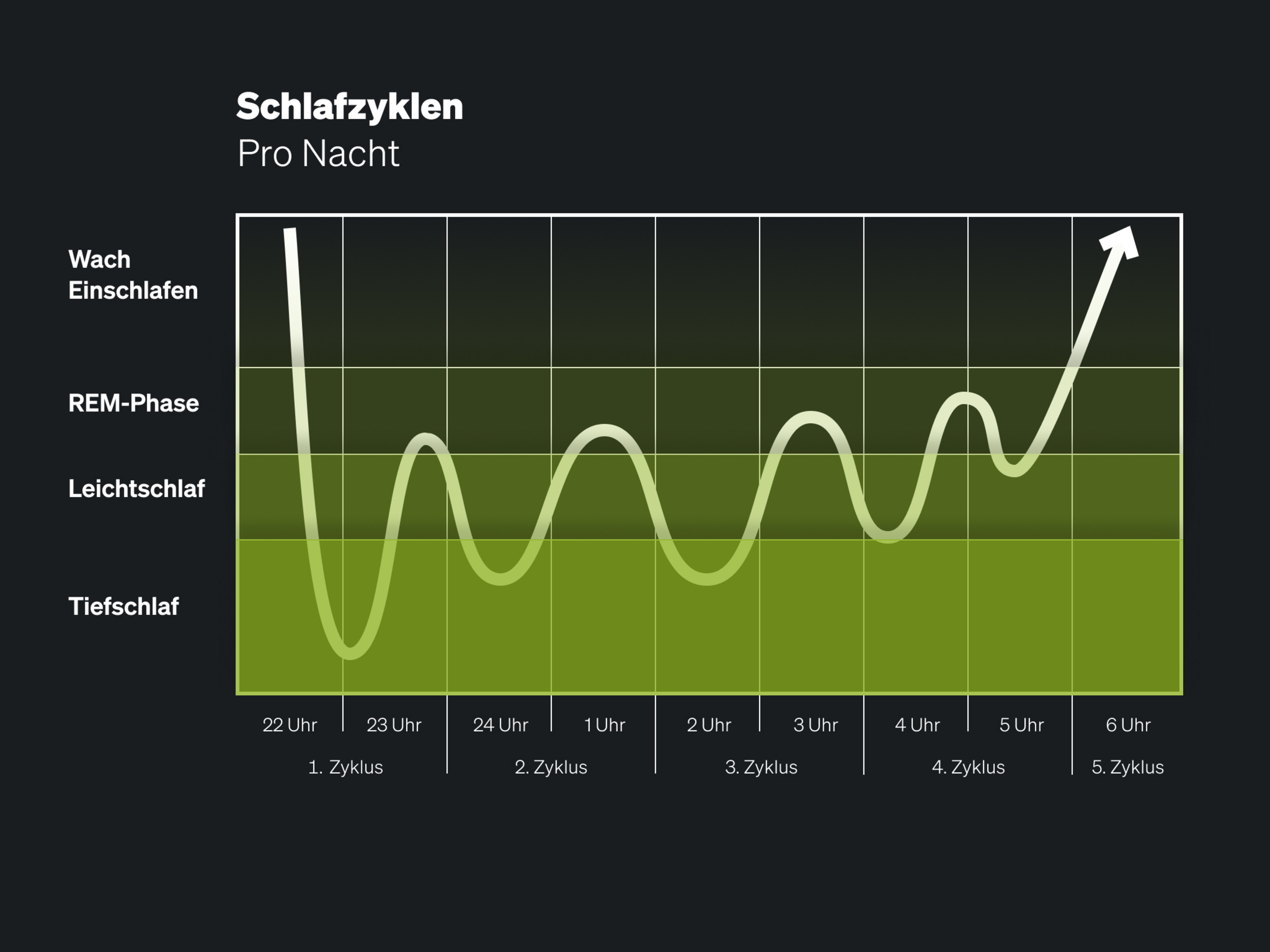
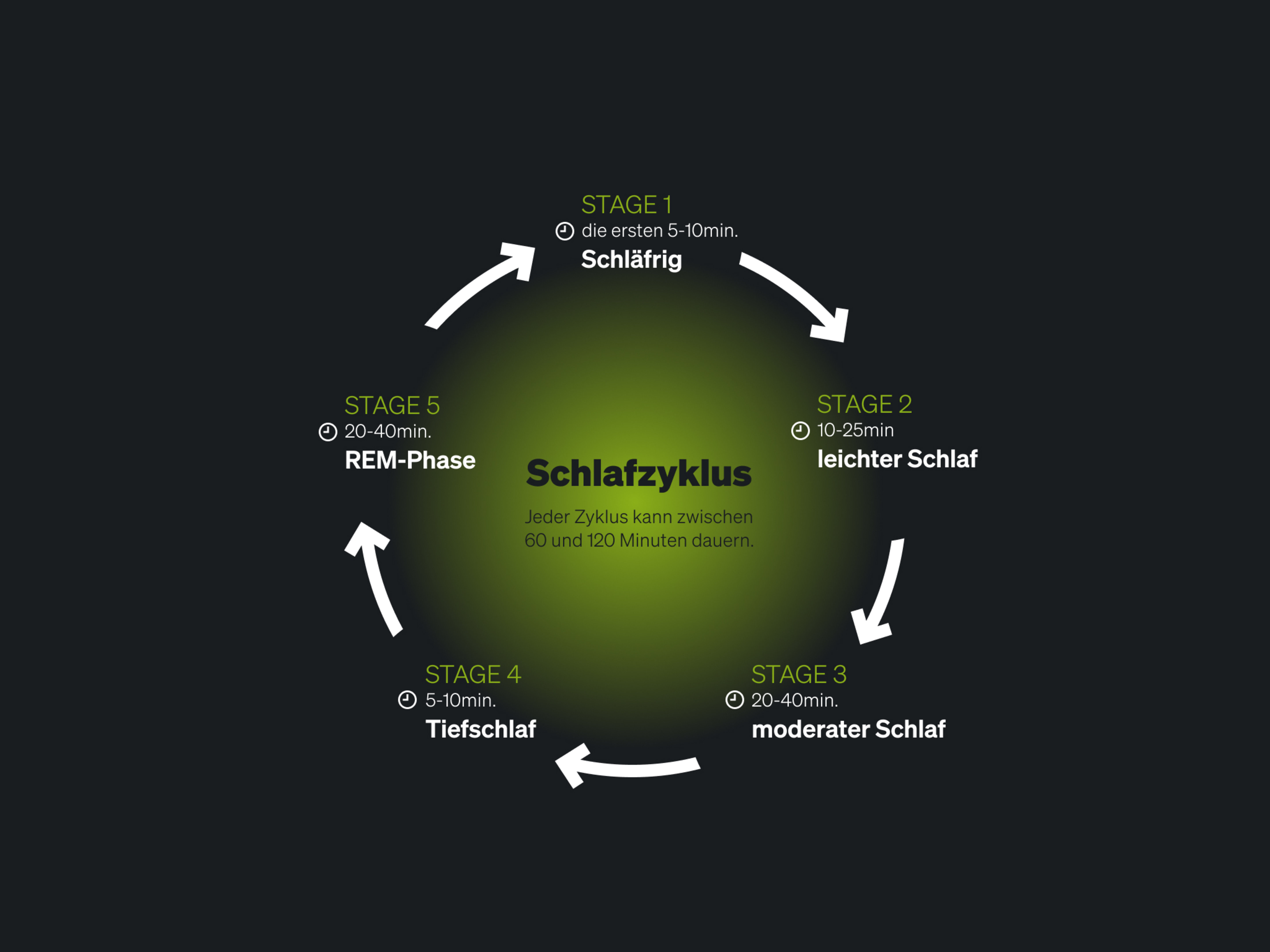
A sleep cycle, in turn, lasts between 60 and 120 minutes and is divided into wakefulness, REM sleep (Rapid Eye Movement), and non-REM sleep (N1 for light sleep through N3 for deep sleep). From N1 to N3, the depth of sleep increases progressively.
Healthy Sleep: What Is the Optimal Duration?
How much sleep a person needs per day varies from person to person. However, long-term studies have shown that for good (mental) health, the optimal number of hours adults should spend sleeping is 7—at least between the ages of 18 and 64.
According to these findings, getting more or less sleep than this can actually have a negative impact on health and shorten life expectancy. Concentration can also suffer in the long term from sleep deprivation —such as that caused by deliberately delayingbedtime through“revenge bedtime procrastination”—while too much sleep, in turn, contributes to the development of diabetes and obesity.
Babies, children, and adolescents under the age of 18, on the other hand, need more sleep; in old age, however, people can get by just fine with less sleep without jeopardizing their health. Incidentally, according to a study, the average person—at least in Germany—sleeps 7 hours and 45 minutes per night.
However, there are also sleep patterns such as polyphasic sleep, which distributes sleep across several short phases throughout the day instead of concentrating it into a single nighttime sleep period. The goal is to reduce total sleep duration and maximize wake time by optimizing particularly efficient sleep phases, such as REM sleep. There are various variations, including biphasic sleep (nighttime sleep plus an afternoon nap) and Everyman sleep (core sleep plus several short naps). Although polyphasic sleep is used in extreme situations, it is difficult to implement in everyday life and has not been scientifically proven to be effective in the long term. Potential drawbacks include sleep deprivation and health risks.
However, if your sleep duration doesn’t match the guidelines from studies, that’s no cause for concern. After all, how much sleep you personally need depends on how you feel after waking up. If you get out of bed feeling refreshed and ready to go, you’ve probably had enough sleep. If, on the other hand, you find it hard to get up and feel tired again shortly after waking up, this could be a sign of sleep deprivation and insufficient sleep duration—something you should keep an eye on.
You can determine whether you’re getting enough sleep with a simple self-test. Set aside the weekend or a few days on vacation for this. Don’t set an alarm, and make sure you aren’t woken up in the morning by noise or daylight. Sleep as long as you need to, and keep track of how long you sleep and how refreshed you feel in the morning. After a few days, you can calculate an average sleep duration. If you’re between 18 and 64 years old and sleep an average of 7 hours, you don’t need to change anything. However, if you sleep longer than 7 hours, try to shorten your sleep time. If it’s less than that, try to sleep longer.
You can find more information about optimal sleep duration in our other articles.

The Falling-Asleep Phase
Nearly all of our cells are regulated by the interplay of light and darkness. The onset of the sleep onset phase is largely controlled by the hormone melatonin and the metabolite adenosine. Melatonin is produced only in the dark; it essentially prompts the body to prepare for sleep and also influences our body temperature regulation and immune system.
Daylight—as well as the blue light from LED screens—inhibits its production, which is why electronic devices have no place in the bedroom. Blood levels rise as evening darkness sets in and reach their peak in the middle of the night. However, melatonin production is also closely linked to what is known as the habitual bedtime.
In other words: Our body remembers when we normally go to bed and ramps up production in a timely manner. That’s why sticking to a regular bedtime is so important—especially when dealing with sleep problems—to avoid disrupting the production cycle.
The second substance is adenosine. This makes us tired and “ready for bed.” With every minute we’re awake, the concentration of adenosine in the brain rises, causing us to become more and more tired the longer we stay awake. Scientists refer to this fatigue that builds up throughout the day as “sleep pressure.” Once the sleep pressure—that is, the concentration of these substances in the body—is high enough, we fall asleep.
During the initial phase of falling asleep, the typical muscle twitching occurs, which feels as if you are falling. This happens because, during the initial phase of falling asleep, the muscles still receive movement impulses via nerve receptors, while parts of the brain are already in sleep mode. The brain functions that are still active then cause the muscle twitches due to the transmitted stimuli.
Sleep Latency—Important for Diagnosing Sleep Disorders
Sleep latency, or the time it takes to fall asleep, is an important parameter for identifying sleep disorders. It refers to the time it takes a person to fall asleep. On average, it ranges from 13 to 17 minutes in adults.
If you toss and turn in bed for a long time before falling asleep, a sleep disorder could be the underlying cause. Acute sleep disorders or adjustment disorders are characterized by a short duration (less than 3 months). Stressful life events are often the triggers. In contrast, people with a chronic sleep disorder have long suffered from difficulties falling asleep and staying asleep. The benchmark is 3 nights per week with sleep problems over a period of 3 months.
To identify the causes, a multiple sleep latency test in a sleep lab can precisely determine whether there is a disturbance in what is known as sleep-wake regulation.
Often, simply following tips for restful sleep can help. These include, among other things:
- Avoid bright light before bedtime, as it affects your sleep-wake cycle. This includes blue light from electronic devices such as TVs or smartphones, since it delays the production of the sleep hormone melatonin.
- Avoid exercising about 2 hours before bedtime, as this releases dopamine and endorphins, which keep you awake. A relaxing yoga session or meditation, on the other hand, can actually help your body wind down.
- Make sure your room is at a comfortable temperature. The ideal temperature for sleeping is between 18 and 21 degrees Celsius.
- You can find more tips for falling asleep in our other articles.

Light sleep
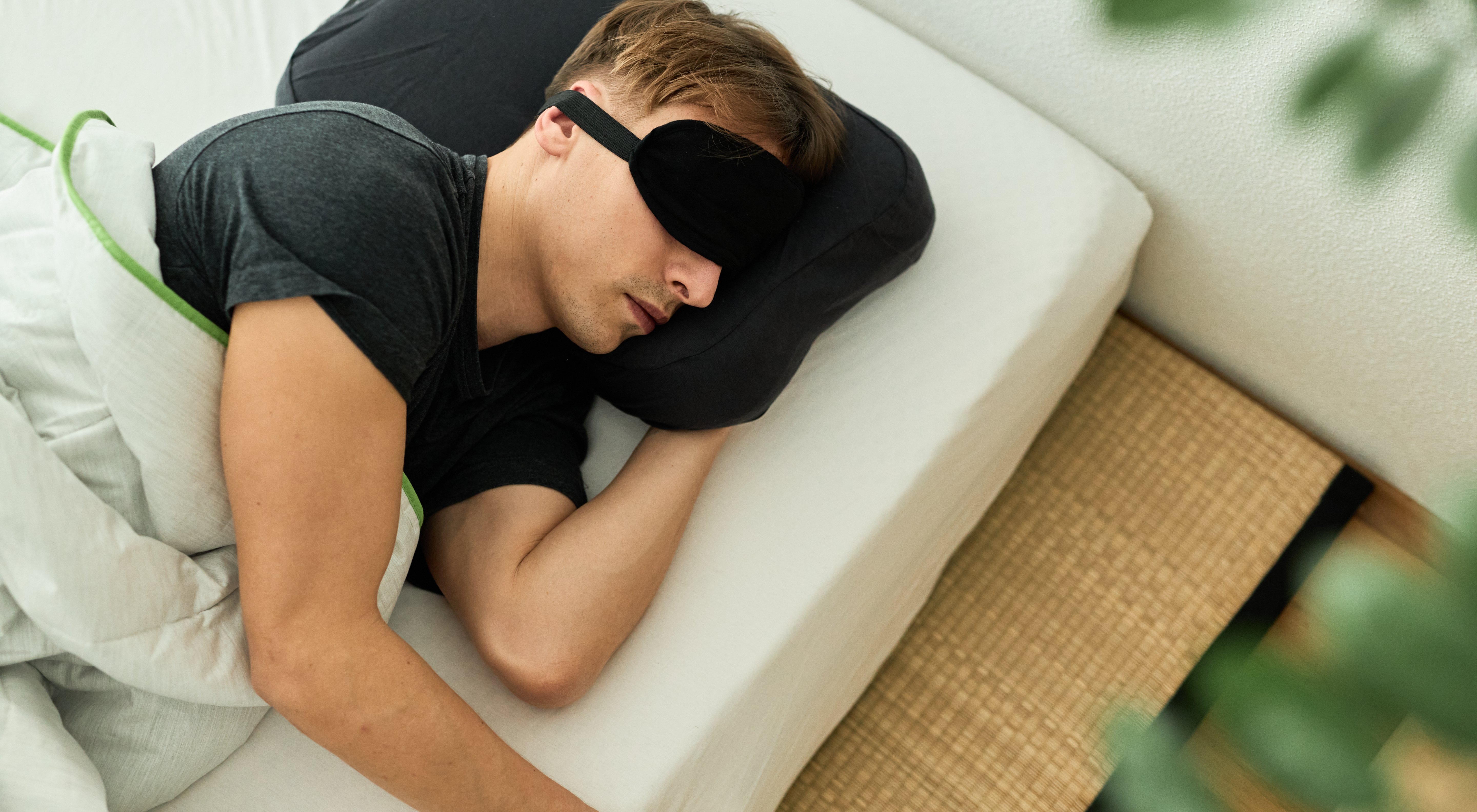
Every sleep cycle begins with light sleep and marks the transition from wakefulness to sleep. At this point, the muscles relax, body temperature drops, and awareness of the surroundings fades. Breathing and heart rate “slow down”—breathing becomes calmer and more even, and the heart rate gradually slows.
The body already begins cell repair at this stage—though not to the same extent as during deep sleep. Someone who moves or talks in their sleep is likely in the light sleep phase. As the name suggests, people can still be awakened relatively easily from this sleep phase.
Even the slightest touch, movement, or soft noise can quickly wake us up during this phase. People who wake up from the light sleep phase feel more refreshed than those who are jolted out of deep sleep.
That’s why experts recommend that a power nap for optimal recovery should never last longer than 20 minutes, so that the body doesn’t enter the deep sleep phase.

Deep sleep
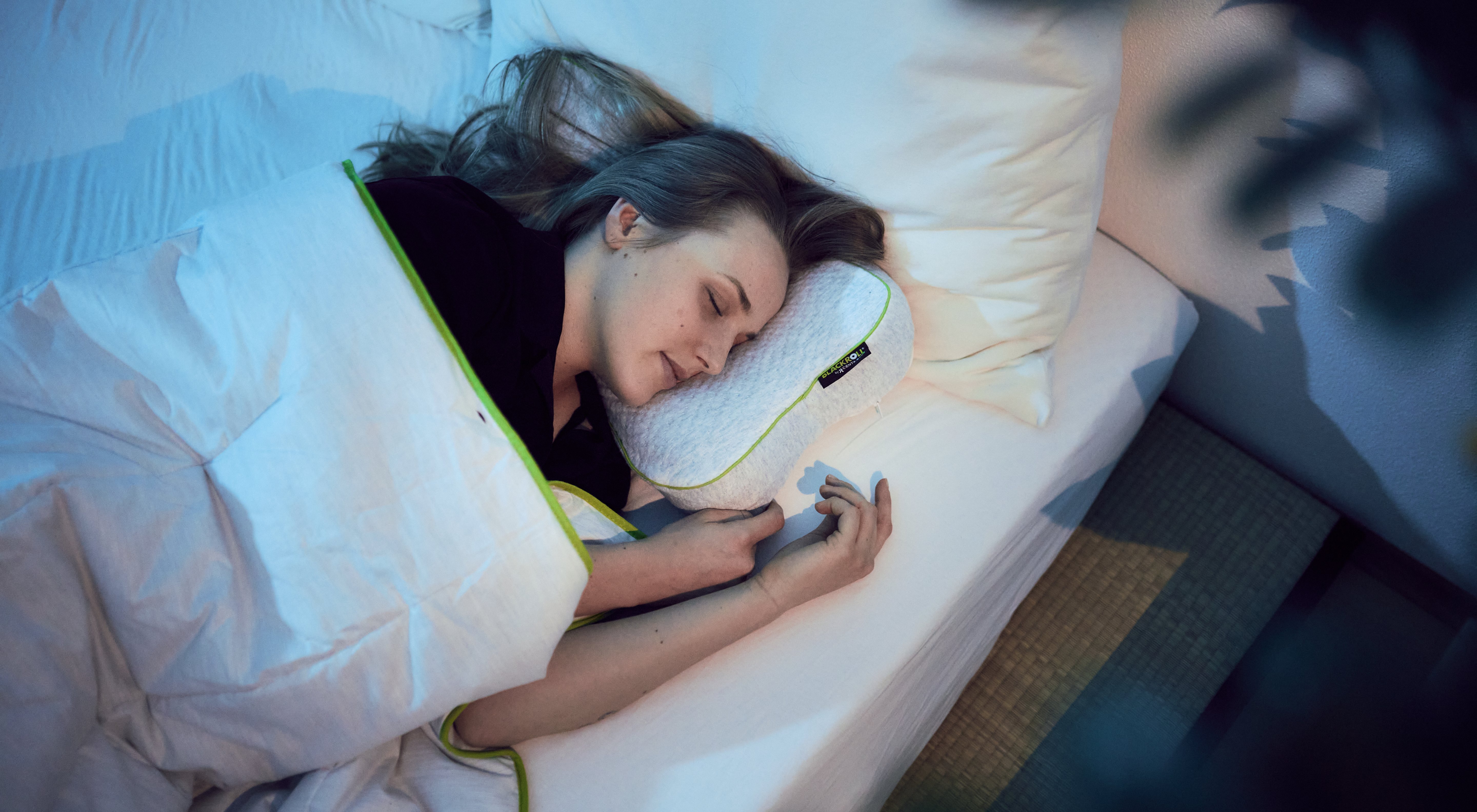
Eventually, a person falls into deep sleep, which accounts for about 1–1.5 hours of the night.
The exact duration of deep sleep cannot be precisely determined, as it depends on several factors. For example, people who sleep 6 hours or less per day experience roughly the same amount of deep sleep as those who sleep 8 hours or more per night.
During this stage, the brain processes what it has learned and experienced over the past day. In addition, the brain’s “drainage system” opens up, allowing the “mental waste” that has accumulated during the day to be flushed out. To facilitate this, the brain has a glymphatic system, analogous to the lymphatic system. This detoxification process works particularly well when breathing and heart rate are synchronized (in a 1:4 ratio)—15 breaths and 60 heartbeats per minute. During this time, our brain cells shrink by up to 60 percent to ensure the “drainage channels” have a clear path.
Physical regeneration also takes place during this deep sleep. For athletes, this is the crucial and essential anabolic phase during which growth hormones are released, making them faster, stronger, and more enduring.
At the beginning of the night, deep sleep phases are long and then become shorter with each sleep cycle. A key indicator of “good nights” and healthy sleep architecture is when more than 50% of deep sleep occurs in the first half of the night.
By the way: For people suffering from sleep disorders, something crucial goes wrong. They often no longer reach any deep sleep phase at all. Yet it is precisely this deep sleep that is particularly important for recovery. That’s why they often feel exhausted throughout the day. Due to the constant and unnatural awakenings, the body essentially has to fight its way back to sleep over and over again. That, too, saps one’s energy.

REM Sleep
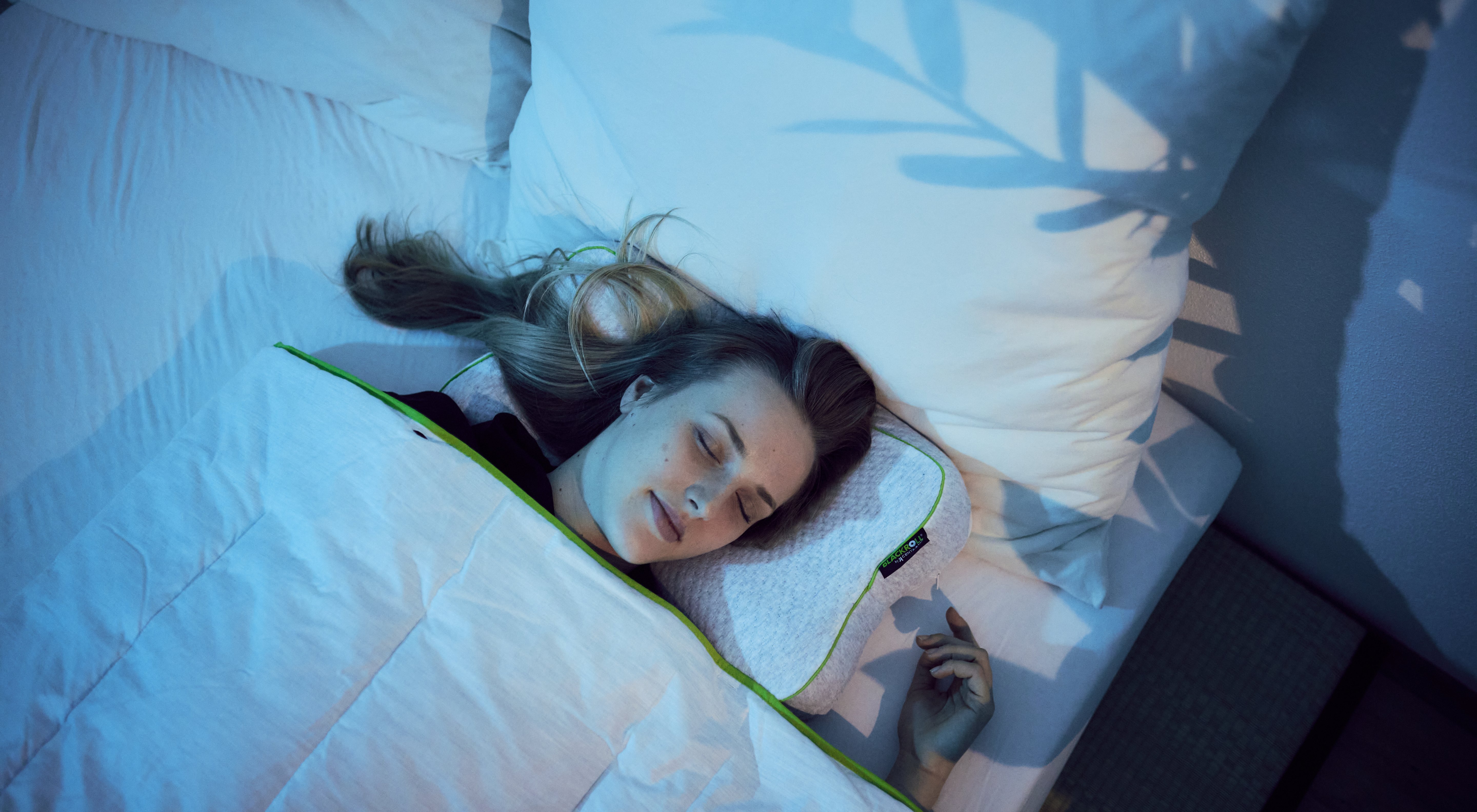
This stage is followed byREM sleep (dream sleep). The name comes from the fact that the eyeballs move visibly beneath the eyelids during this phase because dreaming is particularly intense (REM stands for Rapid Eye Movement).
During this REM phase, which lasts approximately 5 to 20 minutes, the muscles are paralyzed. This prevents the movements made in dreams from actually being carried out. As the night progresses—that is, during the subsequent sleep cycles—the REM phases become longer and the deep sleep stages shorter.
Finally, through light sleep, a person returns to a waking state in the early morning hours—provided the alarm clock doesn’t rouse them from one of the other sleep phases beforehand.

The Timing of Sleep Phases
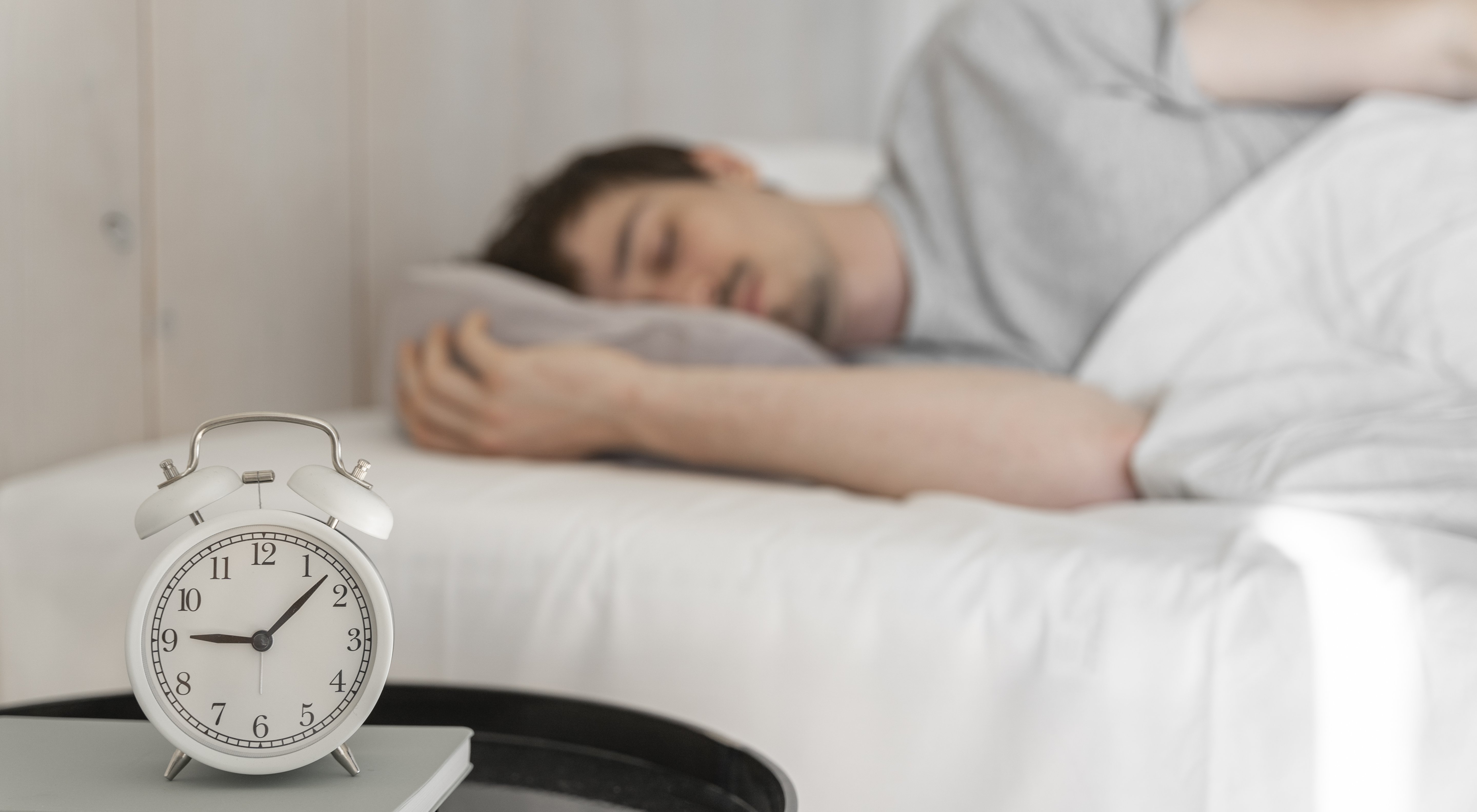
The timing of the sleep phases is particularly important, because only when our internal clock is in sync with our daily routine can the regeneration process be completed before our alarm clock rings. This is because while we sleep, our brain continues to work at full speed. It does more than just process the impressions and information from the day.
Important regenerative processes also take place in the brain and throughout the body while we sleep. Nerve cells are renewed and rewired, and waste products from metabolism are eliminated. Since all bodily functions are also slowed down, the immune system has more energy to fight off pathogens.
Deep sleep is longest at the beginning of the night, then becomes progressively shorter as the cycles continue, and may even be completely absent during the final sleep phase. This allows for a fresh start to the new day. You’ve probably read somewhere that sleeping before midnight is particularly important—but that’s not entirely true.
In fact, the first 4–5 hours of sleep are the most important, regardless of when you fall asleep, since most deep sleep phases occur during this time. And deep sleep is absolutely crucial for our body’s recovery and overall health. So if you don’t go to bed until 1 a.m., the sleep you get until 5 a.m. is especially important. However, for those who go to bed as early as 8 p.m. (such as bakers), sleep before midnight is indeed particularly important.
Sleep quality is also influenced by external factors
Even though the individual sleep stages follow a fixed biological cycle, their quality is strongly influenced by external factors. Temperature, environment, and sleep comfort all play a role in determining how restfully we sleep and how smoothly the transitions between stages occur. For children in particular, an unsuitable sleep environment can cause them to wake up more frequently or spend less time in deep sleep. That’s why it’s worth paying attention to even seemingly minor details—such as choosing the right comforter for toddlers—to specifically improve their sleep.


Waking Up
So what happens when we wake up? During the night, the body breaks down melatonin and adenosine—the hormones that regulate our sense of sleepiness. As a result, the urge to sleep decreases with every minute we sleep. As dawn breaks and the light grows brighter, our brain and body functions slowly ramp up—following our individual biological clock.
The body now prepares for increased activity. Body temperature and blood pressure rise due to the release of the hormone cortisol, which also increases blood sugar levels. At the point where this process becomes stronger than the remaining sleep pressure, we wake up on our own.
Those who wake up without an alarm usually emerge from a REM phase—that is, from dream sleep. That’s why we can sometimes remember our dreams. While waking up from a light sleep phase is not a problem, waking up during deep sleep can lead to persistent fatigue. This rarely happens to people with a regular sleep routine and consistent wake-up times, but shift workers in particular suffer from it regularly.


Conclusion on Sleep Stages
Truly restful nights that contribute to recovery are therefore not just a matterof sleep duration, but also depend on the different sleep stages. The first half of the night is particularly important for physical recovery, and the second half for mental recovery. On days when you’re not very physically active, you can get by with about 6 hours of sleep during the week without causing lasting damage to your body. However, as soon as physical and mental stress increases, you should also invest more time in your sleep and, consequently, your recovery.

Recovery Blanket Summer
Available in multiple variants