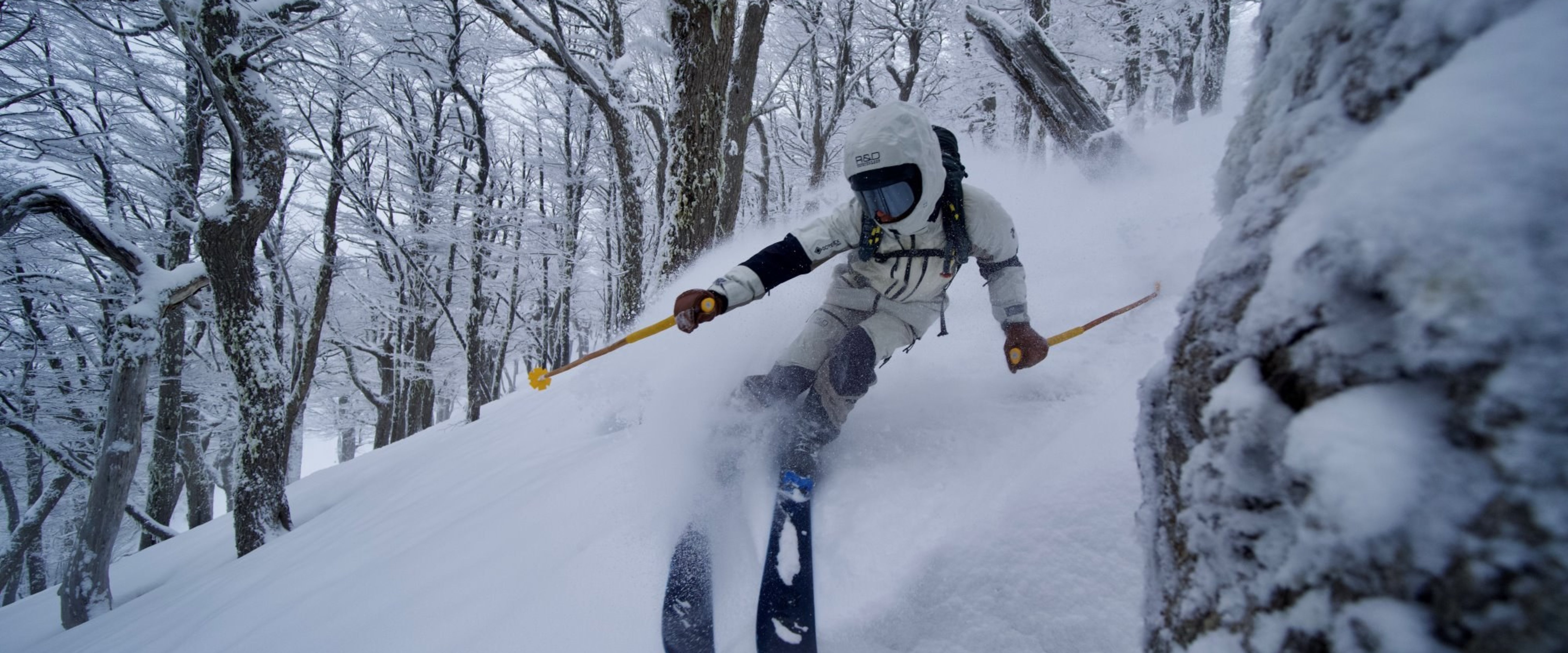
Power. Powder. Peaks. Off-piste with freerider Tao Kreibich
Words aren’t enough to describe Tao Kreibich and his boundless courage off the ski slopes. Perhaps that’s why the affable freerider regularly reaches for his camera when he’s tearing up the mountains on his skis in the most remote places. In this portrait story, Tao talks to us about calculated risks off-piste, his reasons for leaving competitive sports, and which childhood dream he’s fulfilling.
Between the Mountain Worlds
Suddenly, everything is moving very quickly—Tao has some time to spare for an interview earlier than expected and calls Georgien via video from his airport gate. His curls peek out from under his beanie, and in the background, the first passengers are already checking in. He’s just returned from the Freeride World Tour: “The conditions in Georgia weren’t easy—jumping was difficult, and avalanches were also a concern.” Tao used to compete in the event himself; today, he secures the slope before the competition and checks the conditions on the mountain before the start. Is there an increased risk of avalanches? Are the jumps over rocks feasible? He keeps the organizers informed via radio.


Friendship Comes First
Tao started out as a race skier in ski schools and boarding schools, but by the time he was 16, he’d lost interest in the intense competitive aspect. “I then discovered and started following the Freeride World Tour and thought it was cool. Back home in Arlberg, I happened to sit next to a female rider on the lift and talked to her about these events and freeriding. That really inspired me, and shortly after, I competed in the Junior Competition, which took place at the same time as the World Tour. I loved it right away. The vibe is completely different—the kids are all really friendly with each other, and after the competition, we’d go skiing together. It’s the complete opposite of ski racing, where there were hardly any friendships—the competitive atmosphere didn’t allow for it at all. Even with my longtime roommates at boarding school and training partners, we were still more like rivals.”

Calculated Risk—That’s Freeriding
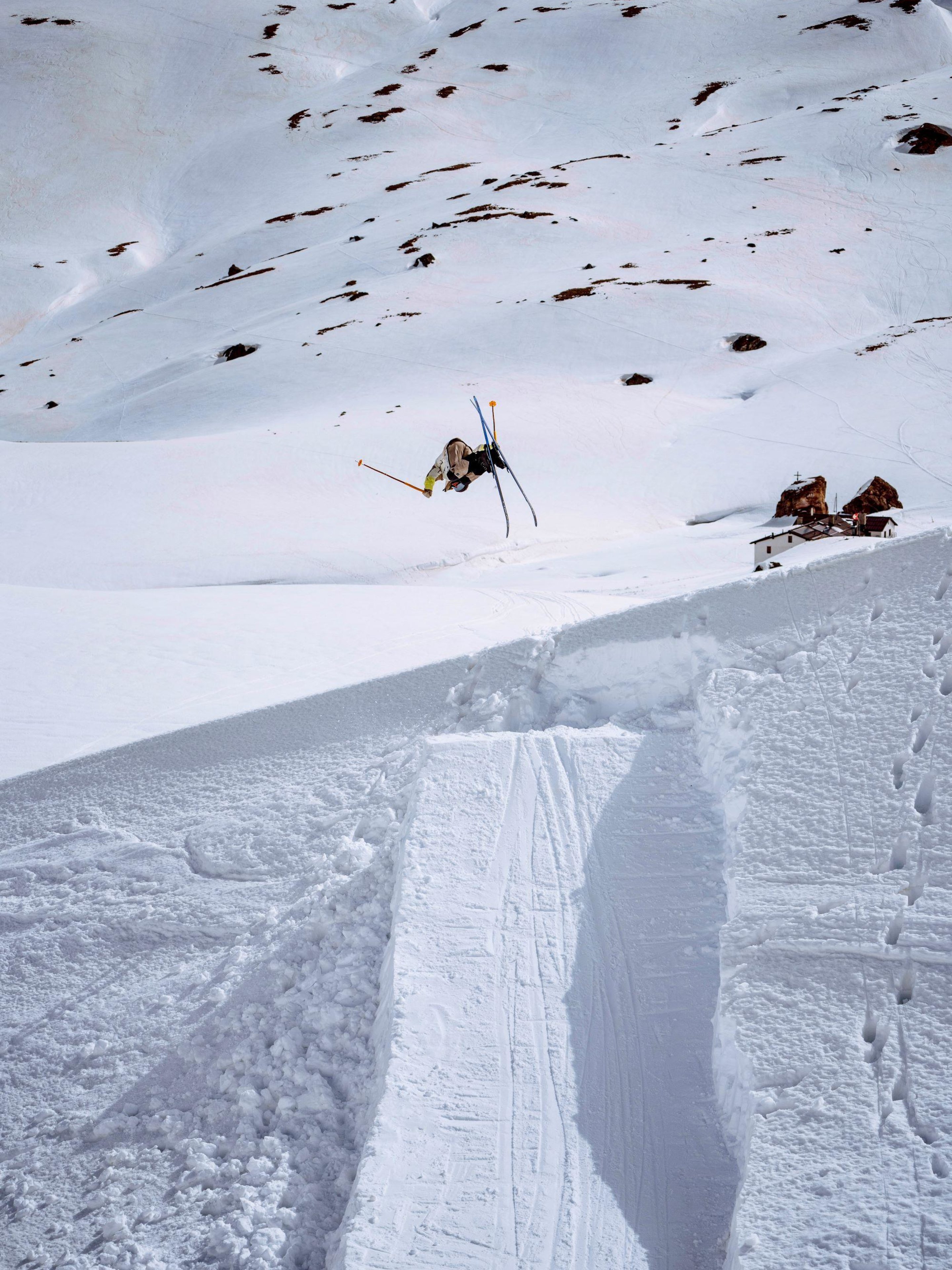
Freeriding off-piste involves descending a marked route on a snowboard or skis, with a slope gradient of 40 to 50 degrees. What matters most is the line you take and the fluid rhythm of your movements, but also the difficulty of the meter-high jumps over prominent rocks. Carrying safety gear is mandatory, and the slopes are cleared in advance by avalanche experts. “From the very beginning, what fascinated me about freeriding was the community of riders—everyone is super nice. It’s ‘me against the mountain’ instead of ‘me against the others.’ Everyone else is happy when someone pulls off a cool run—that’s what hooked me, and it’s still the same today.”
Of course, there’s always a residual risk. In a drone video, you can’t see a rock hidden 5 cm beneath the snow. Over the years, Tao has developed an eye for this, allowing him to assess the situation better. For him, clues include trees or rocks with distinctive shapes—so-called “exit safe spots”—that is, points where he can come to a stop in the event of an avalanche. The most spectacular parts are the jumps.
New Paths
The sport is receiving more and more media attention. The first Freeride World Championships are scheduled for 2026, and in the coming years, riders are set to compete in the Winter Olympics for the first time. “I’m not really a fan of it becoming an Olympic sport. The sport is evolving on its own. The riders are already getting younger on their own and pulling off even more extreme jumps. The World Tour is getting more media attention. But I have the feeling that, when it comes to marketing, very little of that will actually benefit the athletes themselves.” A balancing act is emerging: preserving the sport’s original spirit while allowing for organic growth.
After two years as a rider on the World Tour, Tao is now breaking new ground as well.
No Tracks in the Snow
Tao can showcase his creativity even better away from the World Tour through his own videos on his YouTube channel “Life of Tao,” which he films together with cameraman Gabriel in the snow-covered mountains. The Austrian doesn’t have a set schedule for this. “It happens spontaneously, since every winter is different. The only important things are that there’s snow on the ground and whether I already know someone there or can make contact with locals. Then we pack up the camera and fly out. I use weather and map apps to check out the area. We also always have a drone with us to help us navigate on the mountain. I’ve learned to stay spontaneous—that works best.” They often start out on touring skis, making their way up the mountain until they can’t go any further. “Where there are no tracks in the snow and no one has skied there yet—that’s what I find exciting. In hard-to-reach terrain, a helicopter usually takes them to the summit.
The tricky part: The jumps have to be nailed on the first try and executed to a high standard. Whether it’s a backflip or a three-sixty, there isn’t much time to film the jump. “It’s kind of funny—back in the day, competitions were all about practicing jumps over and over and then improving. Building up more and more speed and landing even flatter. Now that’s changed. I ski less, and the runs have to be of higher quality. In a way, it’s my routine, but sometimes I have to practice jumps and tricks again (laughs). I’m on the explorer side—I want to ski new mountains that no one has ever reached the top of and where no one ever thought you could even ski there. That really appeals to me.”

Skiing Without Limits
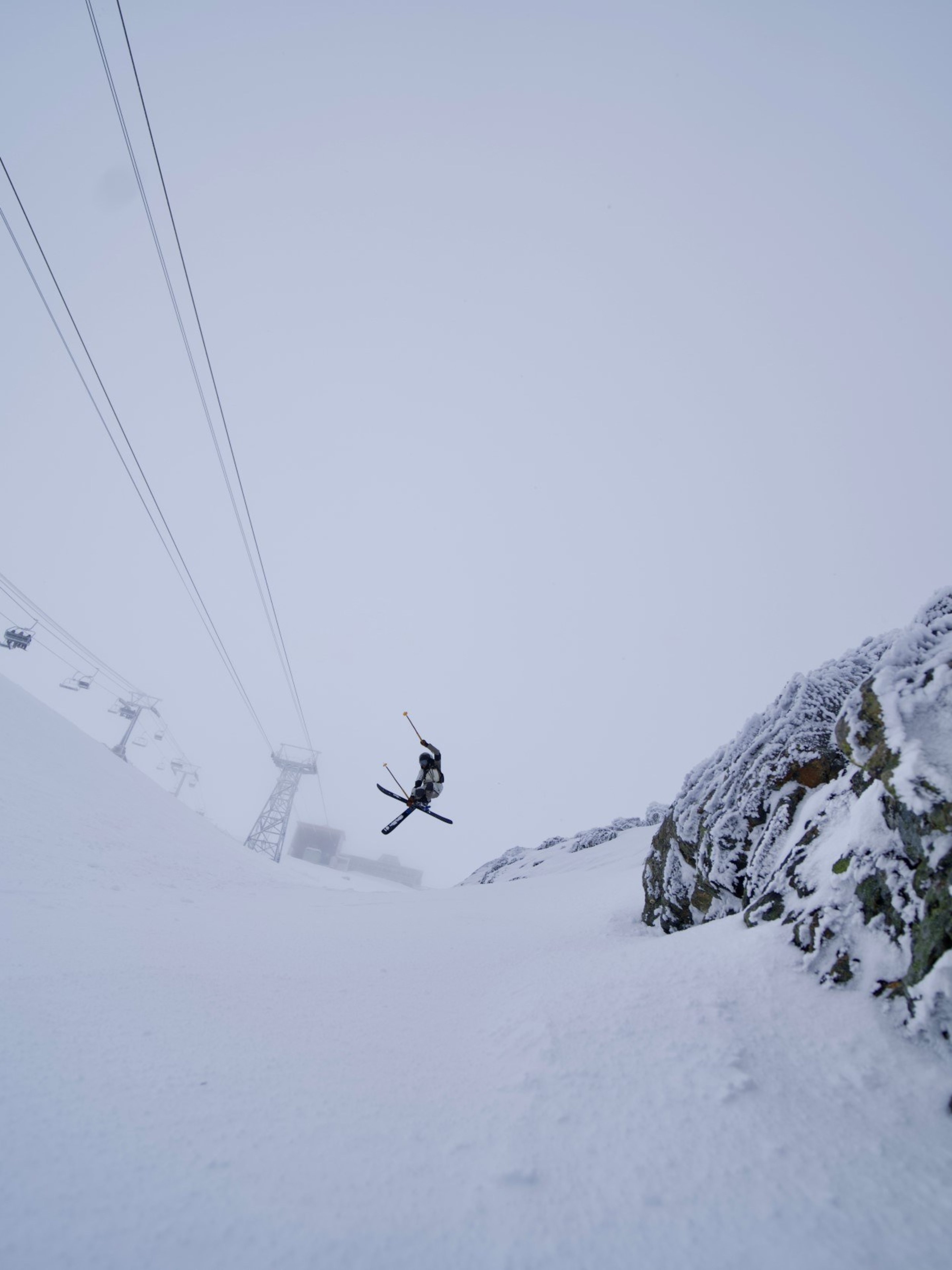
For Tao, no distance is too far to discover something new. Japan, Patagonia, Lebanon, Chile—everywhere, Tao seeks out new adventures and experiences above the clouds. “Last November we were in Kazakhstan; now we’ve been to Georgia four times. In countries like Uzbekistan, Pakistan, and even China, there are so many mountains that no one has skied yet. Those are the places I find most exciting—where no one knows you can ski there and there are no traditional ski resorts. There, you can do some really cool stuff by helicopter and go ski touring to reach the summit.”
Preparation and follow-up for meter-high jumps
Tao uses the summer to get in top physical shape for the winter season. When he first started on the World Tour, he trained at the Olympic Center in Tyrol.
“But I don’t really feel like I belong there anymore when the athletes are grinding away for the Olympics (laughs). I’m more of an outdoorsy type and try to hike a lot in the summer and bike up the mountains. Since I often go ski touring, my endurance is important, so that’s the focus of my training. Every now and then, I also have to do a strength session.”
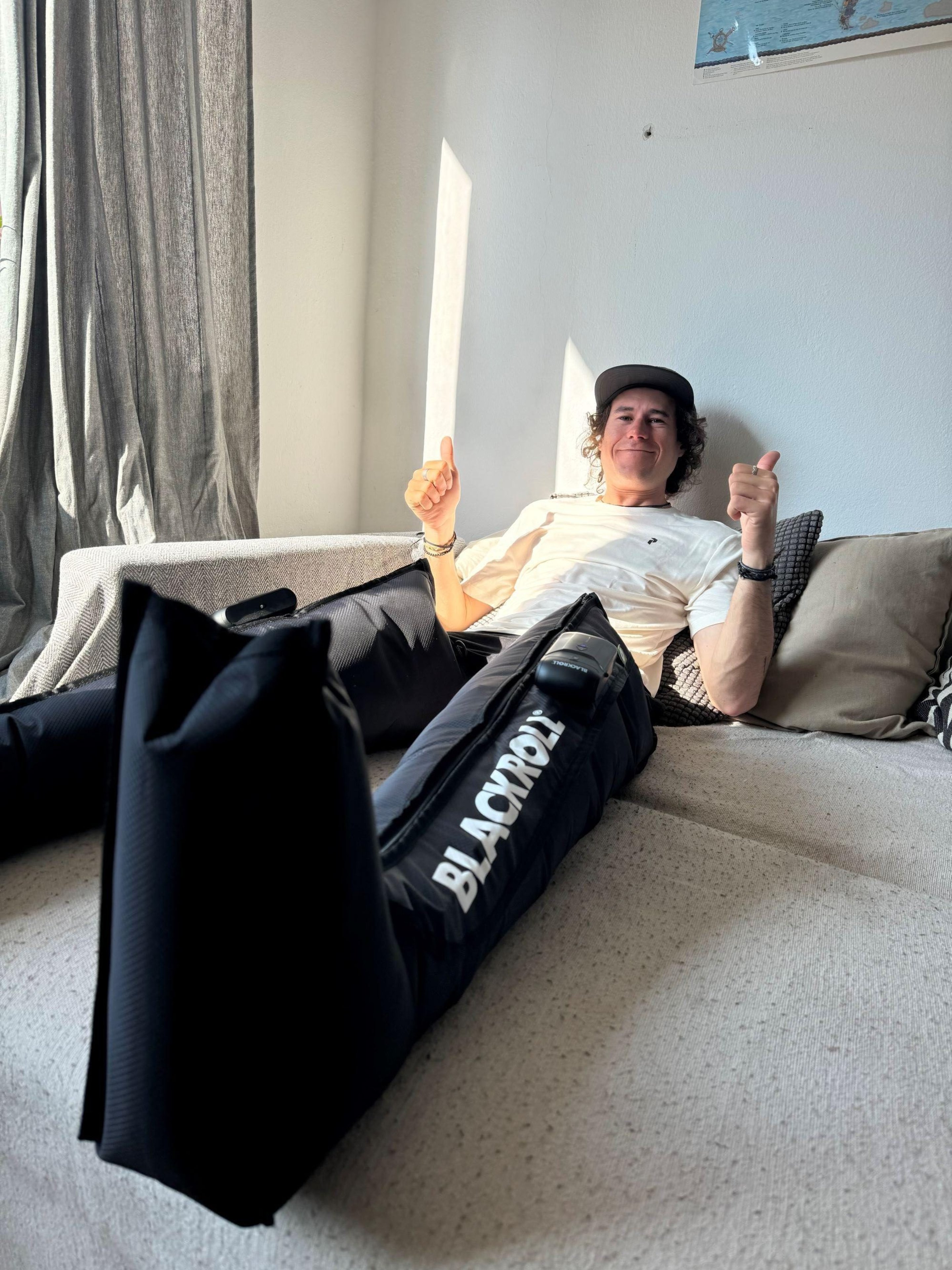
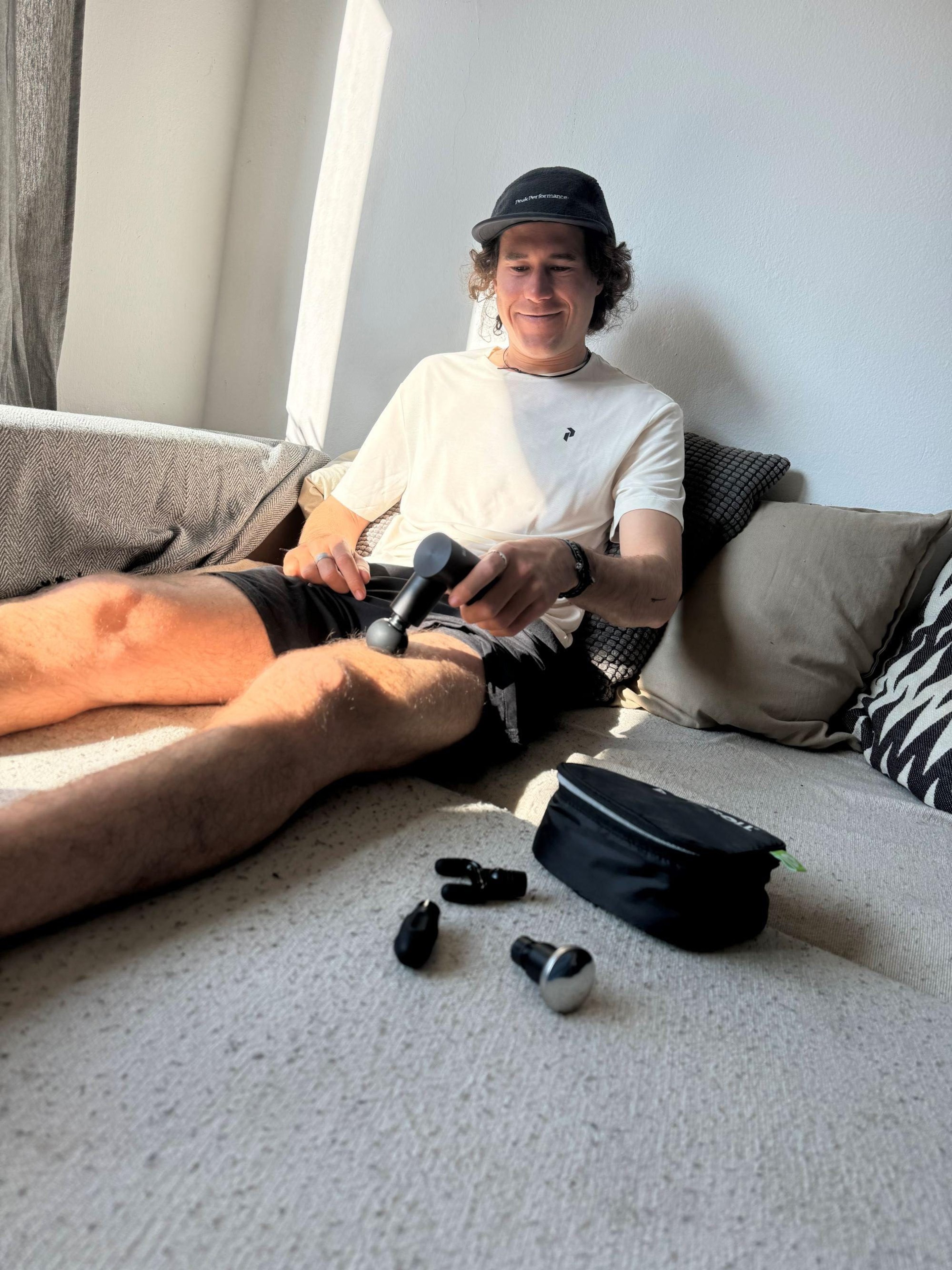
He often feels the physical strain of a grueling day with lots of jumps the next day. During jumps, his neck and legs absorb several times his body weight upon landing in extreme situations. “BLACKROLL is extremely important to me as a recovery partner. Everything hurts in the evening, and I have to work on my muscles first as part of my après-ski routine. First, I roll my back and legs over the FASCIAL ROLLER to loosen up my muscles. I also use the FASCIA GUN for this. Afterward, I always put on the COMPRESSION BOOTS so my legs can feel refreshed again. Sleep is also a major source of recovery for me. Whether at home or traveling, the RECOVERY PILLOW is always a must-have.
A Dream Come True
There are places that make a freerider’s heart beat faster. Japan was very impressive, says Tao, but every freerider’s dream is to ski in Alaska at least once. “I’ve been dying to go there since I was 16. My mind is already in Alaska, where we’ll be skiing and filming all of April. I’ve already made initial contact with the local ski guides and received the first photos. Alaska is THE project and my season finale,” he says with a twinkle in his eyes.