
Chill Out Down Under! - Sophia Kleinherne
National soccer player Sophia Kleinherne offers insights into her World Cup preparations and the importance of recovery and sleep for her as a professional athlete.
BLACKROLL® meets Sophia Kleinherne shortly before the Women’s World Cup in Australia and New Zealand. A profile.
Three years ago, according to UEFA, Sophia Kleinherne was already among the 10 most talented young female players in Europe. In 2023, she is part of the German women’s national soccer team’s World Cup roster with a clear goal in mind: to bring the World Cup title back to Germany. Even though Sophia, at just 23 years old, is only at the beginning of her career, we can already learn a lot from her experience as a Bundesliga and national team player and her recovery routines.
Anyone who, like Sophia, makes their senior national team debut in front of over 87,000 people at a sold-out Wembley Stadium in London against England might quickly think that there could hardly be many more highlights to come. Yet this was only the beginning of Sophia Kleinherne’s journey to the very top of women’s soccer and the rapid development the sport is currently experiencing. Women’s soccer is booming worldwide and becoming more professional at every level. This was most recently evident at the 2022 Women’s European Championship in England, which set entirely new standards.
Anyone who meets Sophia, however, gets the sense that she remains relatively unfazed by all the hype surrounding her sport. Sophia is focused on her path and has her goals clearly in sight: maximum success with her club, Eintracht Frankfurt, in the Bundesliga and the Champions League—but above all, the Women’s World Cup this summer in Australia and New Zealand. She loves it when things get intense during games and training, pushing her to her limits so she can then push them even further.
“I’m the kind of player who pushes herself to her absolute limits in training. Only by giving it your all in training can you translate that into the game.”
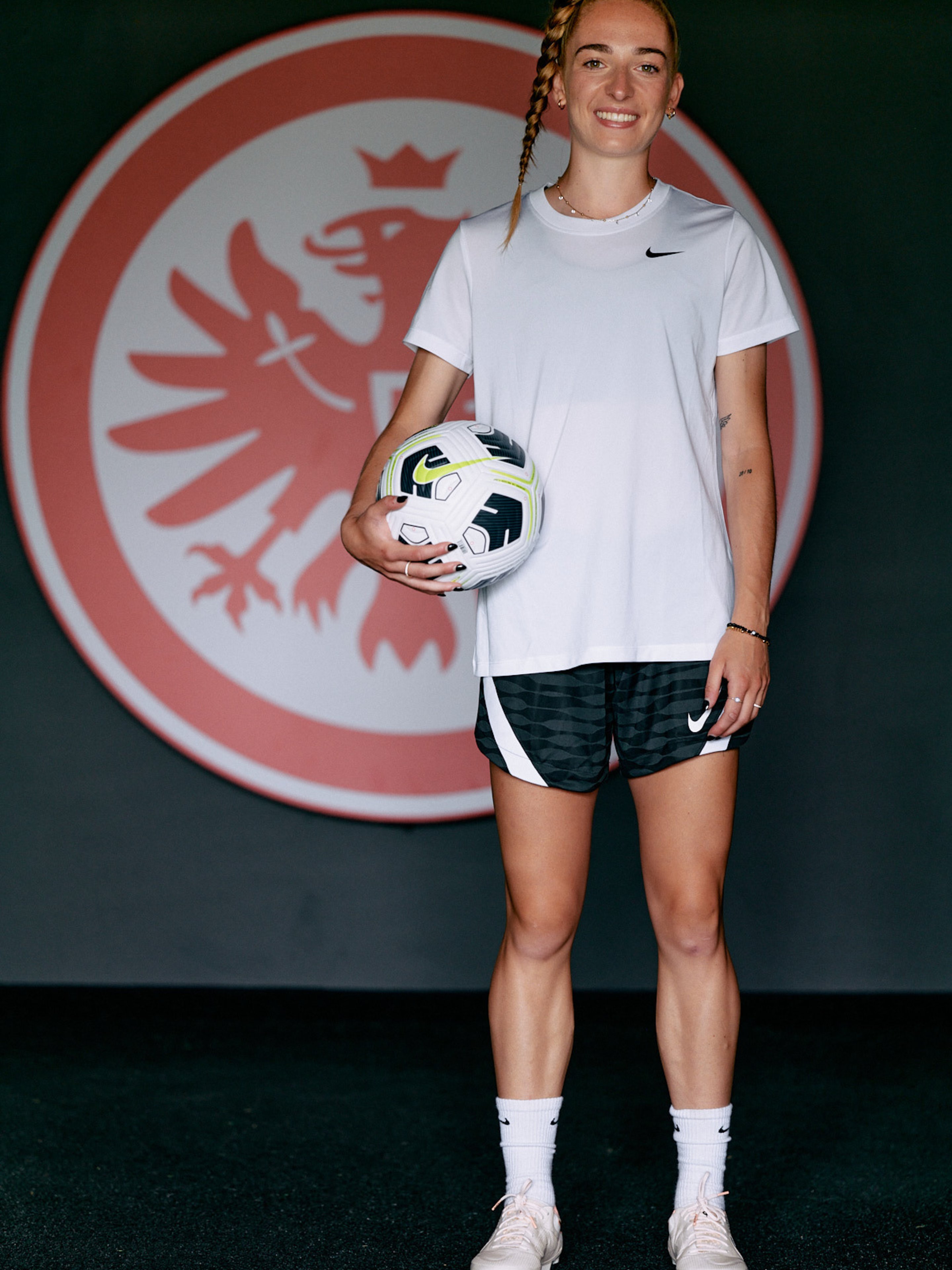
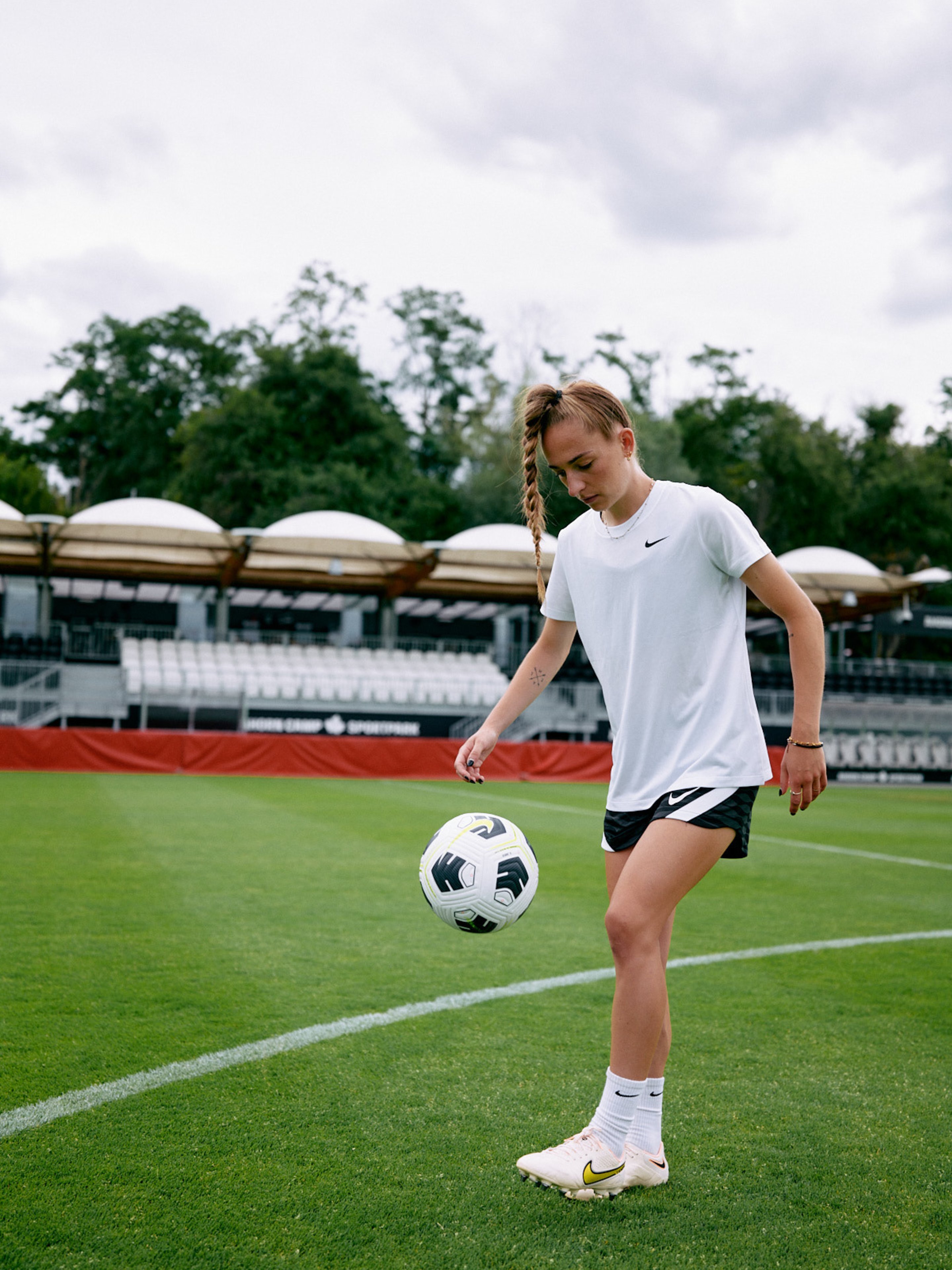
Sophia Kleinherne is a center back who strikes fear into her opponents. With her speed, strength, and stamina, she’s one of the best defenders in German women’s soccer and can play both as a center back and a fullback. On the field, she’s “not exactly sweet old Sophia,” as she told us with a wink. But in her private life, it’s a different story. There, she enjoys spending time with friends and family and likes it when things are a little more laid-back.
We had the opportunity to meet Sophia during her preparations for the 2023 Women’s World Cup and talk to her specifically about her daily life, her training, and her recovery and sleep routines as a professional soccer player.
Dear Sophia, how important is preparing for the World Cup with the German national team to you, and what did your training look like?
During World Cup preparations with the national team, we focus on several key areas: strength training, athletic conditioning, speed, and then on-field work. That also involves a lot of pre- and post-training work. We usually train once or twice a day, and the sessions are always very precisely and individually tailored, since we all come from different clubs and the workload during the season varied for each player. But the communication with the coaching staff is also very good.

LOOP BANDS in action during World Cup preparations.

Recovery is part of training: Sophia Kleinherne during a compression massage.

Quick and easy to use: Activating & recovery massages with the FASCIA GUN.
Will the World Cup in Australia and New Zealand be a special tournament?
I think the World Cup will definitely be special because our run to the final at last year’s European Championship in England showed what we’re capable of. And I’m also firmly convinced that if you can dominate a European Championship and make it to the final, it’s also possible to play a very strong role at a World Cup. That’s why we’re really looking forward to the tournament and have high hopes for ourselves!
How does a team become a team?
I believe that the challenge with the national team is that all the players come from very different clubs, and you then have to find common ground, stick together, and work toward a shared goal. There’s naturally a certain amount of rivalry between the club players at first. Fortunately, though, we always manage that very well on the national team because we’ve learned from the past that being a real team is the key to our success. I’m firmly convinced that we can rekindle that team spirit again at this World Cup.
How do you recover from a grueling game? How do you regenerate?
In general, the topic of recovery is broad, and everyone has to find their own individual approach and test what works for them—or what doesn’t. Sleep is, first and foremost, the best way for the body to regenerate and recover. Personally, I can tell very clearly the day after whether I had a good night’s sleep or not. We also have access to a wide range of recovery methods, whether it’s the cold chamber, the sauna, a massage with the BLACKROLL®, or compression boots.
“It’s important that I start the recovery process as soon as possible after a game.”
How do you manage to wind down after a grueling practice or an exciting game so that you can sleep well?
I think that, especially when you play late in the evening, the biggest challenge is not thinking about the game once you’re in bed—regardless of whether it was a good or a bad game. If it was a good game, your adrenaline levels are still so high in the evening that you feel like you’re still out on the field. So it really takes a lot of calm and acceptance, and it takes a few minutes to a few hours longer to actually fall asleep. But I’m working on that with our sleep coach—finding routines to deal with it and maybe even shorten that time.
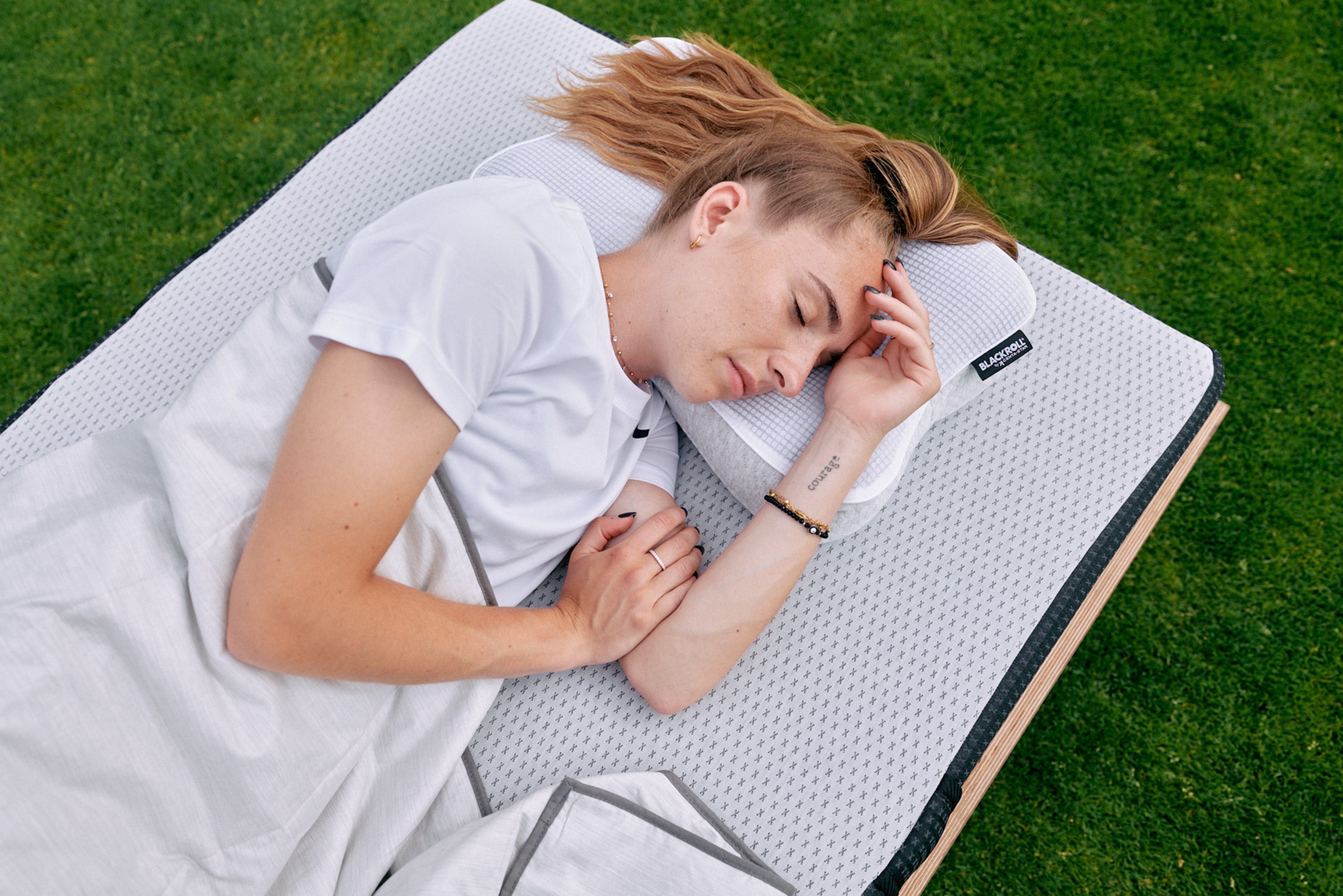
What strategies do you use to wind down?
On the national team, we have the opportunity to work with a sleep coach who gives us lots of tips and tricks. These tips are, of course, very individual. Every player has to find her own way. Many use breathing exercises to lower their stress levels in general. Some write down their thoughts so they don’t take them to bed with them. Others do a little yoga or meditate in the evening, and I’m learning to just let my thoughts be thoughts sometimes. These are methods and tips we’re given, and they’re really very helpful.
Do you have an evening routine? Do you do anything specific before falling asleep?
That generally depends on my situation and how persistent my racing thoughts are—the ones I have a hard time shaking off. I’ve found that I can control my thoughts more consciously when I do yoga. That’s something I’ve discovered for myself. It does take a little practice, though, before it really works well—being able to push those thoughts aside or replace them with pleasant ones. When it works, it really helps me fall asleep.
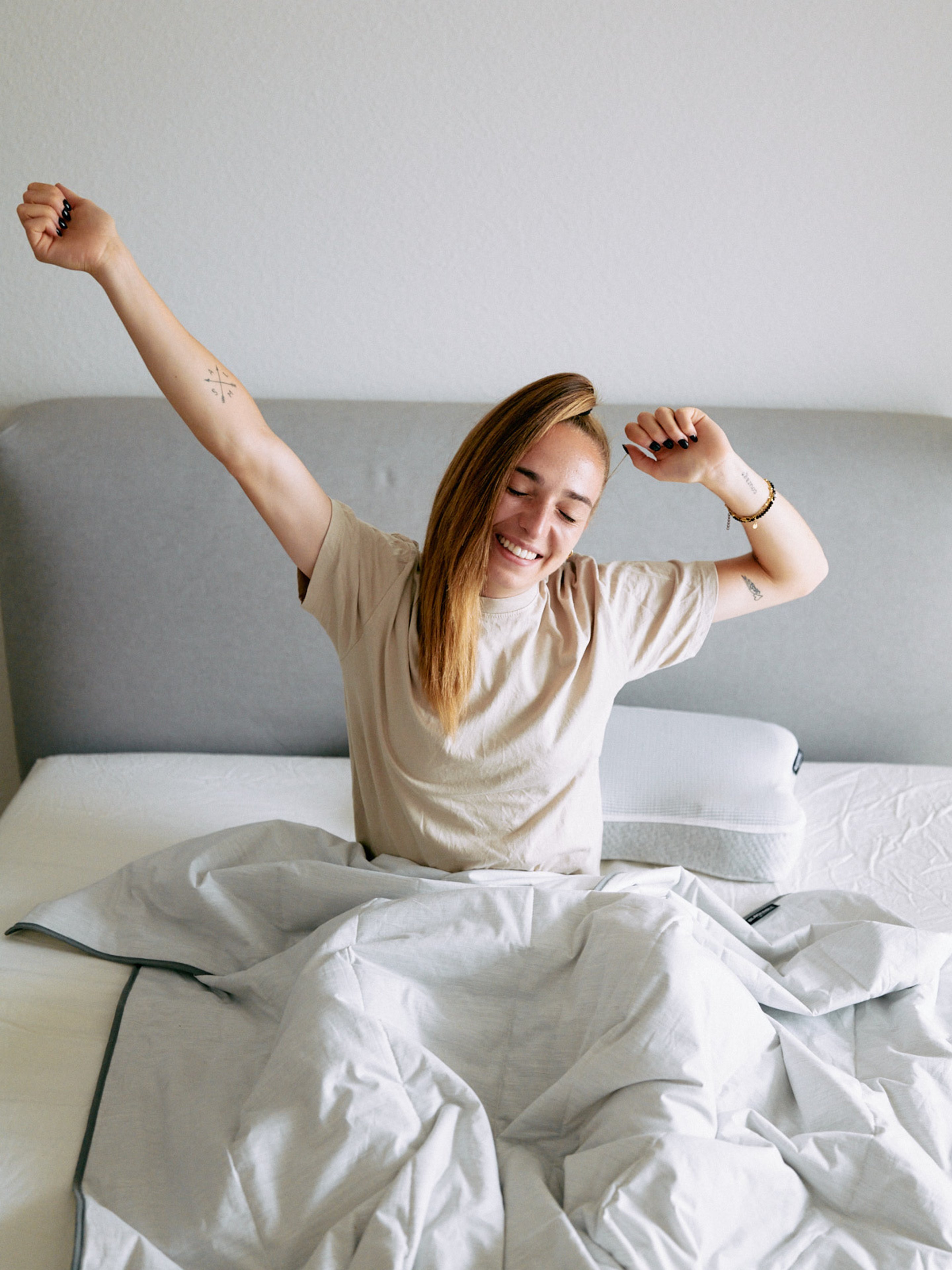
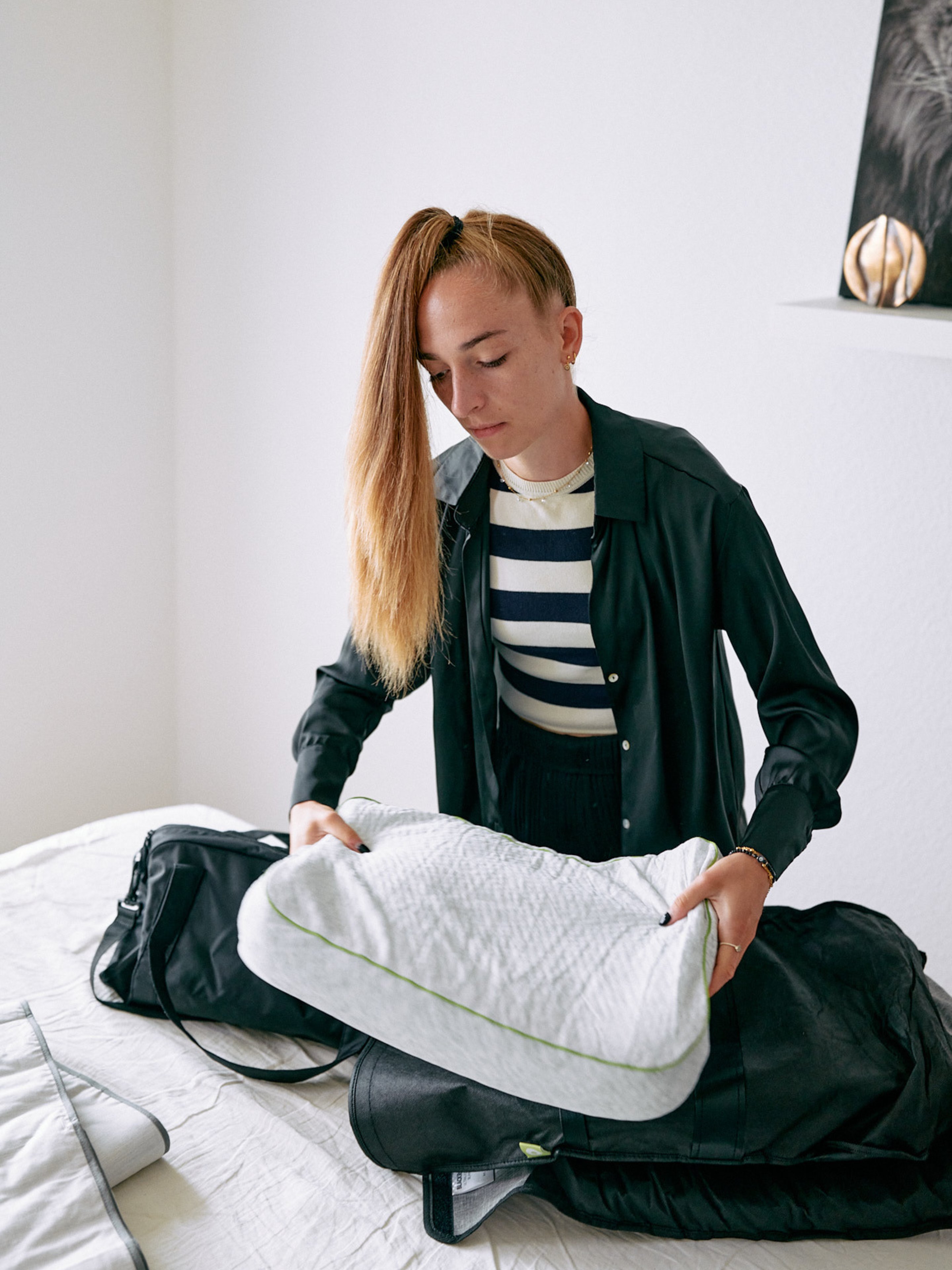
How do you manage to maintain your sleep routine while traveling?
I really love using the BLACKROLL® RECOVERY PILLOW because I find that it adapts very well, whether you sleep on your back or on your side. Plus, of course, I can easily take it with me anywhere since it takes up hardly any space and I can stuff it into any bag. I’ve also learned that having something familiar with me helps me sleep better.
Do you have any sleep tips for athletes and the BLACKROLL® community?
I think the key is to recover quickly from athletic events and start the recovery process relatively soon, so that your mind isn’t so preoccupied with those thoughts when you go to bed at night. Your body should have already recovered somewhat so that you don’t feel like a heavy stone. Consciously and effectively manage your thoughts and recovery. That’s my tip for falling asleep.
We wish Sophia Kleinherne the best of luck at the World Championships and thank her for this interview!


