A good night’s sleep and a balanced mind are your power duo!

Do you want to keep your mental well-being in balance through good sleep?
Sleep and mental health are closely linked. Body, soul, and mind are one. Sleep plays a crucial role in your well-being. Your mental health, in turn, influences your sleep. It’s an interesting interplay with many aspects you should be aware of.
Ideally, your feelings, thoughts, and actions operate within a zone of balance. The better your sleep quality, the more you achieve your individual balance and create the conditions for optimal mental health. Your daily activities flow smoothly, and you feel strong and energetic.
Axel Steiger, a physician and director of the Sleep Medicine Clinic at the Max Planck Institute in Munich-Schwabing, says:
“Sleep disorders can be both a cause and a consequence of depression. Or to put it another way: they are both a symptom and a risk factor. As such, they massively increase the risk of depression.”
The German Society for Sleep Research and Sleep Medicine (DGSM) is intensively engagedin researching the connections between sleep, sleep disorders, the diagnosis, and the treatment of sleep-wake disorders. In particular , sleep duration, sleeping under the influence of various stress factors, sleep disorders, restless legssyndrome, and sleep apnea all affect sleep quality and, consequently, mental health.
If you experience sleep disturbances for up to three months, this is referred to as short-term insomnia. If these symptoms persist longer or if you’ve been suffering from sleep disturbances for years, it’s advisable to see a doctor. There are many possible causes of sleep disturbances. Want to know more? Check out our latest article on this topic.
Sleep Needs and Psychological Development in Children
Sleep plays a central role in children’s psychological development. Especially in the early years of life, the brain processes emotional experiences, learns to cope with stimuli, and builds important cognitive skills. If sleep is insufficient or not restful, it can quickly affect mood, behavior, and concentration. That’s why it’s important to understand that sleep needs vary significantly depending on age. You can find an overview here to help you better understand the sleep needs of 4-year-olds.
Tip: Take some time to reflect on your sleep quality. The following questions might help you do that.
Take this check!
- How good is my sleep quality, really? Use a scale of 1–10. A score of 1 means you sleep very poorly, 5 means moderately well, and 10 means you sleep exceptionally well.
- Include how easily you fall asleep. Do you toss and turn in bed for a long time, or do you fall asleep quickly?
- What could you do to improve your sleep quality?
- How could you optimize your sleep accessories—such as your pillow, mattress, comforter, etc.—to sleep better?
- Write down the results in your journal.
- Do you already have a sleep diary? Book – Sleep Diary: Document Your Sleep Habits || BLACKROLL® Online Shop
With our sleep diary, you can explore the topics of sleep and mental health even more deeply. Just give it a try and analyze your sleep quality in small steps.
Perhaps you need sleep therapy and would like a more detailed analysis of your sleep cycles? Your primary care physician can provide you with appropriate recommendations and refer you to an expert.
How Good Sleep Influences Your Emotional Regulation
During sleep, the brain processes a wide range of information and sensory impressions. Positive experiences from the day, as well as emotionally stressful events, can affect the quality of your sleep. Are you the type of person who dwells deeply on emotional situations, or are you able to let go more quickly—especially from negative situations and emotional states?
Negative thoughts, rumination, or repetitive thought patterns can intensify negative emotions. This is because both negative and positive thoughts lead to corresponding emotions. If you tend to think negatively before falling asleep, you’ll feel worse than you would in a relaxed state of mind. How good are you already at stopping your thoughts before falling asleep?
Tip: Say “Stop” out loud to trigger a startle response in your body. With practice, these negative thoughts will occur less frequently. Give it a try. You can also visualize a red stop sign in your mind.
The way you manage your own emotions during a situation is called psychoregulation . The better and faster you can relax, the more effective your psychoregulation will be.

The example of a top athlete illustrates this concept very clearly. The athlete is very nervous before an important competition the next day, right up until he falls asleep. He literally works himself up into a state of competition anxiety or a peak performance mindset. He visualizes his opponent in his mind’s eye. His adrenaline levels rise, and he finds it difficult to calm down again. To address this, they need routines, relaxation techniques, or psychoregulatory training to fall asleep optimally. In addition to the psychological benefits, it makes sense to equip athletes or entire teams with quality sleep products: relaxation pillows, sleep blankets, and mattresses. Some teams even travel to competitions by truck with a full set of sleep equipment to ensure consistent sleep quality for their athletes!
Sleep for the Soul
Have you heard the sayings , “As you make your bed, so you must lie in it!” or “Sleepon it one more night!”
Does this sound familiar? You’ve slept poorly and feel exhausted and irritable? Or you’ve slept like a baby and are just in a great mood? Getting enough sleep allows the brain to process emotions more effectively and promotes emotional stability—especially in times of constant change and challenges. The first saying suggests that you pay more attention to your bedding when it comes to your sleep needs. Do you need a warm or light blanket? Do you need a firm or soft mattress, or a special neck pillow? It’s best to ask yourself right now how you’d like to get ready for bed tonight and what you can change based on your situation. Getting ready for bed well means identifying your own needs for warmth, comfort, rest, and relaxation—and putting them into practice.
If you don’t get enough sleep, this can lead to increased irritability, heightened anxiety, or emotional vulnerability. In the long term, poor-quality or insufficient sleep leads to sleep deprivation and can result in burnout and depression.
The second phrase addresses the aspects of problem-solving and decision-making. These can drive us crazy and cause sleepless nights if we can’t reach a conclusion and end up taking everything to bed with us. Does this sound familiar?
Conclusion: Various stressors can significantly disrupt emotions and physiological responses, upsetting our inner balance. Mindful care of the body and good sleep can help protect against this. We’ve already discussed the role of stress in everyday life elsewhere. Click the link here to learn more!
Tip: You can learn to relax. There are many different relaxation methods to choose from. You can easily do short psychoregulation exercises during a power nap at lunchtime or in bed in the evening.
Here’s how it works! :
Lie down comfortably on your Blackroll pillow and ensure a pleasant level of warmth or coolness with your Blackroll sleep blanket. Choose a relaxation program (YouTube, Spotify, Calm app) and let go of any negative thoughts before falling asleep so that your brain is free of negativity. This process should lead to better sleep.

Your Personal Evening Routine to Improve Sleep and Mental Well-being
Routines and structures have a stabilizing effect on your mental well-being. Brain functions, metabolic processes, and regeneration processes establish a rhythm that you can help your body maintain. This makes it easier for you to find your personal balance. Lay a solid foundation for healthy sleep habits by maintaining regular bedtimes and creating a comfortable sleep environment with the right sleep products. Eliminate “sleep disruptors” such as caffeine consumption, screen time before bed, or background noise to support your mental health.
Do you want to improve your sleep quality in the long term? In our sleep course, you’ll learn, step by step, how to establish consistent routines and implement targeted behavioral changes.

Sleep better, live healthier—with our sleep course. Up to 100% refund.
Discover the online sleep course nowBuild resilience and strength in the face of crises through good sleep
Do you try to ramp up your activities during crises to get through them? It would be better to increase the amount of time you spend sleeping. Recharge your energy, let your body find an effective rhythm, and start your mornings with full energy. Deep sleep often brings solutions that can make your life easier again. Destructive coping mechanisms—such as overworking, alcohol, compulsive online shopping, or gambling into the night—can rob you of sleep. If you have addictive tendencies, it’s best to seek professional help. Make sure you get enough sleep as an investment in your personal health. Remember that sleep and mental health are interconnected.
Sleep deprivation affects your mental health in the long term and can intensify anxiety
If you don’t get enough sleep, sleep deprivation can accelerate the progression of mental health conditions. People who chronically lack sleep have an increased risk of depression, anxiety disorders, bipolar disorder, and other mental health issues. Poor sleep promotes a tendency toward exaggerated anxiety reactions and can increase them by up to 30%. This is the finding of a 2019 study published by UC Berkeley in California, USA. The study not only highlighted the close link between sleep and anxiety but also closely examined the role of deep sleep. Matthew Walker, a professor of neuroscience and psychology, found that during deep sleep, neural connections in the brain reorganize themselves, reducing anxiety overnight. According to Walker, deep sleep is essentially a natural anxiolytic—that is, an anxiety reliever—when one falls into a healthy deep sleep every night.
For this reason, the treatment of anxiety disorders should always include the component of sleep. Promoting deep sleep, in particular, plays a crucial role, as the regeneration of body cells and neurotransmitter metabolism in the neural network are closely interrelated. Anxiety levels are kept low when you get enough sleep that is deep enough. The natural alternation between the REM and NREM phases plays a particularly important role.
During the REM sleep phase, our brain activity is particularly high, and this is also the phase in which we dream the most and most vividly. “REM” stands for “rapid eye movement,” as certain bodily functions change during this phase. Among other things, the eyeballs move rapidly beneath the eyelids. In addition, some regions of the brain become more active, while muscle activity decreases, and we are unable to move our arm and leg muscles during the REM sleep phase.
During the non-REM sleep phase, on the other hand, brain activity, as well as heart rate, breathing, and blood pressure, slow down. It can be divided into the different phases of falling asleep, light sleep, and deep sleep. During the night, this sleep cycle—consisting of the REM phase and the non-REM phase—repeats several times, with each cycle lasting 90–110 minutes.
Good sleep tends to reduce anxiety. Poor sleep, as described above, can increase anxiety. Conversely, mental health conditions can also cause sleep disturbances, especially in cases of moderate to severe depression. In particular, the phases of falling asleep and staying asleep can be affected by prolonged rumination or medication. Sleep cycles are important building blocks in the relationship between sleep and mental health. You can find more information in the following article:
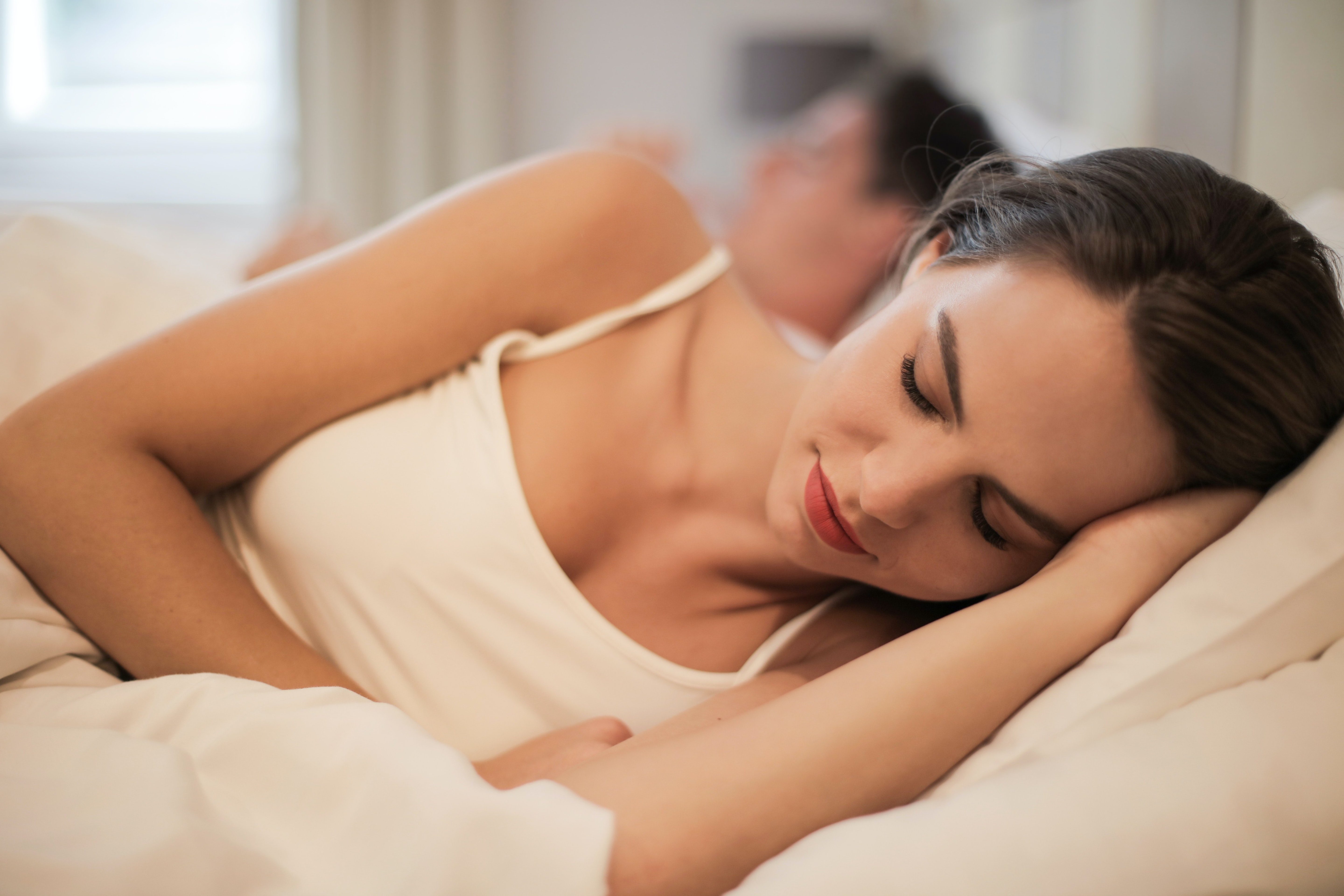
Restless Legs Syndrome or Do Your Legs Tingle at Night?
Approximately 10% of the population suffers from what’s known as “restless legs syndrome,” a sleep-related movement disorder. People with Restless Legs Syndrome often experience a significant reduction in their quality of life because they suffer from an irresistible urge to move their legs during periods of rest, especially in the evening and at night. This urge is accompanied by a very unpleasant sensation, which prevents those affected from sitting or lying down for long periods and compels them to keep their legs moving to alleviate the discomfort.
This leads to consequences such as sleep disturbances and a reduction in sleep efficiency and total sleep time. Sleep quality suffers significantly due to the urge to move. In addition to sleep-related problems, the condition can also impair mental health, leading to reduced performance and absenteeism from work. Fatigue, reduced concentration, and even depression, anxiety, and panic disorders can also occur in connection with restless legs syndrome. The causes of the condition are not yet fully understood; however, previous studies have identified changes in iron and dopamine metabolism, as well as in the central and peripheral nervous systems.
Depending on the severity and frequency of the symptoms, they are treated with medication. For mild cases of restless legs syndrome, non-pharmacological treatments may also be considered. These include approaches such as sleep hygiene and behavioral therapy interventions.
In general, prolonged sleep disruption can lead to mild or severe sleep deprivation, which affects your mental health. With the help of sleep therapy, you can optimally manage your sleep patterns and mental well-being.
Conclusion
Do you use sleep as a healthy protective factor against the development of certain mental health conditions? Good sleep quality and duration are important for reducing the risk of certain mental health problems or mental disorders. Healthy sleep can help maintain your mental well-being and mental health at a stable level over the long term.
With our practical tips , youcan reflect on and optimize your individual sleep strategies related to sleep and mental health.
Practical tips for better sleep include:
- Go to bed at the same time every night.
- Relax before bed with a relaxation ritual or a calming routine such as reading, meditation, or a warm bath.
- Air out your room before going to bed.
- Create a comfortable atmosphere in your bedroom.
- Avoid using your bed for activities like watching TV or working.
- Avoid electronic screens such as smartphones, tablets, and computers for at least one hour before bedtime.
- Make sure you’re comfortable while sleeping with a mattress and pillow that suit your needs. Pillows—individual & in sets || BLACKROLL® Online Store
- Try breathing exercises to reduce your stress.
- Drink plenty of water throughout the day, but gradually reduce your intake as bedtime approaches.
- Focus on thoughts and feelings that make you happy.
- Avoid alcohol, as it can disrupt your sleep cycle.
- Limit your power nap to 20 minutes daily at noon.
- Get regular exercise outdoors to give your body enough periods of activity. This will help you fall asleep more easily and enjoy more deep sleep.
- If none of these tips help, you can consult a psychotherapist who will address your concerns in depth.
- Be patient as you adopt new and necessary sleep habits.
Your Blackroll Team