Lower Back Exercises
Mobilization & Strengthening of the Lower Back
Focus areas
- Unterer Rücken
- Rücken
Time
- 20 minutes
- 11 exercises
Your routine for mobilizing your lower back
Does this sound familiar? You wake up in the morning—and instead of starting the day feeling refreshed, you immediately feel a tightness in your back? Tension or pain is especially noticeable in your lower back—even before you’ve had your first cup of coffee.
That’s exactly why we developed this morning routine: simple, effective exercises you can do right after getting out of bed—all you need is a STRETCH BAND and, if you like, your exercise mat. We gently mobilize your back, activate the surrounding muscles, and get your whole body moving.
If you do this routine regularly, you can also improve your mobility and flexibility.
Get started right away—your back will thank you!
Stretching the Lower Back
Regular stretching and mobility exercises for the lower back can help relieve tension, improve flexibility, and alleviate pain in the lumbar spine, pelvis, or legs.
Through the myofascial chains, targeted stretching affects not only the back muscles locally but also adjacent structures such as the hips, knees, or shoulders.
Here you’ll find a selection of exercises that specifically target the fascia in the lower back as well as in the arms, hands, and legs. Perform each exercise slowly and in a controlled manner for about 60 seconds—ideally in a stable position close to the floor.
These exercises can help you both with acute discomfort and as a preventive measure—they promote recovery, body awareness, and mobility in everyday life.
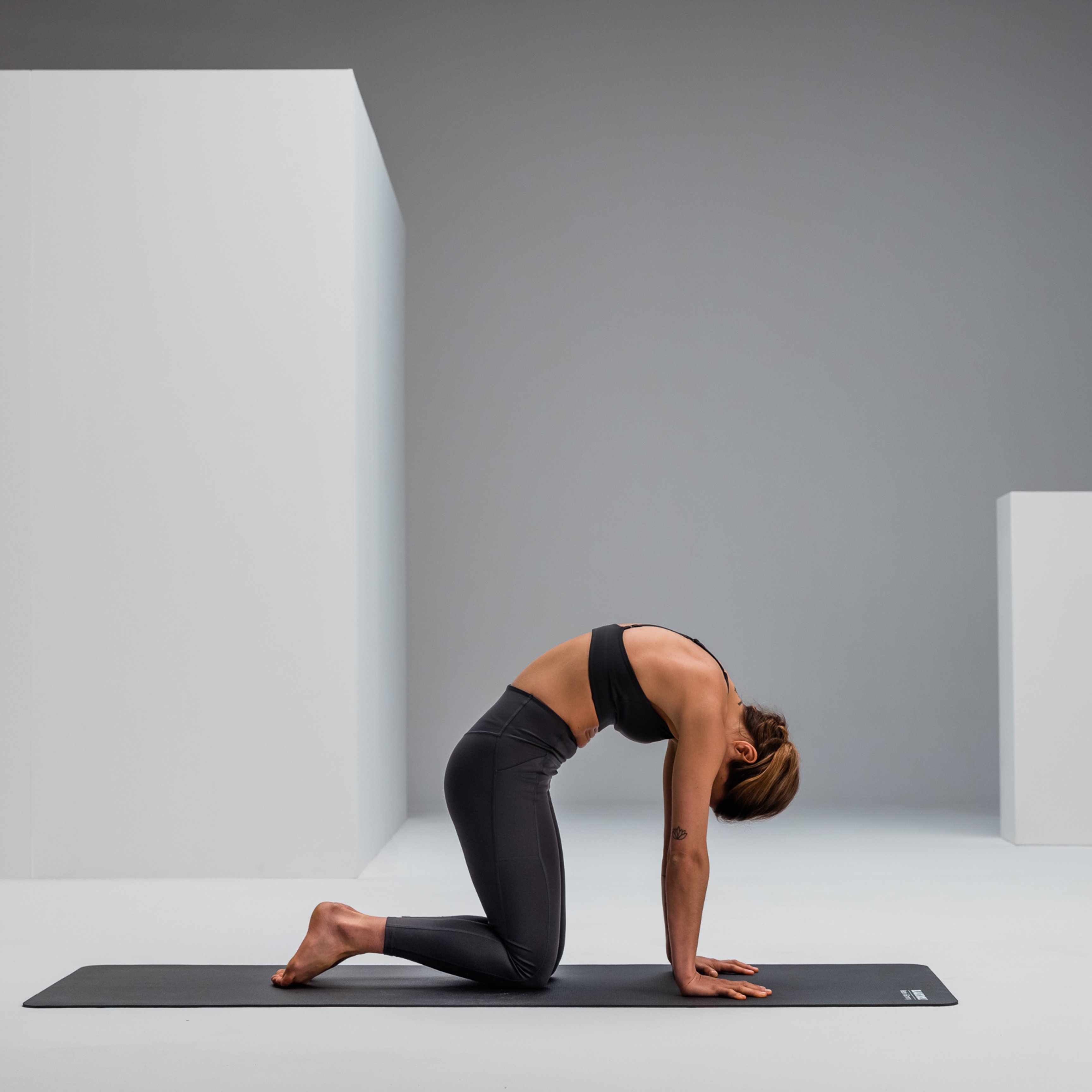
Cat-Cow Exercise
Start on your hands and knees. Arch your back like a cat, lower your head, and lift your tailbone upward. Take a deep breath, then straighten your back, lift your head, and lower your tailbone. Repeat this movement several times to gently stretch the fascia in your lower back.
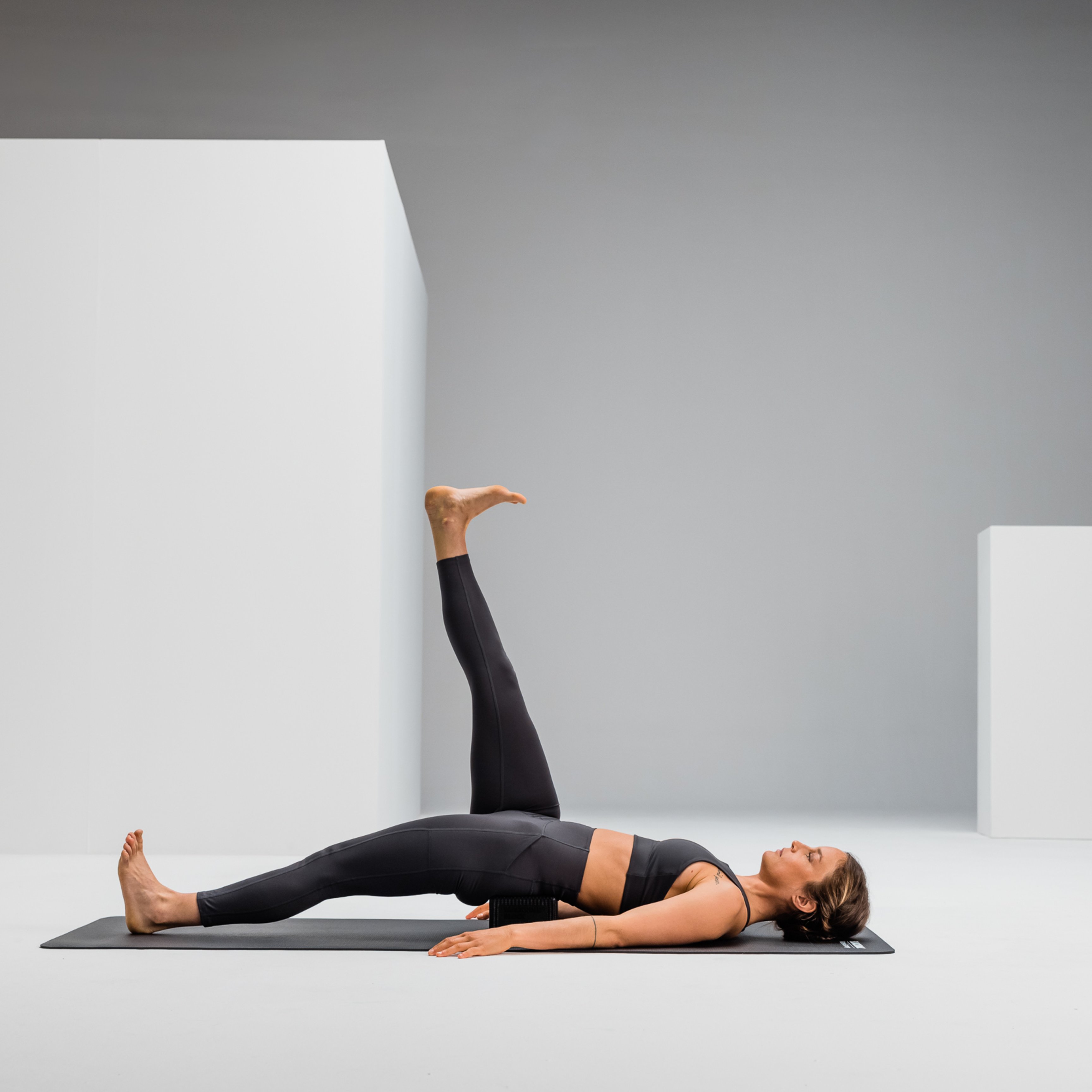
Hip Flexor Stretch
Lie on your back and place the BLACKROLL under your hips. Rest your arms at your sides. Place one leg on the floor with the knee bent. Now take deep breaths in and out. Hold this position.
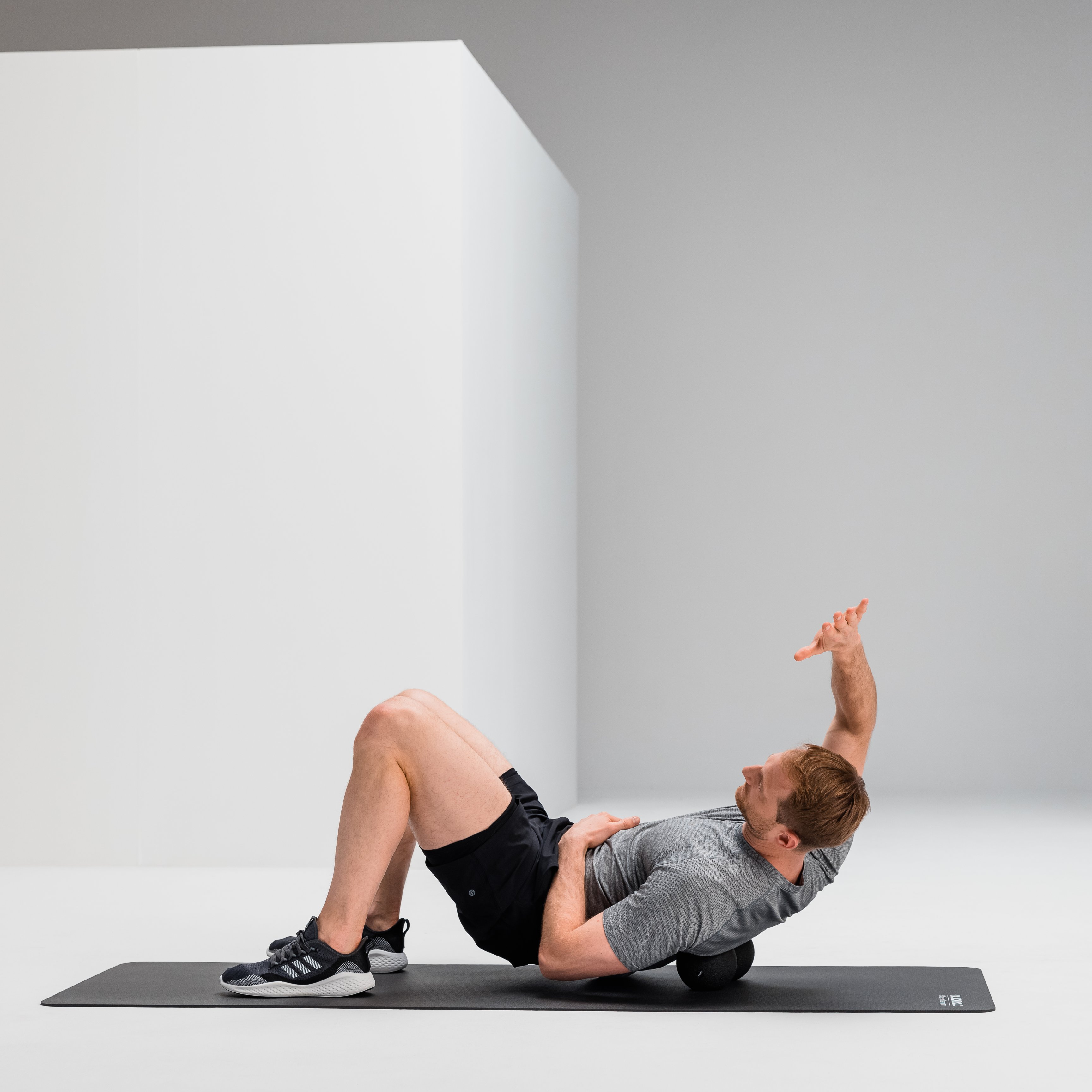
Back Mobilization
Start by lying on your back. Place the DUOFLEX under your back. Bend your knees and place your feet flat on the floor. Cross your arms over your chest. Lift your hips off the floor. Extend your right arm over your head. At the same time, tilt your upper body to the left. Feel the stretch in your right side.
Helping You Maintain a Healthy Back
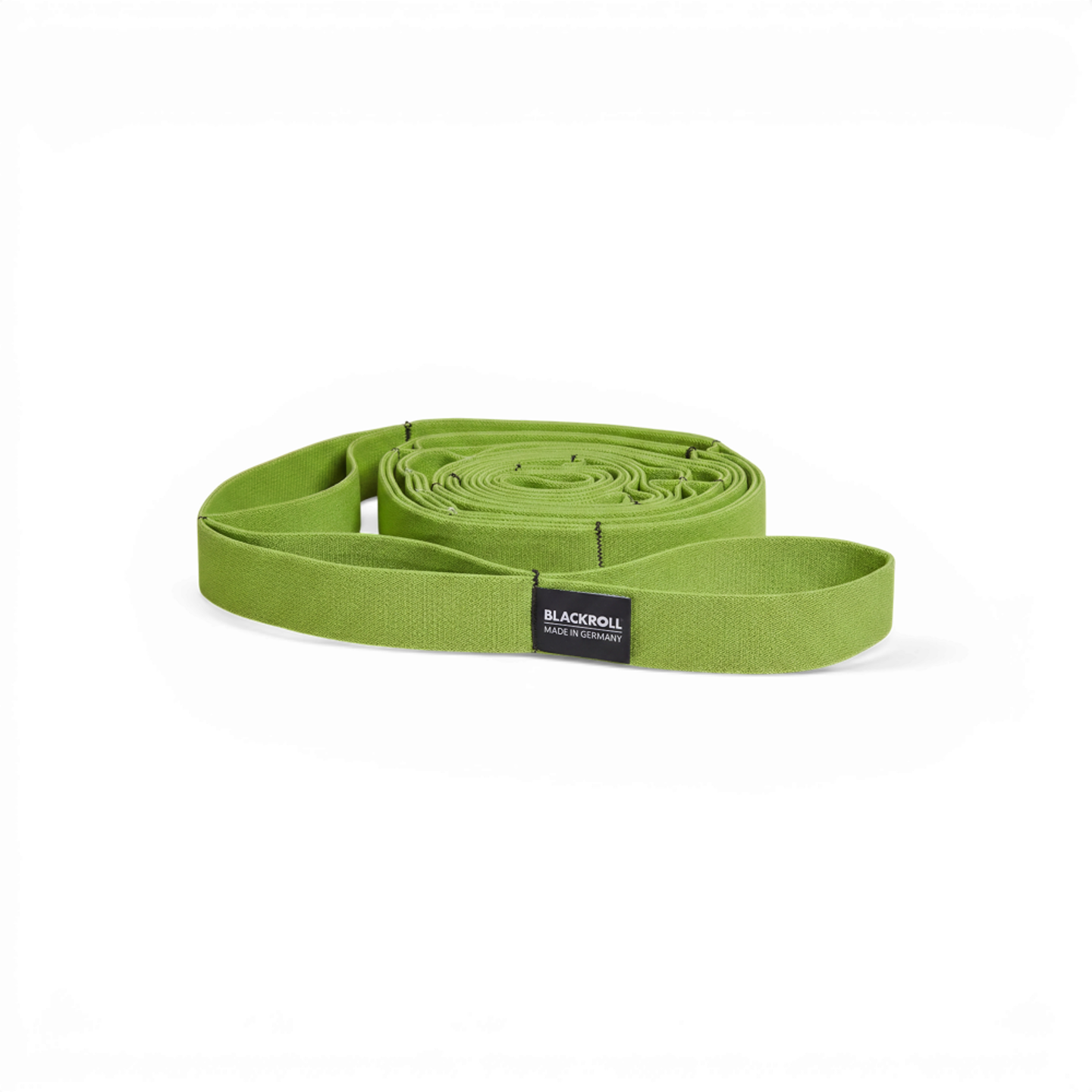
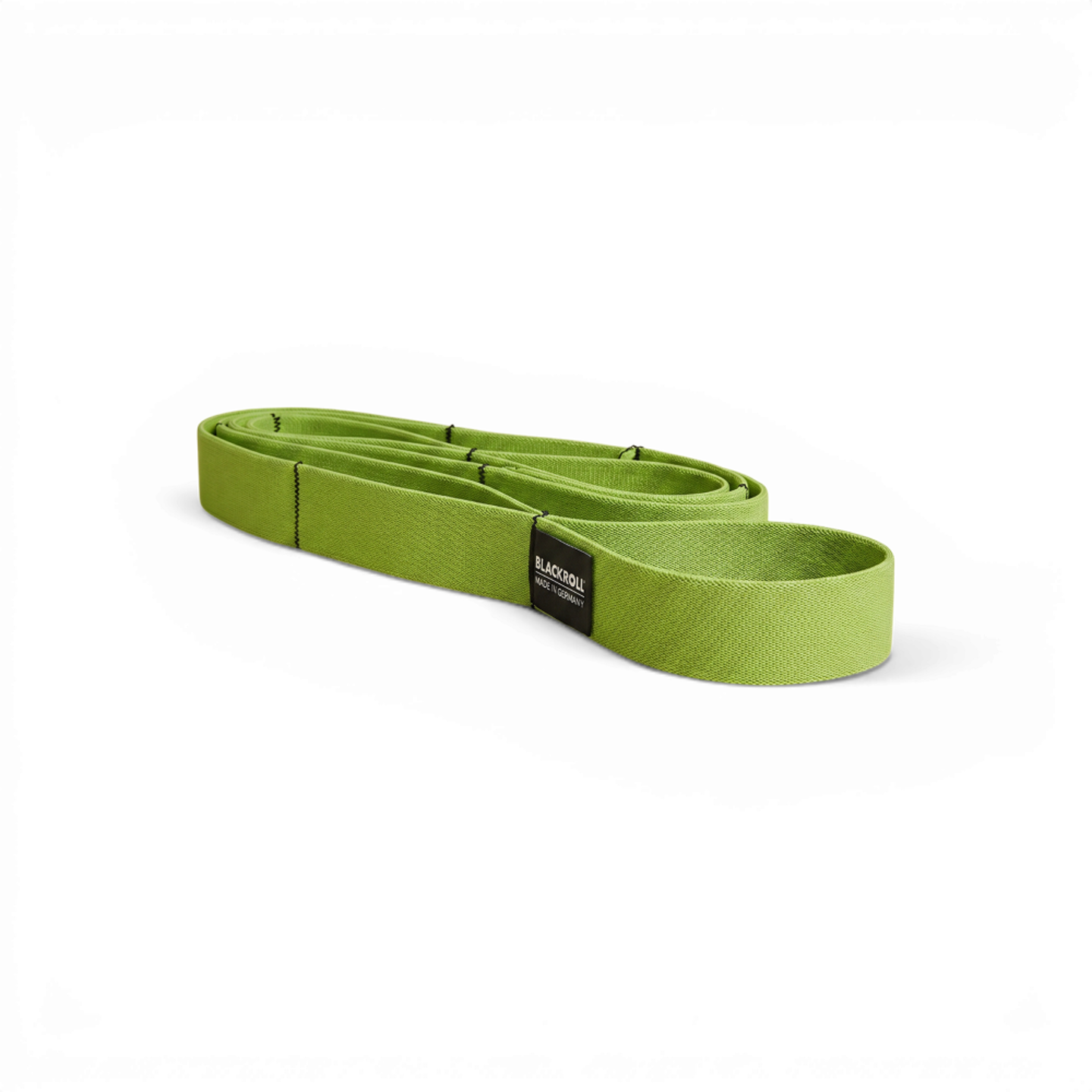
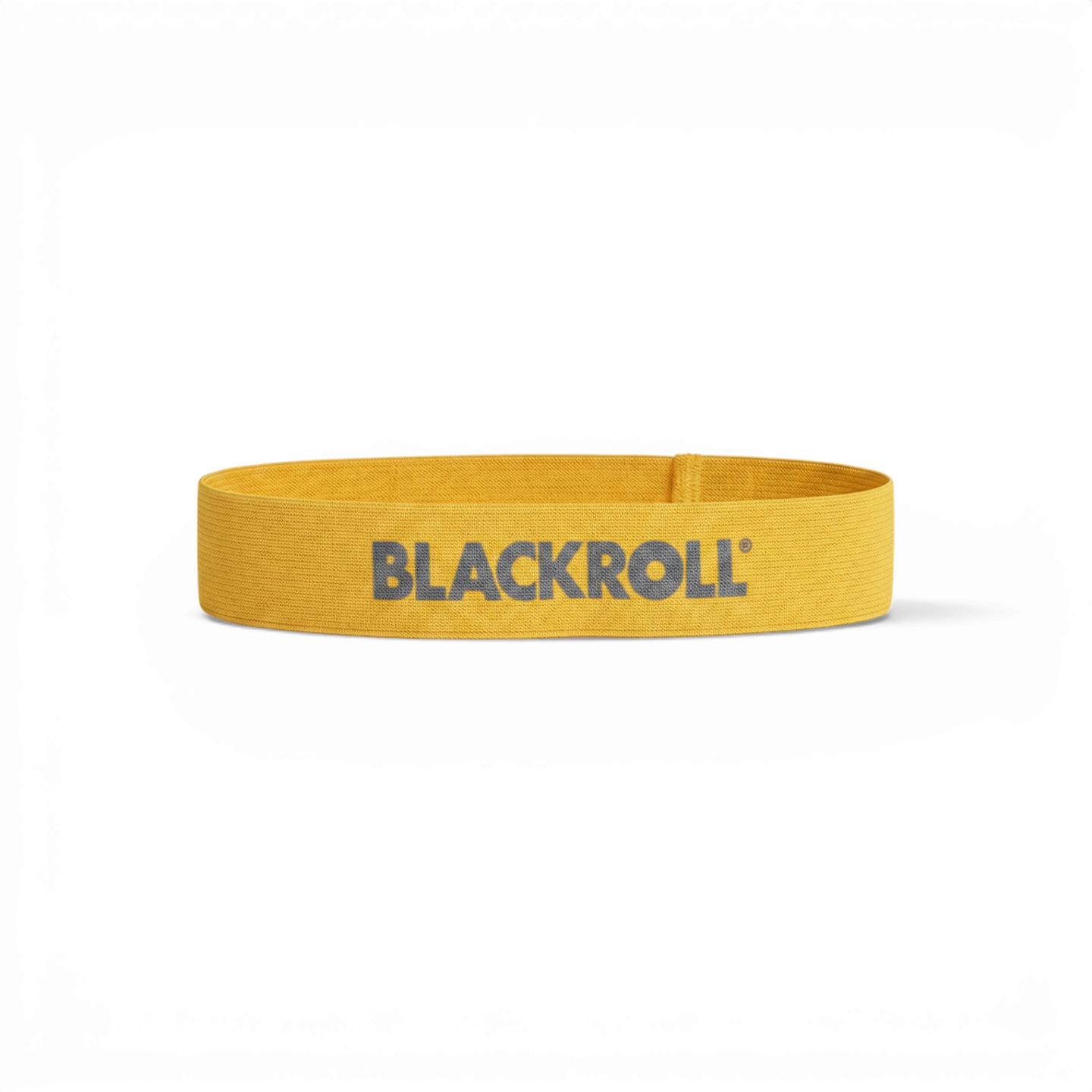
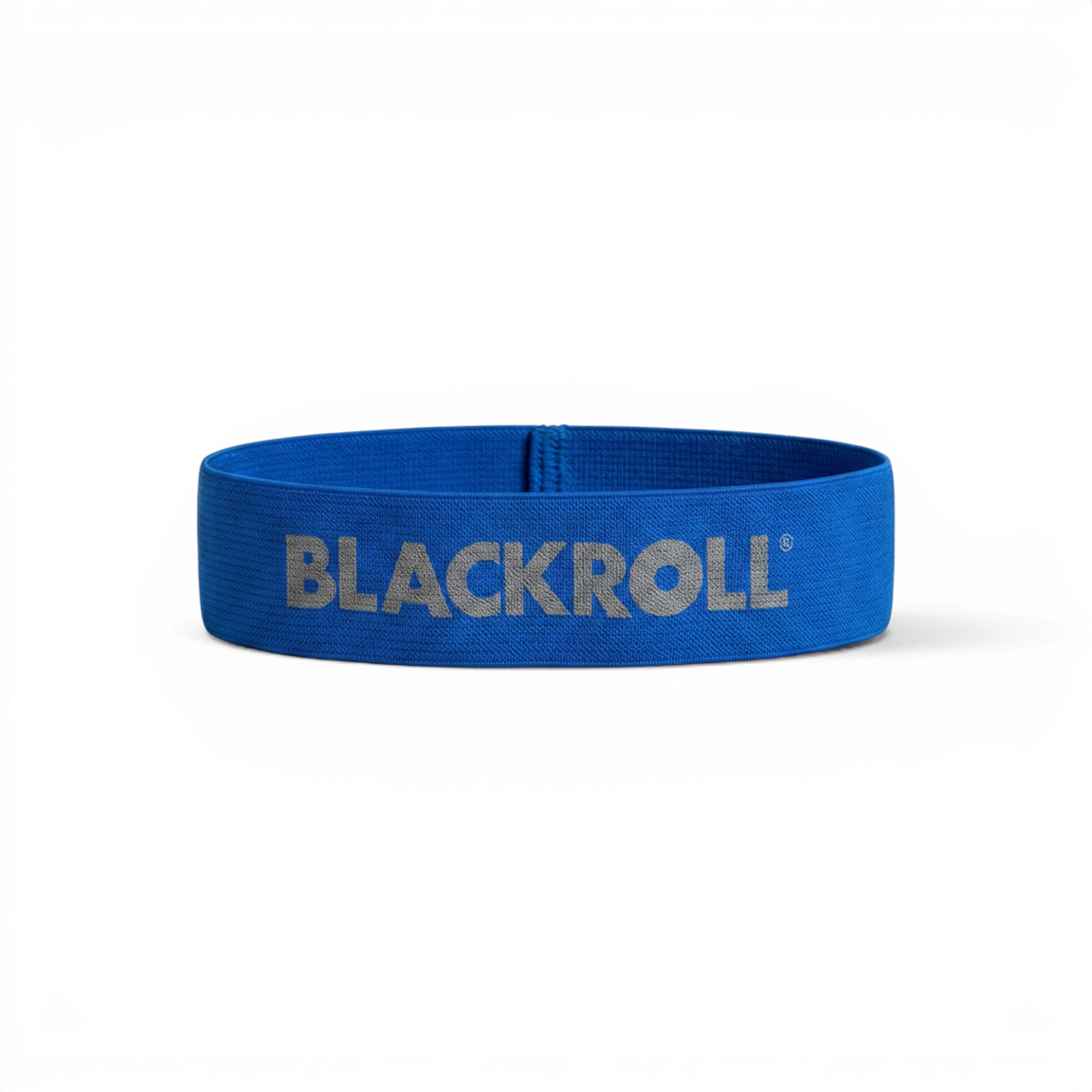
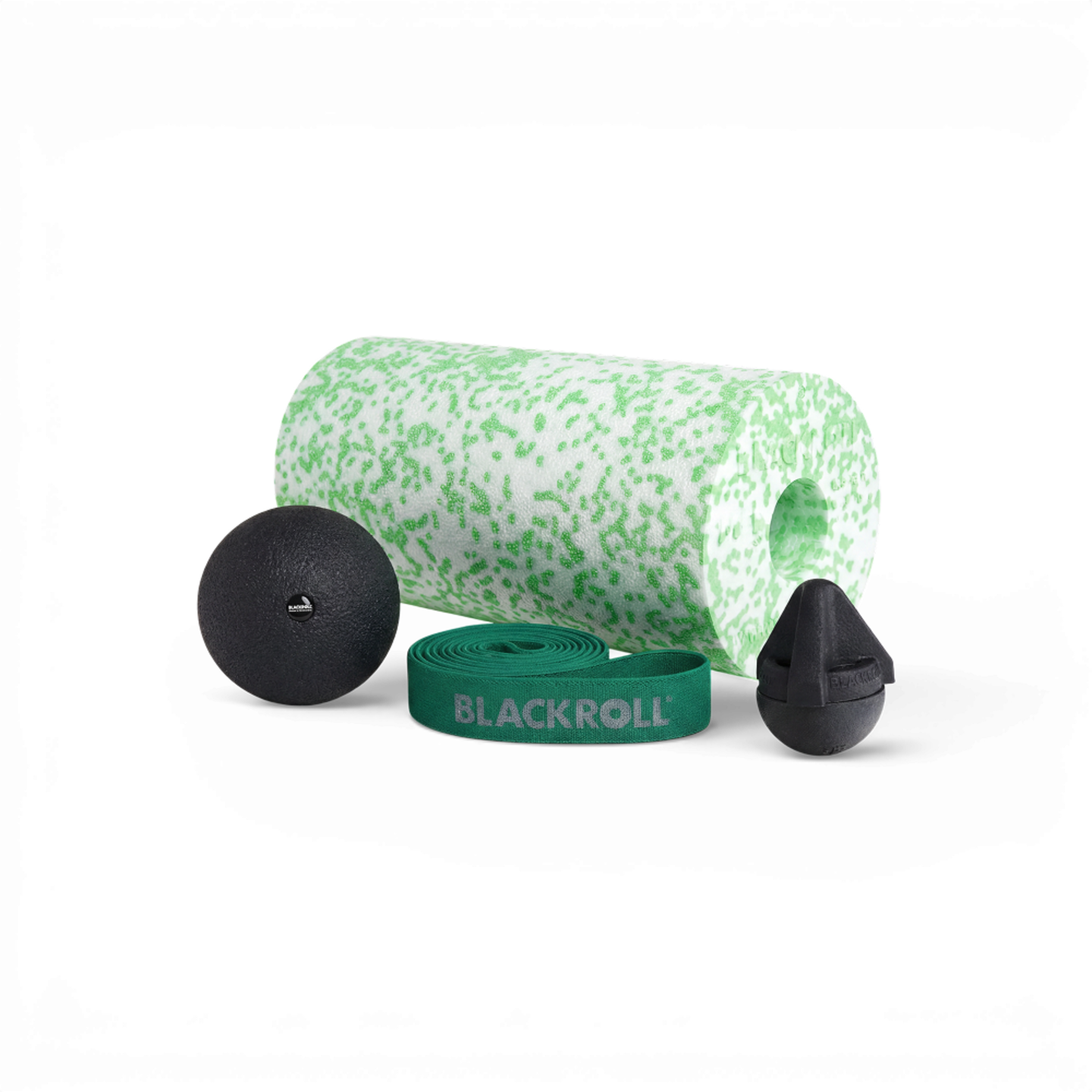
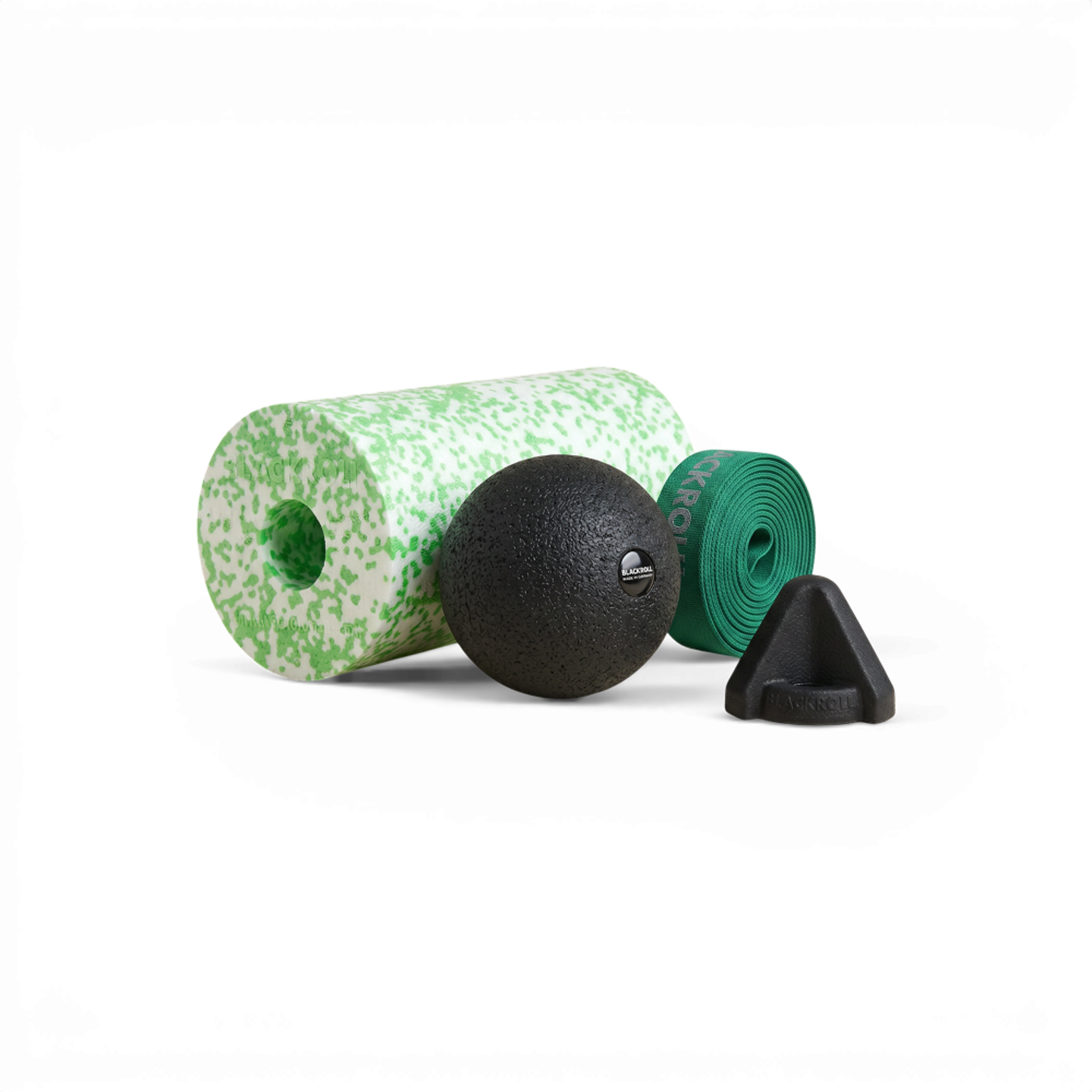
Loop Band
Available in multiple variants
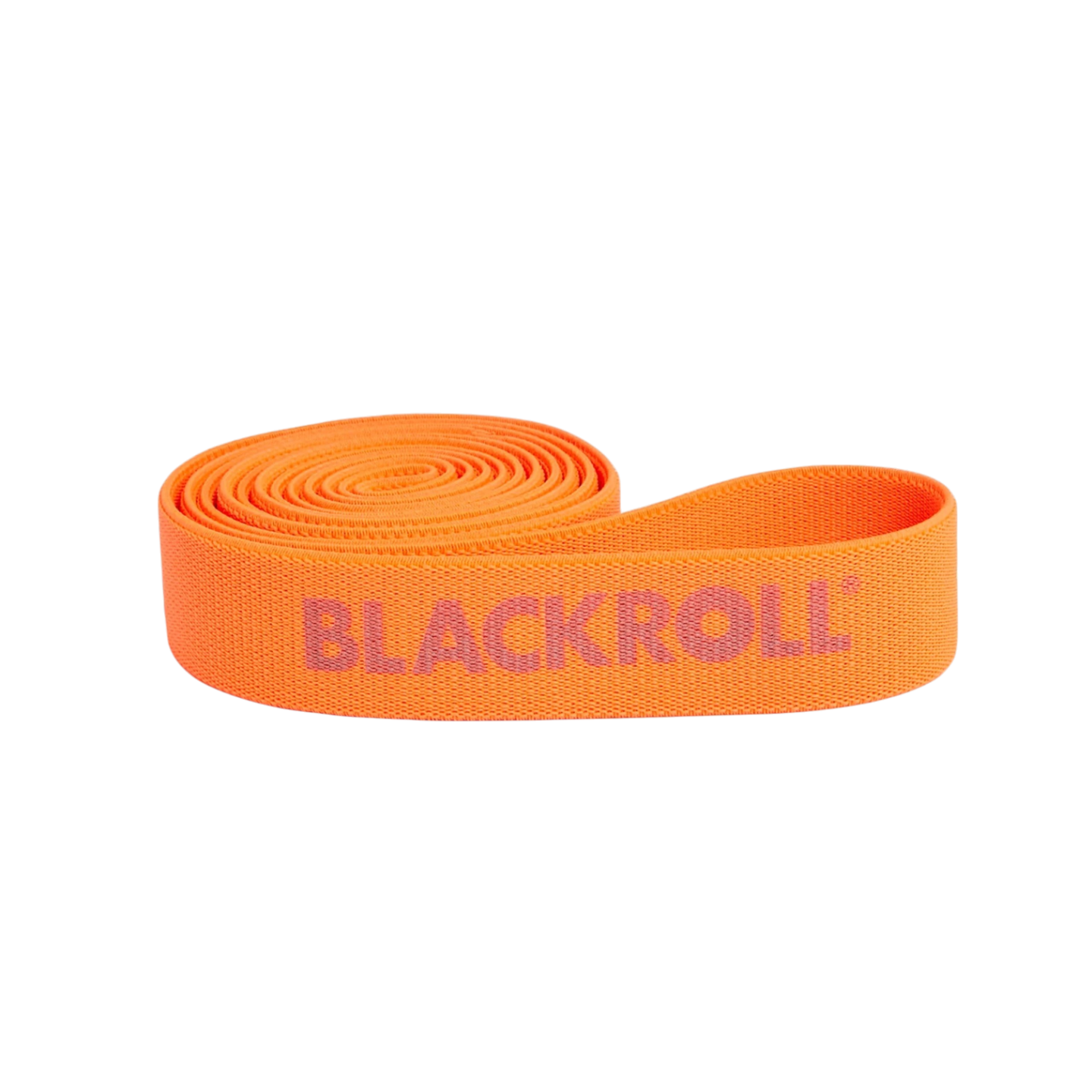
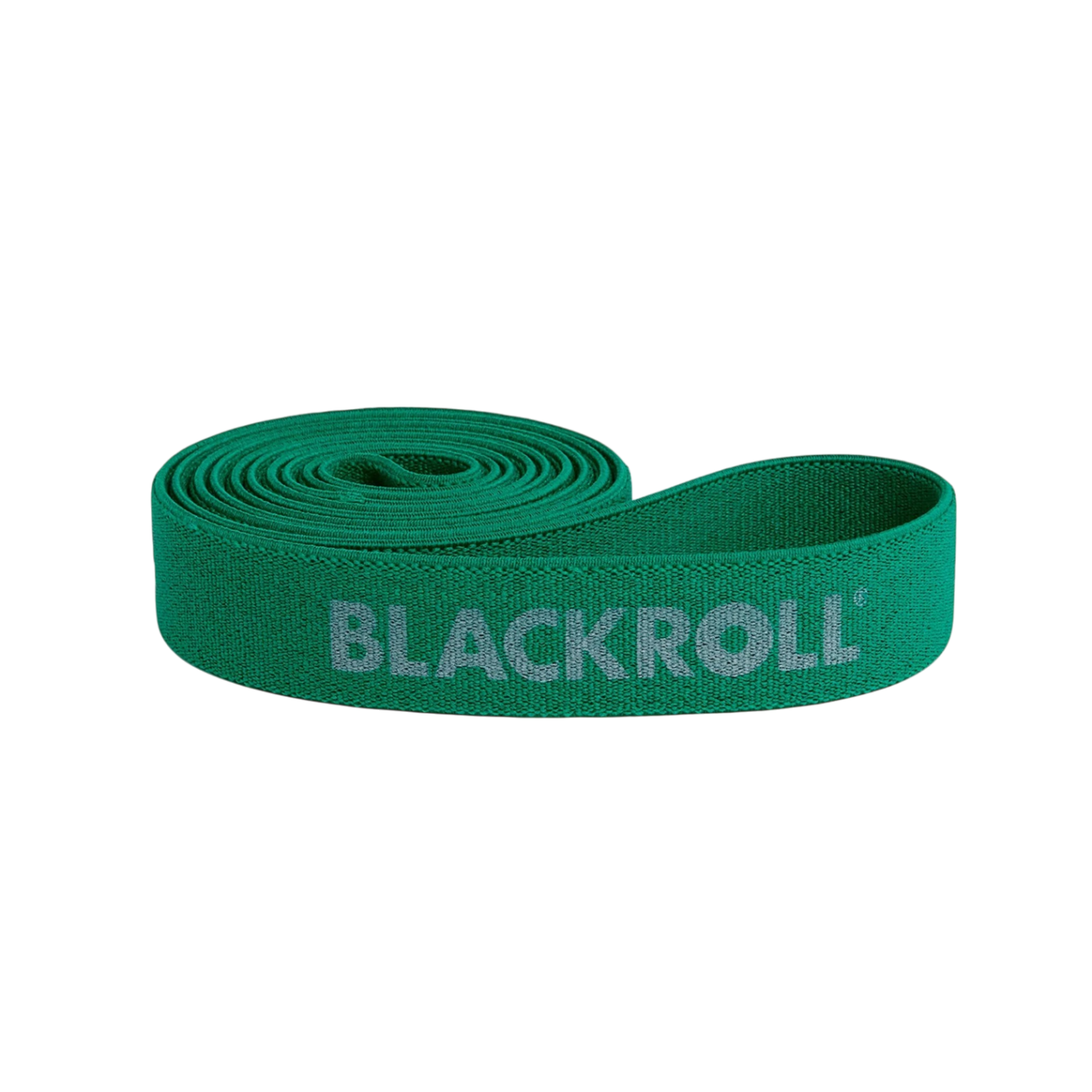
Super Band
Available in multiple variants
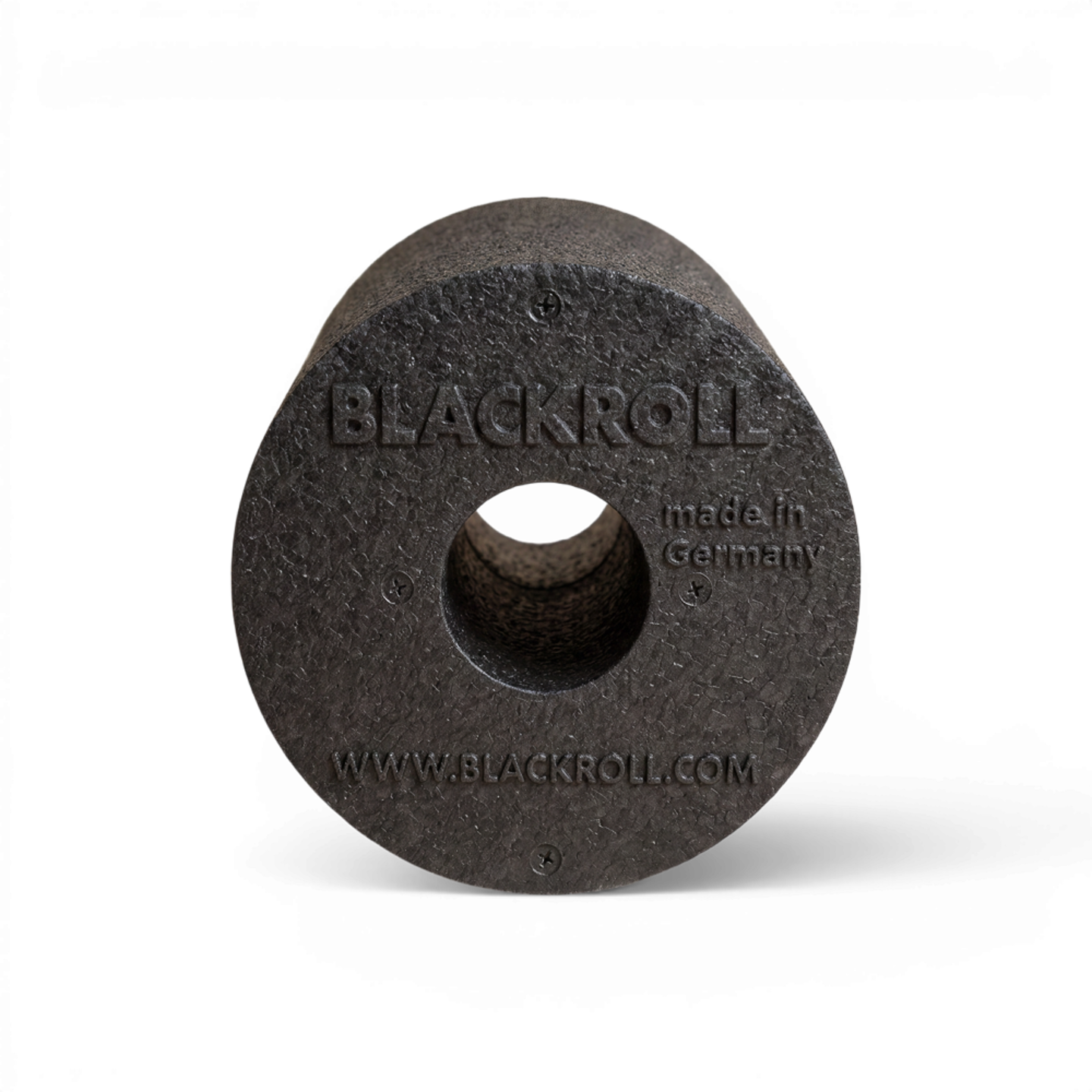
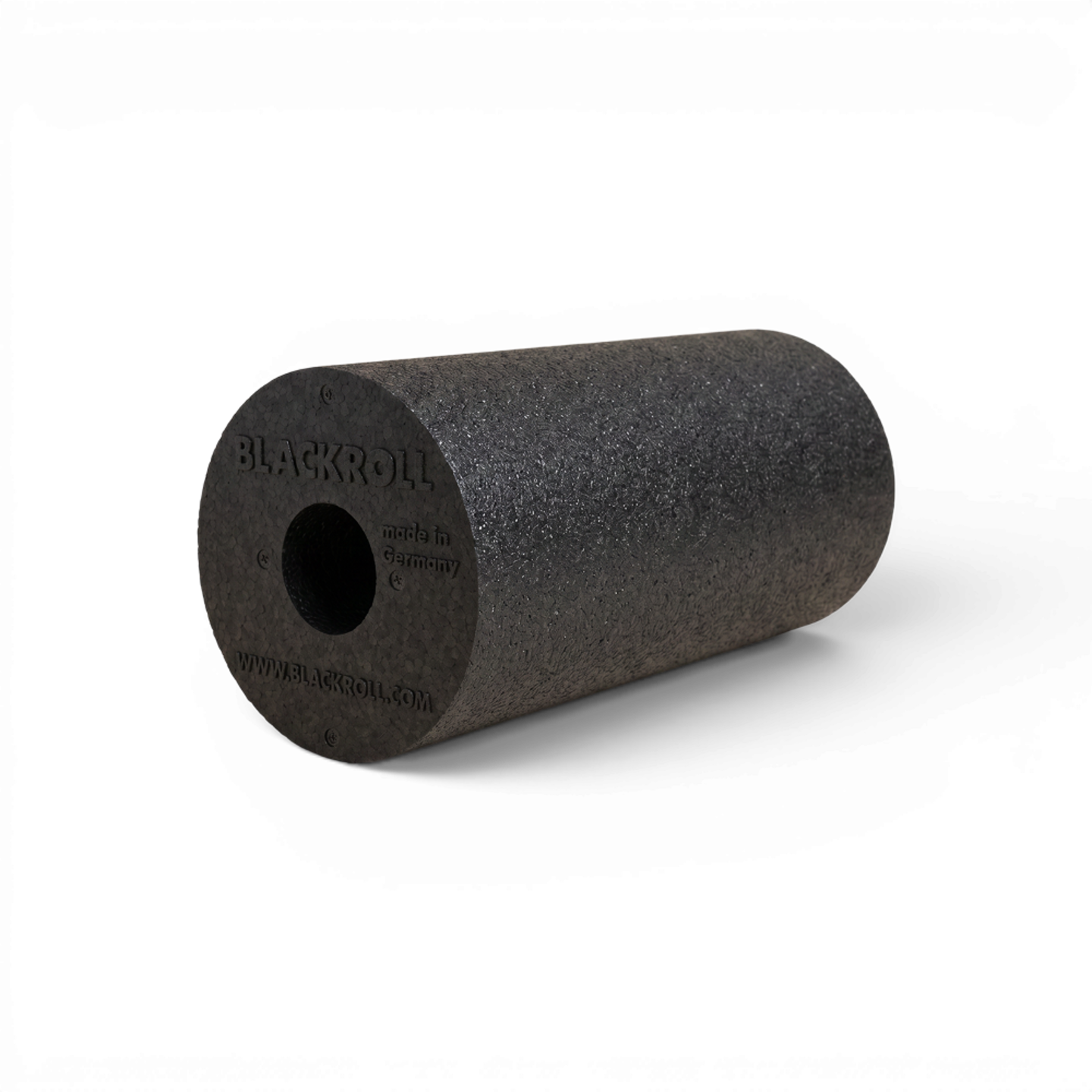
Standard
Available in multiple variants
Spinal Mobilization
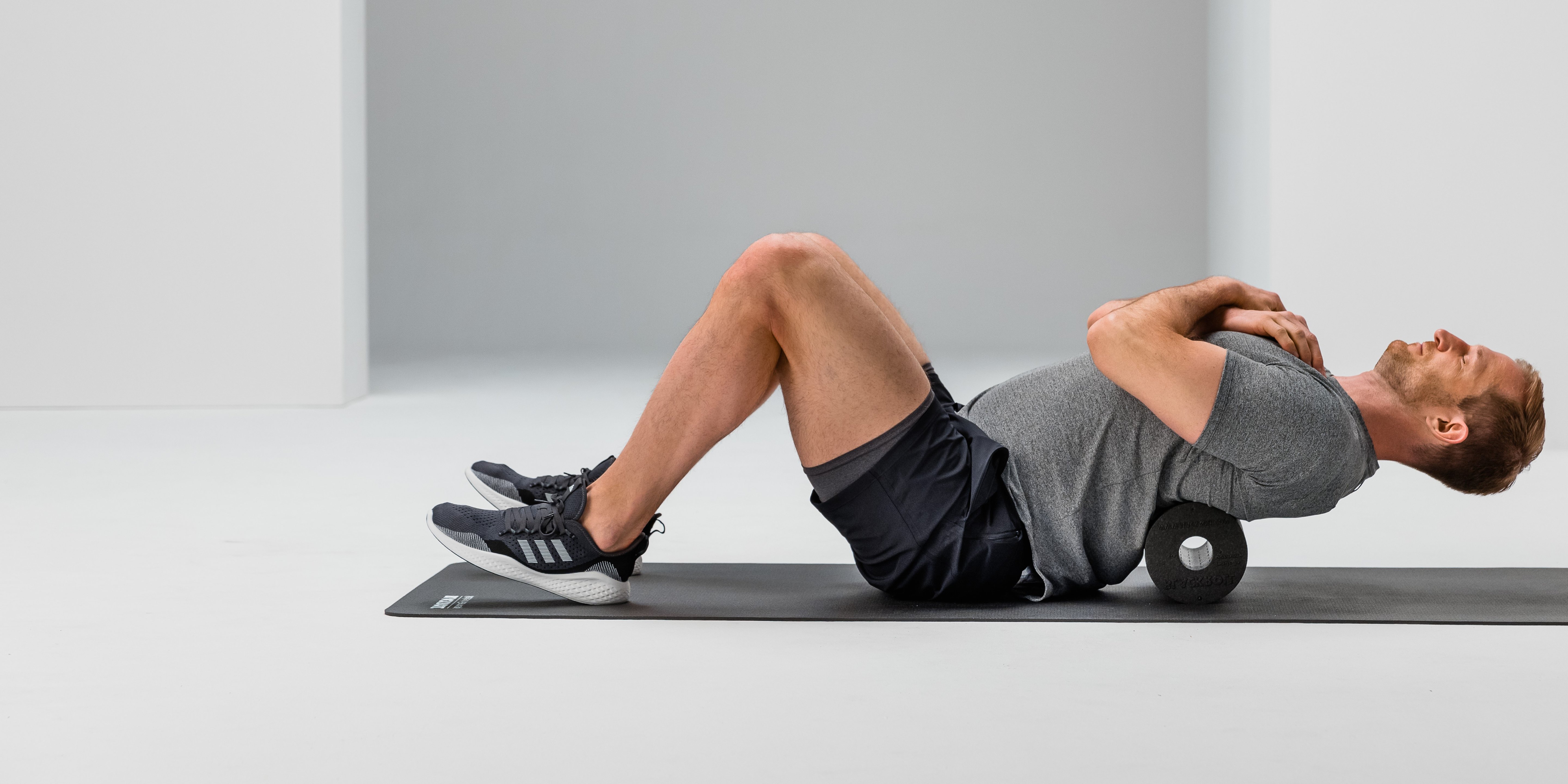
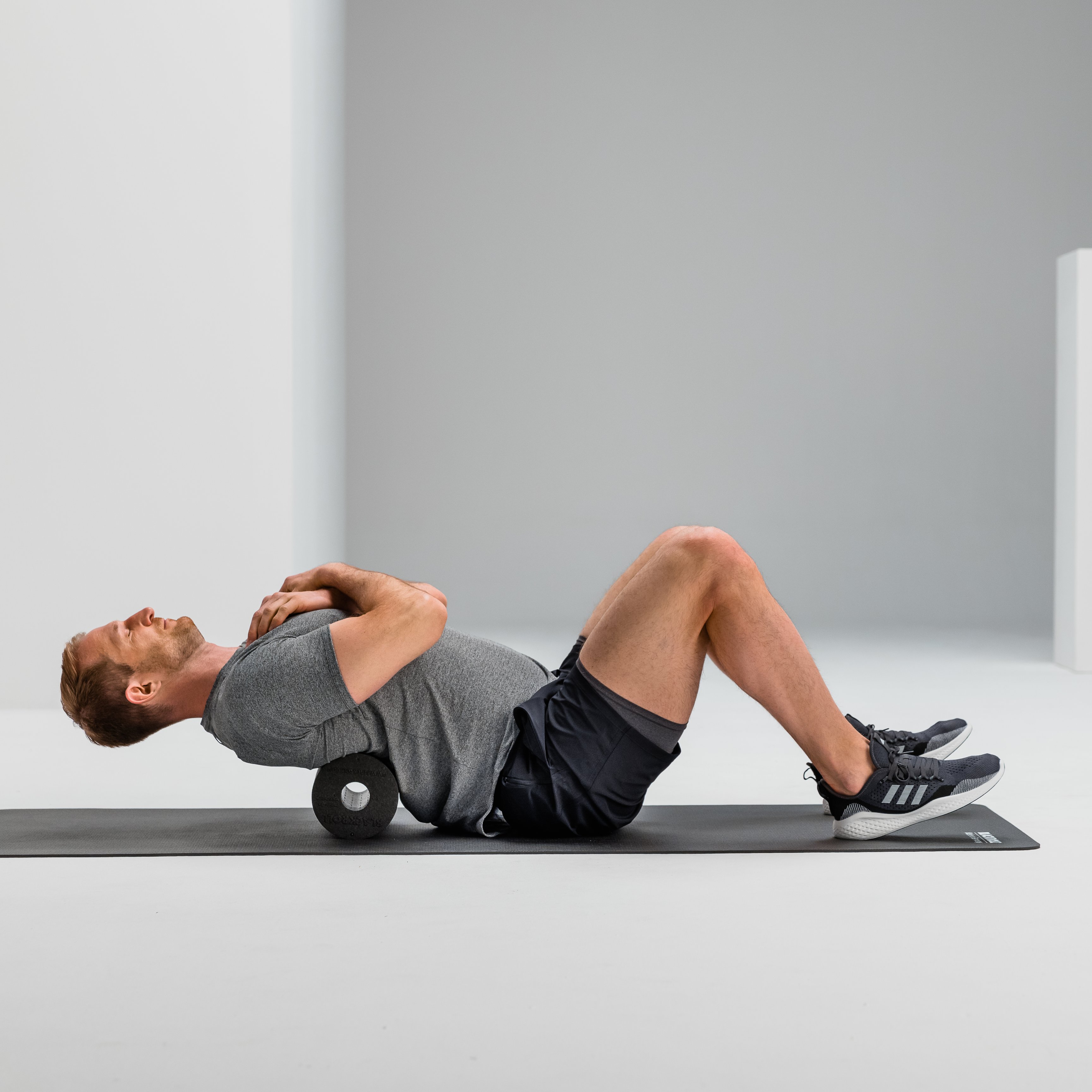
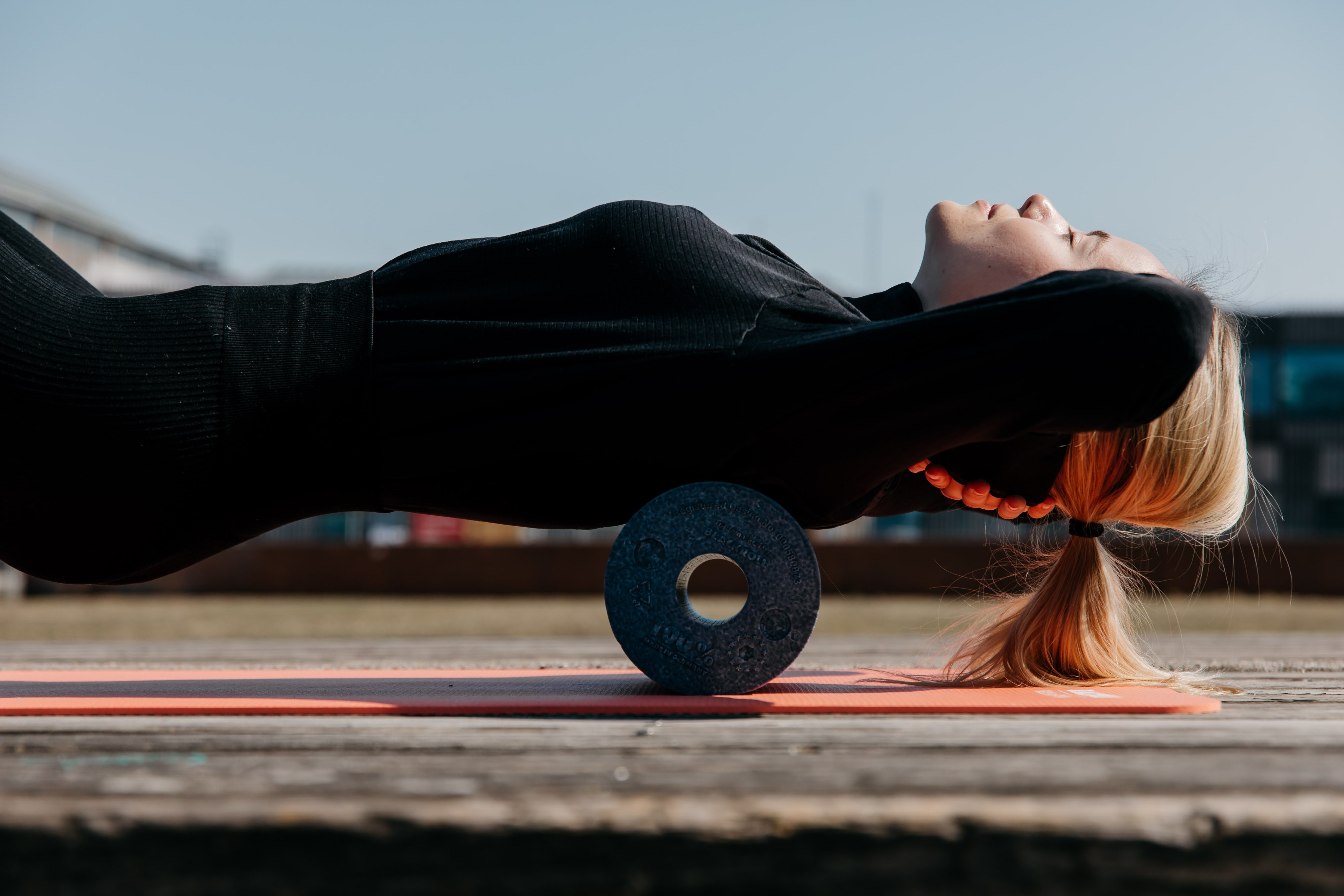
Start by lying on your back. Bend your knees and place your feet flat on the floor. Position the BLACKROLL beneath your shoulder blades. Slowly lower yourself into a hollow back position.
To make the exercise more intense, stretch your arms above your head.
Be sure to perform these exercises slowly and in a controlled manner, and listen to your body. Start with a gentle stretch and increase the intensity as needed. Regular stretching can help improve flexibility and relieve potential discomfort in the lower back. However, if you suffer from chronic back pain, you should consult your doctor or physical therapist before starting a new stretching program.
Relieving Tension in the Lower Back
If you suffer from tension in your lower back, you’re not alone—many people struggle with back pain, especially in the lumbar spine. Common causes include muscle tension, lack of exercise, prolonged sitting, or stress. Poor posture in daily life, uneven strain, or problems with the sacroiliac joint (SIJ) can further exacerbate symptoms—in some cases even leading to a herniated disc.
Targeted back exercises help loosen the muscles around the spine, pelvis, and hips, promote mobility, and improve blood circulation in the lower back. With the right movements, we activate the back muscles, relieve pressure on the buttocks, legs, and upper body—and thus effectively alleviate pain.
It’s also worth looking a little higher up: restrictions in the thoracic spine (T-spine) can directly affect the lumbar spine. This makes it all the more important to regularly mobilize the thoracic spine and release blockages.
Here, we’ll show you some simple exercises you can do right at home—all you need is a DUOBALL.
Get started now with our Master Trainer Stefan:
Stretching and relieving pressure on the lumbar spine with everyday exercises
Targeted relief for the lumbar spine in everyday life is crucial for preventing tension, restricted movement, and back pain. Especially if you sit a lot or experience one-sided strain, it’s important to regularly incorporate movement and targeted exercises into your daily routine.
Here are some simple yet effective strategies for at home and on the go that help relax the lower back, activate the muscles, and improve mobility:
- Get up regularly: During sedentary activities, stand up briefly every 30 minutes, take a few steps, or do some simple mobility exercises—this stimulates blood circulation and prevents tension in the lower back.
- Strengthen your core: Exercises like planks strengthen the deep core muscles and thereby relieve pressure on the lumbar spine—a key component of back health.
- Lift properly: When lifting heavy loads, always bend your knees, keep your back straight, and keep the weight close to your body. This significantly reduces the strain on your lower back.
- Walking: Regular walking boosts circulation, activates the back muscles, and helps gently mobilize the lower back—ideal as an active counterbalance to sitting.
- Swimming: Gentle on the joints and effective—swimming works out the entire body, strengthens the back, and relaxes the muscles at the same time.
- Breathing & Stretching: Breathing techniques combined with gentle stretching exercises promote relaxation, release tension, and support recovery in the lower back.
These everyday measures are easy to incorporate into your routine and make a valuable contribution to preventing back pain—especially in the lumbar spine.
The following two exercises are also great for stretching your lumbar spine; you can do them with or without the BLACKROLL® STANDARD:
Spinal Mobilization
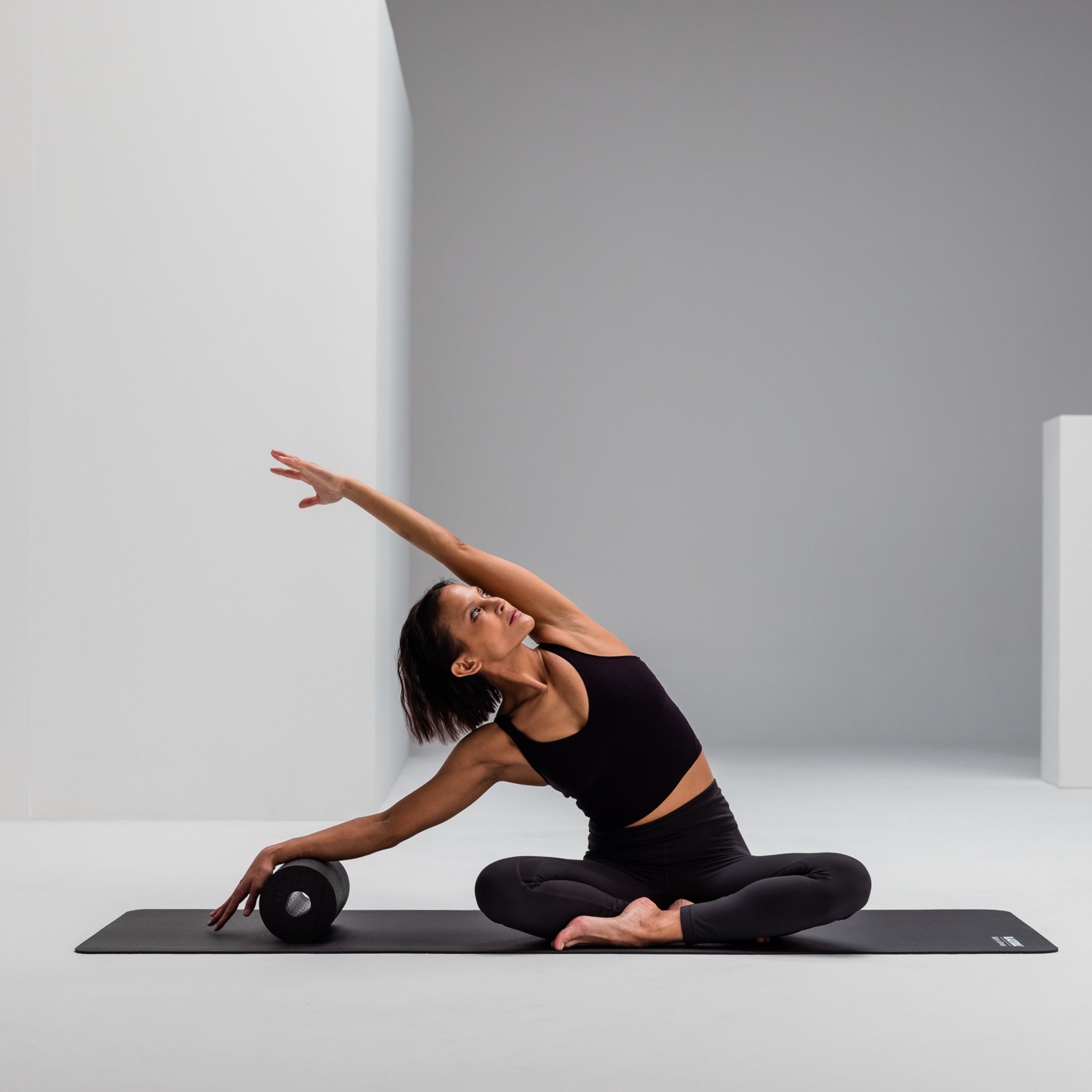
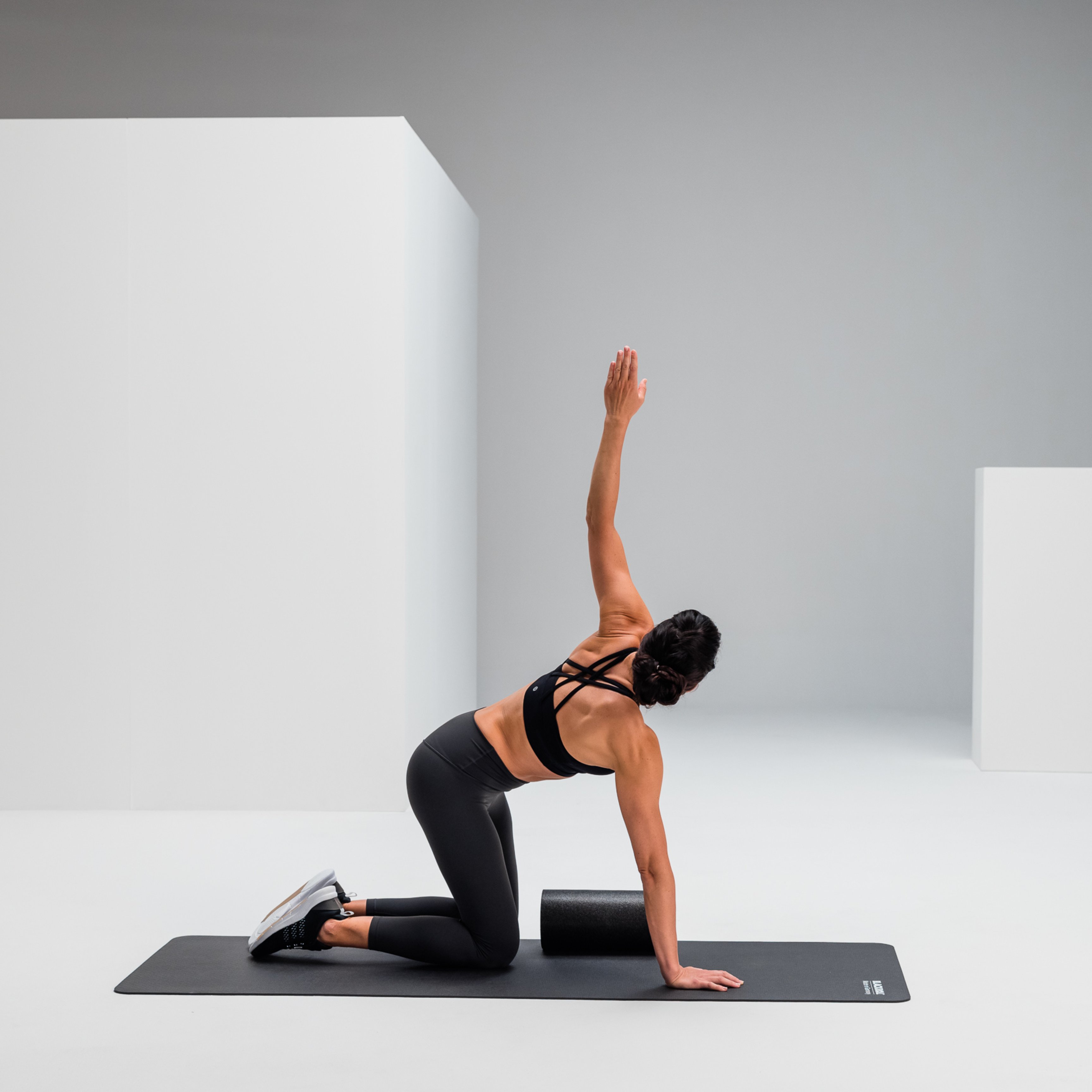
Start in a cross-legged position. Place the BLACKROLL to your right. Place your right hand on the roller. Stretch your left arm over your head while leaning your upper body to the right. Hold this position before switching sides. During this exercise, your upper body should only perform a lateral bend. Make sure you don’t tilt forward or backward.
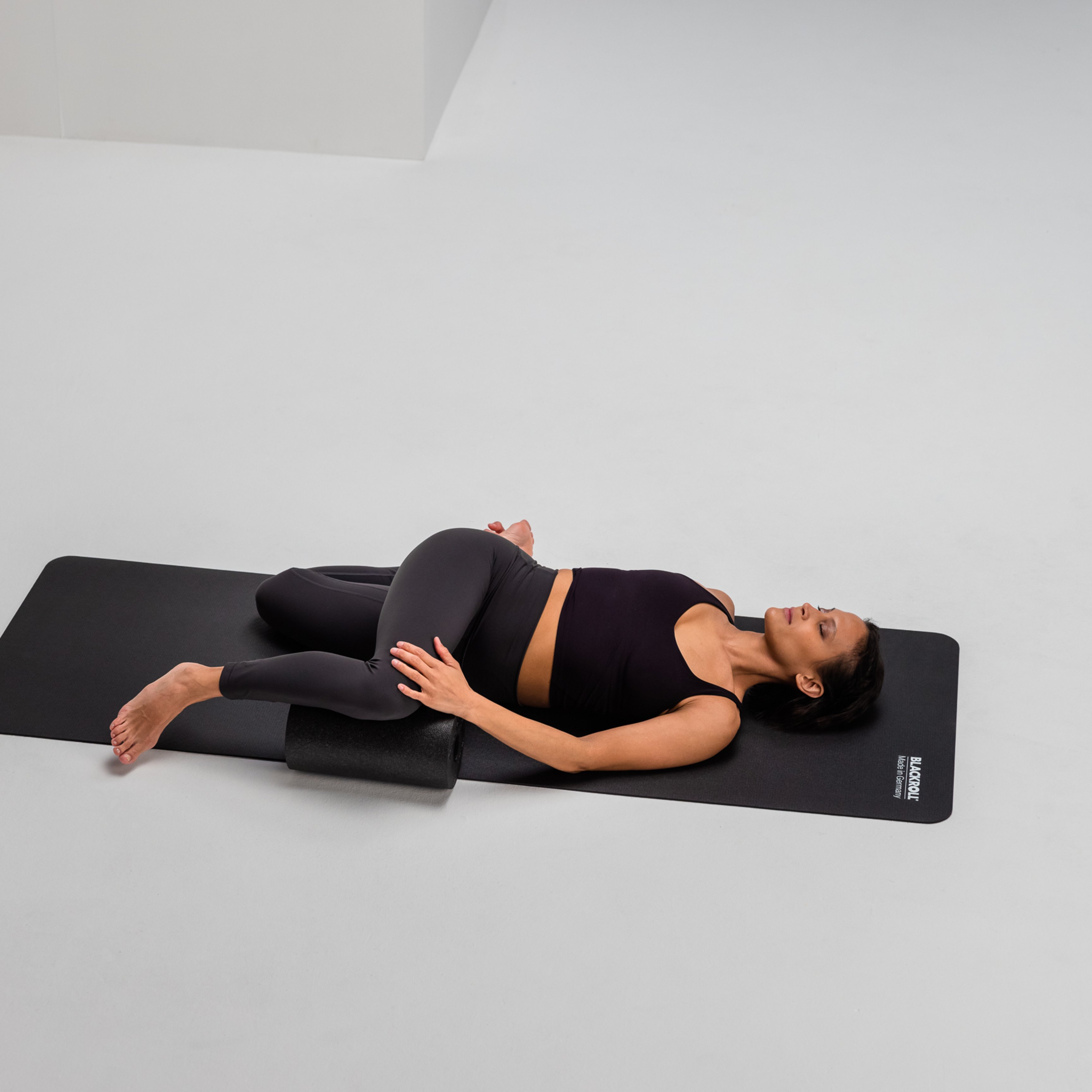
Pretzel
Start in a side-lying position on the floor. Bend the knee of your top leg to 90 degrees. Place the BLACKROLL under the bent knee to stabilize your pelvis for the following mobilization. Bring your bottom leg into active hip extension. Grab the back of your foot to increase the stretch. Try to rest your entire upper back on the floor. Make sure your upper leg does not leave the BLACKROLL. Your other leg should remain in full hip extension throughout the entire exercise.
It’s important to perform these exercises regularly to achieve long-term relief from lower back tension. Start slowly and, above all, make sure you’re performing the exercises correctly. It’s best to set aside enough time for this.
Reasons to Strengthen Your Lower Back
Strengthening your lower back and building up the muscles in that area is important for several reasons:
- Pain prevention: A strong lower back can help prevent or alleviate back pain and discomfort. Weak muscles in this area can lead to tension, stiffness, and pain.
- Improved stability: Strong lower back muscles contribute to the stability of the spine. This can help prevent back injuries and strain during everyday activities.
- Posture and Body Alignment: Well-developed lower back muscles help maintain healthy posture. This can distribute the load on the spine and reduce the risk of postural problems.
- Range of motion: A strong lower back allows for greater range of motion and flexibility. This is especially important for performing daily tasks more easily and preventing injuries during physical activities.
- Core Support: The lower back is part of the core, which forms the center of the body. Strong core muscles are crucial for stabilizing the body during various movements and activities.
- Prevention of Disc Problems: Strong lower back muscles can help relieve pressure on the intervertebral discs and reduce the risk of herniated discs.
- Overall Physical Performance: A strong lower back contributes to overall body strength. This can improve performance in sports and daily life.
Lower Back Strengthening
Strengthening the lower back is essential for a strong lower back. Here are three sample exercises for you.
Perform each exercise for 12–15 repetitions and 2–3 sets.
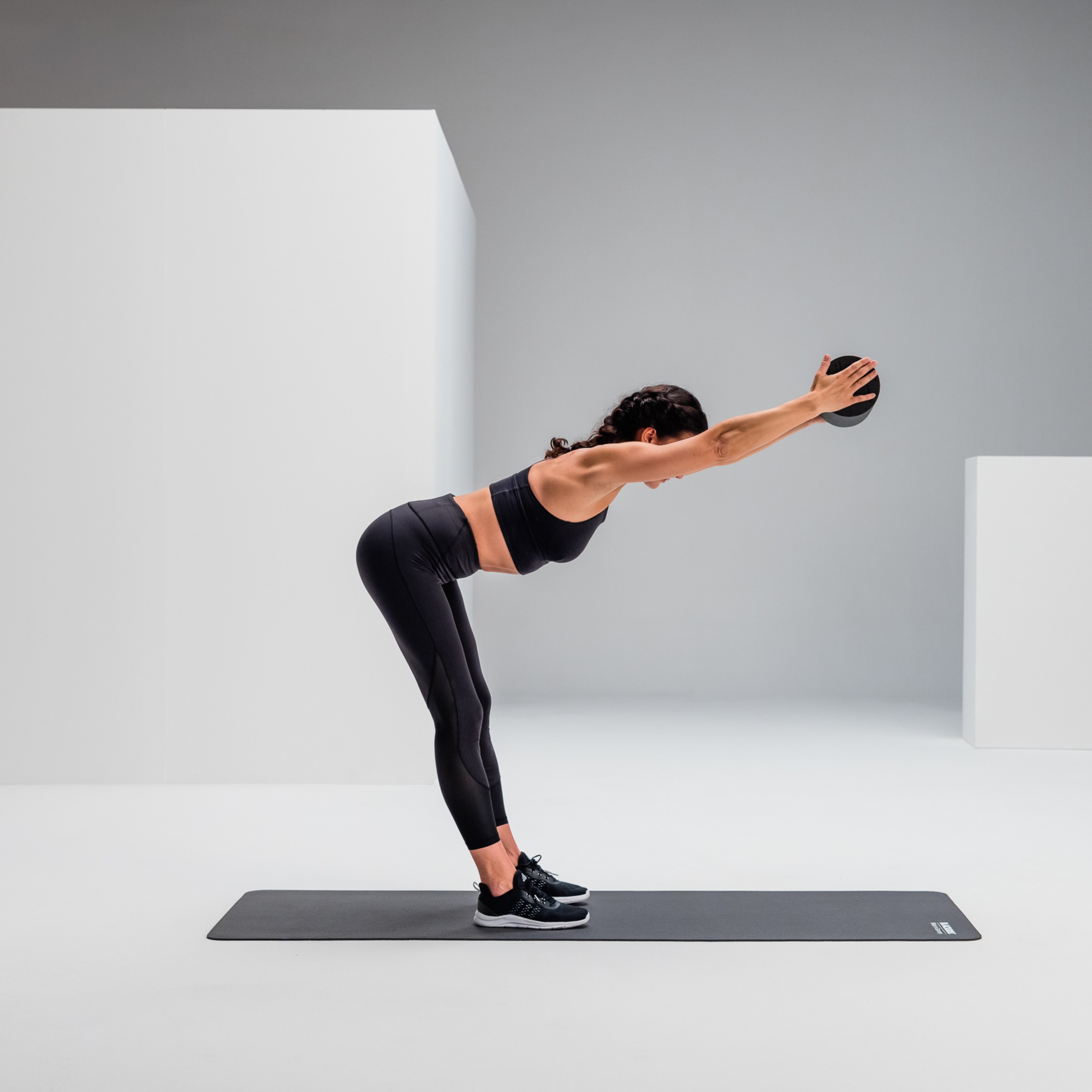
Good Mornings
Start with your feet shoulder-width apart. Keep your knees slightly bent. Hold the BLACKROLL between your hands, which are extended overhead. Push your pelvis back. Lean forward while keeping your back straight. Return to the starting position.
Bend your upper body forward until you feel a stretch in the back of your thighs.
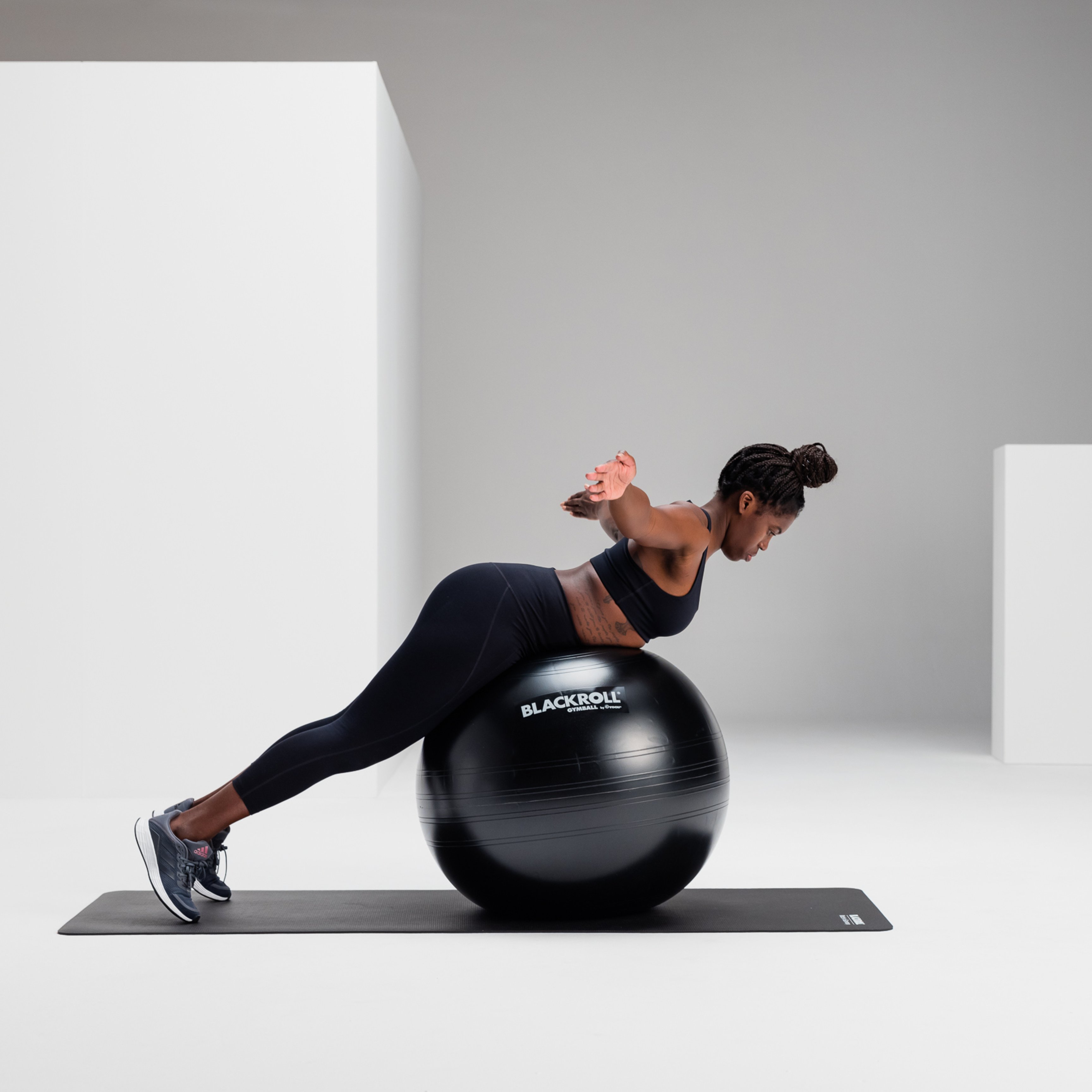
T-Arm Raises
Lie face down on the GYMBALL. Keep your feet on the floor. Raise your arms straight out to the sides and lower them again. Hold the tension for a moment at the end of the upward movement.
Superman
Lie face down on the GYMBALL. Keep your hands and feet on the floor. Alternately lift one arm and the opposite leg. Try to keep your torso as still as possible.

Table Position
Start on all fours. Place the BLACKROLL® between your hands and knees. Rest your left arm on the roll beneath your body. Rotate your thoracic spine as far as possible. Bring your arm back, rotate in the opposite direction, and extend your arm toward the ceiling. Then switch sides.

We’ve created a special exercise routine for you with more exercises to strengthen your lower back.
Lower Back Workout


