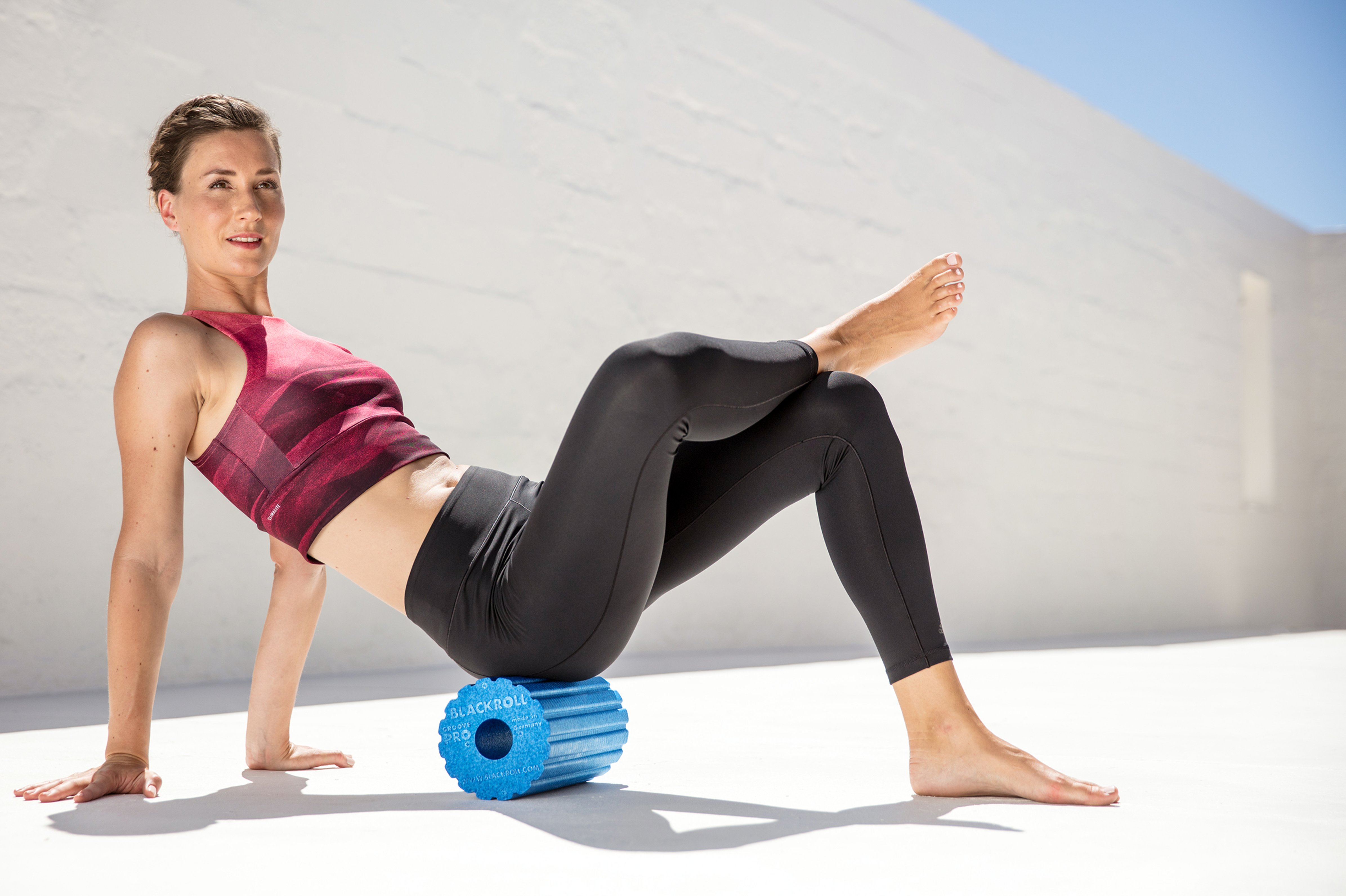
Is training with a foam roller dangerous?

We’ll explain what’s behind the criticism of fascia training.
It’s the many positive effects that make fascia training—or, more specifically, foam rolling—so popular. It’s a quick and easy way to improve your mobility without having to limit your athletic performance. It enhances mobility and flexibility, speeds up recovery, reduces pain, and can not only help you relax but also lower muscle tone.
There are also promising study results indicating improved recovery, arterial function, and better intrafascial glide. To date [as of December 6, 2023], 114 studies on foam rolling have been published in international journals worldwide. Based on this, we at BLACKROLL® have been training instructors and therapists in fascial training since 2014 and have been in constant dialogue with the scientific community for years, which has led to an ongoing reevaluation of our training content as well as the expansion of our product range.
Mistakes in fascia training with the BLACKROLL occur time and again. These typical mistakes are often made unconsciously—but they are precisely what can slow down your progress or even lead to more tension. In the following video, we reveal 5 key misconceptions that many people have when rolling and show you how you can easily avoid them.
Because of these unfortunately common mistakes, the fascia roller is sometimes labeled as dangerous. Statements such as “The pressure during fascia training is dangerous for the venous valves,” “Fascia training has no structural effect on the fascia tissue,” or “Training with a fascia roller is a health hazard” are typical examples of criticism directed at fascia training. In this article, we’ll take a closer look at the criticism of fascia training and examine its actual effects based on current research to dispel any doubts.
First things first: You can’t get something for nothing. If you don’t stick with it, you won’t achieve long-term results:
“If mobility is measurably improved, use it. If you gain hip extension, use it. If you gain shoulder flexion, use it.”
Gray Cook
In the context of foam rolling, this quote from the well-known physical therapist means that if you’ve improved your mobility by using a foam roller, you should continue to use it right away. Otherwise, you may unfortunately lose those gains and won’t be able to improve your posture or alleviate your pain in the long term.
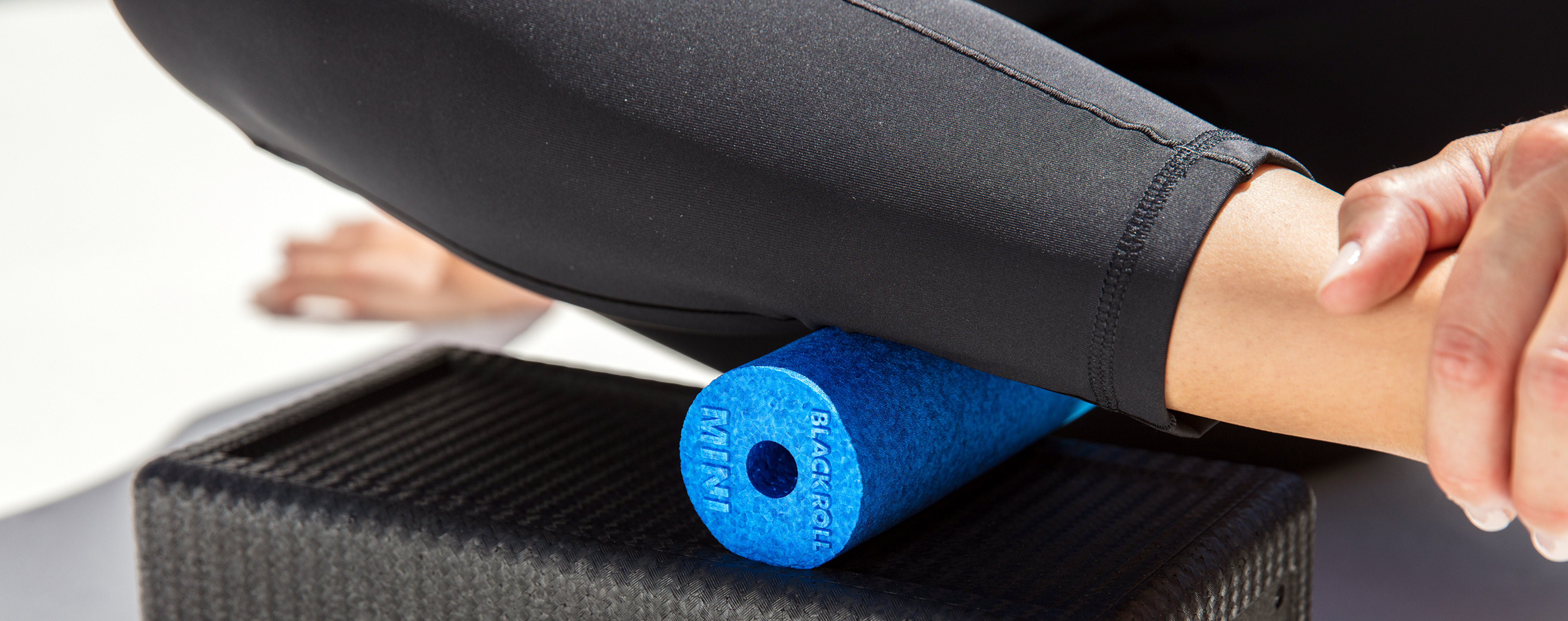
8 important points
onthe topic Foam Rolling
01. Comparing Foam Rolling and Static Stretching in Terms of Improving Mobility
Foam rolling leads to improved flexibility. There is broad consensus on this among experts. The most comprehensive and high-quality study on this topic was conducted by Scott W. Cheatham in his 2015 “Systematic Review.”
According to current research, traditional stretching and fascia training are nearly identical in terms of the gains in flexibility they provide. However, there is one major difference with static stretching that can have a negative effect on your body. It lies in neuromuscular performance—specifically, the excitability of the muscle fibers in the stretched muscles is significantly reduced. This leads to poorer athletic performance immediately after stretching. And that’s exactly not the case with fascia training.
Conclusion: You can achieve a comparable improvement in flexibility in the same amount of time without reducing your neuromuscular performance. A real game-changer for you and all other athletes!
There is still uncertainty regarding the long-term effects of fascial training alone, and the results are contradictory. For example, a study involving active soccer players examined eccentric exercises combined with fascia training to improve ankle joint mobility. The acute effects after 30 minutes were comparable for both interventions, while only the eccentric exercises showed an improvement in the long-term effects (4 weeks after the standardized training protocol).
These results contradict those of a two-month study of a group of 37 active and healthy women who were divided into a control group and a fascia training group. Both groups trained twice a week, with the difference being that the fascia training group subsequently supplemented their training with a fascia training program. After two months, this group demonstrated significantly better results on the Functional Movement Screen (FMS), while the control group showed no improvements whatsoever.
Of course, these are preliminary findings based on small groups of participants, and further studies are needed to draw definitive conclusions.
Nevertheless, we can say that foam rolling is most beneficial when combined with other exercises or interventions.
There is still no consensus on the physiological effects underlying the improved range of motion (ROM). According to Scott W. Cheatham et al. (2015), the increased flexibility is attributable to viscoelastic (i.e., high deformability despite very firm tissue) and thixotropic (i.e., increased viscosity of the surrounding fluid due to greater cross-linking of the fascia) changes in the fascial tissue. This, in turn, is said to result in improved gliding between the fascial layers. This hypothesis was confirmed in 2017 by Wilke’s research, but the effect requires further investigation (de Souza et al., 2019). And very importantly: This result must not be confused with an actual structural change in the superficial fascia itself, which is too resilient to be affected by foam rolling.
According to Kelly and Beardsley (2016) and de Souza et al. (2019), the most plausible explanation is that the increased flexibility has an effect on the central pain modulation system. The constant, strong pressure could “overload” the fascial receptors, which could lead to a minimization or even complete inhibition of the stretch receptors. As a result, the “neural” block would be overcome, and the central nervous system would allow for a greater range of motion. This reduced pain perception has already been observed in several studies, e.g., Aboodarda et al. (2015) or Cavanaugh et al. (2017).
02. Foam Rolling and Performance Enhancement
Criticism has arisen that foam rolling does not improve the user’s performance immediately after use. Fascia training definitely makes you more flexible without reducing your strength output. This is a clear advantage, even if it doesn’t lead to an immediate increase in performance after use. Studies were conducted to determine whether foam rolling limits output simply because self-massage lowers muscle tone at rest and increases range of motion. More information on this topic is available here.
03. Fascia Training and Improved Recovery
A meta-analysis of 21 studies found a significant reduction in subjective pain perception. Furthermore, the effects on measured flexibility were again positive; improved arterial function and increased activity of the parasympathetic nervous system were also observed. These are clear indications of systemic relaxation and are therefore very beneficial for recovery.
These results may also refute the claim that fascia training does not promote recovery and instead tends to exacerbate pain and muscle soreness.
What is the mechanism behind the reduced pain perception?
This has not yet been sufficiently clarified. A current hypothesis, loosely based on Kai Hill et al., 2014; Macdonald et al., 2014, suggests that exercise-induced muscle soreness is primarily associated with connective tissue damage and inflammatory reactions.
During the acute inflammatory response, the osmotic pressure within the tissue increases, exerting pressure on the surrounding nociceptors (pain receptors) and can thus lead to the painful reactions following intense muscle work.
One explanation for the positive effect following fascia training: In general, rolling stimulates the exchange of substances between cells. This can help facilitate the removal of metabolites.
Our example demonstrates that foam rolling after intense muscular and neural exertion can lead to significantly faster recovery: In a small pilot study involving 20 men experienced in strength training, all participants were divided into a foam rolling group (n=10) and a control group (n=10). On different days, both groups performed a 1 RM back squat workout as well as a 10 x 10 back squat workout. The foam rolling group showed significant improvements in subjective muscle soreness (post 24, 48, 72). In addition, the vertical jump height (post 48) was significantly better than that of the control group. A clear result, even though the study group was very small.
04. Fascia Training and Proper Rolling
When foam rolling, you shouldn’t just roll in one direction— feel free to roll in both directions: forward and backward, crisscrossing back and forth. The key is applying the right amount of pressure and rolling at a moderate speed. The many positive study results on this topic speak for themselves and dispel any uncertainties regarding the direction of rolling. There are no scientifically proven side effects associated with foam rolling or the direction of rolling.
It’s also particularly important to always pay attention to your body’s signals. The key lies in self-awareness: by listening to your body, you can optimally adjust the intensity and duration of your rolling to your individual needs.Consistency also plays a major role in fascia training. It’s best to incorporate it into your daily routine, either as part of your warm-up before exercise or as a way to relax after physical exertion.
05. Foam Rolling and Blood Pressure
According to a recent study, elevated levels of NO (nitric oxide) were observed following fascia training. The increase in NO was therefore considered positive, as it correlates with a reduction in blood pressure.
In addition, it was found that the heart rate variability (HRV) of these individuals increased—a clear indication of the relaxing and positive effects of foam rolling on the body and overall health. However, due to the small sample size, fascia training cannot yet be touted as the latest method for lowering blood pressure. Nevertheless, the results are once again very promising and extremely positive.
This discovery underscores the importance of foam rolling as a supportive element for cardiovascular health. Although fascia training was originally used to improve muscular flexibility and relieve muscle soreness, it also shows potential positive effects on the cardiovascular system.
06. Foam Rolling and Blood Circulation
According to renowned fascia researcher Dr. Robert Schleip, very positive effects can generally be demonstrated regarding blood flow and fascia training. For example, a 2014 study published in the Journal of Strength and Conditioning Research showed that the concentration of nitric oxide in the blood plasma of the study participants was elevated after foam rolling. Nitric oxide relaxes blood vessels and makes the vessel walls more elastic. It also prevents blood platelets from clumping together; thus, the substance has a positive effect on blood flow. A number of medications, including Viagra, take advantage of nitric oxide’s vasodilatory effect. In their study, the scientists concluded that self-massage with the roller reduces arterial stiffness and improves endothelial vascular function.
Thilo Hotfiel et al. (2017) also contributed further very promising results with their study. Following self-massage (in which the outer thighs were rolled), arterial blood flow increased significantly.
The pressure exerted on your body by using foam rollers is also not harmful to the lymphatic system or the venous valves. After all, foam rolling is not performed statically but dynamically while moving. This limits occlusion (i.e., pathological blockage) to a minimal period during the entire session.
“Given the widespread use of foam rolling in the fitness sector, I find it strikingly surprising how few detailed reports there have been so far on negative effects in individual cases. We therefore suspect that the risk to the veins is significantly lower than that associated with air travel or long bus trips—certainly not higher.”
Dr. Robert Schleip, Head of the Fascia Research Group at the University of Ulm

07. Fascia rolling on the spine—dangerous?
Here at BLACKROLL®, we’re often asked whether using a foam roller on the spine is dangerous. The spine is a complex structure made up of vertebrae and intervertebral discs.
Based on our collaboration with many physical therapists and experts in sports science, we see no issues with using a foam roller on the upper back.The situation is a little different for the lower back. Since we don’t have the support of the rib cage here, significantly more pressure is exerted directly on the spine. The muscles often react with a protective tension, and we want to avoid this effect. There are special techniques we can use to treat the lower back more gently, but the classic method of rolling out the lower back is not recommended for many people.
If you want to target your lower back, you should consider a smaller fascia massage tool, such as the BALL 08 or a TRIGGER. With these tools, you can release tension in the lower back area.
Master Trainer Stefan shows you which exercises can help in the video “Exercises for Lower Back Pain.”
08. Myofascial Training and Contraindications
To ensure that fascia training always has a positive effect on your body, you should rule out any possible contraindications before you begin self-massage.
There are essentially three conditions that preclude the use of myofascial self-massage on the affected area. These three “hard contraindications” include:
- Redness
- Swelling
- Acute pain
These conditions occur in nearly all acute traumas and illnesses, such as fresh injuries. In the initial phase of recovery, inflammation levels are very high. Rolling on severely inflamed areas can worsen the condition. Using the BLACKROLL® is not recommended in this case.
In certain cases, a decision must be made on an individual basis as to whether myofascial self-massage is possible. We refer to these as “soft contraindications.” In these cases, you should consult with your doctor to determine whether and in what form using the BLACKROLL® makes sense.
The following conditions, among others, are considered soft contraindications:
- Osteoporosis: With this condition, in which bones become thinner and more porous, caution is advised, as pressure from the fascia roller could lead to fractures.
- Use of blood-thinning medications: When using a fascia roller, you may experience more bruising if you are taking blood-thinning medications. Therefore, it is always necessary to consult your doctor.
- Herniated disc: In cases of an acute herniated disc, it is not recommended to roll directly over the affected area, as the pain should serve as a warning sign.
- Fibromyalgia: The use of self-massage should be discussed with your treating doctor, as there is evidence that it may be helpful for some patients.
- Rheumatic diseases: Myofascial massage can have a positive effect on metabolism, but its use should be individually coordinated with a doctor.
- Joint replacement: Whether the fascia roller can be used after joint replacement surgery should be discussed with the treating surgeon.
- Cancer: In cases of cancer, there is concern that massage therapy could spread the cancer. If there is any uncertainty, training with the roller should be avoided.
- Pregnancy: Even during pregnancy, the use of the fascia roller should be discussed with the treating physician, especially during the first and last trimesters. Caution should be exercised around sensitive reflex zones, and applying less pressure is advisable.
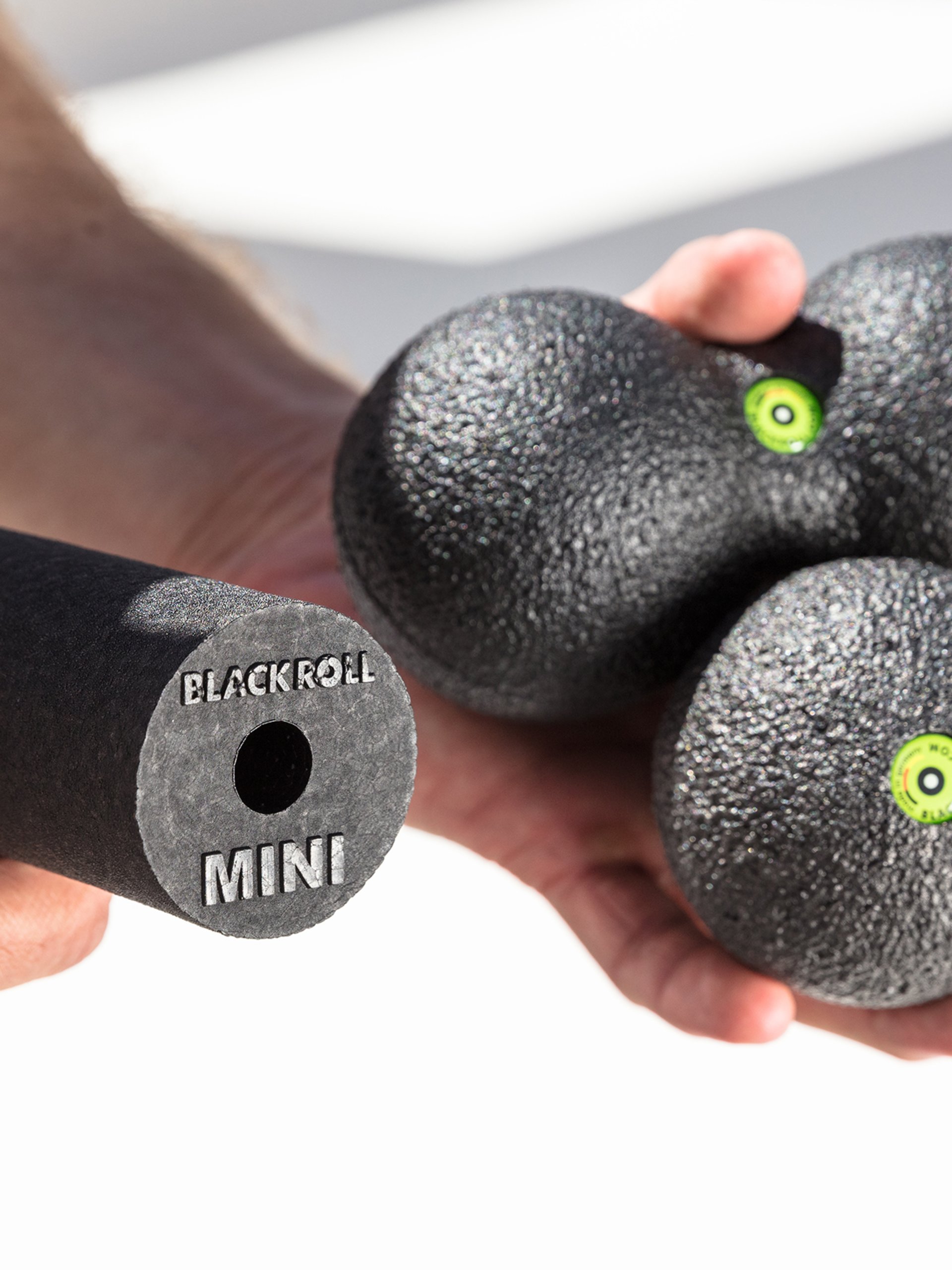
08. Conclusion – Fascia Training
Depending on the location and “type” of fascial tissue, pressure of several hundred kilograms would be required to have a structural effect on the fascia itself. Therefore, the manual pressure applied during foam rolling is also insufficient to influence the fascial tissue.
In summary, fascial training offers many positive effects on mobility and recovery. The criticisms often leveled against fascial training have been refuted by studies. It is important to use the correct rolling technique and to practice regularly. Studies show positive effects on the body. Nevertheless, one should be aware of individual contraindications and consult a doctor if in doubt. Overall, fascia training can be a valuable addition to a healthy lifestyle.
With that in mind: Have fun with your training using the fascia roller. We hope we’ve been able to shed some light on the supposed risks of fascia training.