
Magnesium and Sleep: How This Mineral Can Improve Sleep

In our fast-paced world—marked by stress and sleep deprivation—many people are looking for natural ways to improve their sleep quality. In addition to exercise, rest periods, and a quiet environment, the mineral magnesium plays a central role in this context : It relaxes muscles and the nervous system and is therefore essential for restful sleep.
Studies show that a daily magnesium intake of 320–900 mg can shorten the time it takes adults to fall asleep, improve sleep quality, and reduce nighttime awakenings. Magnesium glycinate appears particularly promising, as it has a calming effect through its interaction with GABA receptors, while magnesium citrate stands out for its high bioavailability .
In this article, you’ll learn practical, evidence-based information about:
- Which form of magnesium really helps you fall asleep
- When you should take magnesium before bed
- How to optimize the effects through sleep hygiene and diet


Functions of magnesium in the body
Magnesium is a vital mineral that the body cannot produce on its own and that plays an essential role in over 300 enzymatic reactions —from energy production and DNA synthesis to nerve cell function . These fundamental functions make magnesium an indispensable component of a healthy body.
Muscle & Nerve Function
Magnesium acts as a natural calcium blocker, regulates muscle contractions, and protects against cramps and nervous system irritability. It is important for a steady heart rhythm and balanced nerve transmission—which are central to sleep and relaxation   .
Energy Metabolism & Cell Function
It supports the production of ATP (the cellular energy unit) and the synthesis of proteins and nucleic acids (DNA/RNA). Without magnesium, vital metabolic processes cannot function effectively .
Cardiovascular Health & Blood Pressure
Magnesium helps regulate blood pressure and supports a stable heart rhythm. It also regulates electrolyte balance (e.g., calcium, potassium), which is particularly important for vascular health and the heart  .
Bones & Immune System
About 50–60 % of magnesium is found in bones and muscles. It supports bone formation, activates vitamin D, and strengthens antioxidant systems such as glutathione—which are central to cell protection and the immune system  .
Role in Sleep
- Regulation of GABA & Cortisol: Magnesium supports calming neurotransmitters (GABA) and helps reduce stress hormones—thereby promoting falling asleep and deep sleep .
- Muscle and Nerve Relaxation: Relieves tension and muscle cramps that can wake you up during sleep and cause discomfort.
- Sleep Quality: Studies show that adequate magnesium intake shortens the time it takes to fall asleep, reduces nighttime awakenings, and prolongs deep sleep—especially in older adults or people experiencing stress.

Magnesium also has a positive effect on bone health. It contributes to bone structure and strength and works closely with calcium to keep bones and teeth strong. This makes it an important mineral for the prevention of osteoporosis and other bone diseases.
The role of magnesium in mental well-being should not be underestimated either. It influences various neurotransmitters in the brain and can help alleviate anxiety and depression. Magnesium promotes relaxation and can help reduce stress, making it an important factor for mental health.
Magnesium is thus a versatile and essential mineral that is indispensable for a wide range of bodily functions. From supporting the muscular and nervous systems to energy production and mental health—the importance of magnesium for the human body can hardly be overstated.


How Much Does Magnesium Support Sleep
Have you ever wondered why magnesium is so often discussed in the context of healthy sleep? Magnesium isn’t just an important mineral for your body—it also has a significant impact on your sleep and your sleep-wake cycle. Here, you’ll learn how magnesium can positively influence your sleep and why this mineral is so important for a good night’s rest.
1. Relaxation of the Nervous System: Magnesium acts as a natural sedative in the body. It has a relaxing effect on the nerves by binding to GABA receptors in the brain. GABA (gamma-aminobutyric acid) is a neurotransmitter known for its calming properties and plays a major role in preparing the body for sleep. By promoting relaxation and reducing feelings of anxiety, magnesium can help you fall asleep more easily and enjoy a deeper, undisturbed sleep.
2. Promoting Melatonin Production: Magnesium supports the release of melatonin, the hormone that regulates your sleep-wake cycle. When your body has enough magnesium, it can help you fall asleep faster and experience a deeper, more restful sleep.
3. Reducing sleep disturbances: A magnesium deficiency can lead to various sleep disturbances, including restless legs syndrome or nighttime calf cramps. Adequate magnesium intake can alleviate such problems, thereby contributing to better sleep and reducing your fatigue.
4. Improving sleep quality: Magnesium can improve not only the ability to fall asleep but also the quality of sleep itself. It promotes deep sleep, which is essential for your body’s regeneration and recovery.
Magnesium plays a crucial role in healthy sleep. An adequate intake of this important mineral can help improve sleep quality and promote overall well-being. In the following text, you’ll learn more about how to maintain your magnesium levels and thereby contribute to better sleep.


Consequences of Magnesium Deficiency
Magnesium is an essential mineral that is indispensable for many bodily functions. A magnesium deficiency can therefore cause various health problems, including sleep disorders. Here are some of the most common consequences of a magnesium deficiency:
- Sleep disturbances: Since magnesium helps regulate the sleep-wake cycle, a deficiency can cause sleep problems such as difficulty falling asleep, frequent nighttime awakenings, and restless sleep.
- Muscle weakness and cramps: Muscle weakness and cramps are often among the first signs of a magnesium deficiency. Magnesium plays a crucial role in muscle contraction and relaxation, and a deficiency can lead to involuntary muscle twitching and painful cramps.
- Nervousness and anxiety: Magnesium has a calming effect on the nervous system. A deficiency can therefore lead to increased irritability, nervousness, restlessness, and even anxiety.
- Heart rhythm disorders: Magnesium is important for the health of the cardiovascular system. A deficiency can lead to heart rhythm disorders, high blood pressure, and other cardiovascular problems.
- Digestive problems: Magnesium deficiency can also impair digestion, as it plays an important role in muscle movement within the digestive tract. This can lead to symptoms such as nausea, vomiting, and indigestion.
- Osteoporosis: Magnesium is crucial for bone health. A long-term deficiency can increase the risk of osteoporosis, as magnesium plays an important role in bone formation and maintenance.
- Lack of energy and fatigue: Magnesium is involved in the body’s energy production. A deficiency can therefore lead to general weakness, lack of energy, and chronic fatigue.
To prevent a magnesium deficiency and the associated symptoms from occurring in the first place, we’ve summarized everything you need to know about proper magnesium intake in the following sections.


Recommended daily magnesium intake for healthy sleep
According to studies by the German Nutrition Society, a healthy adult woman needs approximately 300 mg of magnesium per day. Men have slightly higher requirements and should consume approximately 350 mg daily.
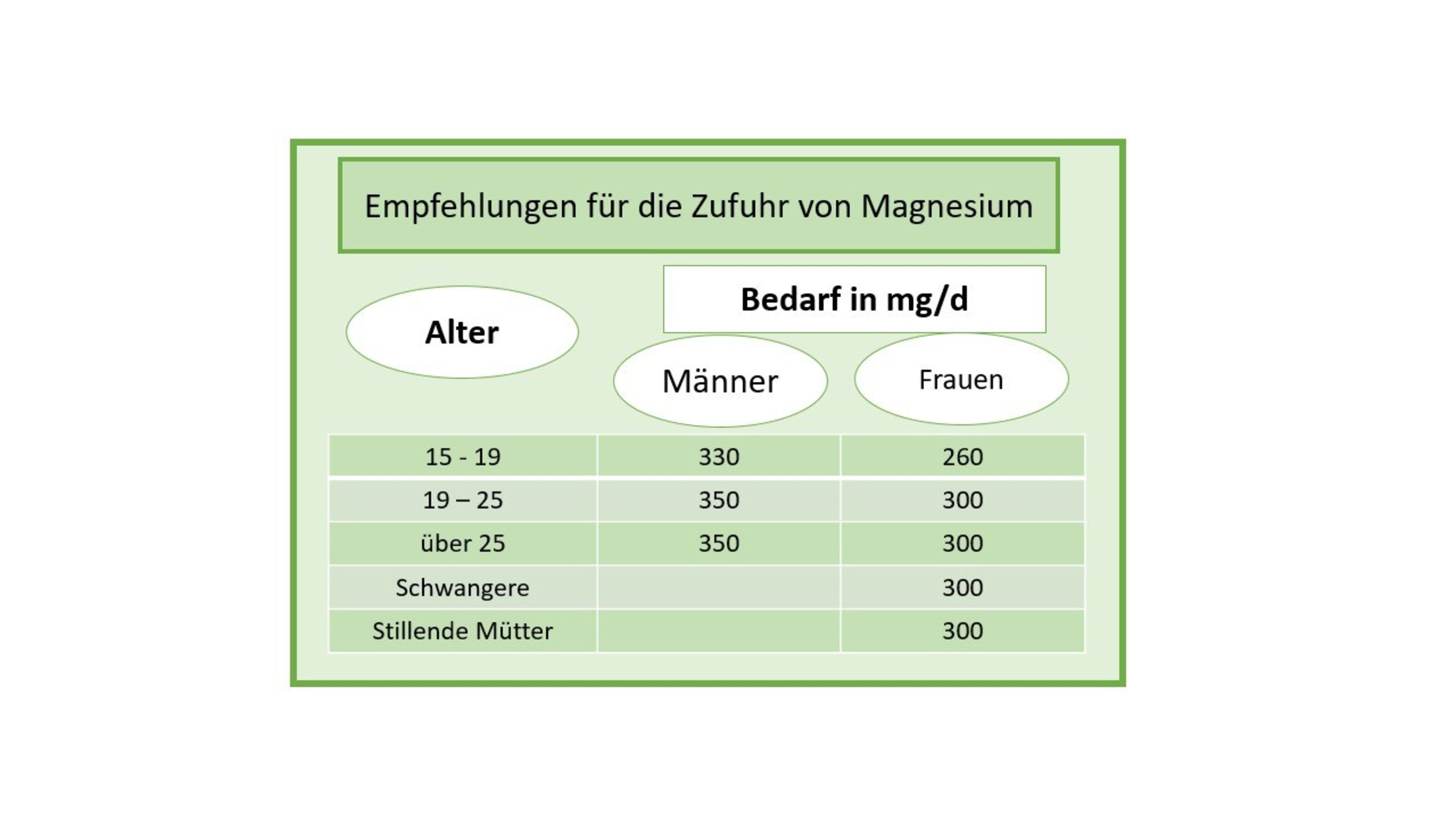
If you have trouble getting enough magnesium from your diet, you might also consider taking dietary supplements. However, you should choose them carefully and follow the correct dosage.
Side Effects
Magnesium is an important mineral for the body, but as with any nutrient, excessive doses can cause side effects. Generally, however, this only occurs when too much magnesium is taken in the form of supplements, since the body regulates magnesium from food effectively.
Common side effects of magnesium overdose:
- Gastrointestinal symptoms: The most common side effect of too much magnesium is diarrhea. This often occurs when taking magnesium in forms such as magnesium oxide, which have lower bioavailability.
- Nausea and vomiting: At high doses, magnesium can irritate the stomach and lead to nausea or vomiting.
- Cramps and bloating: In some cases, excessive magnesium can lead to stomach cramps or bloating.
- Low blood pressure: Magnesium has a relaxing effect on blood vessels, which can lead to dangerously low blood pressure (hypotension) in the event of an overdose.
- Cardiac arrhythmias: In extreme cases of magnesium overdose, cardiac arrhythmias may occur, as magnesium affects the heart muscle.
- Muscle weakness: Very high amounts of magnesium can impair the nervous system, which can lead to muscle weakness or, in severe cases, even paralysis.
Side effects are relatively rare when magnesium is taken in the recommended amounts. However, it is advisable not to exceed the recommended dosage when taking dietary supplements, and if you are unsure about taking them, consult your doctor for advice.
Magnesium for Sleep Disorders
Do you suffer from sleep problems and want to use magnesium to treat them? You have a choice between different magnesium compounds. The following types of magnesium are particularly suitable for promoting sleep: Compounds.
Magnesium citrate: Magnesium citrate is a highly bioavailable magnesium compound. However, some people may be sensitive to it, as magnesium citrate has a mild laxative effect. For those who are prone to constipation anyway, this mild laxative effect is naturally beneficial.
Magnesium carbonate: Until the turn of the millennium, magnesium carbonate was considered to have relatively poor bioavailability. Studies from the last two decades now paint a different picture. Magnesium carbonate is found, for example, in Sango coral. It can help with sleep disturbances and is often used to treat heartburn. However, those who already have low stomach acid should opt for a different magnesium compound.
Magnesium bisglycinate: Magnesium bisglycinate is a compound in which magnesium is bound to the amino acid glycine. It is characterized by high bioavailability and very good gastric tolerance. Glycine also has relaxing and sleep-promoting properties, which, in combination with magnesium, can provide a dual effect against sleep problems.
Magnesium malate: Magnesium malate is a compound of magnesium and malic acid. Its bioavailability is also rated highly, and it is frequently used to relieve fatigue and exhaustion. In cases of magnesium deficiency, it can also contribute to better sleep quality.
Magnesium orotate: In this form, magnesium is bound to orotic acid. Magnesium orotate penetrates cells easily. It can also help with sleep disturbances because it relaxes blood vessels.
Magnesium chloride: This magnesium compound is often sold commercially as magnesium oil. This liquid magnesium can be easily sprayed onto the skin and takes effect particularly quickly. It is also especially useful for treating cramps, as it can be applied directly to a specific area.
Magnesium sulfate and magnesium oxide are more useful for treating excess stomach acid or constipation, as both can have a laxative effect and their bioavailability is generally considered to be lower.
Bioavailability
To maintain high magnesium bioavailability, it’s important to choose the right form and ensure proper intake so your body can optimally absorb and utilize this valuable mineral. Magnesium is absorbed particularly well when taken in small doses throughout the day rather than in a single large dose. This helps your body process it continuously instead of excreting excess magnesium unused.
The form of magnesium also plays an important role. Compounds such as magnesium citrate or magnesium glycinate have higher bioavailability than inorganic forms like magnesium oxide, meaning your body can absorb these forms more easily. So if you decide to take supplements, look for ones that promote better absorption.
In addition to proper supplementation, it’s also crucial to focus on a magnesium-rich diet. Foods like nuts, seeds, whole grains, and leafy green vegetables naturally provide your body with magnesium. It’s also important to minimize factors that can quickly deplete your magnesium stores, such as stress or intense exercise. By ensuring a consistent supply, you help your body use magnesium effectively and maintain high levels of bioavailability.


Foods Rich in Magnesium
To meet your daily magnesium needs, you can incorporate the following magnesium-rich foods into your diet:
Nuts and seeds: Almonds, cashews, and pumpkin seeds are excellent sources of magnesium.
Whole grains: Whole-grain bread, oatmeal, and brown rice are also high in magnesium.
Green leafy vegetables: Spinach and kale are not only rich in magnesium but also in other important nutrients.
Legumes: Beans and lentils are also good sources of magnesium.
Additional sources of magnesium:
Fish: Certain types of fish, such as mackerel, salmon, and halibut, contain significant amounts of magnesium. These fish also provide important omega-3 fatty acids, which are beneficial for heart and brain health.
Bananas: This popular fruit isn’t just a good source of potassium—it also contains magnesium. Bananas are ideal as a snack between meals or as part of your breakfast.
Dark chocolate: Good news for chocolate lovers—dark chocolate with a high cocoa content is rich in magnesium. However, be mindful of the sugar content to maintain a healthy balance.
Tofu: Tofu is an excellent source of magnesium, especially for vegetarians and vegans. It’s also a good source of protein and can be used in a variety of ways in the kitchen.
Avocado: This creamy fruit is not only rich in healthy fats but also in magnesium. Just one avocado can cover a significant portion of your daily magnesium needs.
Water: Certain mineral waters can also be a good source of magnesium. Check the label to see how much magnesium is in your water.
By regularly incorporating these foods into your diet, you can naturally support your magnesium balance. This not only contributes to better sleep but also promotes your overall health and well-being.
Magnesium and Vitamin D
Magnesium is essential for your body when it comes to absorbing and utilizing vitamin D. You may take vitamin D regularly to strengthen your immune system and support your bones, but did you know that magnesium is what allows vitamin D to work properly in the first place?
Without enough magnesium, your body cannot convert vitamin D into its active form. This active form of the vitamin is necessary to support important processes in the body, such as regulating calcium and phosphate levels in the blood. These minerals, in turn, are essential for building and maintaining strong bones as well as for healthy muscle function. If your magnesium levels are too low, vitamin D remains essentially “inactive” and cannot fully exert its beneficial effects.
In addition, magnesium helps ensure that vitamin D is not only absorbed but also distributed evenly throughout the body and utilized. A magnesium deficiency can prevent you from reaping the full benefits of vitamin D, even with an adequate intake. Your body therefore needs sufficient magnesium to get the most out of the vitamin D you consume.
Conclusion: Magnesium as a Sleep Aid
Magnesium plays an important role in healthy sleep. It not only has a positive effect on sleep quality but also on falling asleep and overall sleep regulation. Here, we’ve summarized the most important points you should know about magnesium as a sleep aid:
Magnesium helps calm the nervous system and also provides excellent support for melatonin production, which in turn has a very important influence on your sleep-wake cycle. With magnesium, you may be able to overcome annoying sleep disturbances—and do so in a healthy way, since magnesium is a natural mineral.
It’s important to ensure an adequate intake of magnesium through your diet or, if necessary, through dietary supplements. However, you should avoid overdosing.
Even if you’re taking supplements, be sure to maintain a healthy and balanced diet and lifestyle. If you experience any adverse symptoms or side effects while taking magnesium, you should contact your doctor.
FAQ
Magnesium is involved in over 300 vital enzymatic reactions: it supports energy production (ATP), nerve and muscle balance, heart rhythm, bone formation, and helps reduce stress. Particularly relevant for falling asleep: Magnesium stabilizes GABA, lowers cortisol, and promotes deeper, more restful sleep .