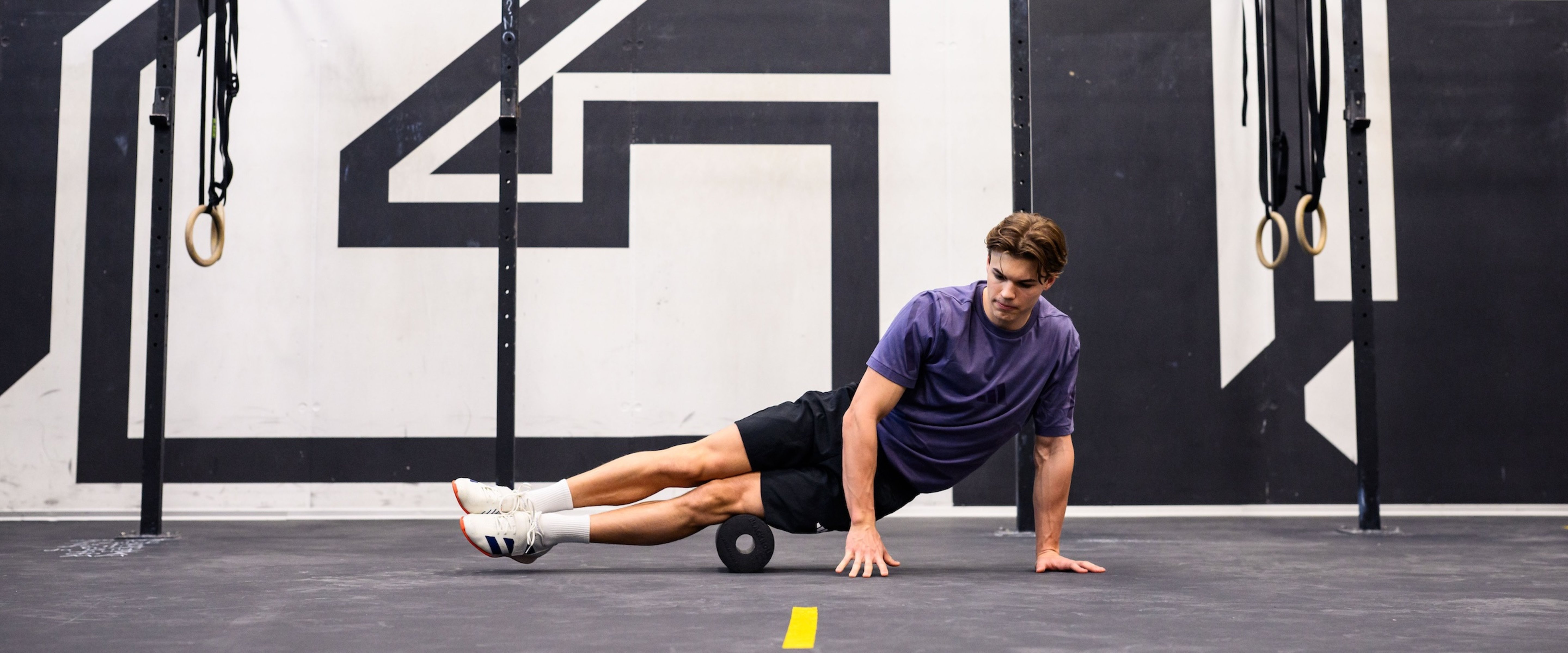
No shortcuts: Taliso Engel carves his own path
For him, there’s no countercurrent he can’t overcome. With two Paralympic gold medals and several world championship titles, Taliso Engel has long been part of the international elite in para-swimming. But what sets him apart cannot be measured solely in times and medals. In conversation, Taliso comes across as present, focused, and at peace with himself. He laughs a lot and seems relaxed—his confidence is contagious. How does an athlete at this level manage to stay true to the joy of the sport, handle expectations, and still fall asleep peacefully at night despite his successes?
A Childhood Connection to Water: An Element of Calm
When he swims his laps in the water, Taliso forgets everything around him, leaves the hustle and bustle of everyday life behind, and lets his mind wander, while his body intuitively repeats the same movements over and over. From an early age, the water was a place where he found peace—a space that felt light and free.
“It’s a completely different element. In the water, I can let myself drift and find peace.
Even as a child on vacation, I was always the first one in the pool or the ocean; they could hardly get me out (laughs).”
This calm gives rise to performance. The fact that Taliso can also touch the wall in breathtaking times proves the drive he develops in the water. For years, the 23-year-old has dominated para-swimming; he first caught international attention with his first Paralympic gold medal in Tokyo in 2021. In Paris in 2024, he impressively defended that title. In the 100-meter breaststroke, Taliso Engel is now the benchmark in his classification.
Challenges & Setbacks
Taliso was born with a congenital visual impairment. He competes in the international SB13 classification—the highest class for visually impaired swimmers. For a long time, this impairment wasn’t a major issue for him. He grew up with it without giving it much thought.
“I just thought water was cool. As a kid, I didn’t think much about the whole issue of disability. It was never really on my mind. My parents always said, ‘He should do everything just like everyone else,’ and they never wrapped me in cotton wool.
So for a very long time, my disability wasn’t an issue for me—I didn’t really even notice it.”
It wasn’t until he started school that his perspective changed.
Taliso: “That was around 2010–2011, when I was eight or nine years old. At school, the issue became more apparent—how do I deal with it, how do I cope? Until I started school, I thought: What’s the problem? Sure, then it was about being able to recognize and read what was on the board. That’s when I first noticed the disability that other kids didn’t have.”
A real turning point came years later—at a time when Taliso was already among the world’s top athletes. Taliso recalls that difficult time: “In 2023, I lost my hearing. That was a year when I thought:
What’s happening right now? I struggled with myself and the thought: How am I supposed to perform? That was tough.”
During a phase when he had to reevaluate so many things, his courage and positive attitude allowed him to maintain the trust of those around him. He didn’t hide away. On the contrary: Taliso went back to swimming as if nothing had happened. “This year, I’ve learned a lot about myself and have been able to grow as a result—as a person and as an athlete. Even though I was feeling down, I didn’t stay home; I kept going. Looking back, I know this: In the end, you have to want it yourself—to keep going and push yourself!”
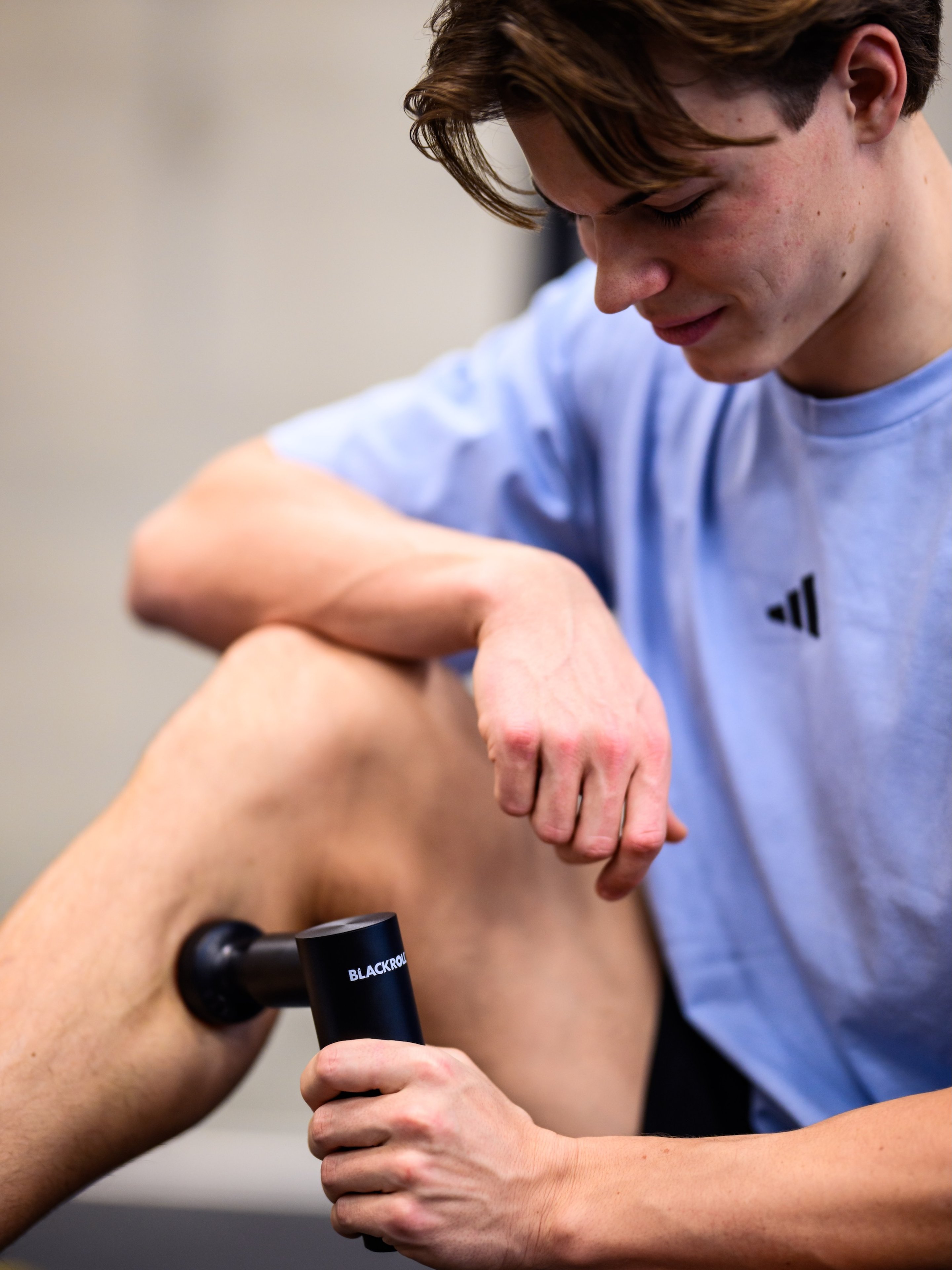
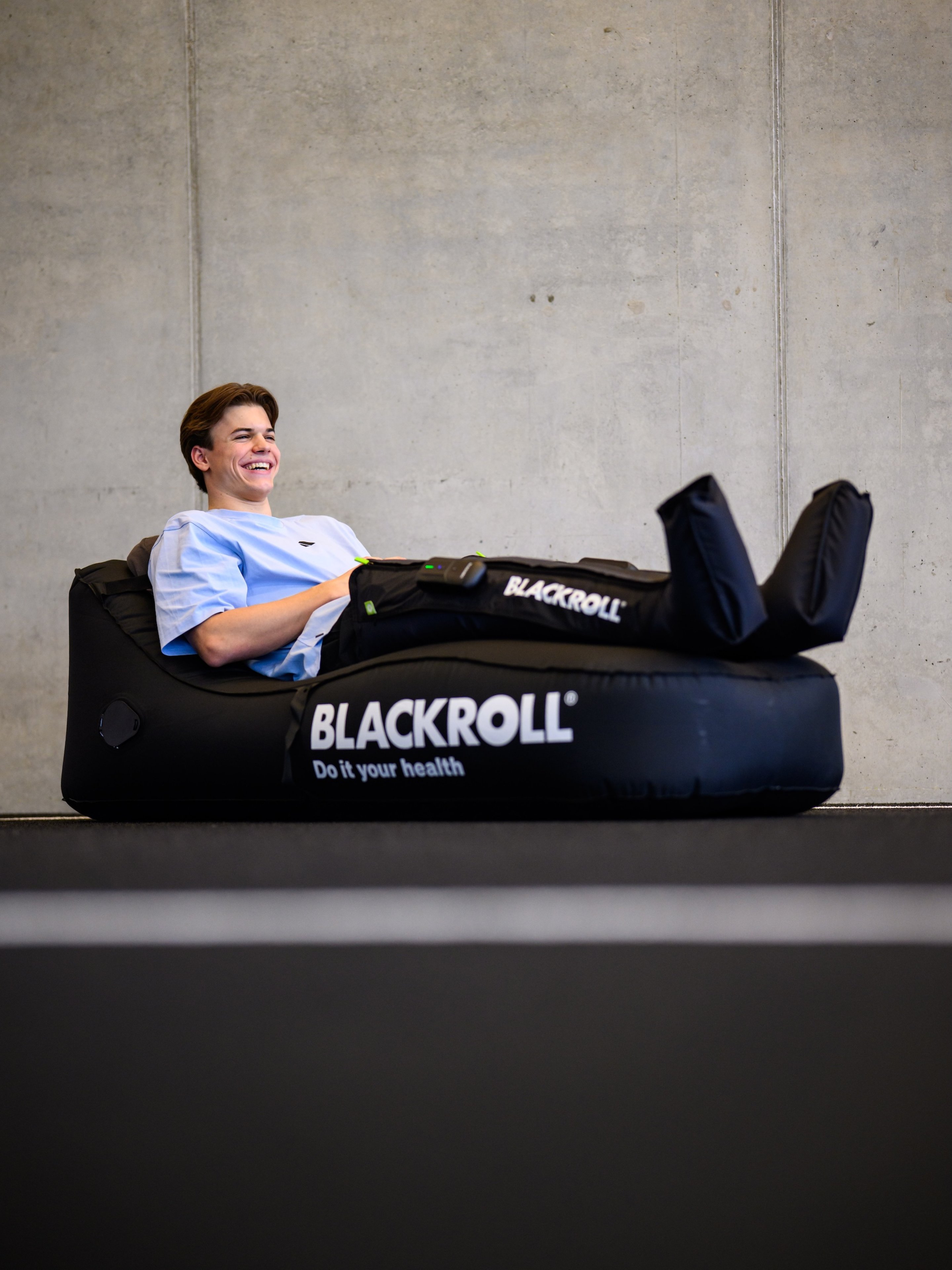
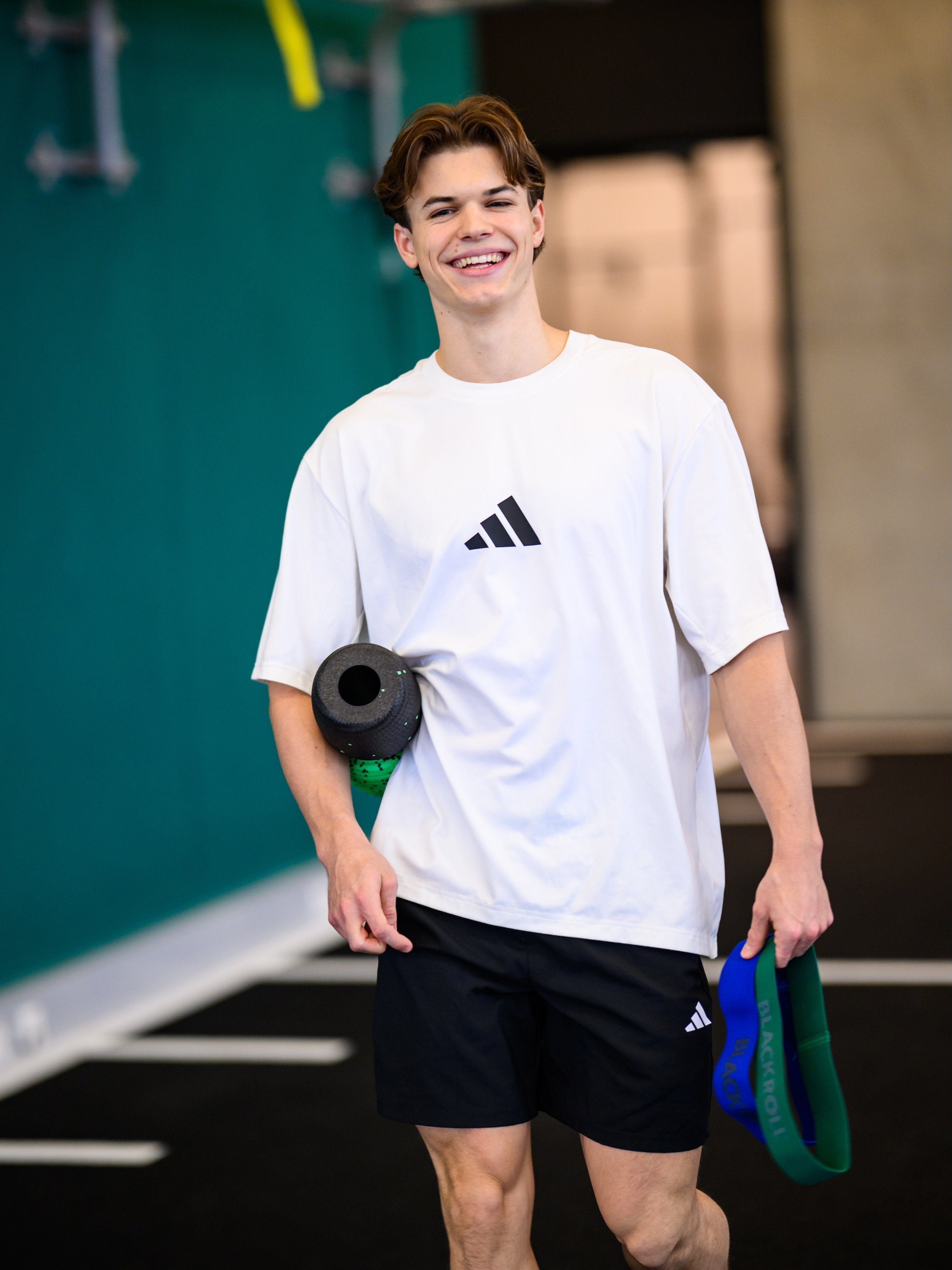
For Taliso, recovery isn’t just a way to balance things out—it’s a prerequisite for maintaining consistent performance. Always within reach in his backpack and an integral part of his daily training routine:
His RECOVERY PILLOWhelps him get a restful night’s sleep . The RECOVERY BLANKETS are a real game-changer for him : They regulate the temperature so he’s neither too hot nor too cold—no matter where he sleeps.
The Dual Career
Taliso consciously navigates between two worlds: para-competitive sports and Olympic swimming—a path that few athletes consistently pursue. For him, one thing is clear: performance knows no boundaries.
His entry into para-sports came early—and rather by chance.
“It was back then at the swimming pool in Nuremberg. Elena Semechin’s coach—a successful para-swimmer herself—approached my mom and said I had potential and that they could take us to the German Para-Swimming Championships. We agreed, and that’s how I got involved in para-sports. Elena was my role model for a long time—she won silver in London in 2012.”
It was clear to Taliso early on that he didn’t want to limit himself to just one path. Para-sports is part of his journey—but not the only one.
“I’ve never said, ‘My focus is solely on parasport.’
To this day, I also swim in the 1st Bundesliga—which is a purely Olympic-level competition. There’s much more competition there for me, with many swimmers who are faster. I want to keep doing that: competing in the German Championships, training with able-bodied swimmers. That’s another source of motivation for me.”
For Taliso, this doesn’t mean choosing between two systems, but rather constantly taking on the greater challenge. Competition, comparison, and the pressure to perform aren’t obstacles for him—they’re what drives him.
Development & Breakthrough
In his Nuremberg team, Taliso was long the one who “just went with the flow.” He describes himself during that time as someone who was a late bloomer—for a long time, he was neither particularly tall nor particularly muscular. However, his ambition and dedication were already well-developed. In 2016, at just 13 years old, Taliso stood on the starting block for the national team at his first Para European Championships.
As one of the youngest athletes on the team, Taliso gained international experience early on—often surrounded by significantly older competitors. Even at a young age, he learned to cope with expectations, comparisons, and the pressure to perform.
Taliso recalls: “Many on the national team were 19 or 20; I was the 13-year-old—I felt like the kid of the group,” he remembers. His first World Championships were set to follow a year later. But shortly before the competition, an earthquake in Mexico destroyed the swimming pool. The World Championships were canceled, and the training camp ended abruptly.
His next attempt came at the European Championships. Taliso won his first international medal in the 100-meter breaststroke. In 2019, his first “real” World Championships finally arrived—and with it, a moment that hardly anyone would have expected:
Taliso became world champion. A turning point in his young career.
From that point on, he developed rapidly—becoming a dominant breaststroke swimmer on the international stage.
New Paths
After years in the pool, titles, and well-established routines, Taliso made a conscious decision to step out of his comfort zone. By participating in the TV show “Let’s Dance” last year, he broke new ground—a risky move athletically, but personally enriching.
Away from the water, he showed a different side of himself to an audience of millions. Without a training plan, without his usual routines, without the security of being able to fall back on his athletic routine at any time. “Thirteen weeks on ‘Let’s Dance’ were intense and really cool—so many new experiences in a world I didn’t know! Of course, I couldn’t train at all during that time,” Taliso explains. “Afterward, I had to get back into it and trust that I’d be able to perform at my best again in September. From early June to mid- to late September—that’s not much time to get back to an incredibly high level of performance. But that also appealed to me in a way.”
Focus & Hard Work
Taliso is resuming training. Every day, he works hard to get his body back in shape for the water—instead of the dance floor in the spotlight.
Taliso’s week is fully scheduled. Only Sunday is training-free. Most days include two sessions: in the water in the morning and strength training in the evening. Athletic and mobility sessions are also part of the routine.
Now it’s getting serious again at the competitions. Taliso is ready. Those milliseconds on the starting block, when everything suddenly falls silent and his heartbeat pulses all the way up to his head. The wait for the liberating starting signal. Then his heart rate skyrockets from the rapid movements, and Taliso flies through the pool. He doesn’t look left or right. He stays in his own lane.
How does he manage to convert the underlying tension before the start into energy and keep the pressure from getting the better of him? How does he keep his nerves in check?
“Definitely with music. It can either push you or calm you down. Without music, I’d be a completely different athlete,” Taliso is certain.
For him, one thing is certain: balance is the key to staying focused. “As an athlete, it’s important to do something different every now and then—to let go a bit even with all that focus, so you don’t lose the fun. Go out, take part in normal life. If you’re just stuck in the grind, you stagnate.” Accepting that not everything works out is also important to him. “We all fail—that’s how you learn.”
What’s next?
He’s looking ahead. 2026 will once again be all about competition. Taliso has big plans: “I’m planning to compete in the German Olympic Championships and the Para European Championships. I want to go for it again!”
After a year full of new experiences, paths, and challenges, Taliso feels ready to forge his own path.


